
Selecting the perfect boxing glove weight is one of the most critical decisions you will make for your training journey. The weight of your glove directly impacts your safety, your speed, and the overall effectiveness of your workouts. When choosing your Everlast gloves, the decision comes down to matching the glove’s weight—measured in ounces (oz)—to your primary training activity and your physical build.
Lighter gloves, typically ranging from 8oz to 10oz, are engineered for speed, focus mitt work, and official competition. Mid-weight gloves, such as 12oz and 14oz options, represent the most versatile choices for solo heavy bag workouts and general fitness classes. Heavier gloves, measuring 16oz or more, are the safety standard required for partner sparring and are essential for heavier athletes who require maximum impact absorption. By understanding how these weights distribute padding, you can protect your hands, prevent wrist strain, and get the most out of every round.
Understanding Everlast Boxing Glove Weights and Protection
To choose the right equipment, you must first understand what the weight of a boxing glove actually represents. In boxing, gloves are categorized by ounces rather than standard small, medium, or large sizes. This ounce measurement refers specifically to the weight of the protective foam padding built into the glove, rather than the physical size of the hand compartment itself. While a 16oz glove will naturally have a slightly larger outer profile than an 8oz glove due to the sheer volume of foam, both weights are designed to fit standard hand sizes once secured with wraps.
Products mentioned in this guide
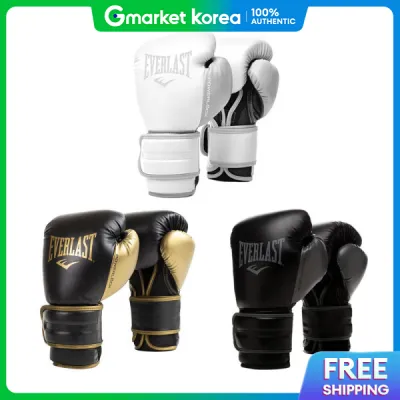
Prices are valid at publication and may change. Please refer to the product page for the latest price.
The weight of the padding creates a fundamental performance trade-off between speed and protection. Lighter gloves contain less foam, which reduces the physical mass your shoulders have to support. This allows you to throw faster punch combinations and receive immediate tactile feedback upon impact, helping you assess your knuckle alignment. However, this lack of mass means very little kinetic energy is absorbed by the glove.
Conversely, heavier gloves pack dense layers of protective foam over the knuckles and wrists. This extra padding dampens the shock of high-velocity impacts, protecting the delicate bones in your hands from stress fractures. Additionally, training with heavier gloves builds crucial shoulder endurance. Keeping a pair of 16oz gloves up in a defensive guard for several rounds forces your deltoids and upper back muscles to adapt, making your hands feel incredibly light and fast when you eventually switch to lighter competition gloves.
Matching Everlast Glove Weights to Your Training Activity
Your training routine is the primary factor that determines which glove weight you should pull out of your gym bag. Using the wrong weight for a specific drill not only limits your skill development but also increases your risk of injury.

8oz and 10oz: Pad Work, Speed, and Competition
Gloves weighing 8oz and 10oz are highly specialized tools designed almost exclusively for speed, precision pad work, and competitive bouts. Because these gloves feature minimal padding over the knuckles, they allow for maximum velocity and razor-sharp hand speed. This makes them excellent for focus mitt drills, where your coach catches your punches and guides your form, or for working on a lightweight speed bag where rapid hand-eye coordination is key.
However, this minimal construction comes with significant safety trade-offs. You should never use 8oz or 10oz gloves for heavy bag workouts or partner sparring. Striking a dense, heavy bag with such light padding transmits the raw force of the impact directly back into your knuckles, wrists, and elbows, which can quickly lead to chronic joint pain or acute injuries.
If you are preparing for an official boxing match, 8oz and 10oz are the standard competition weights. Professional organizations typically mandate 8oz gloves for lighter weight classes and 10oz for welterweight and above, while amateur associations have strict guidelines regarding approved safety stamps and glove weights. Always consult your coach and check your local sanctioning body’s official rulebook before purchasing competition-specific gloves.
12oz and 14oz: Heavy Bag Work and All-Around Training
For the vast majority of fitness boxers, recreational athletes, and home gym users, the 12oz and 14oz categories represent the ideal middle ground. These weights are highly versatile, making them the standard choice for structured boxing classes, heavy bag drills, and solo training sessions.
A 12oz glove is often preferred by lighter individuals, typically those weighing under 65 kg, or by fitness enthusiasts who want to maintain high hand speed during cardio-heavy workouts. It offers just enough knuckle protection to handle moderate bag work while keeping your arms from fatiguing too quickly during long, high-intensity intervals.
If your training involves heavy bag work where you throw full-power punches, upgrading to a 14oz glove is highly recommended. The extra padding in a 14oz glove is crucial for absorbing the shock of striking dense synthetic or leather bags, which often weigh between 30 kg and 50 kg. This weight provides a reliable balance of hand protection and wrist support, while also offering excellent shoulder conditioning. For solo training where you transition seamlessly between focus mitts, double-end bags, and heavy bags, a 14oz glove is arguably the most practical and protective all-around option.
16oz and Above: Sparring and Heavy Hitters
When you transition from solo training to partner work, your equipment choices directly impact the safety of your training partners. For this reason, 16oz gloves are the universally accepted standard for sparring in almost every boxing gym worldwide. The primary purpose of a 16oz glove is not just to protect your own hands, but to provide a thick, cushiony barrier that dampens the force of your punches on your sparring partner’s face and body, minimizing the risk of cuts, bruises, and concussions.
Attempting to spar with 12oz or 14oz gloves is highly dangerous and is widely considered a breach of gym etiquette. Lighter gloves do not have enough foam density to prevent your knuckles from pushing through the padding during hard exchanges.
In addition to sparring, 16oz gloves are essential for heavy hitters and larger athletes. If your body weight exceeds 80 kg, your natural punching power generates immense kinetic energy. Using a lighter glove on a heavy bag can cause the padding to “bottom out”—fully compressing on impact and leaving your joints vulnerable. Larger boxers should utilize 16oz or even 18oz gloves for all bag work to ensure their hands remain fully protected over years of heavy training.
Adjusting for Body Weight and Hand Size
While your training activity provides a solid starting point, you must adjust your glove weight to account for your physical body weight and hand size. A universal weight recommendation does not work because a heavier boxer naturally generates far more impact force than a lighter boxer, requiring thicker foam to absorb that energy safely.
To help guide your choice, you can use a general weight-matching framework for daily bag and pad training:
- Boxers under 55 kg: 10oz to 12oz gloves provide the best balance of protection and speed.
- Boxers between 55 kg and 75 kg: 12oz to 14oz gloves offer optimal knuckle cushioning.
- Boxers over 75 kg: 14oz to 16oz gloves are necessary to prevent bottoming out.
Beyond body weight, the physical size of your hand and the thickness of your hand wraps are critical factors. Everlast gloves are designed with specific internal hand compartments that scale slightly with weight. If you have large hands, a 12oz glove might feel uncomfortably tight, restricting blood flow and causing hand cramps, even if your body weight suggests a 12oz is appropriate. Conversely, a petite boxer with small hands might find their hand sliding around inside a 16oz glove, which compromises wrist stability and increases the risk of a sprain.
To find the perfect fit, never rely on guesswork. Wrap your hands completely, then use a flexible measuring tape to measure the circumference of your dominant hand just below the knuckles, excluding the thumb. Compare this measurement directly to the manufacturer’s official sizing chart for the specific Everlast model you are eyeing. Because different glove lines feature unique internal shapes, checking these specifications ensures a secure, locked-in fit.
Cross-Training: Can One Pair Cover Multiple Purposes?
For beginners starting their boxing journey in Singapore, purchasing multiple pairs of specialized gloves can feel like a significant financial commitment. High-quality gloves can range from S$60 to well over S$200, leading many to search for a single, multi-purpose pair.
If you must absolutely limit yourself to one pair of gloves, a 12oz or 14oz glove (adjusted for your body weight) is the most versatile compromise. This single pair can handle fitness classes, focus mitt sessions, and moderate heavy bag workouts quite effectively.
However, you must establish a strict boundary when it comes to partner sparring. You should never use the exact same pair of gloves for both heavy bag training and live sparring. This rule is non-negotiable for two critical reasons: padding degradation and hygiene.
First, striking a dense heavy bag repeatedly compresses the internal foam layers of the glove. Over months of training, this foam loses its resilience and hardens into a solid block. If you use these compromised, hardened gloves to spar, you are essentially hitting your partner with minimal protection, which can easily cause injuries.
Second, Singapore’s tropical climate creates a highly humid environment, leading to intense sweating during heavy bag workouts. The inner lining of your gloves absorbs this moisture, becoming a breeding ground for bacteria and odor. Taking these sweat-saturated gloves and pressing them against a training partner’s face during close-range sparring is highly unhygienic. To keep your training safe, sanitary, and respectful, invest in a dedicated, clean pair of 16oz gloves reserved exclusively for sparring, while using your lighter pair for solo bag work.
Frequently Asked Questions (FAQ)
Should I wear hand wraps under my boxing gloves?
Yes, you should always wear hand wraps under your boxing gloves, regardless of the glove weight or the intensity of your workout. Hand wraps are not optional accessories; they are essential safety gear that secures the many small bones in your hand, supports your wrist joint, and keeps your hand aligned upon impact. Furthermore, wraps absorb a significant amount of sweat, which protects the inner lining of your Everlast gloves from premature wear and odor. Because wraps add physical volume to your hands, make sure to wear them whenever you are trying on new gloves to ensure a proper, realistic fit.
How do I know if my boxing gloves are too small or too big?
You can easily determine if your gloves fit correctly by paying attention to a few key physical indicators. Your gloves are too small if your fingertips are pressed painfully against the very top of the glove, or if your hand feels cramped and restricted before you even close your fist. Conversely, your gloves are too big if your hand slides around inside the compartment, if your wrist feels loose despite tightening the strap, or if you can easily wiggle your fingers while wearing hand wraps. If purchasing online, always verify the retailer’s return and exchange policy so you can swap your gloves for a different size if the initial fit is incorrect.
Community discussion
Share your experience or ask a question. Comments are reviewed before publication.