
Choosing the right FABX resistance band level requires matching the band’s tension to your physical baseline, training goals, and target muscle groups. Selecting the correct resistance ensures you apply enough mechanical tension to stimulate muscle adaptation without compromising form or risking joint strain. Because resistance bands rely on progressive tension as they stretch, finding the ideal level involves a mix of goal alignment, understanding product specifications, and performing safe physical self-tests.
In space-conscious living environments, such as modern apartments where bulky gym equipment is impractical, a versatile set of resistance bands offers a highly efficient, compact alternative for full-body workouts. However, using a band that is too light will stall your progress, while a band that is too heavy can lead to compensatory movements and injury. By systematically evaluating your fitness level and testing your physical response to different bands, you can build a safe, progressive home workout routine.
Identify Your Fitness Baseline and Primary Training Goals
Before selecting a band, define your primary workout objectives. Different fitness goals require distinct levels of mechanical tension. For instance, physical rehabilitation and joint mobility work demand low-tension bands that allow for a complete range of motion. In contrast, muscle toning and endurance training require moderate resistance that fatigues muscles over higher repetition ranges, typically between 12 and 20 repetitions. If your goal is strength building, you will need high-tension bands that challenge your muscles within lower repetition ranges, such as 6 to 10 repetitions.
Products mentioned in this guide

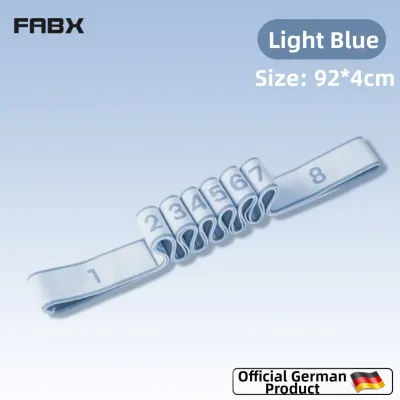
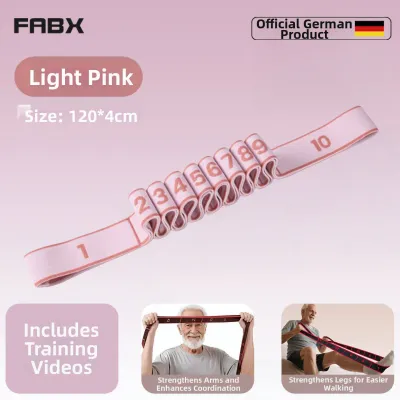
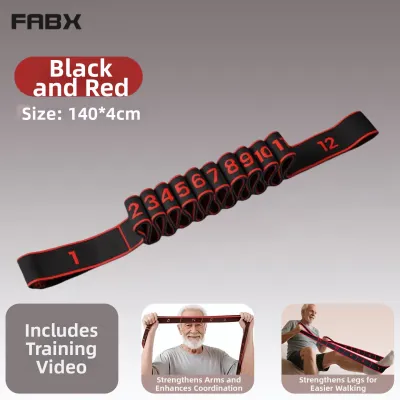
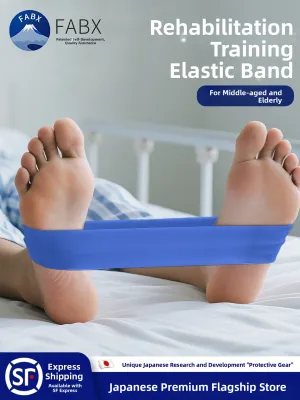
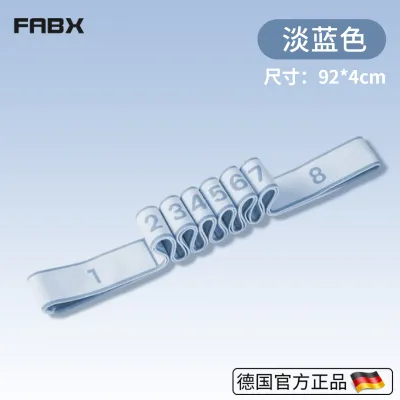
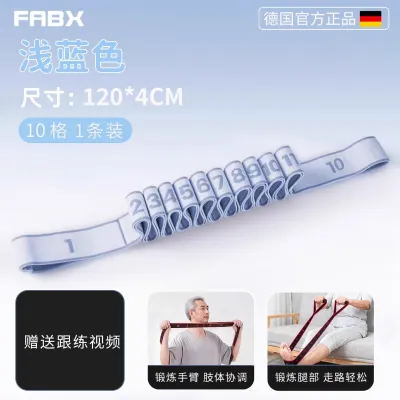

Prices are valid at publication and may change. Please refer to the product page for the latest price.
Your current workout experience serves as the baseline. Beginners who are new to resistance training or recovering from an injury should start with the lowest tension to master proper movement patterns safely. Intermediate fitness enthusiasts who regularly perform bodyweight exercises can typically begin with medium-tension bands for general conditioning. Advanced lifters accustomed to heavy weights will likely require heavy or extra-heavy bands to experience a challenging stimulus, particularly during lower-body movements.
Identify the specific muscle groups you plan to target, as strength varies significantly across your body. Large muscle groups, such as the glutes, hamstrings, and quadriceps, are capable of producing high force and require heavier bands to stimulate growth. Conversely, smaller upper-body muscles, including the shoulders, biceps, and triceps, are weaker and can easily be overloaded by excessive resistance. Planning your routine around these anatomical differences prevents you from overestimating your strength requirements and helps you select a balanced variety of band levels.
Decode FABX Resistance Levels: Light, Medium, and Heavy
FABX resistance bands are categorized into distinct levels to accommodate different exercises and fitness backgrounds. Understanding these standard classifications helps you narrow down your choices when selecting a band from a multi-pack.

Light Resistance Light bands are highly flexible, thin, and offer minimal initial tension. These bands are designed for joint mobility, dynamic warm-ups, physical rehabilitation, and targeting delicate muscle groups like the rotator cuff. If you are learning a new movement pattern, starting with a light band allows you to focus entirely on form without struggling against heavy resistance.
Medium Resistance Medium bands provide a balanced level of tension suitable for a wide range of exercises. They are the standard choice for muscle endurance, conditioning, and full-body toning. Intermediate users will find medium bands challenging enough for upper-body movements, while beginners can use them to add light resistance to lower-body exercises like squats and lunges.
Heavy Resistance Heavy bands are thicker and offer substantial resistance even at the beginning of the stretch. These bands are engineered for strength building, advanced muscle hypertrophy, and targeting the body’s largest muscle groups. They are highly effective for lower-body movements, such as deadlifts, hip thrusts, and assisted pull-ups, where significant force is required.
To verify the resistance category of your specific FABX band, inspect the product packaging, printed labels, or color-coded markings. Manufacturers often print the estimated weight equivalent or a tension rating directly on the band’s surface. Because color systems can vary between different product lines, do not rely solely on color memory; instead, consult the official product insert or user manual to confirm the exact tension specifications of each band.
Perform Safe Self-Tests to Find Your Ideal Tension
To determine if a specific band level is appropriate for your current strength, you can perform simple, low-risk physical self-tests at home. These tests rely on observable physical cues rather than arbitrary weight numbers to guide your selection.
The most reliable method for assessing band tension is the “two-rep rule.” To apply this rule, select an exercise—such as a bicep curl or a standing squat—and attempt to perform a target set of 12 controlled repetitions. If your movement form begins to break down, or if you must use momentum to complete the tenth or eleventh repetition, the band is too heavy for that exercise. Conversely, if you complete all 12 repetitions easily and feel that you could comfortably perform several more without muscle fatigue, the band is too light to stimulate physical adaptation. The ideal band should make the final two repetitions highly challenging while still allowing you to maintain perfect alignment and control.
During these self-tests, closely observe your joint strain, breathing patterns, and overall movement control. You should feel the primary tension in the belly of the target muscle, not in your joints or connective tissues. If you experience sharp joint discomfort, find yourself holding your breath excessively, or notice your body shaking uncontrollably, immediately stop the exercise and switch to a lighter band. Controlled, smooth eccentric (lowering) and concentric (lifting) phases are clear indicators of an appropriate resistance level.
If you find yourself falling between two standard resistance levels, you can safely adjust the effective tension of your current band by modifying your setup. For long loop bands, narrowing your stance or widening your grip increases the pre-stretch tension, making a lighter band feel heavier. Alternatively, you can fold a flat band to double its resistance, or choke up on the material to shorten the working length. These simple mechanical adjustments allow you to fine-tune your workouts without immediately needing to purchase a new band.
Recognize When to Upgrade or Adjust Your Resistance
As your muscles adapt to regular training, your baseline strength will increase, meaning a band that once felt challenging will eventually become too light. Recognizing the physical signs of adaptation is crucial for maintaining progressive overload and continuing to reach your fitness goals.
The most obvious sign that you need to upgrade is a lack of mechanical tension during your workouts. If you can complete your entire routine without experiencing muscle fatigue, or if you find yourself performing 20 or more repetitions per set with ease, your current band is no longer providing a sufficient stimulus for muscle growth or toning. Additionally, if you must constantly shorten or double-wrap your band to feel any resistance, it is time to transition to the next tension level.
Before moving to a heavier band, always conduct a thorough safety and form check. Ensure you can perform the target exercise with flawless technique using your current band before attempting to increase the resistance. Transitioning to a heavier band prematurely can lead to compensatory movements, where stronger muscle groups take over the work, reducing the effectiveness of the exercise and increasing the risk of injury.
If the jump to the next single band level feels too extreme, you can explore the technique of stacking or combining bands. Stacking involves using two lighter bands simultaneously—such as a light and a medium band together—to create an intermediate resistance level. When combining bands, ensure they are securely anchored to prevent slipping, and strictly follow the manufacturer’s guidelines regarding material limits. Never stretch a band beyond its specified maximum length, as over-stretching can cause the material to snap, potentially causing injury.
Frequently Asked Questions (FAQ)
Can I use the same resistance band for upper and lower body workouts?
While it is physically possible to use a single band for multiple exercises, it is rarely optimal due to the vast differences in strength between your upper and lower body muscle groups. Your legs and hips can handle significantly more resistance than your shoulders and arms. If you attempt to use a heavy lower-body band for upper-body exercises, you risk straining your joints or compromising your form. To modify the challenge when limited to a single band, you can adjust the anchor points, change your foot placement to alter the band’s slack, or use single-arm variations to reduce the load on smaller muscles.
How do I know if my resistance band is worn out and needs replacing?
Regularly inspecting your resistance bands is essential for preventing sudden snaps during exercise, especially in warm, humid climates where latex can degrade more rapidly. Before every workout, perform a visual check for micro-tears, small cracks, discoloration, or areas that appear permanently stretched or thinned out. Gently stretch the band to inspect the surface for tiny splits, particularly near the handles or anchor points. If the material feels unusually sticky, brittle, or has lost its natural elasticity, discard the band immediately and replace it to ensure your safety during training.
Community discussion
Share your experience or ask a question. Comments are reviewed before publication.