
Selecting the right finger guard is not a matter of finding a one-size-fits-all accessory. The ideal finger guard depends entirely on the specific biomechanical demands of your sport: basketball requires lateral stability without sacrificing shooting touch, volleyball demands high-impact shock absorption to survive heavy blocks, and weightlifting calls for ultra-thin friction barriers that preserve your grip on the barbell. Choosing the wrong support can not only hinder your performance but also increase your risk of acute joint injuries.
To make an informed decision, you must understand how different designs manage impact, support joint structures, and interact with your sports equipment. Equipping yourself with the correct gear ensures you stay on the court or in the gym while keeping your hands fully functional.
Why Finger Protection Needs Differ by Sport
Every sport subjects your hands to a unique set of physical forces, meaning a guard designed for one activity can be ineffective or even dangerous in another. In basketball, the primary stressors are sudden, high-velocity impacts. When catching a fast pass, deflecting a ball, or contesting a rebound, your fingers are highly vulnerable to hyperextension and joint jamming. These acute injuries occur when the ball strikes the tip of an extended finger, forcing the joint backward or compressing it along its longitudinal axis.
Products mentioned in this guide
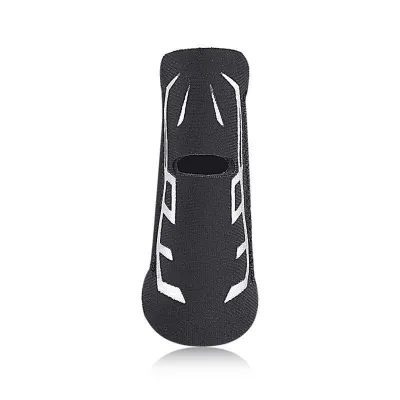
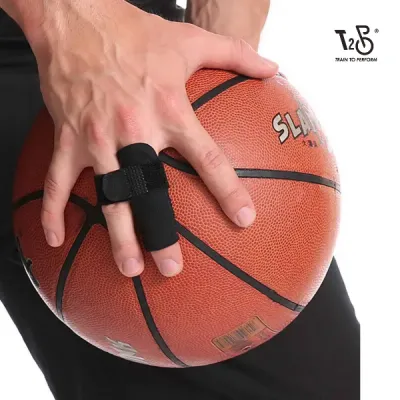
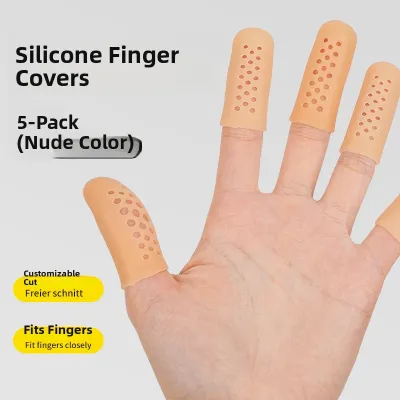
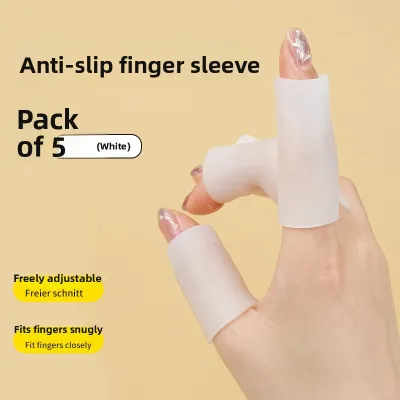
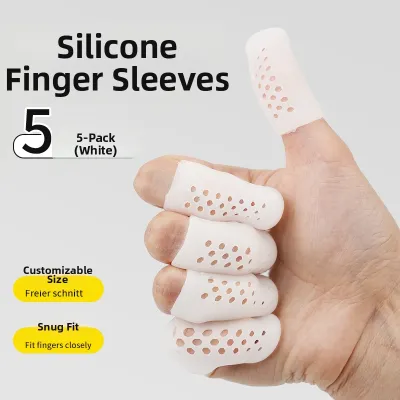
Prices are valid at publication and may change. Please refer to the product page for the latest price.
Volleyball introduces a different set of mechanical challenges, primarily centered around high-velocity ball impact during blocking and setting. When blocking a spiked ball, your fingers must absorb massive kinetic energy while resisting extreme dorsal and lateral forces. Without adequate joint stabilization and targeted tip protection, the risk of joint subluxation or ligament tears increases dramatically. Conversely, setting requires precise, soft-tissue contact, meaning your fingers need localized stability that does not completely isolate your tactile awareness.
Weightlifting represents the opposite end of the spectrum, where the threat is not a flying ball but constant, heavy friction and shear forces. As you grip a rotating steel barbell, the aggressive metal knurling grinds against your skin, leading to painful callus tears, blisters, and minor joint strain. Here, the primary need is friction control and skin protection. Weightlifters require a solution that preserves their natural grip strength and tactile feedback, as any bulk can compromise safety during heavy lifts.
Because protection levels and flexibility requirements inherently conflict, you cannot rely on a single universal guard. A thick, padded sleeve that excels at absorbing volleyball impacts will ruin a basketball player’s shooting release and make it impossible for a weightlifter to wrap their fingers securely around a barbell. Understanding these distinct demands is the first step toward choosing the right gear.
Choosing a Finger Guard for Basketball: Flexibility and Jam Prevention
For basketball players, the core objective is protecting the proximal interphalangeal (PIP) joints from jamming and lateral deviations while maintaining a natural release on shots and precise control when dribbling. If a guard is too rigid, it alters your shooting mechanics and limits your ability to secure rebounds cleanly. The goal is to find a low-profile solution that provides structural support only when the finger is pushed beyond its normal range of motion.

Suitable Guard Types
- Buddy Taping: This classic method involves using high-quality athletic tape to bind an injured finger to a healthy adjacent finger. This provides excellent lateral support and prevents hyperextension while allowing the fingers to flex forward together for catching and shooting.
- Lightweight Compression Sleeves: Often made of elastic nylon or spandex, these sleeves offer mild compression that helps manage swelling and increases proprioception (your brain's awareness of your joint position). Some advanced models feature integrated silicone gel pads or thin, flexible side stays that offer extra lateral stability.
- Low-Profile Stay Guards: These specialized guards feature thin, flexible plastic or spring-steel stays running along the sides of the finger. They permit normal forward bending but lock up to prevent the finger from bending sideways or hyperextending backward.
Material Considerations
When playing in warm environments, such as Singapore’s humid outdoor courts or indoor sports halls, sweat accumulation is a major concern. Look for breathable, moisture-wicking synthetic blends like nylon and elastane that dry quickly. Avoid thick, heavy neoprene, which traps heat and sweat, causing the guard to slip down your finger during intense play. The material over the fingertip pad must be non-existent or exceptionally thin to preserve your tactile connection with the ball’s leather surface.
Evaluation Checklist
- Flexibility: Verify that you can make a tight fist without feeling excessive resistance from the guard.
- Tactile Sensitivity: Ensure your fingertip pad remains exposed or covered only by a ultra-thin, high-grip material.
- Lateral Resistance: Press the side of your protected finger; the guard should noticeably resist sideways bending.
- Secure Fit: Perform a few rapid dribbling and catching motions to confirm the guard does not slide off when wet with sweat.
Choosing a Finger Guard for Volleyball: Impact Absorption and Joint Stability
Volleyball demands a high level of structural protection because of the sheer force of the ball hitting an outstretched hand. When blocking a spike, your fingers act as a barrier against a ball traveling at high speeds. The primary goal of a volleyball finger guard is to dissipate this kinetic energy and stabilize the joints against sudden, violent hyperextension.
Suitable Guard Types
- Splint-Style Guards: These guards utilize rigid or semi-rigid aluminum or plastic stays positioned along the back or sides of the finger. They act as mechanical braces, preventing the joints from bending backward under heavy impact while allowing a safe degree of forward flexion.
- Padded Fingertip Protectors: Designed specifically for blockers, these guards feature dense foam padding over the fingertips and distal joints to absorb shock and protect against direct ball impacts.
- Heavy-Duty Taping Systems: Utilizing rigid, non-elastic strapping tape in specific patterns (such as the "X" tape job over the joint) provides customized joint stabilization that can be adjusted for tightness and placement.
Material Considerations
Shock absorption requires materials that can deform under sudden impact and quickly return to their original shape. Look for guards lined with high-density Ethylene-Vinyl Acetate (EVA) foam or thick, medical-grade neoprene. These materials cushion the joints against hard-driven balls. Additionally, look for guards with secure, adjustable strap systems—such as high-tensile hook-and-loop closures—to ensure the brace remains firmly anchored to your hand during rapid overhead blocking motions.
Balancing Stability and Flexion
While maximum stability is crucial for blocking at the net, you must balance this with the flexibility required for setting and passing. If your fingers are locked in completely rigid splints, you will struggle to cushion the ball during a set, resulting in poor ball control or double-contact violations. If you play as a setter, prioritize flexible compression sleeves with targeted silicone reinforcement. If you play primarily as a middle blocker, opt for the structural security of semi-rigid splint guards on your most vulnerable fingers.
Choosing a Finger Guard for Weightlifting: Grip Preservation and Friction Control
In weightlifting, powerlifting, and functional fitness, finger guards serve a completely different purpose. You are not defending against an external impact; instead, you are protecting your skin and minor joints from the aggressive knurling of a steel barbell. The core need is to prevent painful blisters, friction burns, and callus tears while preserving your grip strength and tactile connection to the bar.
Suitable Guard Types
- Minimalist Finger Sleeves: These are ultra-thin, highly elastic sleeves made of cotton, nylon, or silicone. They slide over individual fingers to act as a second skin, absorbing friction without adding bulk.
- High-Adhesion Athletic Tape: Often referred to as weightlifting tape, this is a flexible, tearable cotton tape coated with a strong, sweat-resistant adhesive. It is wrapped tightly around the thumbs and fingers, particularly when utilizing the hook grip (where the thumb is tucked under the fingers).
- Gymnastic-Style Grips: These are leather or synthetic palm protectors that loop around the fingers and drape down the palm, protecting the base of the fingers where calluses commonly form and tear during pulling movements.
Material Considerations
Weightlifting guards must utilize durable, high-friction materials. Suede, leather, and specialized textured synthetics provide excellent grip against steel barbells. The overall profile must be exceptionally thin. Thick materials increase the effective diameter of the barbell, which mechanically reduces your grip strength and makes it significantly harder to hold onto heavy loads during deadlifts, cleans, or snatches.
Safety Warning Against Rigid Braces
Never use thick, padded, or rigid joint braces designed for ball sports while lifting weights. These braces prevent your fingers from wrapping completely around the barbell, compromising your grip security. If your hand cannot close fully, the bar can easily slip out of your grasp mid-lift, presenting a severe safety hazard to your head, chest, and limbs. Furthermore, rigid stays can press painfully into your joints under heavy loads, potentially causing structural damage to the delicate bones of your hand.
Cross-Sport Compatibility: Can One Guard Do It All?
If you participate in multiple sports, you might wonder if a single finger guard can serve all your needs. While some basic options offer minor cross-sport utility, specialized activities generally require dedicated gear.
Universal Options
Basic neoprene compression sleeves and standard, high-quality athletic tape are the closest options to a universal solution. A simple roll of rigid athletic tape can be adapted for buddy taping in basketball, joint stabilization in volleyball, or thumb protection in weightlifting. Similarly, a basic elastic sleeve provides mild warmth, compression, and skin protection that can be useful across all three activities for minor swelling or general joint support.
Limitations of Crossover Use
However, the limits of crossover use quickly become apparent when dealing with specialized gear. A rigid, aluminum-stay splint designed to protect a volleyball blocker from a dislocated finger is completely unusable in weightlifting because it prevents you from gripping the barbell safely. That same rigid splint will also ruin a basketball player’s shooting release and dribbling control. Conversely, the thin, flexible tape wrap used by weightlifters offers virtually no protection against the high-impact joint jamming forces encountered at the volleyball net or on the basketball court.
Guard Selection Decision Matrix
To help you decide whether to invest in sport-specific gear or stick with a generic option, consider the following decision framework:
- Choose a Generic Compression Sleeve or Tape if you play casually across multiple sports, have no history of moderate-to-severe finger injuries, and only require mild skin protection, warmth, or psychological support.
- Choose a Basketball-Specific Guard (Low-Profile Stays/Buddy Tape) if you play competitive basketball, are recovering from a jammed finger or ligament sprain, and must maintain shooting precision.
- Choose a Volleyball-Specific Guard (Rigid Splints/Padded Guards) if you play at the net frequently, block high-velocity spikes, or are returning to play after a joint dislocation or severe hyperextension injury.
- Choose a Weightlifting-Specific Guard (Flexible Tape/Ultra-Thin Sleeves) if you lift heavy weights regularly, utilize the hook grip, suffer from frequent callus tears, and require uncompromised barbell control.
Sizing, Fit, and Safety Guidelines for Finger Guards
To ensure your finger guard provides effective protection without causing secondary issues, you must select the correct size and fit it properly. An ill-fitting guard can slip off during play, fail to protect your joints, or restrict blood circulation.
How to Measure for a Finger Guard
- Measure Circumference: Wrap a flexible tape measure or a piece of string around the widest part of the target finger joint (usually the PIP joint). Mark the string and measure the length against a metric ruler in millimeters.
- Measure Length: Measure from the base of your finger to the tip to ensure the guard will not be too long and interfere with your hand's natural movement.
- Consult the Size Chart: Compare your measurements to the manufacturer's specific sizing chart, as sizing standards vary significantly between brands.
The "Fit Check" Protocol
Once you put the finger guard on, perform a comprehensive fit check before starting your activity. The guard should feel snug and secure, remaining firmly in place when you shake your hand vigorously. However, it must not restrict your blood circulation.
Check your fingertip for signs of restricted blood flow, such as numbness, a tingling “pins and needles” sensation, or the skin turning pale or blue. If you experience any of these symptoms, remove the guard immediately and choose a larger size or loosen the straps.
Safety Boundaries and Stop Conditions
It is vital to understand that finger guards are designed for joint support, friction management, and minor injury protection; they cannot replace proper physical conditioning, technique, or professional medical evaluation.
If your finger is visibly deformed, completely immobile, highly unstable, or causing severe, throbbing pain, do not attempt to self-treat with a finger guard. These symptoms point to a severe injury, such as a complete ligament tear, tendon rupture, or bone fracture. In these scenarios, stop all athletic activity immediately, do not apply a guard, and consult a qualified medical professional for a proper diagnosis.
Care and Maintenance
Because finger guards are exposed to heavy sweat and dirt, they can quickly become breeding grounds for bacteria, leading to skin irritation or unpleasant odors. Wash reusable fabric and neoprene guards regularly by hand in warm, soapy water, and allow them to air dry completely before your next session. If you use athletic tape, always apply fresh tape for every workout to maintain optimal hygiene and adhesive strength.
Community discussion
Share your experience or ask a question. Comments are reviewed before publication.