
Selecting the right fishing hook is one of the most critical decisions you will make as a beginner angler. The hook is your direct connection to the fish, and using the wrong type or size can lead to missed bites, lost gear, or unnecessary harm to the fish. To choose correctly, you must match the hook’s design to your target species’ mouth anatomy, feeding behavior, and the bait you plan to use.
For active bait fishing where you strike when you feel a bite, a classic J-hook is highly effective. If you prefer passive bait fishing where the fish hooks itself, or if you plan to practice catch-and-release, a circle hook is the safest and most efficient option. In Singapore’s diverse fishing environments—ranging from urban reservoirs to saltwater payponds and offshore reefs—understanding these fundamentals will dramatically improve your catch rate.
Understanding Fishing Hook Anatomy and Sizing Systems
To navigate the walls of tackle shops in Singapore, you must first understand how a fishing hook is constructed. Every hook consists of five primary components: the eye, the shank, the bend, the point, and the barb. The eye is the loop at the top where you tie your fishing line or leader. The shank is the straight section of wire extending down from the eye, which can vary in length depending on the bait you use.
Products mentioned in this guide
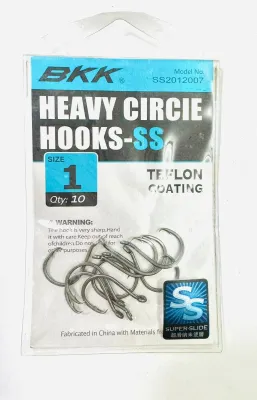
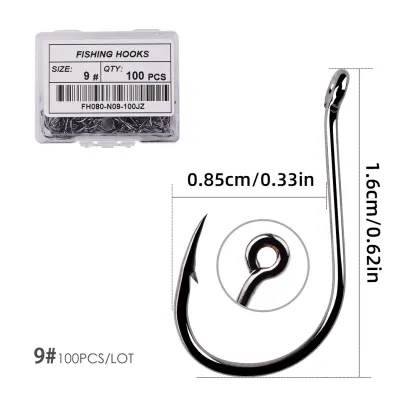
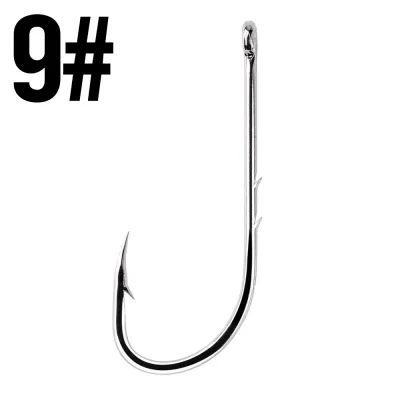
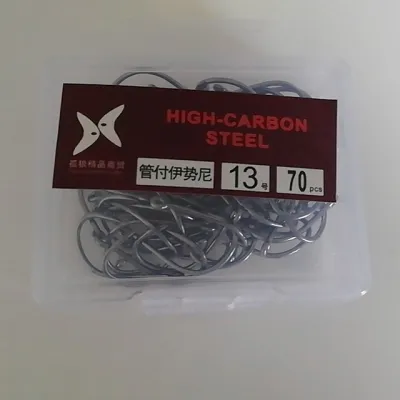
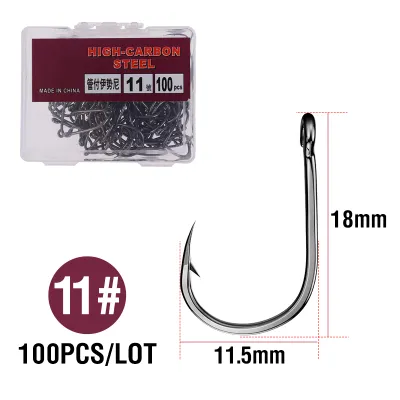
Prices are valid at publication and may change. Please refer to the product page for the latest price.
Below the shank lies the bend, which is the curved portion of the hook that determines its overall shape and depth. The bend leads directly to the point, which is the sharp tip designed to penetrate the fish’s mouth. Finally, the barb is the small, backward-facing spike located just below the point. The barb’s sole purpose is to prevent the hook from slipping back out once it has penetrated the tissue, though it also makes unhooking more challenging.
Understanding hook sizes can be incredibly confusing for beginners because the sizing system runs in two opposite directions. Standard hook sizes are represented by whole numbers, such as size 1, size 6, or size 12. In this standard system, the larger the number, the smaller the physical size of the hook. For example, a tiny size 10 hook is perfect for small baitfish, while a size 1 hook is much larger and suited for medium-sized targets.
Once hooks grow larger than size 1, they transition into the “aught” or “zero” sizing system, written with a slash and a zero (e.g., 1/0, 2/0, 5/0). In the aught system, the logic flips: the larger the number before the slash, the larger and heavier the hook. A 5/0 hook is significantly larger and thicker than a 1/0 hook, making it suitable for powerful saltwater predators.
Because there is no universal industry standard, a size 2 hook from one brand may look completely different from a size 2 hook from another manufacturer. Always inspect the hook physically or check the millimeter measurements on the packaging to ensure it matches your intended bait and target fish.
Common Hook Types Every Beginner Should Know
The J-hook is the traditional, classic design that most people picture when they think of a fishing hook. It features a straight shank that curves into a sharp point parallel to the shank, forming a distinct “J” shape. J-hooks are highly versatile and are best used for active fishing styles where you hold the rod, feel the bite, and manually set the hook with a swift, upward sweep of the rod.

In contrast, circle hooks feature a distinct design where the sharp point is curved sharply inward, pointing perpendicularly back toward the shank. This geometry prevents the hook from catching on flat surfaces, meaning it will not hook the fish if it is swallowed into the throat or stomach. Instead, as the fish swims away with the bait, the hook slides safely up the digestive tract and catches firmly in the corner of the mouth. This makes circle hooks the gold standard for passive bait fishing and sustainable catch-and-release practices.
Baitholder hooks are specialized variations of the J-hook, easily identified by one or two small, backward-facing barbs sliced directly into the back of the shank. These extra barbs are designed to keep soft, slippery baits—such as live prawns, earthworms, or cut fish fillets—firmly threaded along the shank. This prevents the bait from bunching up at the bend or sliding down and masking the point during a cast or when facing strong currents.
Treble hooks consist of three individual hooks forged together onto a single eyelet and shank, spaced evenly at 120-degree angles. They are most commonly found pre-installed on artificial lures like minnows, poppers, and metal jigs. While treble hooks offer an incredibly high hook-up ratio because they present points from multiple angles, they require extreme caution. They snag easily on underwater structures like rocks and weeds, and they present a higher risk of accidental self-injury to the angler during handling.
Matching Hooks to Popular Fish Species in Singapore
Selecting the right hook requires matching the hook’s physical characteristics to the specific mouth structure and feeding habits of the fish you want to catch. In Singapore’s local waters, you will encounter vastly different species depending on whether you are fishing in freshwater reservoirs, coastal estuaries, or offshore reefs.
Tilapia are abundant in Singapore’s freshwater public fishing areas and urban ponds. These fish have relatively small, delicate mouths and are notorious for their cautious, nibbling feeding style. To target tilapia successfully, beginners should use small J-hooks or baitholder hooks in standard sizes 6 to 10. These small hooks can be easily concealed inside small baits like bread, dough, or earthworms, allowing the fish to inhale the entire offering without feeling the hard metal.
Barramundi, commonly referred to as seabass in local payponds and estuaries, present a completely different challenge. They are aggressive predators that feed by rapidly opening their massive mouths to inhale prey, followed by violent head-shaking jumps to shake off hooks. Because barramundi have hard, bony jaws, you need a strong J-hook or circle hook in sizes 2/0 to 5/0. The hook must have a wide gap to clear the thick lip and a strong wire gauge to prevent bending under the immense pressure of the fight.
Groupers and snappers are the prized targets of Singapore’s offshore southern islands and deep-water reef structures. These bottom-dwelling predators possess incredibly powerful jaws, rows of sharp teeth, and an immediate instinct to dive back into rocky crevices once hooked. To stop them, you must use heavy-duty, forged circle hooks or thick-wire J-hooks in sizes 5/0 to 8/0. These hooks are designed to withstand massive crushing force and prevent the line from rubbing against the fish’s teeth or sharp gill covers.
A fundamental rule for all species is maintaining the correct bait-to-hook ratio. Your hook must be large enough to leave the point exposed for a solid hookset, yet small enough that it does not weigh down or kill your live bait. A hook that is too large will cause live prawns to sink unnaturally or die quickly, which will immediately deter wary fish from biting.
Step-by-Step Guide to Baiting and Setting the Hook
Properly rigging your hook and executing the hookset are skills that require practice but yield immediate results. When baiting your hook, the method should match the bait type. For live prawns—a highly popular bait in Singapore—gently thread the hook point through the tail segment or carefully under the horn on the head, avoiding the dark spot which is the brain. For soft baits like earthworms or fish strips, thread the hook through the body multiple times, ensuring the bait sits straight along the shank while leaving the sharp point slightly exposed to ensure easy penetration.
To secure your hook to your leader line, you must use reliable knots that maintain high breaking strength. The Improved Clinch Knot is an excellent, beginner-friendly choice for monofilament and fluorocarbon lines, wrapping the line around itself to create a secure self-locking knot. Alternatively, the Palomar Knot is incredibly simple to tie and is widely considered the strongest knot for braided lines, ensuring your hook always sits perfectly inline with your leader.
The physical action of setting the hook depends entirely on the type of hook you have tied on. If you are using a J-hook, you must actively drive the point into the fish’s mouth. Wait for a steady, continuous pull on your line, lower your rod tip slightly to take up any slack, and then execute a firm, swift upward sweep of the rod.
If you are using a circle hook, you must never strike or sweep the rod upward. Doing so will simply pull the hook straight out of the fish’s open mouth. Instead, when you feel a fish take the bait, keep your rod tip low and slowly wind your reel to tighten the line. As the fish swims away, the tension will pull the hook to the corner of its mouth, allowing the curved point to hook the fish automatically.
Safe Handling and Unhooking Practices
Angler safety and responsible fish welfare should always be top priorities, especially when handling sharp hooks. Keep all unused hooks secured inside your tackle box, and never leave loose hooks lying on the boat deck, jetty floor, or in your pockets. It only takes a sudden wave or a careless step to drive a hook deep into your skin.
When unhooking a fish, always use long-nose pliers, forceps, or a dedicated hook remover tool rather than your bare hands. This keeps your fingers safely away from sharp teeth, thrashing gill covers, and the hook points themselves. Steady the fish gently with a wet towel to preserve its protective slime coat before attempting to extract the hook.
If a fish has swallowed a J-hook deeply into its throat or stomach—a scenario known as gut-hooking—do not attempt to pull or tear the hook out. Forcing the hook out will cause fatal internal bleeding. Instead, cut the leader line as close to the hook eye as possible and release the fish. Over time, the fish’s natural digestive acids can break down the hook, or the hook may rust out naturally, giving the fish a much higher chance of survival.
To make unhooking safer and faster, consider using pliers to crush the barbs flat on your hooks, or purchase purpose-made barbless hooks. Crushing the barb makes it incredibly easy to slide the hook out of both fish tissue and accidental snags on your clothing or skin, without significantly reducing your catch rate if you maintain constant line tension during the fight.
Frequently Asked Questions (FAQ)
How do I prevent my fishing hooks from rusting?
Singapore’s high humidity and saltwater environments accelerate metal corrosion rapidly. To protect your gear, always rinse your hooks, lures, and tackle boxes with fresh water after every outing. Dry them thoroughly with a towel before storing them. Placing a few silica gel packets inside your tackle trays will absorb residual moisture, while applying a light mist of multi-purpose oil can create a protective barrier for long-term storage.
Should I use barbed or barbless hooks as a beginner?
Both options have clear trade-offs for novice anglers. Barbed hooks are highly effective at keeping fish pinned, which helps prevent lost catches if you struggle with maintaining constant line tension. However, barbless hooks or crushed-barb hooks are strongly recommended for beginners because they are infinitely safer. If you accidentally hook yourself, your clothing, or a landing net, a barbless hook can be slid out instantly without causing painful tissue damage.
Community discussion
Share your experience or ask a question. Comments are reviewed before publication.