
To fit a fitness bench into a typical Singapore HDB flat without overcrowding your home, you need a model that balances a compact storage footprint with a safe, functional workout area. For most HDB living rooms or spare bedrooms, the ideal choice is a folding adjustable bench. When active, it should feature a footprint of approximately 120 cm to 140 cm in length and 30 cm to 45 cm in width. When folded, it must collapse to a thickness of 20 cm or less, allowing you to slide it under a bed frame or tuck it into a household shelter.
Choosing the right size is not just about finding a piece of equipment that physically fits inside your walls. It is about ensuring you have enough clearance to perform exercises safely without scraping your knuckles against a wardrobe or knocking over a living room side table. By evaluating your apartment’s layout, understanding the structural limits of compact designs, and measuring your space with precision, you can build a highly effective home gym that disappears when your workout is over.
Evaluating Your HDB Space and Bench Footprints
When planning a home workout setup in a compact apartment, you must distinguish between two entirely different sets of dimensions: the static storage footprint and the dynamic workout footprint. The static footprint is the physical space the bench occupies when it is not in use. For a non-folding model, this is a permanent commitment of floor space. The dynamic footprint, however, represents the total area required to perform exercises safely and comfortably. This dynamic zone is always significantly larger than the bench itself.
Products mentioned in this guide
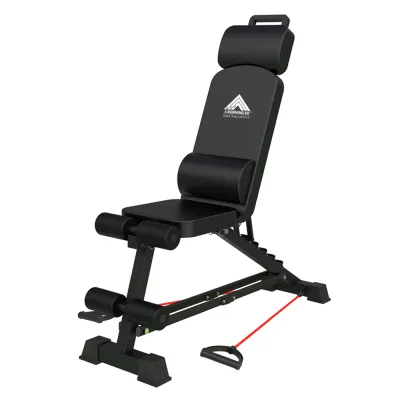
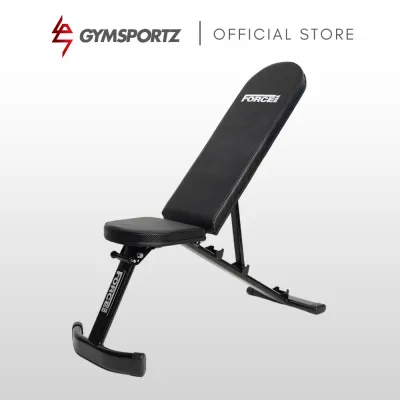
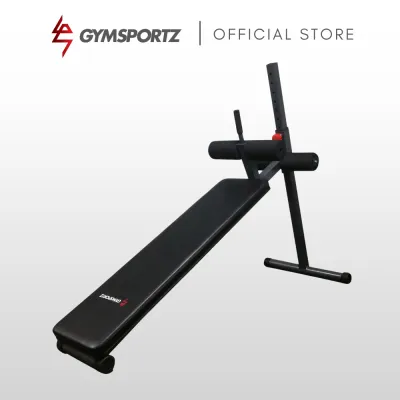
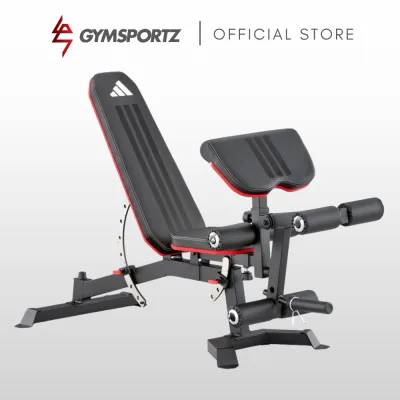
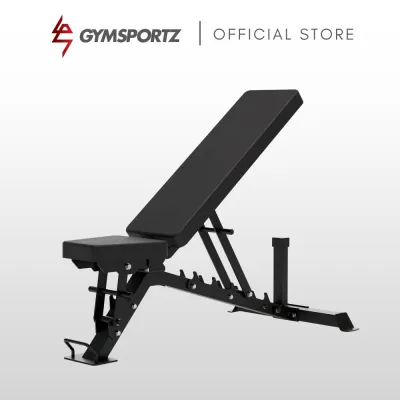
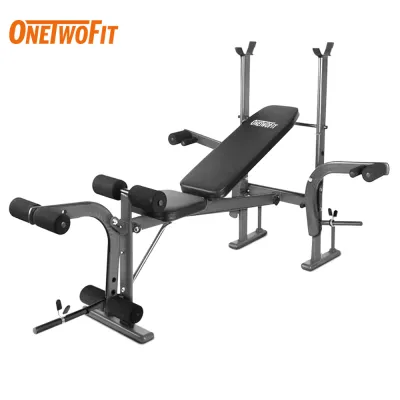
Prices are valid at publication and may change. Please refer to the product page for the latest price.
To calculate your dynamic footprint, you must account for your body’s natural movement patterns. During a dumbbell chest press, your elbows flare out wide, requiring an extra 30 cm to 50 cm of lateral clearance on each side of the bench pad. Similarly, exercises like the seated shoulder press or dumbbell rows require space for your arms to travel through their full range of motion without hitting nearby furniture. You must also consider head and foot overhang; if you are tall, your head or feet may extend past the physical ends of the bench pad during lying exercises.
Instead of relying on the generic room dimensions provided in your HDB floor plan, you must measure the clear floor area of your designated workout zone. Built-in wardrobes, TV consoles, sofas, and dining tables quickly eat into a room’s usable square footage. Identify a specific zone—such as a multi-purpose study room or a clear corridor in your living room—where you can consistently set up your bench. Ensure this zone is free of low-hanging light fixtures and is situated on a level surface to prevent the bench from rocking during heavy lifts.
Comparing Fitness Bench Types for Compact Spaces
Different fitness bench designs offer distinct spatial advantages and functional limitations. Selecting the right type requires balancing your training goals against the physical constraints of your apartment.

Flat Benches
Flat benches are the most basic and space-efficient option available. They typically feature a simple, solid rectangular frame with a single padded surface. Because they lack complex adjustment hinges, brackets, or moving parts, flat benches are exceptionally lightweight and boast the lowest profile of any bench type. A standard flat bench measures roughly 110 cm to 120 cm in length and sits about 40 cm to 45 cm off the ground.
Their lightweight construction makes them incredibly easy to maneuver. When your workout is complete, you can easily tip a flat bench vertically to stand against a wall, slide it behind a wardrobe, or tuck it into a utility closet. The primary trade-off is functional versatility. Because the pad cannot tilt, you are limited to flat exercises like flat dumbbell presses, bench dips, and seated shoulder presses. If your fitness routine relies heavily on incline or decline angles to target different muscle groups, a flat bench will not suffice.
Adjustable FID (Flat/Incline/Decline) Benches
Adjustable FID benches offer the ultimate in exercise variety, allowing you to transition from flat presses to incline and decline movements. To support these various angles safely under heavy loads, manufacturers must build these benches with robust steel adjustment spines, heavy-duty hinges, and wider base stabilizers. Consequently, an FID bench is naturally bulkier and heavier than a flat bench, often weighing between 20 kg and 35 kg.
An active FID bench typically requires a larger floor footprint to maintain stability when the backrest is tilted backward or forward. The base stabilizers often extend wider—up to 60 cm—to prevent any lateral tipping. While they occupy more permanent space and are harder to move around, they eliminate the need to purchase multiple specialized pieces of equipment. If you choose an FID bench for an HDB flat, look for a model with integrated transport wheels on the rear stabilizer so you can roll it out of the way without straining your back or scratching your flooring.
Folding and Compact Benches
Folding benches are engineered specifically for small-space living, making them highly popular for HDB apartments. These models feature quick-release locking pins or hinge systems that allow the legs and backrest to fold completely flat against the main frame. When collapsed, a high-quality folding bench can shrink to a thickness of just 15 cm to 20 cm, making it incredibly easy to store out of sight.
When shopping for a folding model, you must verify the folded dimensions rather than just the active dimensions. Pay close attention to any protruding adjustment knobs, wheels, or foot anchors, as these can add unexpected height to the folded profile and prevent the bench from sliding under low-clearance furniture. Additionally, because folding benches rely on hinges, you must inspect the locking mechanisms to ensure they are secure and wobble-free before attempting any heavy lifts.
Key Dimensions to Check Before Buying
To ensure your fitness bench fits both your physical body and your apartment’s layout, you must verify several critical measurements before making a purchase. Avoid buying a bench based on generic marketing labels; instead, compare the manufacturer’s spec sheet against your personal requirements.
- Length: The overall length of the bench pad must accommodate your height. For a safe and comfortable workout, the pad should support your head down to your tailbone. If you are 180 cm tall, look for a bench with a total pad length of at least 115 cm to 120 cm. Additionally, ensure you have at least 30 cm of clear wall clearance at both ends of the bench to prevent your head or feet from making contact with walls or furniture during your exercises.
- Width: The width of the bench pad should range between 25 cm and 30 cm. A pad that is too wide will restrict your shoulder blades during chest presses, while a pad that is too narrow will compromise your stability. Meanwhile, the base stabilizer width (the metal feet on the floor) should be at least 40 cm to 50 cm. This wide base is essential for preventing the bench from rocking or tipping sideways when you sit on the edge or lift heavy weights.
- Pad Height: The standard height for a fitness bench is between 42 cm and 45 cm from the floor to the top of the pad. This height is designed to align with the average lower leg length, allowing your feet to plant flat on the floor. Proper foot placement is crucial for maintaining a stable spinal arch and generating leg drive during heavy presses. If you are shorter, a bench height of 40 cm may be more comfortable; if the bench is too tall, your heels will lift off the ground, compromising your stability.
- Folded Thickness: If you plan to store your bench in a tight gap—such as under a bed, inside a wardrobe, or behind a door—measure that specific clearance first. Many folding benches fold flat but still have wheels or adjustment pins that protrude. Ensure your storage gap has at least 2 cm to 3 cm of extra clearance beyond the bench's maximum folded thickness to avoid scraping your walls or furniture.
- Weight Capacity and Structural Specifications: Do not assume that a smaller, more compact bench is inherently weak, nor should you assume a bulky bench is automatically durable. Always check the manufacturer's certified maximum weight capacity. This rating must include your body weight plus the maximum weight of the dumbbells or barbells you plan to lift. For safe home use, look for a bench rated for at least 250 kg, constructed from high-tensile steel (such as 11-gauge or 12-gauge steel), and featuring thick, high-density foam padding that will not bottom out under pressure.
Measuring Your Space and Planning the Layout
Before ordering your fitness bench, take the time to physically map out your workout space. This proactive step prevents the frustration of unboxing a bench only to find it blocks a critical walkway or collides with your furniture.
First, clear the designated workout area of all temporary items. Use a tape measure to mark out the exact length and width of the bench’s base stabilizers on the floor. For an accurate visual representation, you can outline this footprint using painter’s tape or lay down sheets of newspaper cut to the bench’s dimensions. This step helps you visualize how much physical floor space the bench will occupy when fully assembled.
Next, you must factor in safety margins. Draw an imaginary boundary line at least 50 cm wide around the entire perimeter of your bench footprint. This buffer zone is critical for several reasons: it gives you room to step on and off the bench safely, provides clearance for your arms and dumbbells during wide movements, and ensures you can load weight plates onto a barbell without hitting adjacent walls. If your workout area is next to a wardrobe, ensure the buffer zone allows the wardrobe doors to open fully in case of an emergency.
Finally, plan how you will integrate the bench into your home’s storage flow. If you are using a foldable model, identify a nearby storage nook to minimize the distance you have to carry the equipment. Utilizing vertical space is an excellent option for compact HDB flats. If you store your bench vertically against a wall or inside a household shelter, secure it with a heavy-duty wall strap or bungee cord to prevent it from accidentally tipping over, especially if you have young children or pets in the home.
Common Sizing and Placement Mistakes to Avoid
Many homeowners make simple, avoidable mistakes when selecting and placing a fitness bench, resulting in a cramped workout environment or safety hazards.
One of the most common errors is focusing exclusively on the bench’s folded dimensions while ignoring its expanded, active footprint. A bench may fold down to a remarkably thin profile, but if it requires a 150 cm clear runway to unfold and lock into place, it may still be too large for a small bedroom. Always verify that your room has enough clear floor space to accommodate the bench in its fully extended state, including the necessary safety buffer zones.
Another frequent oversight is ignoring the width of the base stabilizers. In an effort to save space, some buyers opt for ultra-narrow benches with base widths of 35 cm or less. While these models take up very little floor space, they are prone to tipping sideways during unilateral exercises, such as single-arm dumbbell rows or bench step-ups. Prioritize safety by choosing a bench with a stable, wide base, even if it means clearing a slightly larger workout zone.
Ceiling height clearance is another critical factor that is often forgotten. Standard HDB ceiling heights are typically around 2.6 meters. If you are tall and plan to perform seated overhead shoulder presses, your dumbbells can easily come into contact with low-hanging ceiling fans or light fixtures. Always position your bench well away from the rotational path of any ceiling fans, and perform a dry run of your overhead movements with light weights to verify your vertical clearance.
Lastly, avoid buying a heavy, commercial-grade bench if you do not have a dedicated, permanent workout room. Commercial benches often weigh over 40 kg and lack folding mechanisms. If you have to drag a heavy, cumbersome bench out of a closet and across your living room every time you want to exercise, the sheer physical effort will eventually discourage you from working out. For multi-purpose HDB spaces, prioritize lightweight, wheel-equipped, or folding designs that make setup and teardown effortless.
Frequently Asked Questions (FAQ)
Can I store a folding fitness bench under a standard HDB bed?
Yes, many folding fitness benches can be stored under a standard HDB bed frame, but you must measure your specific clearance height first. Most standard platform or framed beds in Singapore have an under-bed clearance of 15 cm to 22 cm. Measure the distance from the floor to the lowest point of your bed frame, taking note of any center support legs. Compare this to the bench’s folded thickness, and ensure you account for any protruding adjustment knobs, foot rollers, or transport wheels that might snag on the bed frame during storage.
Do compact or folding benches compromise stability for heavy lifting?
High-quality folding benches do not compromise stability, but cheaper, poorly constructed models can wobble under heavy loads. A well-engineered folding bench uses heavy-gauge steel, reinforced hinges, and secure locking pins to deliver a solid lifting platform that can support upwards of 250 kg to 300 kg. To ensure safety, always check the manufacturer’s certified weight rating and prioritize models with wider base stabilizers. If you notice any lateral flexing, wobbling, or loose joints during a light test, stop using the bench immediately and verify that all locking pins are fully engaged.
Community discussion
Share your experience or ask a question. Comments are reviewed before publication.