
Selecting the right flipbelt bottle size requires balancing your anticipated run duration with the physical weight you are comfortable carrying around your waist. While a running belt is designed to hold items snugly against your body, carrying water introduces dynamic weight that shifts with every stride. Choosing a capacity that is too small can leave you dehydrated, while selecting a bottle that is too large can cause unnecessary bouncing and discomfort.
To make the right choice, you must look beyond the distance on your training plan. Your individual pace, local environmental conditions, and personal sweat rate all dictate how much fluid you actually need to carry. By evaluating these factors systematically, you can select a bottle setup that keeps you hydrated without compromising your running form.
Estimating Hydration Needs Based on Run Distance and Duration
Distance is a convenient metric for planning runs, but it is actually a proxy for time on feet. A ten-kilometer run might take an experienced athlete forty minutes, whereas a beginner or trail runner might require over eighty minutes to cover the same distance. Because your body loses fluids continuously through sweat and respiration, your hydration strategy must be calculated based on duration rather than kilometers alone.
Products mentioned in this guide
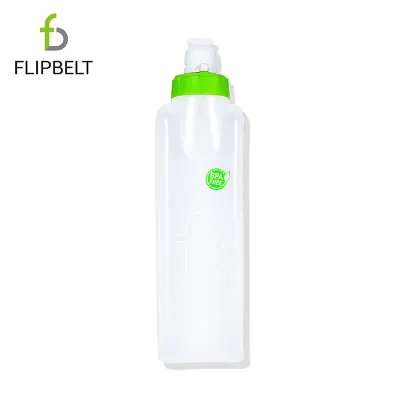
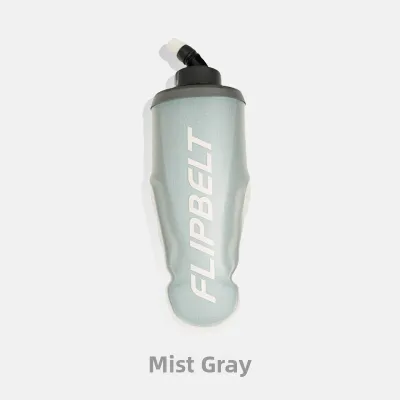
Prices are valid at publication and may change. Please refer to the product page for the latest price.
For shorter efforts lasting under forty-five minutes, your body typically relies on pre-run hydration. During these brief sessions, the physiological demand for immediate fluid replacement is relatively low, meaning you can often run comfortably without carrying water. However, once your time on feet exceeds one hour, baseline fluid loss accelerates, making consistent hydration essential to maintain performance and prevent cardiovascular strain.
To establish a precise hydration plan, consider consulting general sports nutrition guidelines or a qualified sports dietitian. These professionals can help you calculate a personalized fluid replacement formula that accounts for your unique physiology. Avoid relying on generic online calculators that prescribe rigid milliliter-per-hour thresholds, as these do not account for individual metabolic rates or running efficiency.
Your running pace also directly influences your thermal load and sweat rate. Running at a higher intensity increases your core body temperature, which triggers more profuse sweating to facilitate cooling. Consequently, a fast-paced five-kilometer tempo run in warm weather might demand more immediate post-run hydration than a slow, easy eight-kilometer recovery run in cooler conditions.
Matching FlipBelt Bottle Capacities to Your Typical Runs
FlipBelt bottles are specifically designed with a curved profile to contour to your waist, minimizing movement when tucked into the belt’s pockets. These bottles are typically available in several sizes, most commonly around 170ml (6oz) and 250ml (8.5oz). Matching these capacities to your typical training distances is the first step in building an ergonomic hydration system.

Smaller capacity bottles, such as the 170ml option, are highly streamlined and lightweight. When filled, a 170ml bottle adds minimal bulk, making it virtually unnoticeable against your lower back or hip. This size is ideal for short-to-medium distances, such as five-kilometer to ten-kilometer runs, or any session lasting under an hour where you simply need a few sips of water or a diluted energy gel solution to keep your mouth moist.
Larger capacity bottles, such as the 250ml option, are better suited for longer training runs, half-marathon preparation, or extended trail sessions. The extra volume provides a more substantial safety net when you are far from water fountains or running for ninety minutes or more. However, because water weighs approximately one gram per milliliter, a fully loaded 250ml bottle adds significant weight to your waist, requiring a secure belt fit to prevent movement.
Before purchasing, always check the exact specifications on the product label or the official brand store, as available bottle dimensions, cap designs, and materials may vary over time. Ensuring your bottle is compatible with your specific belt model is crucial for a secure fit.
| Run Distance Bracket | Typical Duration | Suggested FlipBelt Bottle Capacity | Primary Benefit |
|---|---|---|---|
| Short Runs (Under 5K to 8K) | Under 45 minutes | 170ml (6oz) or none | Maximum freedom of movement, zero bulk |
| Medium Runs (8K to 12K) | 45 to 90 minutes | 170ml to 250ml (8.5oz) | Balanced hydration without excessive weight |
| Long Runs (15K to Half-Marathon+) | Over 90 minutes | 250ml (8.5oz) or multiple bottles | Sustained fluid intake for endurance safety |
Disclaimer: Exact fluid requirements vary significantly based on individual sweat rates, pace, and weather conditions. Use this table as a general starting framework and adjust based on personal experience.
Adjusting for Singapore's Climate and Personal Sweat Rate
Running in Singapore’s consistently hot and humid tropical climate drastically alters your hydration requirements. High relative humidity levels prevent sweat from evaporating efficiently off your skin, which is the body’s primary method of cooling itself. Because evaporation is hindered, your body continues to produce sweat in an attempt to cool down, leading to exceptionally high fluid and electrolyte loss even during moderate runs.
To adapt your bottle choice to this environment, you should observe and calculate your personal sweat rate. You can perform a simple sweat test by weighing yourself on a digital scale immediately before and after a sixty-minute run, ensuring you dry off any excess sweat before the post-run measurement. Subtracting your post-run weight from your pre-run weight (and accounting for any water consumed during the run) provides a clear picture of your hourly fluid loss.
If your sweat test reveals that you are a heavy sweater, or if you plan to run during peak heat hours in Singapore, you will need to adjust your carrying capacity upward. This might mean opting for the larger 250ml bottle for runs where a cooler climate would only require 170ml. Alternatively, you can plan your running routes along paths with public water coolers, such as coastal park connectors, using your bottle as a portable reservoir that you refill at regular intervals.
While carrying extra fluid is vital for safety in hot climates, you must balance this need with physical comfort. Carrying too much water adds dead weight that can fatigue your core and lower back muscles over long distances. Experiment with different fluid volumes during your training to find the sweet spot where you remain adequately hydrated without feeling weighed down.
Balancing Weight, Bulk, and Belt Fit
Carrying water on your waist introduces physical forces that can disrupt your running stride if your gear is not optimized. A larger, heavier bottle places more demand on the elasticity of your running belt. If the belt is too loose or the bottle is poorly positioned, the weight will cause the belt to bounce, sag, or ride up toward your stomach, which can lead to painful chafing and distraction.
To minimize bounce, pay close attention to how you distribute weight within your belt. The most stable position for a curved bottle is typically at the small of your back, resting directly over your sacrum where pelvic movement is minimal. If you are carrying other heavy items, such as a large smartphone, keys, or energy gels, place them on the opposite side of the belt to create a balanced counterweight.
Checking the manufacturer’s sizing chart is essential before selecting both your belt and your bottle. A belt that fits perfectly when empty may feel overly tight or constricting once you slide a filled 250ml bottle into the pocket. Conversely, if you choose a belt size that is too large, it will lack the tension required to hold a heavy bottle snugly against your hips.
Before committing to your hydration setup for a major race or a challenging long run, perform a short shakeout run with a fully loaded belt. Use this brief session to check for any signs of friction, bouncing, or shifting. If you experience discomfort, try adjusting the vertical position of the belt on your hips or shifting the bottle slightly to the left or right until it feels secure.
Common Sizing Mistakes to Avoid
One of the most frequent errors runners make is overestimating their fluid needs for short, easy recovery runs. Carrying a heavy, fully filled bottle on a thirty-minute run adds unnecessary weight and increases the risk of chafing, when a simple pre-run glass of water would have sufficed. Keep your short runs light and streamlined to focus on recovery and form.
Conversely, underestimating fluid loss during long runs in high humidity can lead to early fatigue, muscle cramps, or heat exhaustion. Assuming you can run fifteen kilometers in tropical heat with only a tiny bottle of water is a safety risk. If you prefer not to carry a larger bottle, you must actively plan a route that features reliable public water sources for refills.
Another common mistake is ignoring how weight distribution affects the fit of the belt. Placing a heavy bottle directly over your hip bone can cause the hard plastic to rub against your skin, leading to bruising or raw spots. Always utilize the rear pocket for larger bottles, and ensure the curved side of the bottle matches the natural curve of your lower back.
Finally, do not rely solely on distance markers to dictate your hydration schedule. A trail run of ten kilometers over technical, muddy terrain will take significantly longer than ten kilometers on a flat, paved track. Always calculate your hydration capacity based on the estimated time you will spend exposed to the elements rather than the physical distance of the route.
Frequently Asked Questions (FAQ)
Can I carry two smaller FlipBelt bottles instead of one large one?
Yes, carrying two smaller 170ml bottles is an excellent strategy for distributing weight more evenly around your waist. By placing one bottle at the front and one at the back, you balance the load and reduce the localized pressure that a single, larger 250ml bottle might create. This dual-bottle setup also allows you to carry water in one bottle and an electrolyte or carbohydrate mix in the other, giving you more flexibility during long-distance training runs.
Do I need to carry a FlipBelt bottle for runs under 5K?
For most runners, carrying a bottle for distances under five kilometers is unnecessary, provided you have hydrated adequately before stepping out the door. However, if you are running in extreme heat, recovering from illness, or have a medical condition that requires frequent sips of water, carrying a small 170ml bottle can provide peace of mind. If you choose to run without water, ensure you have access to fluids immediately upon completing your run.
Community discussion
Share your experience or ask a question. Comments are reviewed before publication.