
Selecting the ideal foam tube density is the defining factor between an effective, rejuvenating recovery session and an agonizing experience that leaves your muscles tense and guarded. The correct firmness level acts as a bridge between your body’s current physiological state and your physical recovery goals. If a tube is too soft, it fails to penetrate the superficial layers of tissue to release deep-seated tension; if it is too firm, it triggers a protective pain response, causing muscles to contract rather than relax. Finding your ideal match requires balancing your personal pain tolerance, muscle density, and specific recovery objectives against the physical properties of different foam materials.
In Singapore’s active fitness community, where high-intensity gym training, running, and competitive sports are common, recovery tools must be selected with precision. Whether you are addressing acute tightness from heavy lifting or seeking gentle myofascial release after a long day of sedentary desk work, understanding how foam density interacts with your soft tissue is essential. By evaluating your physical needs and learning how to manipulate body weight against the roller, you can optimize your recovery routine, protect your joints, and ensure your equipment remains a safe, effective partner in your fitness journey.
Understanding Foam Tube Density and Firmness Levels
Foam density refers to the mass per unit volume of the material used to construct the tube, which directly dictates its physical firmness and how much it compresses under your body weight. Manufacturers typically utilize materials like expanded polyethylene (EPE), ethylene-vinyl acetate (EVA), or high-density expanded polypropylene (EPP) to achieve varying levels of structural resistance. When you apply your body weight to a foam tube, the material’s resistance determines the depth of pressure applied to your skeletal muscle and the overlying fascial network. A denser material yields less under pressure, concentrating the force onto a smaller, deeper surface area of your tissue.
Products mentioned in this guide
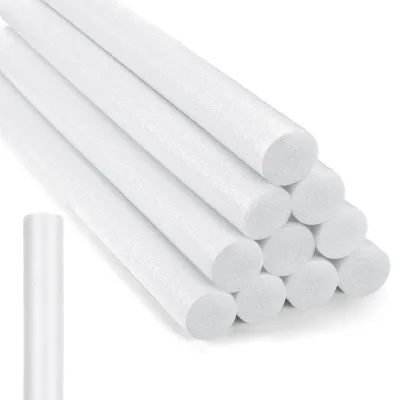
Prices are valid at publication and may change. Please refer to the product page for the latest price.
Soft-density foam tubes, often made from open-cell EPE or soft EVA, offer significant give and compress easily under light pressure. When you lie on a soft tube, the surface molds slightly around your muscle contours, distributing your body weight across a wider surface area. This wide distribution minimizes the intensity of the pressure, making it feel like a gentle, broad massage. It is highly forgiving on sensitive areas and is ideal for individuals with highly sensitive nervous systems or those recovering from intense physical fatigue where deep pressure would be counterproductive.
Medium-density foam tubes strike a balance between comfort and structural support, typically utilizing standard EVA foam. These tubes compress slightly under heavy load but retain their core cylindrical shape, allowing for a moderate depth of tissue penetration. The sensory experience is a firm but tolerable pressure that targets both the superficial fascia and the outer layers of muscle tissue. This level of firmness is highly versatile, providing enough resistance to address moderate muscle tightness without causing the involuntary muscle guarding associated with overly hard surfaces.
Firm-density foam tubes, often constructed from closed-cell EPP or featuring a rigid hollow plastic core wrapped in high-density EVA, offer virtually no give under body weight. When utilizing a firm tube, the contact area between your body and the roller remains highly concentrated, delivering deep, intense pressure directly to the underlying muscle fibers. This high-density construction is designed to bypass superficial layers and reach deep myofascial trigger points. However, because the material does not compress, the physical feedback is highly intense, requiring excellent breathing control and physical conditioning to prevent the body from tensing up in response to the pressure.
Assessing Your Pain Tolerance and Muscle Tightness
Before selecting a foam tube, conducting an honest self-assessment of your personal pain tolerance and current muscle condition is vital to prevent tissue damage and ensure consistent use. Pain tolerance during myofascial release is highly subjective and influenced by factors such as stress levels, hydration, sleep quality, and previous experience with deep tissue massage. If you find standard therapeutic pressure or firm manual massage uncomfortable, a high-density foam tube will likely cause you to hold your breath and tense your muscles, which completely defeats the purpose of self-myofascial release.

The nature of your muscle tightness also dictates the appropriate density level. Acute muscle tightness, which often occurs after an intense workout or a sudden increase in physical activity, is frequently accompanied by localized inflammation and micro-tears in the muscle fibers. Treating this acute state with an ultra-firm foam tube can exacerbate tissue damage and prolong recovery times; a soft to medium tube is far more appropriate to encourage blood flow without mechanical trauma. Conversely, chronic tightness, characterized by dense, fibrous adhesions or “knots” that have developed over months of repetitive strain or poor posture, typically requires the concentrated pressure of a medium-to-firm tube to break down the restricted fascial layers.
For beginners, starting with a soft or medium-density foam tube is highly recommended to allow your nervous system and soft tissues to adapt to the sensation of compression. Unconditioned tissue is highly sensitive to external pressure, and jumping straight to a high-density, rigid tube can lead to bruising, localized inflammation, and a negative association with recovery practices. Experienced users, athletes, or individuals with high muscle mass who have developed a tolerance to deep tissue work can safely transition to firm-density tubes, as their tissues are accustomed to managing concentrated compressive forces without triggering a protective spasm.
Matching Density to Your Specific Recovery Goals
Your recovery objectives should directly guide the density of the foam tube you choose, as different physical goals require distinct levels of tissue stimulation. For general relaxation, light active recovery, and lymphatic drainage, a soft to medium-density foam tube is the most effective tool. Lymphatic drainage relies on gentle, rhythmic pressure to stimulate the movement of lymphatic fluid through the superficial vessels located just beneath the skin. Applying excessive pressure with a high-density roller can actually compress these delicate vessels, hindering fluid movement rather than facilitating it. A softer roller allows for smooth, sweeping strokes that promote circulation and ease the central nervous system into a parasympathetic, restorative state.
When your goal is targeted trigger point therapy or deep fascial release, a medium-to-firm foam tube becomes necessary. Trigger points are hyperirritable spots within a taut band of skeletal muscle that require sustained, concentrated pressure to release—a process known as ischemic compression. A soft roller will simply compress around the knot, failing to deliver the localized force required to encourage the muscle fibers to let go. A firm tube, particularly one with a rigid core, allows you to pinpoint these specific areas of restriction and apply direct, unyielding pressure to restore normal tissue length and blood flow.
For exercises focused on spinal alignment, posture correction, and core stability, the structural integrity of the foam tube is paramount. If you are lying along the length of the roller to support your spine during chest-opening stretches or core stabilization movements, a soft roller will bottom out, causing your back to contact the floor and compromising your alignment. For these applications, a medium-to-high density roller that maintains its perfect cylindrical shape under your full body weight is essential. This structural support ensures your spine remains elevated and aligned, allowing you to perform stability exercises safely and effectively.
Evaluating Size, Texture, and Material Durability
While density is the primary factor in your decision, physical attributes such as size, surface texture, and material durability play a significant role in how that density is experienced and how long the tool remains effective. Foam tubes generally range in length from 30 centimeters to 90 centimeters. A longer tube (typically 90 centimeters) is highly versatile, providing ample surface area to support your entire spine or roll out large muscle groups like the back and hamstrings without slipping off the edges. Shorter tubes (30 to 45 centimeters) are highly portable, making them ideal for carrying in a gym bag or storing in compact Singaporean apartments, though they require more precise positioning during use.
The surface texture of the tube modifies the perceived intensity of its density. Smooth foam tubes distribute pressure evenly across the entire contact area, making them an excellent choice for general rolling and sensitive muscle groups. Textured tubes, featuring ridges, grids, or knobs, alter the pressure distribution by concentrating your body weight onto the raised points of the texture. A medium-density textured roller can feel just as intense as a firm, smooth roller because the contact area is significantly reduced. If you choose a textured design, ensure the underlying density matches your tolerance, as a firm, highly textured roller delivers an exceptionally aggressive sensation that is unsuitable for sensitive or unconditioned muscles.
Evaluating material durability is crucial to ensure your foam tube maintains its density over time. Lower-quality materials, such as basic open-cell polyethylene, are prone to rapid degradation, losing their shape and firmness within a few months of regular use. When inspecting a foam tube, check for compression resistance by pressing your thumb firmly into the surface; it should rebound immediately without leaving a permanent indentation. Look for closed-cell construction, such as EPP or high-grade EVA, which resists moisture absorption from sweat and maintains its structural integrity under repeated heavy loads. Signs of degradation to watch out for over time include flaking material, a flattened or oval shape, and a noticeable softening of the roller’s core resistance.
Safe Testing and Initial Usage Steps for Your Chosen Density
To safely integrate a new foam tube into your routine, you must follow a progressive testing protocol that allows your body to adapt to the pressure without risk of injury. When using your roller for the first time, never place your full body weight directly onto the tube over a sensitive area. Instead, begin by supporting a significant portion of your weight with your hands and non-targeted foot, gently lowering only a fraction of your weight onto the roller. Start with large, slow strokes over a broad muscle group, such as your calves or glutes, to gauge how your soft tissue responds to the material’s firmness.
Adjusting your body weight distribution, contact angles, and surface area is the most effective way to modulate the intensity of the pressure during a session. If a rolling movement feels too intense, increase the number of contact points with the floor to distribute your weight away from the roller. For example, when rolling the lateral thigh (iliotibial band), place your opposite leg on the floor in front of you to bear a portion of your weight. Additionally, altering the angle of your body relative to the roller can shift the pressure from a direct, perpendicular force to a more tolerable, shearing force, allowing you to manage the intensity dynamically.
It is critical to establish clear stop conditions and recognize warning signs that indicate you should immediately cease rolling and consult a healthcare professional. Myofascial release should produce a sensation often described as “good pain” or a dull, therapeutic ache that gradually dissipates as the muscle relaxes. If you experience sharp, shooting, or stabbing pain, stop immediately, as this indicates potential joint, tendon, or nerve compression. Numbness, tingling, or a “pins and needles” sensation are clear signs of nerve impingement and require immediate cessation of the activity. Furthermore, avoid rolling directly over bony prominences, the lower back (where there is no rib cage protection for internal organs), or areas showing signs of bruising, swelling, or acute injury, as aggressive compression can worsen these conditions.
Frequently Asked Questions (FAQ)
Can I use a firm foam tube if I am a beginner?
Starting with a firm foam tube as a beginner is generally not recommended, as unconditioned muscle tissue and fascia are highly sensitive to intense compression. Applying excessive pressure too early can trigger a protective reflex where your muscles contract and tighten to protect themselves, which directly counteracts the goal of myofascial release. If a firm tube is your only option, you can conditionally reduce the intensity by wearing thick, supportive clothing to create a physical barrier, or by performing the rolling movements against a wall rather than on the floor. Rolling against a wall significantly reduces the amount of body weight applied to the tube, allowing you to safely control the pressure as your tissues gradually adapt.
How do I know if my foam tube has lost its original density?
You can identify a loss of density through several clear visual and tactile indicators of material fatigue. Visually, a degraded foam tube will lose its perfect cylindrical shape, appearing oval, warped, or permanently flattened in the areas where you apply the most weight. Tactily, if you press your thumb into the roller and it leaves a lasting indentation or feels soft and spongy compared to its original state, the internal cell structure has collapsed. Additionally, if you find that your standard rolling routine no longer provides the same therapeutic pressure or depth of release, and you are easily bottoming out the roller against the floor, it is time to replace the tube to ensure your recovery sessions remain effective.
Community discussion
Share your experience or ask a question. Comments are reviewed before publication.