
Setting the correct golf tee height is one of the simplest ways for beginners to improve ball contact and build consistency. The ideal tee length depends entirely on the club you are swinging. A driver requires a longer tee to let you strike the ball on the upswing, while fairway woods, hybrids, and irons need progressively shorter tees to match their shallower faces and descending swing paths. Understanding how to position the ball relative to each clubface helps eliminate frustrating mishits like skyed shots or topped balls. By establishing a repeatable visual routine on the tee box, you can build confidence and focus on developing a smooth, consistent swing.
How Tee Height Influences Ball Contact and Launch
The height of the golf ball relative to the clubface directly dictates where contact occurs during your swing. Every golf club is engineered with a specific sweet spot—the optimal location on the face that transfers maximum energy to the ball. When you tee a ball too high or too low, you shift the impact point away from this sweet spot, resulting in a loss of distance and control.
Tee height also heavily influences the launch angle and spin rate of your shots. For example, a ball teed high encourages a higher launch with less backspin when hit with a driver, which is ideal for maximizing carry distance. Conversely, a ball teed too low with a driver often leads to a low, high-spin flight path that robs you of distance and makes the ball more susceptible to slicing or hooking.
Products mentioned in this guide
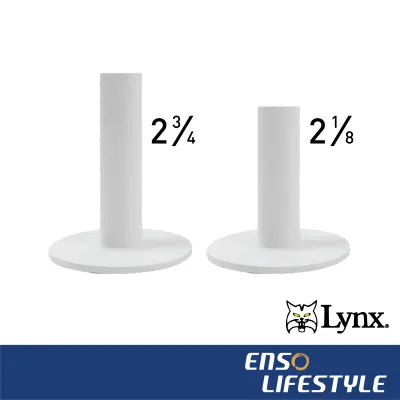
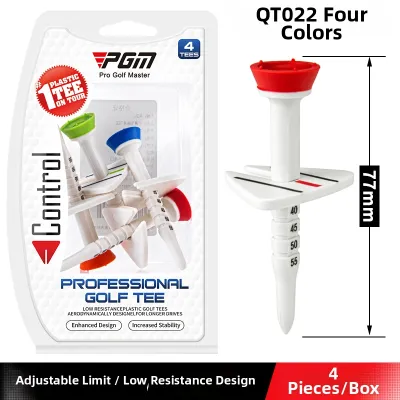
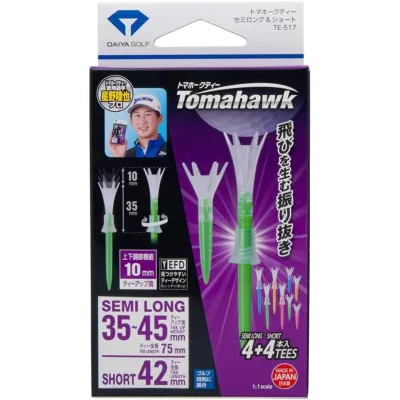
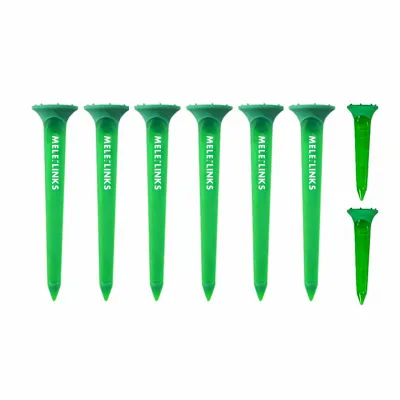
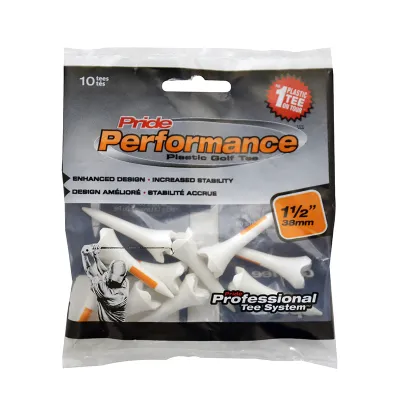
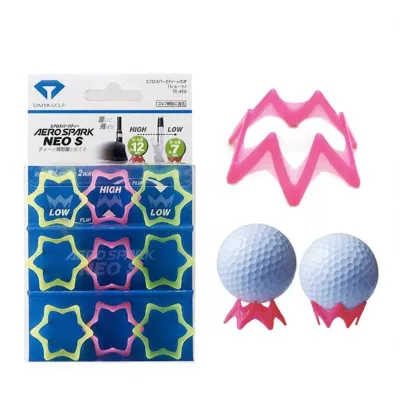
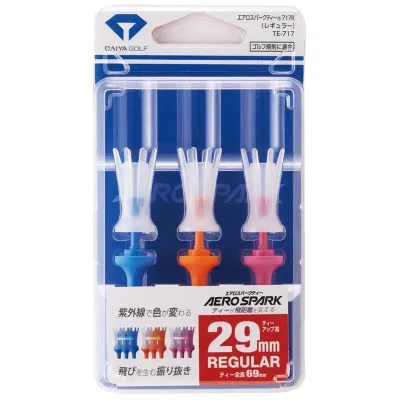
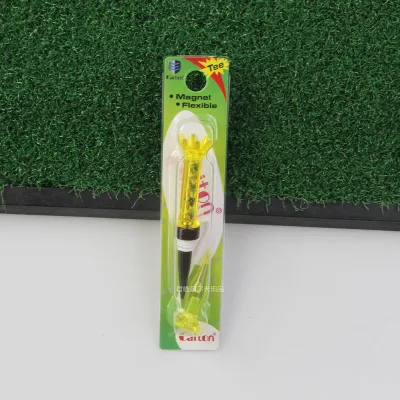
Prices are valid at publication and may change. Please refer to the product page for the latest price.
The fundamental difference lies in the angle of attack required for different clubs. A driver is designed to strike the ball on an upward trajectory. To achieve this, the ball must be suspended high enough in the air to allow the clubhead to reach the bottom of its arc and start rising before making contact. With irons, fairway woods, and hybrids, you want to strike the ball with a level or slightly descending blow. Elevating the ball too much with these clubs interferes with their natural design, leading to poor contact.
Visual Standards for Tee Height by Club Type
Developing a consistent visual reference is the easiest way to ensure you set the correct tee height every time you step onto the tee box. Instead of guessing how many centimeters of the tee should remain above the ground, you should look at how the ball aligns with the top edge, or crown, of your clubhead. This visual relationship remains constant regardless of the specific brand or model of club you use.

While standard visual guidelines work well for most players, you may need to make minor adjustments based on your unique swing mechanics. If you tend to swing with a steep downward angle, a slightly lower tee height can help prevent you from hitting under the ball. As your swing flattens out and becomes more consistent, you can gradually transition to standard heights to optimize your launch conditions.
During a typical round, you will transition between different tee lengths depending on the hole layout and your club selection. Par-4 and par-5 holes usually require a driver or fairway wood off the tee, demanding longer pegs. Par-3 holes, where you typically hit irons or hybrids, require much shorter tees or even broken tees found on the tee box to barely lift the ball off the turf.
Setting Tee Height for Drivers
When teeing up a driver, the standard visual checkpoint is to align the equator of the golf ball with the top edge of the clubhead crown. This means that when the driver rests flat on the ground behind the ball, exactly half of the ball should sit above the top of the clubface. This positioning gives you the necessary clearance to sweep upward through the ball without catching the turf first.
If you find yourself consistently striking the ball too high or too low on the driver face, you can make micro-adjustments. For players who struggle with catching the ball on the very top of the face (often resulting in high, short pop-ups), lowering the tee so only one-third of the ball sits above the crown can improve contact. If you tend to hit low, worm-burning shots, raising the tee slightly so three-quarters of the ball is visible above the crown can encourage a higher launch.
To achieve these positions, you will typically need longer tees. Standard driver tees generally range from 2.75 inches to 3.25 inches in length. Beginners using modern, large-headed 460cc drivers will find that a 3.25-inch tee provides the necessary length to insert the peg securely into the ground while keeping half the ball above the crown.
Setting Tee Height for Fairway Woods and Hybrids
Fairway woods and hybrids feature much shallower clubfaces than drivers, meaning they require a significantly lower tee height. The visual checkpoint for these clubs is to have only about one-quarter to one-third of the ball rise above the top edge of the clubhead. This low profile encourages a sweeping strike that mimics how you would play the ball directly off the fairway turf.
Teeing the ball too high with a fairway wood or hybrid is a common beginner mistake. Because these clubs have a low center of gravity designed to get the ball airborne from the ground, an excessively high tee often causes the clubhead to slide completely underneath the ball. This results in a skyed shot that travels high but covers very little distance, or a topped shot where the bottom of the club strikes the top of the ball.
To achieve the correct setup, you should use shorter tees, typically around 1.5 inches to 2 inches in length. Alternatively, you can push a standard long tee deep into the ground until only a small fraction of the peg remains visible. This ensures the ball sits just high enough to provide a clean lie without altering your natural sweeping swing path.
Setting Tee Height for Irons
When hitting an iron off the tee, your goal is to simulate a clean lie on the fairway while giving yourself a tiny margin of error. The visual checkpoint for an iron is to have the ball sitting just barely above the grass line, with only a fraction of an inch of clearance. The ball should look as though it is sitting on top of a dense cushion of grass rather than being suspended in the air.
Teeing an iron too high is highly risky because irons are designed to strike the ball with a descending blow, hitting the ball first and then taking a divot in the turf ahead of it. If the ball is suspended too high, you are likely to strike the upper portion of the clubface, which is thin and transfers very little energy. This leads to weak, short shots that lack spin and control.
For par-3 holes where you use an iron, you should utilize short tees measuring 1.25 inches or less. Many experienced players simply look around the tee box for broken wooden tees left behind by previous golfers. Pushing a broken tee almost flush with the turf is an excellent, cost-effective way to get the ideal, minimal elevation needed for a clean strike.
How to Measure and Set Consistent Tee Heights on the Course
Achieving consistency on the golf course requires removing as much guesswork as possible from your pre-shot routine. To set your tee height accurately every time, use your clubhead as a physical measuring gauge. Place the tee in the ground loosely, rest your club flat on the turf directly behind it, and adjust the depth of the tee until the ball aligns with the visual checkpoints described above before pushing it firmly into place.
Another highly effective method for beginners is to pre-mark your tees. You can use a permanent marker or a small piece of tape to draw lines on your wooden or plastic tees at your preferred depths for drivers, woods, and irons. By matching these lines to the grass level as you push the tee into the ground, you ensure an identical setup on every single hole without having to bend down and check the alignment repeatedly.
You must also learn to adapt your tee depth to varying ground conditions. On hard, dry tee boxes, pushing a tee to the correct depth can be difficult; in these cases, using a sturdier plastic tee or slightly twisting the tee as you push can help. On tee boxes with long, lush grass, you may need to tee the ball slightly higher relative to the ground to ensure the bottom of the ball clears the grass blades, while still maintaining the correct relationship with your club’s crown.
Selecting the Right Golf Tee Material and Design for Beginners
When shopping for golf tees, you will primarily choose between wood, bamboo, and plastic materials. Traditional wooden tees are highly popular, biodegradable, and offer a classic feel, but they break easily, especially when beginners are still refining their swing path. Bamboo tees offer a more durable and sustainable alternative to standard wood, resisting snapping while remaining environmentally friendly.
Plastic tees are exceptionally durable and can often last for multiple rounds without breaking, making them a highly practical choice for beginners who want to avoid constantly replacing broken pegs. Many plastic tees also feature built-in depth markers or stepped designs. These step tees have a molded collar that prevents you from pushing the tee any deeper than a pre-set limit, automatically ensuring a consistent tee height on every drive.
While some specialty tees feature multi-pronged or oversized cups designed to reduce friction and potentially add distance, these performance gains are minimal for beginners. Your primary focus should be on durability, cost, and consistency. Buying a bulk pack of standard wooden or simple plastic step tees is generally the most practical and budget-friendly approach while you work on mastering your swing mechanics.
Troubleshooting Poor Contact Caused by Incorrect Tee Height
If you notice specific ball flight patterns or unusual marks on your clubs, your tee height may be the culprit. For instance, if you find white scuff marks on the top crown of your driver, or if your ball shoots straight up into the air with very little forward distance, your tee is likely too high. This causes the driver to sweep underneath the ball rather than making contact on the center of the face.
Conversely, if your drives are consistently low, struggling to get airborne, or if you are hitting thin shots where the club strikes the bottom half of the ball, your tee is likely too low. A low tee forces you to either tilt your body backward to try and lift the ball, which ruins your swing posture, or strike the ball with a downward blow that creates excessive spin and robs you of distance.
However, it is important to recognize when to stop adjusting your tee and look at your swing instead. If you have verified that your tee height matches the visual standards—such as half the ball above the driver crown—but you are still experiencing poor contact, the issue likely stems from your swing path, ball position in your stance, or angle of attack. Constantly changing your tee height to compensate for a swing flaw will only hinder your long-term progress as a beginner.
Frequently Asked Questions (FAQ)
Do I need to buy different lengths of golf tees?
You do not necessarily need to buy multiple different packs of tees, but carrying a mix of long and short options in your bag is highly beneficial. A standard 3.25-inch tee is essential for your driver, but using it for irons requires pushing almost the entire peg into the ground, which can be difficult on firm turf. Carrying a pack of long tees for your driver and a smaller pack of 1.25-inch tees for your irons and hybrids is the most convenient setup. Alternatively, you can easily snap broken wooden tees in half to use on par-3 holes.
Does the color of the golf tee matter for beginners?
The color of your golf tee does not affect the physics of your swing, but it has significant practical value for visibility. Brightly colored tees—such as neon yellow, orange, or pink—are much easier to locate in the grass after you hit your shot, helping you retrieve your equipment and keep up the pace of play. However, you should avoid using tees with overly complex patterns or extremely bright neon cups if you find they distract your eyes when you are looking down at the ball during your address.
Community discussion
Share your experience or ask a question. Comments are reviewed before publication.