
To optimize your golf game, choosing the right golf tee length is a fundamental step that directly impacts your shot trajectory, distance, and consistency. Using the wrong tee height can ruin a well-sequenced swing before the clubface even makes contact. For drivers, a tee length of 2.75 to 3.25 inches is standard, allowing half the ball to sit above the club’s crown. For irons, a shorter tee of 1.5 to 2.15 inches pushed nearly flush with the turf ensures clean, descending contact. Fairway woods and hybrids require a transitional height, placing the ball’s equator level with the top of the clubface.
Understanding how these dimensions correspond to your specific clubs will help you eliminate frustrating mishits. By matching your tee selection to your equipment and swing characteristics, you can achieve a more predictable ball flight and better control on the course.
Why Tee Height Dictates Your Launch and Spin
The height at which you position the golf ball relative to the clubface dictates the physics of the collision at impact. This relationship is governed largely by the vertical gear effect. When a ball is struck above the club’s center of gravity (CG), the clubface flexes backward, causing the clubhead to rotate upward. This rotation exerts a counter-rotation on the ball, reducing backspin and increasing the launch angle. Conversely, striking the ball below the club’s CG increases backspin and lowers the launch angle, often resulting in a ballooning flight path that loses distance.
Products mentioned in this guide
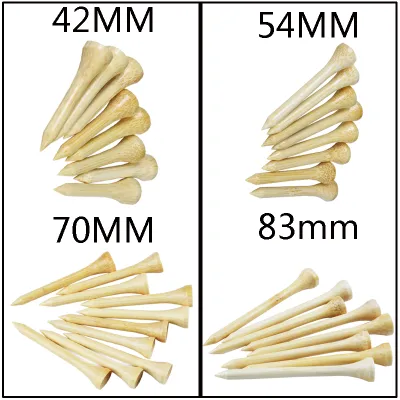
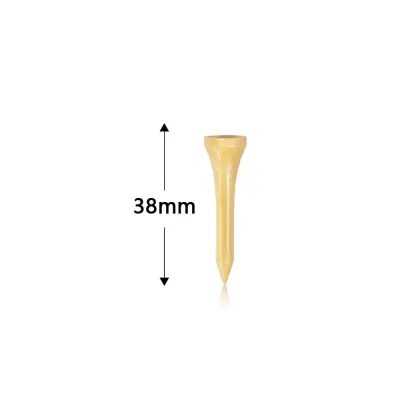
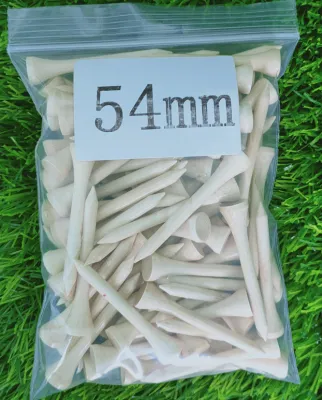
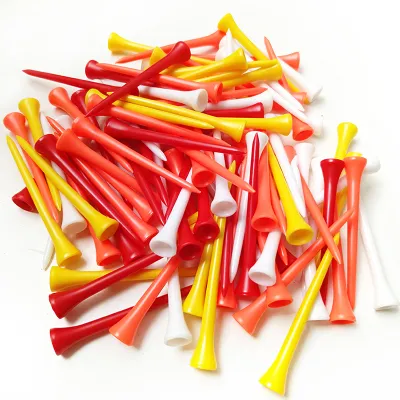
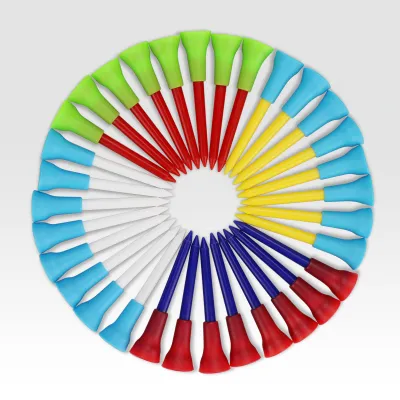
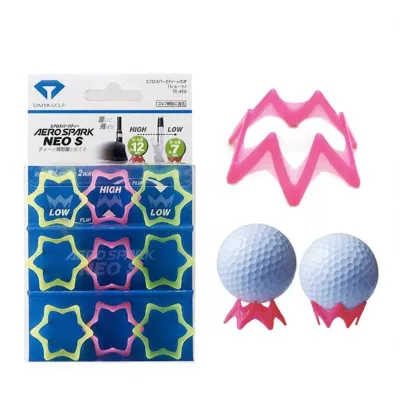
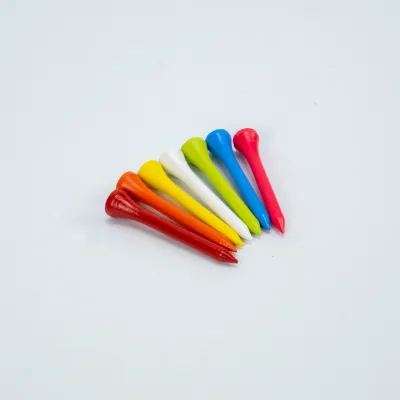
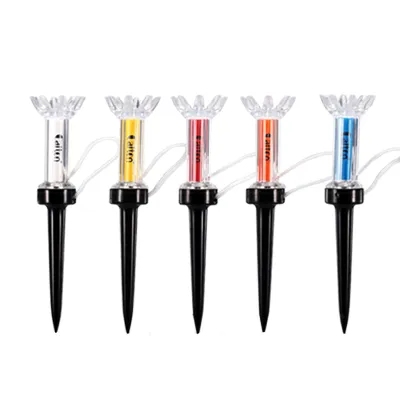
Prices are valid at publication and may change. Please refer to the product page for the latest price.
Optimizing your tee height is the easiest way to minimize common face-contact errors. Teeing a ball too high often leads to striking the upper edge of the clubface, resulting in high, weak pop-ups or even sky marks on your driver’s crown. Teeing the ball too low frequently causes thin or bladed shots, where the leading edge of the club strikes the lower half of the ball, sending it on a low, uncontrollable trajectory.
Your swing mechanics must also match the design of the club you are swinging. A driver is designed to strike the ball on an upward ascent, meaning the clubhead reaches the low point of its arc before making contact. An iron, however, requires a descending blow where the clubhead compresses the ball against the turf first. Because these two swing paths are fundamentally opposite, using a single, uniform tee height across all clubs is mechanically impossible if you want to achieve optimal results.
Setting the Perfect Tee Height for Your Driver
Modern drivers feature large clubheads, typically maximizing at the regulatory limit of 460cc. These deep clubfaces require a longer tee to position the ball in the sweet spot, which sits slightly above the physical center of the face.

Step 1: Select the right length
Standard driver tees range from 2.75 to 3.25 inches (approximately 70mm to 83mm). If you use a modern 460cc driver, a 3.25-inch tee is generally preferred because it provides enough length to anchor securely in the turf while leaving the necessary portion of the tee exposed.
Step 2: Apply the baseline visual rule
When you insert the tee into the ground, use the crown (the top surface) of your driver as your primary visual guide. For a neutral, standard swing, adjust the depth so that exactly half of the golf ball sits above the top edge of the driver’s crown when the clubhead is rested flat on the turf behind the ball.
Step 3: Adjust for your Angle of Attack (AoA)
Your individual swing path may require slight deviations from the standard half-ball rule to maximize efficiency:
- Upward Angle of Attack: If you naturally sweep upward on the ball, tee the ball slightly higher—about two-thirds of the ball above the crown. This reduces backspin further and maximizes carry distance.
- Downward or Neutral Angle of Attack: If you tend to hit down on your driver or prefer a controlled, penetrating ball flight, push the tee slightly deeper so only one-third of the ball sits above the crown. This setup prevents high, ballooning misses and reduces the risk of popping the ball up.
Verification Check
To verify your tee height consistency during practice, look at the tee’s position relative to your lead ankle when addressing the ball. Ensure the tee is pushed straight down rather than angled forward or backward, as an angled tee alters both the effective height and the launch physics of the shot.
Teeing Up Irons for Crisp, Descending Strikes
When playing a par-3 or opting for an iron off the tee on a tight fairway, the goal of using a tee is not to launch the ball high into the air. Instead, the tee simply provides a perfect lie, eliminating the unpredictable friction of the turf while still allowing you to strike downward on the ball.
Step 1: Choose a shorter tee
Select a short tee measuring between 1.5 and 2.15 inches (approximately 38mm to 55mm). Longer tees are highly impractical for irons, as they require you to push the majority of the shaft into the ground, which can be difficult on compacted tee boxes.
Step 2: Set the depth
Push the tee deep into the ground until the cup or lip is nearly flush with the grass. Only a tiny sliver of the tee’s neck—no more than a quarter of an inch—should remain visible above the soil line.
Step 3: Verify the visual cue
When the club is grounded behind the ball, only the bottom quarter of the golf ball should sit above the turf line. The ball should look as though it is sitting on top of a perfectly manicured blade of grass, rather than suspended in the air.
If you tee an iron too high, the clubhead will slide underneath the ball’s center of gravity. This results in contact high on the clubface, causing a loss of compression, excessive backspin, and a severe drop in distance. In worst-case scenarios, it can lead to a bladed shot if you subconsciously adjust your swing mid-downswing to avoid digging too deep.
When playing on hard, dry ground—such as during dry spells on local courses in Singapore—pushing a tee into compacted clay-heavy soil can be challenging. In these conditions, use a sturdy, short wooden tee or a specialized step tee to ensure you do not bend or snap the peg while trying to achieve a flush depth.
Finding the Middle Ground for Woods and Hybrids
Fairway woods and hybrids are transitional clubs. They feature shallower faces than drivers but are still designed to sweep the ball off the turf with a much flatter, more neutral angle of attack than an iron.
For fairway woods like a 3-wood or 5-wood, use a medium tee length and push it into the ground until about half an inch to three-quarters of an inch of the tee remains exposed. The visual rule here is to align the equator (the middle) of the golf ball with the top edge of the clubface. This allows the club to sweep through the ball cleanly without catching too much turf first.
Hybrids have an even shallower profile, closely resembling long irons in their utility. For these clubs, tee the ball slightly lower than you would for a fairway wood. Aim to leave only about a quarter of the ball above the crown of the hybrid. This setup encourages a slight descending blow, ensuring you compress the ball properly using the hybrid’s unique weight distribution.
As you transition down your bag from driver to irons, your tee height should follow a gradual downward slope. Maintaining this systematic progression ensures that your swing mechanics remain aligned with the physical design of each clubhead.
Comparing Golf Tee Materials and Head Designs
Selecting the physical material and head design of your golf tee affects your setup consistency, durability, and overall cost over a season.
- Wooden Tees: Typically made from birch, these are the traditional choice. They are highly biodegradable and inexpensive, usually costing around S$5 to S$8 for a large pack. However, they snap easily on impact, especially when striking downward with irons or when playing on firm tee boxes.
- Plastic Tees: These offer exceptional durability, often lasting dozens of holes without breaking. Many plastic models feature colored height-marker bands painted on the shaft, which help you push the tee to the exact same depth every time. The trade-offs are that they are less environmentally friendly if lost on the course, and they can bend or warp over time, requiring manual straightening.
- Bamboo Tees: Bamboo is a sustainable, natural alternative to traditional hardwood. Because bamboo fibers are naturally flexible and strong, these tees resist snapping much better than birch wood while remaining fully biodegradable.
- Head Designs: Traditional cupped tees feature a simple concave circle to hold the ball. Specialty designs, such as pronged or brush tees, aim to reduce the surface area contact between the tee and the ball to minimize friction. While some players prefer the feel of these tees, the friction reduction is minimal in practice. If you play in club tournaments, ensure any specialty or "anti-slice" angled tee you use complies with USGA and R&A Rule 6.2, which dictates that a tee must not be longer than 4 inches (101.6 mm) and must not be designed to actively influence the ball's flight path.
Common Tee Height Mistakes and Quick Fixes
Even experienced golfers can fall into bad habits regarding tee placement. Recognizing these common errors can save you strokes during a round.
Mistake 1: Teeing the driver too low
This mistake often stems from a fear of sky-balling the shot. Teeing too low forces a steep, downward strike, which increases backspin, lowers launch, and dramatically cuts carry distance.
- The Fix: Return to the baseline visual rule. Ensure at least half the ball sits above the driver's crown, and practice sweeping the ball off the tee without hitting the ground.
Mistake 2: Teeing irons too high
Golfers often tee irons too high because they want to ensure they get the ball airborne. This removes the turf compression that irons rely on for distance control.
- The Fix: Push the tee down until the cup is flush with the grass. Trust the loft built into your iron face to lift the ball naturally.
Mistake 3: Inconsistent depth due to ground hardness
When teeing boxes are baked dry or highly compacted, golfers often stop pushing the tee down simply because it becomes difficult, leading to inconsistent heights.
- The Fix: Switch to bamboo tees, which resist bending under pressure, or use tees with pre-marked height lines. Alternatively, use a visual reference on your clubhead to verify the ball's position before every swing, rather than relying on feel.
Frequently Asked Questions (FAQ)
Does tee height affect driving distance?
Yes, tee height directly influences driving distance by altering your launch angle and spin rate. Teeing the ball higher allows you to strike it on an upward trajectory, which reduces backspin and increases launch height—the ideal combination for maximizing carry. If you tee the ball too low, you will likely hit down on it, generating excessive backspin that causes the ball to climb steeply and stall in the wind, reducing overall distance.
Are plastic or wooden golf tees better?
Neither material is universally superior; the choice depends on your priorities. Plastic tees are highly durable and often feature built-in height markers for consistency, making them a practical choice for beginners. Wooden tees offer a traditional feel and are fully biodegradable, which is better for the course environment. Bamboo tees serve as an excellent middle ground, offering the environmental benefits of wood with significantly higher durability.
Can I use the same tee length for all my clubs?
While you can physically use a long driver tee for all your clubs by pushing it deeper into the ground, doing so is highly impractical. Pushing a long tee deep enough for an iron shot is difficult on firm turf and can leave too much of the shaft exposed, which can interfere with your clubhead path. It is highly recommended to carry a mix of long tees (3.25 inches) for your driver and short tees (1.5 inches) for your woods, hybrids, and irons.
Community discussion
Share your experience or ask a question. Comments are reviewed before publication.