
Selecting your first HEAD tennis racket is a pivotal decision that directly shapes your early experiences on the court. For a complete beginner, a highly suitable racket is not the heaviest or most control-oriented model used by touring professionals, but rather a frame designed for high forgiveness, easy power generation, and physical comfort. Starting with the wrong equipment can lead to rapid fatigue, frustration from frequent off-center hits, and even physical strain on your wrist and elbow. By focusing on key physical specifications rather than aesthetic appeal or professional endorsements, you can find a racket that supports your learning curve and keeps you coming back to the court.
In regions with warm, humid climates like Singapore, where the majority of recreational play occurs on fast, unforgiving outdoor hard courts, choosing the right racket setup is even more critical. High humidity quickly saps your physical energy and alters the behavior of tennis strings, while hard courts transmit significant shock up your arm upon impact. A well-chosen beginner racket acts as a buffer against these elements, offering a generous sweet spot that absorbs vibration and helps you maintain control during long, humid practice sessions. Understanding how HEAD structures its racket specifications and product lines will empower you to make an informed, confident purchase.
Key Specs That Make a HEAD Racket Forgiving for Beginners
To find a racket that supports your development, you must first understand the core specifications printed on the frame. The most critical dimension for any beginner is head size. Tennis rackets generally range from 95 to 115 square inches. For those just starting out, an oversized head (typically 105 to 115 square inches) or a generous mid-plus frame (102 square inches) is highly recommended. A larger head size directly translates to a larger sweet spot, which is the central area of the string bed that provides the most power and control with the least vibration. This extra surface area provides a crucial safety net, ensuring that even when your footwork is slightly off and you strike the ball near the frame, the ball still clears the net.
Products mentioned in this guide
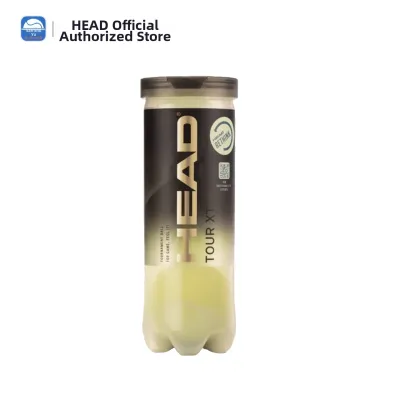
Prices are valid at publication and may change. Please refer to the product page for the latest price.
Racket weight and balance are equally vital to your comfort and swing mechanics. Beginners should look for lightweight frames, specifically those with an unstrung weight between 260 and 285 grams. A lighter racket is much easier to maneuver, allowing you to react quickly to incoming balls and complete your swing path without straining your shoulder or wrist. However, lightweight rackets can sometimes lack the stability to plow through the ball. To compensate for this, beginner rackets often feature a head-heavy balance, meaning more of the racket’s overall weight is distributed toward the hoop rather than the handle. This design helps generate natural momentum during your swing, allowing you to hit deep shots with minimal physical effort.
Finally, pay close attention to beam width and frame stiffness. The beam width refers to the thickness of the racket’s profile when viewed from the side. Thicker beams (typically 24 millimeters to 26 millimeters or more) are stiffer and do not bend as much when contacting the ball. This structural rigidity prevents energy loss, transferring more power back into the ball. For a beginner whose muscles are not yet conditioned to generate immense racket head speed, a thicker, stiffer beam provides easy power. This allows you to focus entirely on mastering your stroke mechanics, footwork, and court positioning rather than muscle-forcing every shot.
Navigating HEAD Racket Families for Your Skill Level
HEAD organizes its tennis rackets into several distinct product families, each engineered with a specific playing philosophy in mind. While these families cater to different styles of play, almost every line includes lightweight, beginner-friendly variations alongside the heavy, advanced models. When browsing, it is essential to look past the primary family name and examine the specific model suffix to ensure the racket matches your current physical capabilities.

If your primary goal is effortless power and maximum arm comfort, look for families designed specifically for recreational and game-improvement play. HEAD’s entry-level lines, such as the Cyber, Boost, or Ti series, are built from the ground up for beginners. These rackets feature oversized heads, ultra-lightweight construction, and highly forgiving sweet spots. They are incredibly easy to swing and are highly cost-effective for players who want to test their interest in the sport before making a larger financial commitment.
For beginners who plan to take regular lessons and want a racket that can transition with them into intermediate play, the Speed and Gravity families offer excellent versatility. While the standard versions of these rackets are designed for control and feel, HEAD produces Team and Lite versions within these lines. These models retain the balanced, all-court characteristics of the professional frames but package them in a much lighter, more maneuverable weight class. They provide a clean, classic feel that helps you develop a precise sense of where the ball is contacting the string bed.
If you are naturally athletic or have experience in other racket sports, you might consider the Extreme line, which is engineered for heavy topspin. The Extreme family features an open string pattern and an aerodynamic frame shape that helps players brush up on the back of the ball. However, because spin-oriented rackets often require a faster, more aggressive swing to be fully effective, beginners should strictly stick to the Extreme Lite or Extreme Team versions to avoid shoulder fatigue.
The most crucial step in navigating these families is verifying the model suffix. A common mistake is purchasing a racket based solely on the family name, such as buying a HEAD Radical because a favorite professional player uses it. A standard Radical MP or Radical Pro is heavy, stiff, and has a small sweet spot, which will severely hinder a beginner’s progress. Always look for suffixes like Team, Lite, Team L, or S, which indicate that the frame has been modified with a lighter weight and a more forgiving head size suitable for developing players.
Finding Your Ideal Grip Size and Racket Weight
Choosing the correct physical dimensions for your racket handle and weight is just as important as selecting the frame itself. An incorrect grip size can lead to a host of issues, including painful blisters, a slipping racket, and chronic conditions like tennis elbow. Fortunately, you can use simple, low-risk methods to verify these parameters before making a purchase.
To determine your suitable grip size, you can perform the classic index finger test. Hold the racket handle firmly in your dominant hand using an Eastern grip, which feels like shaking hands with the racket. Once your hand is in position, attempt to slide the index finger of your other hand into the gap between your ring finger and the palm of your hand. In a well-fitted grip, your index finger should fit snugly into this space with minimal friction. If there is not enough room to insert your finger, the grip is too small, which will force you to squeeze the handle too tightly to prevent twisting. If there is a large amount of excess space, the grip is too large, preventing you from wrapping your fingers securely around the handle.
If you find yourself caught between two grip sizes, the safest decision is always to size down. It is incredibly simple to increase the thickness of a smaller handle by wrapping a cheap, absorbent overgrip around it. In Singapore’s hot and humid climate, you will likely want to use an overgrip anyway to absorb sweat and maintain a secure hold on your racket. Conversely, reducing the size of a racket handle that is too large is nearly impossible without professional modification.
To evaluate whether a racket’s static weight and swing weight are appropriate for your physical strength, perform a simple arm extension test. Hold the racket by the handle and extend your arm straight out in front of you, parallel to the ground, for ten to fifteen seconds. If your wrist begins to sag, shake, or ache during this brief period, the static weight of the frame is too high for your current conditioning. Next, perform a few slow, controlled practice swings. If the momentum of the racket hoop pulls your shoulder out of alignment or makes it difficult to stop the swing cleanly, the swing weight is too high. A proper beginner racket should feel like a natural extension of your arm, allowing you to maintain a steady balance throughout your entire swing motion.
Pre-Purchase Checklist: Verifying Specs and String Setup
Before finalizing your purchase from a local pro shop or an online marketplace, you should run through a quick checklist to verify the racket’s true specifications and string configuration. This step ensures that you do not accidentally purchase a counterfeit frame or a model that differs from your intended specifications.
First, locate the manufacturer’s specification label, which is typically printed directly on the inside of the racket throat or along the inner rim of the hoop. This label lists the exact unstrung weight, balance point, beam width, and string pattern. Double-check these numbers against your target beginner specifications: look for an unstrung weight under 285 grams and an open string pattern, such as 16×19, which provides more forgiveness and easy depth than a dense 18×20 pattern.
Second, determine whether the racket is sold pre-strung or unstrung. Many beginner-specific HEAD rackets are sold pre-strung with factory synthetic gut. This is highly convenient and cost-effective, allowing you to head straight to the court. However, if you are purchasing a Team or Lite version of a premium line, it may arrive unstrung. In this case, you will need to purchase a set of strings separately and pay a local stringer to install them. If you must string the racket yourself, request a soft, arm-friendly multifilament string strung at a lower tension, around 50 to 52 pounds, to maximize comfort and power.
Finally, always verify the return and exchange policies of your chosen retailer. Many online marketplaces and physical stores have strict policies regarding tennis equipment. Typically, a racket cannot be returned once the plastic protective wrap has been removed from the handle, or if the strings show any signs of ball fuzz or wear. When your racket arrives, inspect it thoroughly at home, test the grip size with the plastic wrap still on, and perform gentle dry swings in a safe space. This allows you to exchange the frame easily if the weight or grip size does not feel right before you take it to the court.
Frequently Asked Questions (FAQ)
Is an Expensive Graphite HEAD Racket Necessary for Beginners?
While it is tempting to purchase a budget-friendly aluminum or alloy racket when first starting out, investing in a mid-tier composite or full graphite frame is highly beneficial. Aluminum rackets are inexpensive, but they are highly flexible and transmit a significant amount of harsh vibration directly into your arm upon impact. Over time, this vibration can lead to joint fatigue and discomfort. Full graphite frames, even those in HEAD’s entry-level price brackets, offer superior shock absorption, structural stability, and longevity. If you plan to play regularly, a graphite frame is a much safer investment that will support your physical health and skill development for several years.
Pre-Strung vs. Unstrung: Which is Better for a Beginner?
For a complete beginner, a pre-strung racket is generally the most practical and economical choice. Factory strings are perfectly adequate for learning basic stroke mechanics, understanding ball contact, and developing consistency. However, factory strings are typically made of basic synthetic gut that will gradually lose tension and elasticity over several months of play. Once you begin playing more consistently, or if you start to experience arm fatigue, it is highly recommended to cut out the factory strings. Upgrading to a high-quality, soft multifilament string strung at a moderate tension will greatly improve your racket, providing a softer feel, better shock absorption, and more controlled power.

Community discussion
Share your experience or ask a question. Comments are reviewed before publication.