
Starting your fitness journey from the comfort of a compact home requires a smart approach to equipment selection. In Singapore’s high-rise apartments, where floor space and ceiling heights are often limited, a kettlebell is an exceptionally versatile tool for building strength. However, picking the wrong starting weight can lead to joint strain, damaged flooring, or cluttered living areas. Finding the right balance involves assessing your current physical baseline, understanding the mechanics of different exercises, and measuring your physical surroundings to ensure safe, uninterrupted movement.
Matching Starting Weights to Your Strength Baseline
To select your initial kettlebell weight, you must first distinguish between the two primary categories of kettlebell exercises: ballistic movements and grind movements. Ballistic exercises, such as swings, cleans, and snatches, are dynamic, fast-paced, and rely on momentum generated by your hips and glutes. Because these movements recruit large lower-body muscle groups, they generally require a heavier weight to provide adequate resistance. Conversely, grind movements, such as overhead presses, Turkish get-ups, and goblet squats, are slow, deliberate, and rely on upper-body or core stability. These exercises require a lighter weight to maintain control and protect delicate shoulder joints.
Before purchasing, perform a simple bodyweight self-assessment to gauge your baseline strength. If you can comfortably perform fifteen controlled bodyweight squats and ten strict push-ups with proper form, you likely possess the foundational stability to start with a moderate weight. If these bodyweight movements are challenging, starting with a lighter weight ensures you can build joint integrity first.
Products mentioned in this guide
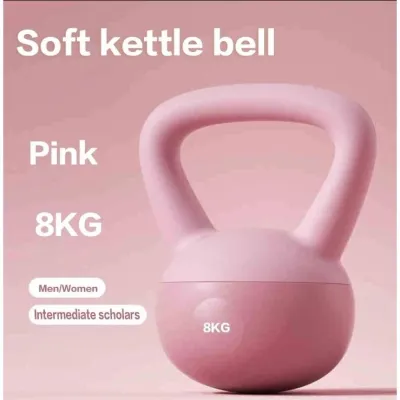
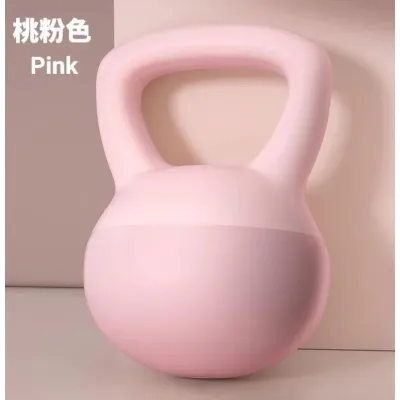
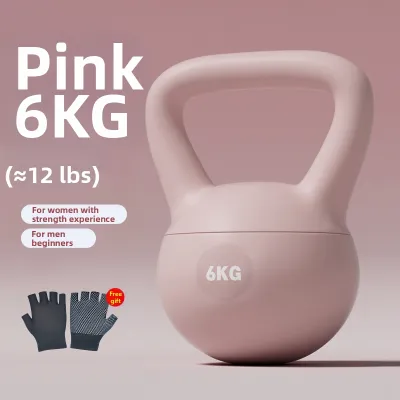
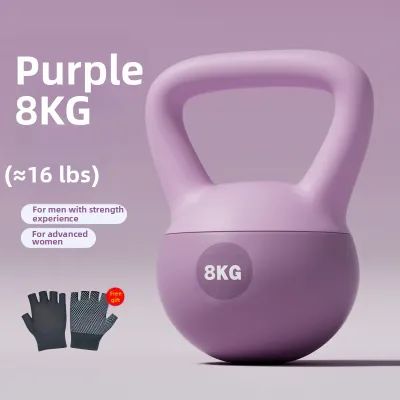
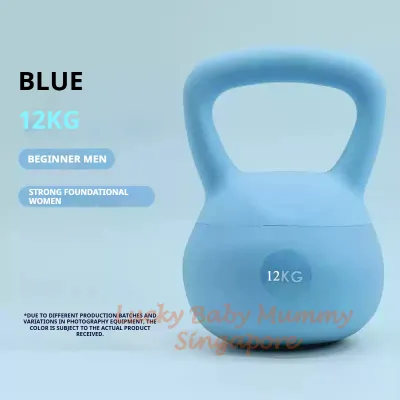

Prices are valid at publication and may change. Please refer to the product page for the latest price.
Prioritize a weight that allows you to complete your target repetitions through a full, unrestricted range of motion. If your form breaks down, or if you find yourself arching your lower back to complete a movement, the weight is too heavy. Remember that equipment cannot replace proper training and physical preparation; mastering the movement pattern with a lighter weight is always safer than struggling with an excessively heavy load.
Navigating Space and Clearance Constraints in Small Apartments
Training in a compact apartment introduces unique spatial challenges that directly influence your equipment choices. Before swinging a heavy iron ball, you must verify your vertical and horizontal clearance. Stand in your designated workout area and extend your arms fully overhead; ensure there is ample clearance between your knuckles and the ceiling, light fixtures, or ceiling fans. If your ceiling is low, heavy overhead presses or snatches may carry a risk of impact, making a lighter, more controllable weight or alternative low-profile exercises a safer choice.

Floor protection is another critical factor when training at home. Dropping a heavy kettlebell on vinyl, laminate, or tiled flooring can cause costly structural damage and create disruptive noise for downstairs neighbors. To mitigate this, invest in a high-density rubber exercise mat or a dedicated weightlifting drop pad. These accessories help absorb impact and dampen sound, but they do not make your floor indestructible. Checking the load-bearing limits of your floor and using controlled descents on every repetition are essential safety habits.
If your floor space is highly restricted, focus on low-arc, compact exercises that deliver full-body results without requiring a wide physical footprint. Goblet squats, single-leg deadlifts, and halos require minimal lateral movement and keep the kettlebell close to your center of gravity. This minimizes the risk of colliding with nearby walls, television screens, or furniture, allowing you to train confidently in tight quarters.
Decoding Kettlebell Design Specs for Indoor Comfort
When browsing online marketplaces or local fitness shops, pay close attention to the physical specifications of the kettlebell, as these details directly impact your comfort and safety indoors. The handle diameter and texture are critical for maintaining a secure grip, especially during high-rep sets when your hands become sweaty. Look for a smooth, powder-coated finish or high-quality cast iron with no rough weld seams along the underside of the handle. A handle that is too thick can prematurely fatigue your grip, while a rough surface can cause painful blisters.
The design of the base and the outer coating are equally important for home use. A wide, flat base ensures the kettlebell remains stable when placed on the floor, preventing it from tipping over and rolling into furniture. For floor-based exercises like renegade rows or push-ups on the handles, a flat, machined bottom is non-negotiable for stability. Additionally, kettlebells encased in a vinyl, neoprene, or rubber coating offer an extra layer of protection against minor scuffs and scratches on your flooring, though they should still be placed down gently.
While aesthetic features like bright color-coding or premium brand logos can make your gear look appealing, they do not enhance performance. If you are working within a budget, ignore these cosmetic details and focus entirely on the structural integrity, handle comfort, and base flatness of the kettlebell.
Planning for Progressive Overload in Limited Spaces
Progressing in strength does not mean you have to turn your living room into a crowded gym rack. One space-saving solution is the adjustable kettlebell, which allows you to change the weight by adding or removing internal plates. While highly cost-effective and compact, adjustable models have mechanical limitations. You must carefully inspect the locking mechanism, pins, or dials before every set to ensure the internal weights are completely secure. Any rattling or loose parts are immediate stop conditions, as a shifting weight can disrupt your balance during dynamic swings.
If you prefer the simplicity of a single fixed-weight kettlebell, you can still achieve progressive overload by manipulating other training variables. Instead of reaching for a heavier weight, try slowing down the tempo of your movements, particularly during the lowering phase. You can also reduce your rest periods between sets, increase the total number of repetitions, or transition to unilateral variations. These adjustments increase the time under tension and challenge your stability without requiring additional physical space.
Eventually, you may outgrow your starting weight. A clear indicator that it is time to upgrade is when you can perform your entire routine with strict form, minimal cardiovascular fatigue, and zero loss of control. When this occurs, look for a weight that represents a modest, manageable increase, ensuring you can maintain the same strict form and safety standards in your compact home environment.
Frequently Asked Questions (FAQ)
Can I use a single adjustable kettlebell instead of buying multiple fixed weights?
Yes, an adjustable kettlebell is an excellent space-saving option for small apartments, as it consolidates multiple weight increments into a single footprint. This significantly reduces clutter and can be highly cost-effective compared to buying a full set of individual weights. However, before performing dynamic movements like swings or snatches, you must perform a thorough mechanical check to ensure the locking mechanism is fully engaged and there is no internal play or rattling. If the mechanism feels loose or worn, stop using it immediately to prevent accidental release.
How do I know when it is time to move up to a heavier weight?
You are ready to transition to a heavier weight when you can complete all your target sets and repetitions with strict form, controlled breathing, and no joint discomfort. If the final reps of your workout feel as effortless as the first, your body has adapted to the stimulus. Before purchasing a heavier kettlebell, try increasing the difficulty of your current movements by slowing down your training tempo or switching to single-limb variations to ensure you have fully maximized the utility of your current weight.
Community discussion
Share your experience or ask a question. Comments are reviewed before publication.