
Selecting the right knee guard in Singapore requires balancing the specific physical demands of your sport with the challenges of a hot, humid tropical climate. Because no single brand or design excels in every scenario, the ideal choice depends on whether your activity demands high-impact shock absorption, flexible compression for endurance, or rigid structural support for heavy lifting. By evaluating a brand’s core engineering focus—whether it leans toward medical-grade orthopedics or lightweight athletic performance—and verifying physical features like moisture-wicking fabrics and secure non-slip grips, you can find a support system that protects your joints without restricting your movement or causing skin irritation.
How to Match Knee Guard Features to Your Sport
High-impact and court sports like basketball, badminton, and netball involve rapid lateral movements, sudden stops, and frequent jumps. These actions place immense stress on the patella and surrounding ligaments. For these sports, look for knee guards featuring built-in patella stabilizers—often shaped as silicone or gel rings—that keep the kneecap tracking correctly. Shock-absorbing pads integrated into the front of the guard help cushion the impact of sudden landings or floor contact.
Endurance and cyclic sports such as running, cycling, and hiking involve repetitive, linear motions over extended periods. Here, heavy or rigid braces can alter your natural gait and cause chafing. The priority is lightweight compression sleeves that promote blood flow and joint warmth while allowing a full range of motion. Look for seamless knit designs and breathable, moisture-wicking fabrics that prevent sweat accumulation behind the knee, which is a common cause of friction burns and skin rashes in Singapore’s humid climate.
Products mentioned in this guide
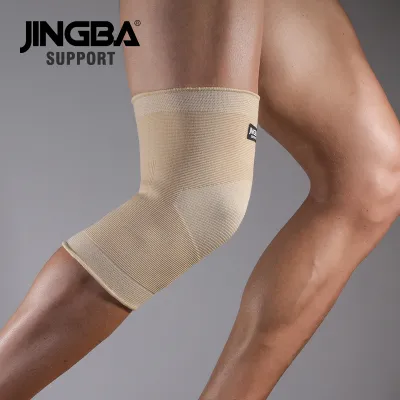
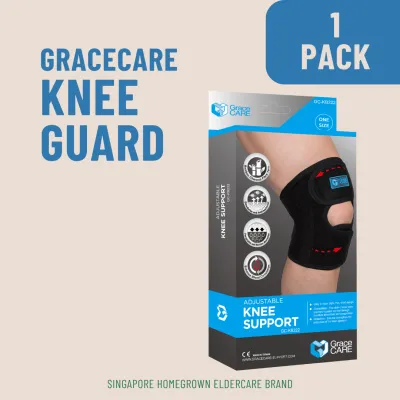
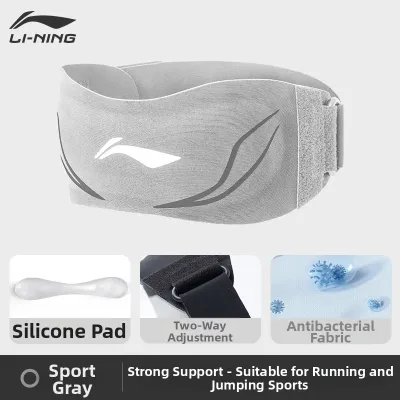
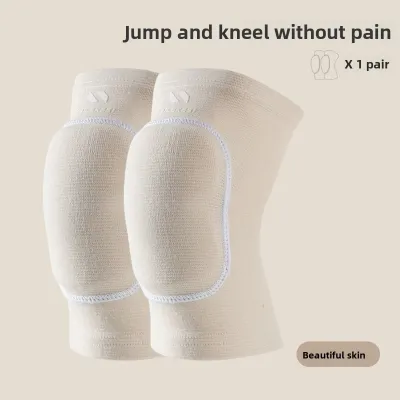
![[BUNDLE OF 2] TAKAMIZU - Orthocare Knee Support](https://img.lazcdn.com/g/p/358694f2fd4b2405e4e66b4a4bf8105e.jpg_400x400q80.jpg_.webp)
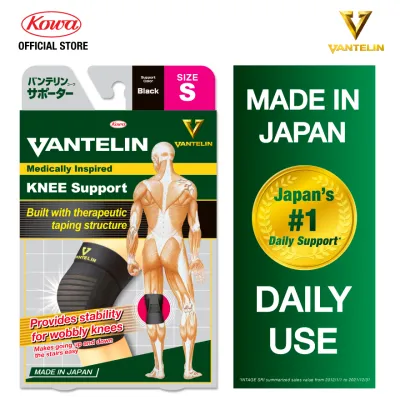
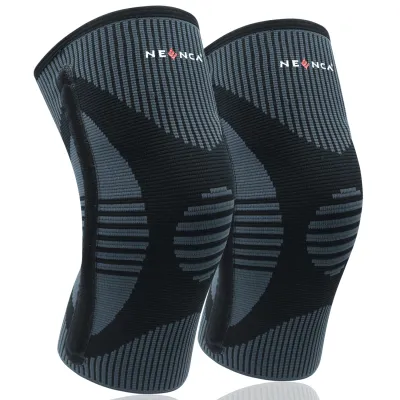
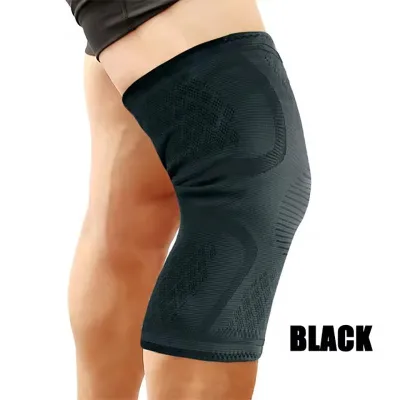
Prices are valid at publication and may change. Please refer to the product page for the latest price.
Contact and field sports like football, rugby, and trail running expose the knees to external impacts, falls, and abrasive surfaces. Knee guards for these activities require durable outer shells or reinforced face fabrics that resist tearing when sliding on turf or gravel. Secure strap systems are essential to keep the guard from shifting during high-velocity sprints and physical contact.
Weightlifting and strength training subject the knees to heavy axial loads during squats, deadlifts, and clean-and-jerk movements. Athletes in these disciplines require maximum joint warmth and mechanical rebound. Thick neoprene sleeves (typically 5mm to 7mm in thickness) or heavy-duty elastic wraps provide the necessary compression to stabilize the joint under load. These designs prioritize structural stiffness over long-term breathability, as they are typically worn only during active lifting sets.
Understanding Brand Specializations and Design Philosophies
Medical and orthopedic-focused brands center their design philosophy on joint alignment, ligament unloading, and post-injury recovery. These manufacturers frequently incorporate rigid components, such as bilateral aluminum hinges, hyperextension stops, and medical-grade compression knits. If you are recovering from a ligament tear or managing chronic joint instability, these structurally focused brands offer the precise mechanical control required, though they may be bulkier and more expensive.

Performance and athletic apparel brands design gear specifically for active, healthy athletes looking to prevent minor strains or manage mild soreness. Their products emphasize low-profile integration, aesthetic appeal, and advanced fabric technologies. These guards often utilize ultra-thin, highly breathable synthetic blends that fit comfortably under athletic shorts. While they offer excellent mobility and moisture management, they generally lack the rigid structural support needed for severe joint instability.
Specialized combat and extreme sports brands focus heavily on impact dissipation for activities like skateboarding, rollerblading, or martial arts. Their designs feature hard plastic caps or high-density foam inserts capable of absorbing direct blows. These guards are built to withstand repeated scraping against concrete or mats, prioritizing outer durability and impact safety over lightweight breathability.
When comparing brands, it is crucial to look past marketing buzzwords and evaluate actual structural specifications. Terms like “maximum protection” or “advanced stability” should be verified by looking for physical features. Check if the guard includes spiral stays (flexible metal coils on the sides) for lateral support, a contoured patella ring to stabilize the kneecap, or adjustable tension straps that allow you to customize the level of compression.
Building Your Shortlist: Fit, Sizing, and Material Checks
Accurate measurement is the single most critical factor in ensuring a knee guard functions correctly. Sizing standards vary significantly between brands; a “Medium” in an athletic compression sleeve may correspond to a “Small” in a heavy-duty medical brace. To find your size, use a flexible measuring tape to measure the circumference of your knee at three points: directly across the center of the patella, approximately 10 to 15 centimeters above the kneecap (mid-thigh), and 10 to 15 centimeters below the kneecap (upper calf). Always refer to the specific brand’s sizing chart rather than relying on your usual clothing size.
The materials used in a knee guard directly affect both comfort and skin health, especially in Singapore’s tropical climate. Neoprene is excellent for heat retention and structural support, but it can trap sweat and cause heat rashes if worn for prolonged periods. If you have sensitive skin or sweat heavily, look for neoprene-free alternatives, such as 3D knit fabrics, or designs that feature open mesh panels behind the knee to facilitate airflow. Additionally, check the product label for latex content if you have a known allergy, as many elastic bands utilize latex for stretch.
A knee guard that slips down during exercise is both distracting and ineffective. Evaluate the quality of the closure systems. High-quality hook-and-loop fasteners should feel secure and resist peeling under tension. Look for interior silicone grip strips along the upper and lower hems, which help adhere the guard to your skin and prevent sliding during vigorous movement. For hinged braces, ensure the hinge pockets are well-padded to prevent the metal or plastic joints from rubbing against your skin.
Because joint anatomy and comfort are highly individual, a knee guard that looks perfect on paper may pinch or rub during actual movement. When purchasing, check the retailer’s return and exchange policies. Many physical stores in Singapore allow you to try on sample guards to assess the fit. If buying online, verify if the seller permits exchanges for different sizes, provided the product is returned in its original packaging and has only been tried on briefly for fit.
Purchasing and Verifying Authenticity in Singapore
To ensure you are purchasing a genuine product that meets safety and quality standards, buy directly from authorized distributors. In Singapore, these include official brand boutiques, established multi-brand sports chains, and licensed medical supply shops or pharmacies. Purchasing from these outlets guarantees that the materials used are medical-grade or sport-safe, and that the product has not been subjected to improper storage conditions that could degrade the elastic fibers.
While online marketplaces offer convenience and competitive pricing, they also host unauthorized third-party sellers. When shopping on these platforms, look for “Official Store” badges or verified distributor labels. Be skeptical of listings offering premium brands at prices significantly below the standard S$50 to S$150 retail range, as counterfeit knee guards often use inferior plastics, weak stitching, and low-grade elastics that fail to provide adequate support.
Genuine knee guards from reputable brands often come with a manufacturer’s warranty against defects in materials and workmanship. This is particularly important for high-end hinged braces or custom-molded supports. Verify whether the local distributor honors the warranty in Singapore, and keep your physical or digital receipt as proof of purchase. A valid warranty typically covers issues like premature tearing of seams, failure of the hook-and-loop fasteners, or cracking of structural hinges within a specified period.
Frequently Asked Questions (FAQ)
How tight should a knee guard feel during exercise?
A properly fitting knee guard should feel snug and supportive, providing firm compression without cutting off your circulation or pinching your skin. You should be able to slide one finger comfortably under the top and bottom bands of the guard. Signs that a knee guard is too tight include numbness, tingling, coldness in your lower leg or foot, deep red indentations on your skin, or restricted movement that alters your natural running or jumping form. If you experience any of these symptoms, loosen the straps or size up immediately.
Can I wear a knee guard all day, or only during sports?
The safe duration of wear depends entirely on the design of the knee guard and your physical condition. Lightweight, breathable compression sleeves can generally be worn for extended periods during daily activities to manage mild swelling or warmth, provided they do not restrict circulation. However, rigid braces, hinged supports, or thick neoprene sleeves designed for high-impact sports should only be worn during the activity itself. Wearing highly restrictive supports all day without medical supervision can weaken the surrounding muscles and lead to joint dependency.
How do I clean and maintain my knee guard to extend its lifespan?
To preserve the elasticity and hygiene of your knee guard, hand-wash it in cold water using a mild, pH-neutral detergent. Avoid using bleach, fabric softeners, or harsh chemical cleaners, as these can break down the elastic fibers and degrade silicone grip strips. Gently squeeze out excess water without wringing or twisting the fabric. Always air-dry the guard flat in a shaded, well-ventilated indoor area, keeping it away from direct sunlight, clothes dryers, or direct heat sources, which can warp plastic hinges and melt elastic components.
Community discussion
Share your experience or ask a question. Comments are reviewed before publication.