
Selecting the right knee guard requires matching the structural design of the support to the specific movement patterns and physical stresses of your sport. A guard that excels at managing the repetitive, straight-line impact of running will often fail to provide the lateral stability needed for court sports or the heavy compression required for deep weightlifting squats. Choosing the wrong type can restrict necessary movement, cause discomfort, or fail to protect the joint under load.
To find the ideal balance of compression, support, and mobility, you must first evaluate how your sport impacts your joints. By understanding these biomechanical demands, you can select a knee guard that targets your specific physical needs and keeps you moving safely.
Understanding Your Sport's Biomechanical Demands
Every athletic activity subjects the knee joint to a unique set of forces. Identifying these forces is the first step in determining the level of support, flexibility, and structural reinforcement your knee guard must provide.
Products mentioned in this guide
![[$61 Buy] EBENE Bio-Ray Compression Knee Guard - Best for Active Support](https://img.lazcdn.com/g/p/18c4ecd447b81334b7d42d3631fcfe0a.jpg_400x400q80.jpg_.webp)
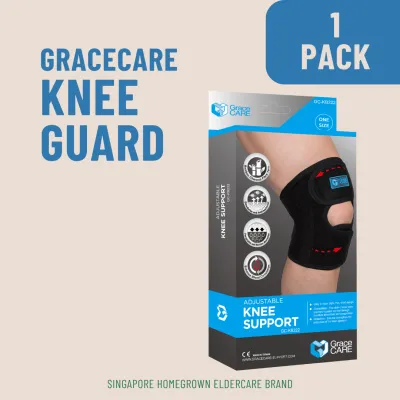
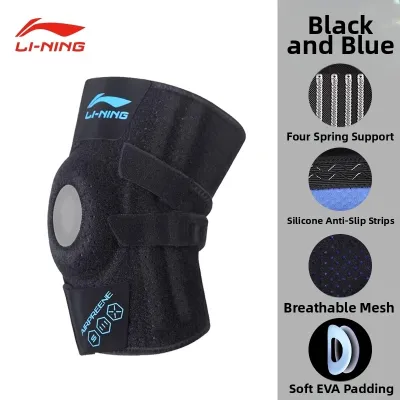
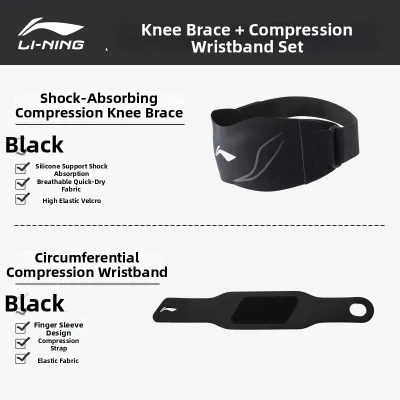
Prices are valid at publication and may change. Please refer to the product page for the latest price.
Running: Repetitive Linear Impact
Running is a highly repetitive, single-plane activity. With every stride, your knees absorb vertical impact forces that travel up from the ground. The primary biomechanical challenges here are managing repetitive shock and maintaining proper patellar tracking—the smooth movement of the kneecap within its groove. Runners rarely need protection against lateral twisting, but they do require lightweight, flexible support that prevents mild tendon strain without altering their natural running gait.
Weightlifting: Heavy Flexion and Axial Loading
Weightlifting, powerlifting, and heavy strength training subject the knees to extreme axial loads during deep joint flexion. When squatting or clean-pressing, the knee joint experiences intense compression. The primary requirement for weightlifters is joint warmth and heavy compression, which increases blood flow, enhances joint awareness, and provides a physical rebound effect at the bottom of a lift. Lateral movement is minimal, but the demand for structural density and joint warmth is exceptionally high.
Court Sports: Lateral Cuts and Sudden Deceleration
Court sports such as basketball, badminton, and tennis demand rapid multi-directional movement. Players must constantly perform sharp lateral cuts, sudden stops, and explosive jumps. These actions subject the knee to severe rotational and lateral shear forces, which can strain the ligaments. Players in these sports require knee guards that offer robust lateral stability to prevent the joint from shifting sideways, alongside sufficient impact absorption to handle hard court surfaces.
Matching Knee Guard Types to Activity Profiles
Once you understand the physical demands of your sport, you can match them to the correct knee guard category. Knee guards generally fall into three main structural designs, each offering a different trade-off between rigid support and unrestricted mobility.

Compression Sleeves
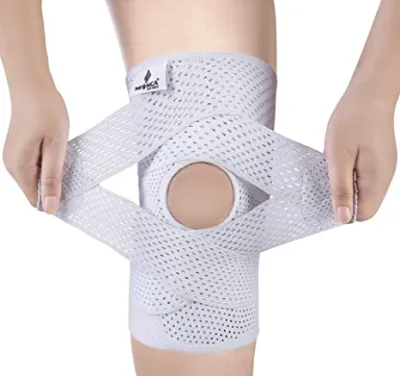
Compression sleeves are typically made from elastic knit fabrics or neoprene. They slip directly over the leg to provide mild, uniform compression around the entire joint. This compression increases local blood circulation, keeps the joint warm, and improves proprioception—your brain’s awareness of the joint’s position. Sleeves are highly flexible and breathable, making them the ideal choice for runners and general fitness enthusiasts who require unrestricted movement and mild support.
Patellar Straps and Bands
Patellar straps are narrow bands worn directly below the kneecap, applying targeted pressure to the patellar tendon. This pressure helps distribute forces away from the tendon, relieving strain and assisting with patellar tracking. Because they do not cover the entire joint, straps offer completely unrestricted knee flexion and maximum breathability. They are highly effective for athletes experiencing localized tendon discomfort from repetitive jumping or running.
Wraparound and Hinged Braces
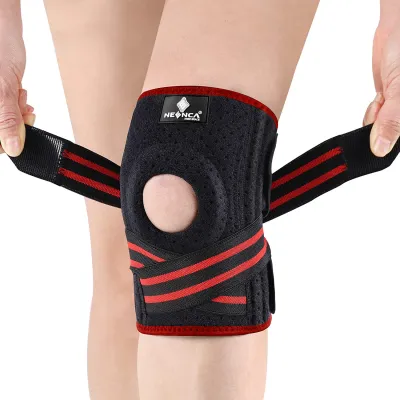
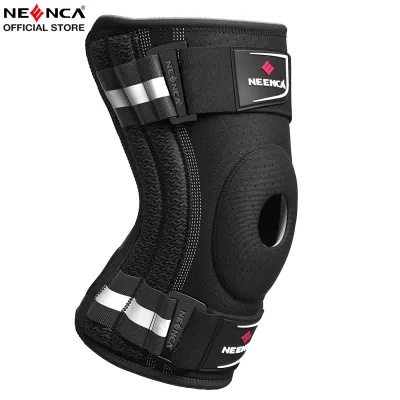
Wraparound braces feature adjustable hook-and-loop straps, while hinged braces incorporate plastic or metal hinges along the sides of the joint. These designs provide maximum structural stability by physically preventing the knee from twisting or bending sideways. While they offer the highest level of protection, they are heavier and restrict movement more than sleeves or straps. This makes them suitable for court sports players recovering from ligament strains, or weightlifters requiring maximum joint reinforcement under extreme loads.
Key Fit and Material Considerations
An improperly fitting knee guard can cause more harm than good. If a guard is too loose, it will slip down and fail to provide support; if it is too tight, it can restrict blood flow and pinch nerves during movement.
To find your correct size, do not rely on your standard clothing size. Use a flexible tape measure to find the circumference of your knee, measuring directly across the center of the kneecap while standing with your leg slightly bent. Many manufacturers also require measurements taken 10 to 15 centimeters above and below the kneecap to account for thigh and calf taper. Always compare your exact measurements to the manufacturer’s specific sizing chart.
Material choice is equally critical, especially when exercising in hot and humid climates. Sweat accumulation under a thick, non-breathable sleeve can lead to skin chafing, rashes, and slippage. For high-temperature environments, look for lightweight, moisture-wicking knit fabrics or perforated neoprene that allows heat to escape. Additionally, ensure the guard features integrated non-slip silicone gel strips along the inner cuffs to keep the support securely in place during intense, sweaty workouts.
Safety Limits and When to Seek Professional Advice
While a knee guard is a valuable training aid, it is important to recognize its limitations. A brace or sleeve is designed to support the joint, not to cure underlying structural damage or compensate for weak muscles. Relying on a knee guard as a permanent shield to mask pain can lead to muscle weakness over time, as the surrounding tissues stop working to stabilize the joint naturally. True joint longevity comes from progressive strength training, proper movement mechanics, and thorough warm-ups.
If you experience sharp or sudden pain, persistent swelling, joint locking, or a feeling that your knee is giving way, stop your activity immediately. These symptoms are red flags that indicate potential ligament or cartilage damage. In such cases, a knee guard cannot safely protect the joint, and you should seek a professional evaluation from a physiotherapist or medical doctor.
Finally, maintain your knee guard to preserve its supportive properties. Sweat, body oils, and dirt degrade elastic fibers over time. Hand wash your knee guard regularly in cool water using a mild detergent, and allow it to air dry completely away from direct heat sources. Avoid using fabric softeners or tumble dryers, as these will destroy the elasticity and ruin the non-slip silicone grips.
Frequently Asked Questions (FAQ)
Can I use the same knee guard for both running and weightlifting?
Using the same guard for both activities is generally not recommended because they have conflicting physical requirements. Running requires a highly flexible, breathable, and lightweight sleeve to allow continuous, unhindered movement. Weightlifting requires a much thicker, stiffer sleeve (often 7mm neoprene) to provide heavy compression and joint warmth under extreme loads. A stiff lifting sleeve will feel too restrictive and hot for running, while a thin running sleeve will not offer enough compression for heavy squats.
How tight should a knee guard feel during a workout?
A knee guard should feel snug, firm, and supportive, but it should never cause pain, numbness, tingling, or coldness in your lower leg or toes. If you notice deep red indentations on your skin after removing the guard, or if it pinches behind your knee when you bend your leg, the guard is too tight. It should stay securely in place during movement without sliding down, while still allowing a full, comfortable range of motion for your specific sport.
Should I wear a knee guard on both knees if only one hurts?
You should generally only wear a knee guard on the knee that requires support or is recovering from an injury. Wearing a brace on a healthy knee during running or court sports can alter your natural movement patterns, potentially causing you to compensate unnaturally and place excess stress on other joints. The exception is heavy bilateral weightlifting, where lifters often wear matching sleeves on both knees to ensure symmetrical compression and warmth across both joints under heavy loads.
Community discussion
Share your experience or ask a question. Comments are reviewed before publication.