
To choose the right Micro inline skates, you must match the boot construction, frame length, and wheel configuration to your specific skill level and the environment where you plan to skate. Beginners require high lateral ankle support and smaller wheels for stability, while advanced skaters can opt for lower-cut cuffs and larger wheels to maximize speed and power transfer. Selecting a model that aligns with your primary skating discipline—whether that is casual cruising along park connectors, technical urban commuting, or freestyle slalom—ensures optimal performance, safety, and comfort.
Assessing Your Skating Profile Before Choosing a Model
Before exploring the diverse lineup of Micro inline skates, you must evaluate your current physical capabilities, your skating goals, and the specific terrain you will encounter most frequently. Ask yourself where you intend to log most of your hours. In Singapore, this often translates to choosing between the long, smooth stretches of the Park Connector Network (PCN) and East Coast Park, or the high-friction, uneven pavements, curbs, and pedestrian traffic of urban centers. The frequency and duration of your sessions also dictate your comfort requirements; a skater planning a weekly two-hour fitness roll has different needs than a daily commuter or a technical slalom enthusiast practicing precise footwork in a confined space.
Your skill level is the most critical factor in determining the structural design of your skates. Beginners typically lack the deep muscle memory and ankle strength required to maintain a perfectly upright stance, making rigid lateral ankle support a non-negotiable safety feature. Intermediate and advanced skaters, by contrast, have developed the balance and edge control necessary to handle more flexible or lower-cut boots, which allow for a deeper knee bend and longer strides.
Products mentioned in this guide
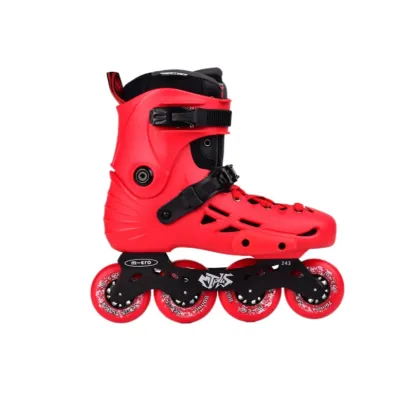
![Micro Super Inline Skates [Red] [PROMO]](https://img.lazcdn.com/g/p/56e3f763ce204ddafb85ceaabc226533.jpg_400x400q80.jpg_.webp)
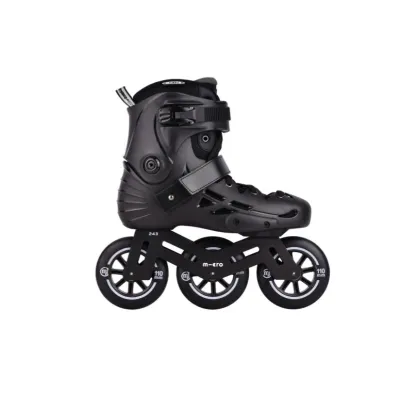
![Inline Skates Fire Frame by Micro Skates [ 3x125mm]](https://img.lazcdn.com/g/p/89c1ed0eaa0f63d9f8cbef752b7b4b70.jpg_400x400q80.jpg_.webp)
Prices are valid at publication and may change. Please refer to the product page for the latest price.
Micro is recognized globally for engineering skates with precise boot constructions and specialized frame designs that cater to these varying profiles. By understanding how different boot shells—ranging from forgiving semi-soft fabrics to ultra-rigid carbon fiber composites—interact with your feet, you can narrow down the product lines to find a model that supports your progression rather than hindering it.
Matching Micro Skate Categories to Your Discipline
Micro categorizes its inline skates into distinct families designed for specific disciplines. Choosing the wrong category can lead to discomfort, premature wear of the components, or a mismatch in maneuverability and speed.

Fitness and Recreational Cruising
Fitness and recreational cruising skates are engineered for skaters who prioritize straight-line speed, cardiovascular exercise, and sustained comfort over long distances. The boot structure of these models is typically semi-soft, utilizing breathable mesh fabrics and integrated foam liners that conform to the shape of your foot while allowing heat and moisture to escape during intense workouts in warm climates. These boots are paired with longer frames and larger wheels, which are optimized for maintaining momentum with minimal effort.
When browsing the Micro fitness lineup, you will commonly encounter models such as the Micro Beat or the Micro Phreak. These skates are designed with lightweight aluminum frames and wheel setups that often range from 80mm up to 110mm in diameter. The larger wheel configurations, sometimes referred to as “triskates” (three-wheel setups), roll over small cracks, twigs, and textured pavement with ease, providing a smooth ride on outdoor paths.
The ideal user for this category is an intermediate to advanced skater looking to cover long distances, such as completing a full loop of a local park or commuting along well-paved pathways. The emphasis is on endurance, smooth power transfer, and a comfortable fit that prevents hot spots and blisters over hours of continuous use.
However, these skates have distinct limitations. The longer frame length that provides stability at high speeds also increases the turning radius, making them less suitable for tight, rapid turns. Additionally, the semi-soft boot construction does not offer the impact resistance or extreme lateral rigidity needed for executing advanced slides, jumps, or highly technical freestyle maneuvers.
Urban Commuting and Freestyle Slalom
Urban commuting and freestyle slalom demand a highly responsive, durable skate that can withstand the physical impacts of city environments. Skates in this category feature hard-shell boots made of high-density polyurethane or reinforced carbon fiber composites. These rigid outer shells provide maximum protection against impacts, exceptional lateral support to prevent ankle roll, and highly efficient energy transfer from your legs to the pavement.
Representative models in this category include the Micro MT Plus and the Micro Super, as well as high-performance options like the Micro Delta F. These models are typically equipped with shorter, CNC-machined aluminum frames that position the wheels as close to the boot sole as possible. This low center of gravity combined with a short wheelbase allows for instantaneous turning, quick acceleration, and precise control over edge transitions.
This setup is ideal for skaters who navigate complex urban environments, where they must constantly steer around pedestrians, hop over curbs, and brake suddenly. It is also the preferred choice for freestyle slalom skaters who require absolute precision for wheelings, cross-overs, and intricate footwork patterns around cones.
The trade-off for this extreme responsiveness is a stiffer fit and a mandatory break-in period. Hard-shell boots do not conform to the foot as quickly as soft boots, and the dense liners can feel restrictive initially. Furthermore, the rigid shell offers less ventilation, which can lead to warmer feet during extended sessions, and the shorter frame requires more effort to maintain high top speeds over long, straight distances.
Beginners and Junior Skaters
For those taking their very first strides or parents purchasing gear for growing children, stability, safety, and adaptability are the primary concerns. Skates designed for this demographic focus on helping the user build confidence by lowering the barrier to balance and ensuring the foot is locked in a secure, anatomically correct position.
In the junior and beginner segment, models like the Micro Infinite and Micro Discovery are prominent choices. These skates frequently feature adjustable sizing mechanisms, allowing a single boot to expand across three to four sizes. This is achieved through a sliding toe-box design that maintains structural integrity while accommodating growing feet, making them a cost-effective option for parents.
The ideal user is a child or an adult beginner who needs maximum stability to learn the fundamentals of gliding, turning, and stopping. These skates often feature a slightly lower frame height to bring the skater closer to the ground, reducing the leverage that can cause ankles to wobble. They also come standard with a reliable heel brake, which is essential for learning how to control speed safely.
The main limitation of beginner and junior setups is their performance ceiling. As a skater’s skills progress and they begin to crave higher speeds or more advanced maneuverability, the flexible composite frames, smaller wheels, and basic bearing ratings found on entry-level models may begin to feel sluggish and restrictive, necessitating an upgrade to an intermediate urban or fitness model.
Critical Specifications to Compare Across Models
To make an informed purchase, you must look beyond the aesthetic design of the skate and carefully analyze the technical specifications listed on the product label.
Boot Material
The choice between a hard-shell and a soft-boot construction affects both performance and comfort. Hard-shell boots utilize an external plastic cuff and shell paired with a removable, washable fabric liner. This design offers superior durability, protects the foot from impacts, and ensures that every bit of muscular effort is translated into forward motion. Soft-boots integrate the supportive elements into an internal skeleton covered by stitched textiles, prioritizing lightweight comfort and breathability at the expense of maximum lateral support and impact resistance.
Frame Material and Length
The frame holds the wheels and is mounted directly to the bottom of the boot. Aluminum frames, particularly those crafted from 6000 or 7000 series alloy, offer excellent rigidity, ensuring minimal energy loss during your stride. Composite or plastic frames are more flexible; while they absorb road vibrations well and offer a softer ride on rough surfaces, they can flex under heavy loads or high speeds, reducing efficiency. Frame length is measured from the center of the front axle to the center of the rear axle. Shorter frames (typically 231mm to 243mm) prioritize quick turning and agility, whereas longer frames (270mm and above) provide a stable platform that prevents speed wobble during fast descents or long-distance cruising.
Wheels and Bearings
Wheels are characterized by their diameter (measured in millimeters) and their hardness or durometer (indicated by a number followed by the letter ‘A’). Larger wheels (90mm to 110mm) roll faster and roll over obstacles more easily, but they require more effort to accelerate from a standstill and raise your center of gravity. Smaller wheels (76mm to 80mm) offer rapid acceleration and a lower, more stable ride height.
Durometer ratings typically range from 80A (soft) to 86A (hard). Softer wheels provide more grip and absorb more vibration, making them comfortable on smooth indoor tracks, but they wear down quickly on rough outdoor asphalt. Harder wheels slide more easily, resist wear on abrasive concrete, and roll faster, but they transmit more road vibration to your feet.
Bearings are housed inside the wheels to allow them to spin freely. They are often rated using standards such as ABEC or specialized manufacturer ratings. While higher numbers generally indicate tighter manufacturing tolerances and smoother rotation, real-world performance is heavily influenced by the quality of the lubricant used and the effectiveness of the protective shields against dust and moisture.
Closure Systems
A secure closure system is vital for keeping your heel locked into the back of the boot, preventing heel lift which causes blisters and reduces control. Standard closure configurations combine traditional laces with a 45-degree instep strap (either Velcro or a ratchet buckle) and a top cuff buckle. Hard-shell skates often feature micro-adjustable ratchet buckles at both the instep and the cuff, allowing you to fine-tune the tightness to the millimeter. Soft-boots may utilize quick-lace systems or Velcro straps for speed and convenience, though they may require occasional retightening during long sessions.
| Component | Fitness/Cruising Priority | Urban/Slalom Priority |
|---|---|---|
| Boot Material | Semi-soft, breathable mesh for long-term comfort | Hard-shell or carbon composite for maximum support |
| Frame Material | Rigid aluminum, medium to long wheelbase | CNC-machined aluminum, short and highly agile |
| Wheel Diameter | 90mm to 110mm for maintaining high speeds | 76mm to 80mm for low center of gravity and agility |
| Wheel Hardness | 82A to 84A for a balance of grip and speed | 84A to 86A for durability and smooth sliding |
| Closure System | Laces combined with secure Velcro power straps | Dual micro-adjustable ratchet buckles and laces |
Essential Safety Gear and Skill Boundaries
No matter how advanced or high-tech your Micro inline skates are, they cannot replace physical conditioning, proper technique, and sound judgment. Inline skating carries inherent risks of falls and collisions, making high-quality protective gear an absolute necessity for every session, regardless of your skill level.
Before stepping onto the pavement, you must equip yourself with a complete set of safety gear. A properly fitted helmet is the most critical piece of equipment; ensure it is certified under relevant safety standards (such as EN 1078) and sits low on your forehead, covering the back of your head. Wrist guards are equally vital, as instinct dictates reaching out with your hands during a forward fall; a rigid plastic splint in the wrist guard absorbs the impact energy and allows you to slide, preventing severe fractures and hyperextension. Knee and elbow pads with durable plastic caps protect your joints from painful abrasions and absorb the shock of hard impacts.
Recognizing your physical and skill limits is fundamental to staying safe. Fatigue is a common trigger for accidents; when your leg muscles tire, your ankles tend to pronate (collapse inward), leading to poor control, loss of balance, and increased strain on your joints. If you feel your form deteriorating, it is time to stop and rest.
You must also constantly assess the riding surface. In tropical climates like Singapore, sudden rain showers can turn dry pavements into hazardous surfaces. Wet asphalt, painted road lines, metal drain covers, and smooth tiled pathways become exceptionally slippery when wet, drastically reducing your wheels’ traction and making braking nearly impossible. Debris such as fallen leaves, twigs, loose sand, and small stones can easily lock up smaller wheels, leading to sudden forward falls.
Before attempting to skate at high speeds or navigate crowded public paths, you must master the fundamental skills of stopping and falling safely. Practice controlling your speed using the heel brake, or learn the T-stop and plow stop on a flat, empty surface. When a fall is unavoidable, try to lower your center of gravity by bending your knees, and aim to fall forward onto your protective pads, letting the plastic caps slide along the ground to dissipate the impact force safely. Always check your specific Micro model’s manual for manufacturer weight limits and intended use guidelines to ensure you do not exceed the structural design parameters of the skate.
Buying in Singapore and Post-Delivery Checks
To ensure you receive an authentic product backed by a valid manufacturer warranty, you should purchase your Micro inline skates exclusively from official brand stores, authorized physical specialty shops, or verified online retail channels in Singapore. Buying from unauthorized sellers or unverified online marketplaces carries the risk of purchasing counterfeit goods or models stored in poor conditions, which can compromise the integrity of the plastics and adhesives.
Once your skates arrive, perform a thorough post-delivery inspection before taking them outside:
- Verify the Fit Indoors: Put on the skates inside your home on a clean, carpeted surface. Fasten the laces and buckles securely. Stand up and bend your knees into a skating stance. Your toes should gently touch the front of the toe box when standing completely straight, but they should pull back slightly and clear the front when you bend your knees. If your toes are painfully cramped or if your heel slips up and down when you walk, the size is incorrect.
- Check Frame Alignment: Ensure that the frame is centered under the boot. Some intermediate and advanced Micro models allow you to adjust the frame laterally. If you find your ankles rolling inward or outward excessively while standing still, you may need to adjust the frame position slightly to compensate for your natural pronation or supination.
- Inspect the Hardware: Use the Allen key provided in the box to check that all axle bolts, frame mounting bolts, and buckle screws are tightened securely. It is common for hardware to settle during shipping, and a loose axle can lead to a wheel detaching during a ride.
- Retain Packaging and Receipts: Keep the original box, tags, and purchase receipt intact. Most authorized retailers will only accept exchanges for sizing issues if the skates are in brand-new, unused condition with all original packaging.
Frequently Asked Questions (FAQ)
Are Micro inline skates suitable for wide feet?
The fit of Micro inline skates depends heavily on the specific model and boot construction. Generally, soft-boot models and semi-soft fitness skates offer more flexibility and can stretch slightly to accommodate wider foot profiles comfortably. Hard-shell models provide a highly rigid structure that does not stretch; however, certain urban models are designed with a wider toe box than others. To avoid discomfort or pressure points, you should check the manufacturer’s specific width recommendations or visit an authorized physical specialty store in Singapore to try on different shells before completing your purchase online.
How often should I replace the wheels and bearings?
There is no fixed calendar timeline for replacing wheels and bearings, as wear rates depend on your body weight, skating frequency, the roughness of the surfaces you ride on, and your braking techniques. You should inspect your wheels regularly for visual indicators of wear, such as a sharp asymmetrical profile, flat spots, or cracking in the urethane. Rotating your wheels periodically (swapping their positions and flipping them) helps ensure even wear and extends their lifespan. For bearings, you should listen for grinding, clicking, or rattling noises, and check if the wheels spin smoothly without resistance; exposure to water, dust, and humidity can cause internal corrosion, indicating that the bearings require cleaning, lubrication, or complete replacement.
Community discussion
Share your experience or ask a question. Comments are reviewed before publication.