
Selecting the ideal mobile phone holder for your bicycle depends on matching the mount’s physical design to your bike’s cockpit geometry and aligning its security features with your typical riding environment. Whether you are navigating Singapore’s Park Connector Network (PCN) on a folding bike or embarking on long-distance road tours, the right mount keeps your device secure and legible without interfering with your steering. By evaluating your handlebar space, understanding your route’s vibration levels, and checking compatibility with your phone case, you can find a mounting system that protects your device from sudden tropical downpours and rough terrain.
Match the Mounting Style to Your Bicycle Type
Your bicycle’s cockpit setup is the primary factor that determines which phone holder style will fit securely. Standard cylindrical handlebars, commonly found on hybrid, commuter, and mountain bikes, are highly compatible with classic handlebar clamp mounts. These mounts use a circular bracket that wraps around the bar, secured by screws or a thumb-wheel. Before purchasing, you must verify your handlebar’s outer diameter—typically 22.2 mm, 25.4 mm, or 31.8 mm—and ensure there is enough straight, unobstructed clamping space next to your grips or stem.
For bicycles with limited handlebar space, such as road bikes with wrapped drop bars or integrated aero cockpits, a stem cap mount offers a streamlined alternative. This style replaces your existing stem top cap or bolts directly into the stem faceplate, positioning your phone directly in the center of your line of sight. When choosing a stem mount, inspect your stem bolt pattern and clearance to ensure the bracket does not pinch your cables or restrict your steering rotation.
Products mentioned in this guide
![[SG Ready Stock] GUB G-81 Mobile Phone Holder G81 Bicycle Bike Electric Scooter Motorcycle Phone Holders](https://img.lazcdn.com/g/p/82a416f0ed5cb32f4f621be9e20be181.jpg_400x400q80.jpg_.webp)
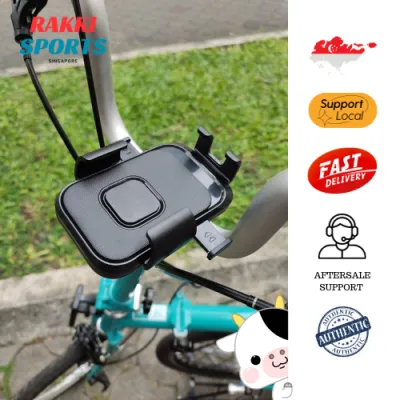
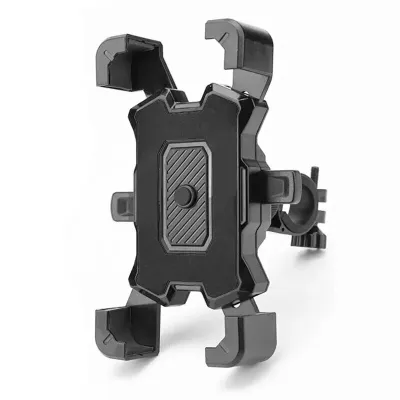
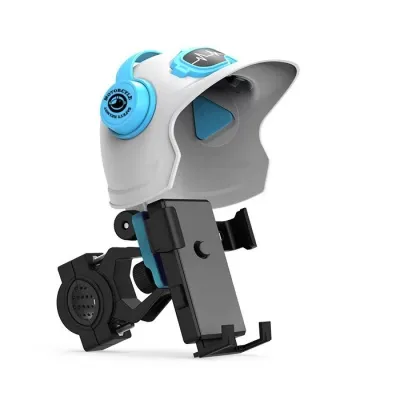
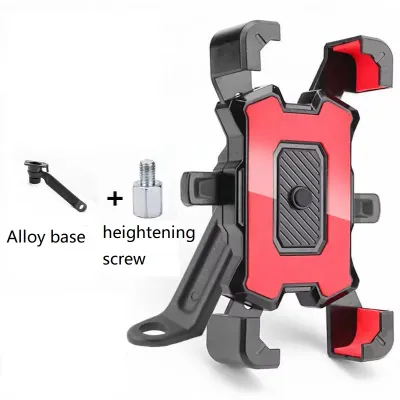
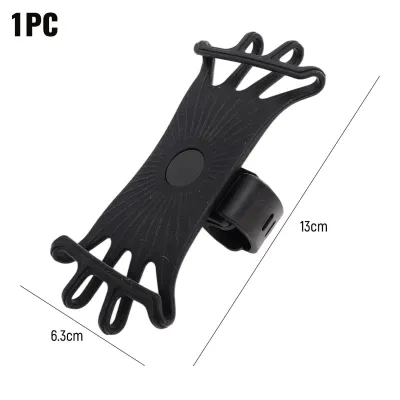
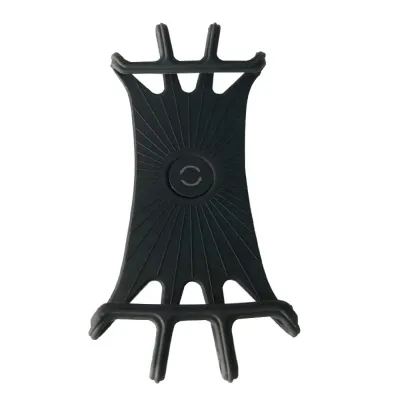
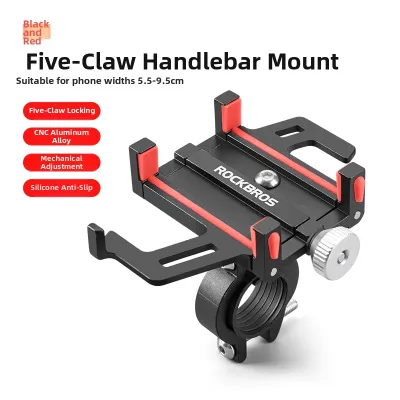
Prices are valid at publication and may change. Please refer to the product page for the latest price.
If your front end is fully occupied by front lights, a cycle computer, or a bell, or if you ride a folding bike with an unconventional folding mechanism, a frame bag or top tube mount is often the most practical choice. These bags strap securely to the top tube and steering column, housing your phone beneath a clear, touch-compatible plastic window while providing extra storage space for keys or an external battery. However, because these bags sit lower on the frame, they require you to look further down to read your screen, which may affect your situational awareness on busy paths.
To avoid compatibility issues, always use a caliper or a flexible measuring tape to measure your handlebar’s exact diameter at the intended mounting point. Inspect your stem bolts and front-end clearance against the mount manufacturer’s specifications before making a purchase.
Choose the Right Holder for Your Riding Scenarios
Your typical cycling environment and pace dictate the level of physical protection, stability, and convenience your phone holder must provide. A casual weekend ride along paved coastal paths requires a very different setup than high-speed road descents or long-distance touring. Matching the holder’s locking mechanism and weather resistance to your specific route ensures your device remains safe and functional throughout the journey.

PCN Commuting and Urban Navigation
Commuting through urban areas and navigating the shared paths of the Park Connector Network requires a phone holder designed for frequent stops and high convenience. Quick-release mechanisms, such as spring-loaded clamps or single-button detaching systems, are highly beneficial for city riders. These designs allow you to mount or remove your phone in seconds when parking at a transit hub, popping into a shop, or leaving your bike unattended, reducing the risk of opportunistic theft.
Urban environments also demand low-profile mount designs that do not protrude excessively from your handlebars. A compact mount minimizes the risk of your phone snagging on clothing, bags, or low-hanging foliage along narrow shared paths. Additionally, because tropical climates are prone to sudden, heavy rain showers, urban riders should look for mounts that offer quick-deploying weather covers or integrated drainage channels to prevent water from pooling around the device’s ports.
Recreational Rides and Long-Distance Touring
For long-distance touring and recreational rides that span several hours, physical durability and continuous power access become the primary concerns. Sustained riding over varied terrain, including unpaved gravel paths or older asphalt, subjects your phone to continuous high-frequency vibrations. To protect your smartphone’s delicate internal components, particularly the optical image stabilization (OIS) systems in modern cameras, look for mounts compatible with dedicated vibration-dampening modules.
Longer journeys also require secure mechanical locking systems rather than simple elastic bands. While silicone straps are excellent for short trips, they can stretch or degrade under prolonged exposure to heat and UV rays, potentially loosening during high-speed descents or over bumpy surfaces. A mechanical lock that physically clamps the phone’s edges provides a more reliable hold over extended periods. Furthermore, ensure the mount’s bracket design leaves your phone’s charging port completely unobstructed, allowing you to connect a power bank mounted on your top tube to keep your navigation running all day.
Key Features to Check Before You Buy
Before committing to a specific phone holder, you must evaluate how well the system integrates with your existing mobile device and daily habits. The first consideration is case compatibility. Universal silicone strap systems are highly versatile and can accommodate almost any phone brand or case thickness, making them ideal if you frequently upgrade your phone or share the mount with family members. However, they can block portions of your screen or front-facing sensors. Conversely, proprietary hard-case ecosystems require a matching phone case that twists and locks into a dedicated mount, offering a highly secure and low-profile connection at the cost of flexibility.
Material durability is another critical factor to verify on the manufacturer’s product label. Look for mounts constructed from high-grade materials such as CNC-machined aluminum or UV-stabilized polycarbonate. These materials resist degradation from intense sunlight and high humidity, ensuring the bracket does not become brittle over time. Always check the manufacturer’s specified load limits to confirm the mount can support the weight of your specific phone model, especially if you use a heavy, ruggedized case.
Finally, verify that the mount’s physical design does not interfere with your phone’s usability. The clamping arms or silicone straps must not press against your phone’s side buttons, which can cause accidental volume changes or emergency calls. Ensure the mount allows full access to biometric sensors, such as face recognition or fingerprint scanners, and leaves the bottom charging port clear for on-the-go power connections.
Installation and Safety Checks for Every Ride
Proper installation is just as important as choosing the right mount. When installing a handlebar clamp, always follow the manufacturer’s recommended torque specifications to avoid over-tightening, which can crush carbon fiber handlebars or strip plastic threads. Use the provided rubber shims or spacers; these not only protect your handlebars from scratches but also provide the necessary friction to prevent the mount from rotating forward when you hit a bump.
Before setting off on any ride, establish a quick safety routine. Perform a physical shake test by firmly grasping the mounted phone and checking for any play or movement in the bracket. Visually inspect all locking mechanisms, ensuring that quick-release levers are fully engaged and that any silicone safety straps are free of tears or dry rot.
If you observe any signs of wear, stop using the mount immediately to prevent device damage or a potential accident. Discontinue use and consult the manufacturer if you notice stress cracks in plastic components, if metal bolts loosen repeatedly despite proper torque, or if the phone exhibits excessive movement during normal riding. Remember that no accessory can replace active rider judgment; always pull over to a safe spot if you need to interact with your navigation screen.
Frequently Asked Questions (FAQ)
Can I use a standard clamp on an aero handlebar?
Standard circular clamps are not compatible with non-cylindrical, flat-topped aero handlebars, as they cannot form a secure grip on the irregular shape and may damage carbon fiber structures. Attempting to force a standard clamp onto an aero bar can lead to slippage or structural failure. Instead, riders with aero handlebars should look for stem faceplate mounts, top cap mounts, or dedicated out-front adapters designed to bolt directly into the accessory threads underneath integrated cockpits.
Do I need a vibration dampener for my phone mount?
If you ride a modern smartphone with optical image stabilization (OIS) on rough roads, gravel paths, or uneven pavements, a vibration dampener is highly recommended. The high-frequency vibrations transmitted through a bicycle’s rigid frame can gradually degrade the delicate mechanical gyroscopes inside your phone’s camera, leading to blurry photos or permanent camera failure. Many premium mount manufacturers offer modular vibration-dampening inserts that absorb these high-frequency shocks, helping to safeguard your device’s hardware over long-term use.
Community discussion
Share your experience or ask a question. Comments are reviewed before publication.