
Selecting the ideal thickness for an nbr yoga mat requires balancing joint protection against physical stability. Nitrile Butadiene Rubber (NBR) is a synthetic rubber copolymer characterized by its highly flexible, closed-cell structure, designed primarily to absorb impact rather than to provide high-traction grip or rigid balance. Unlike thin natural rubber or polyurethane mats, NBR mats are chosen for their plush cushioning, making them popular among beginners, individuals with joint sensitivity, and Pilates practitioners. However, choosing the wrong thickness can compromise your alignment or lead to injury.
To make an informed decision, you must evaluate how different thickness levels interact with your body weight, your specific workout venue, and the style of exercise you practice. Because NBR is highly compressible, a thickness that works perfectly for a lightweight individual doing gentle stretches may completely bottom out for a heavier user performing dynamic movements. Understanding this physical behavior is key to selecting a mat that protects your joints without compromising your safety.
Quick Guide: Matching NBR Thickness to Your Body and Practice
To help you identify the correct thickness range immediately, use this structured decision framework based on your physical needs and workout style:
Products mentioned in this guide
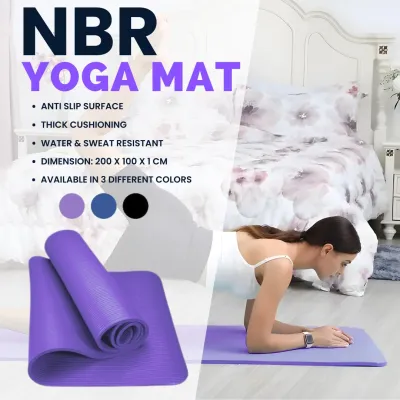
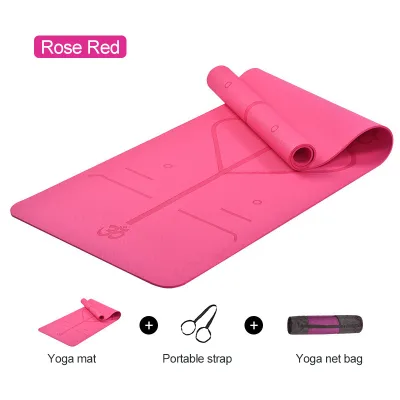
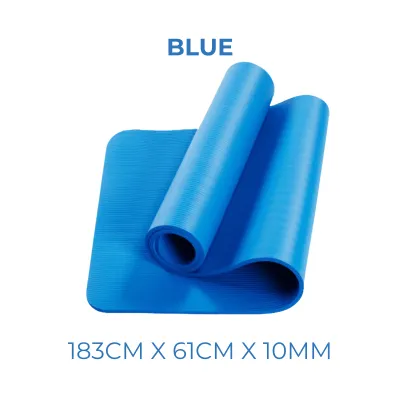
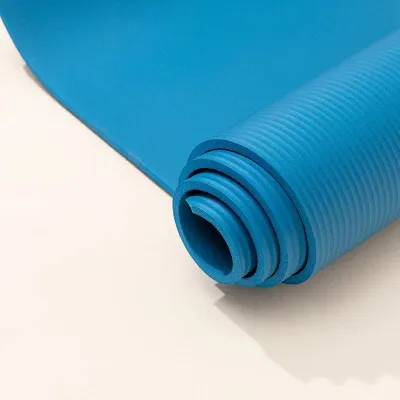
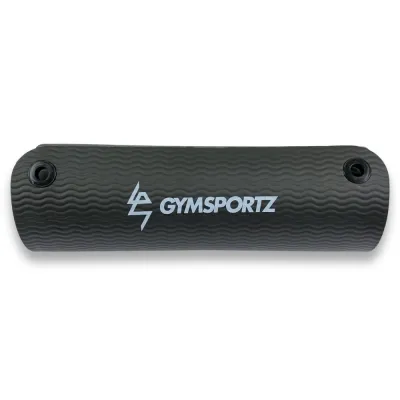
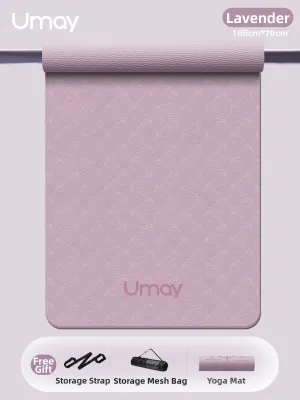
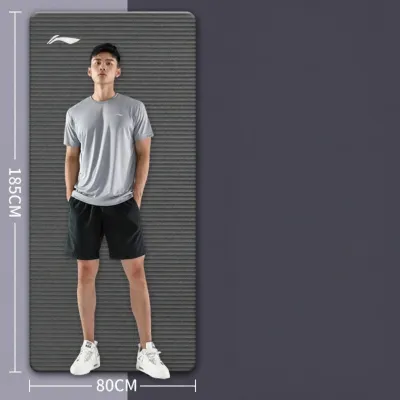
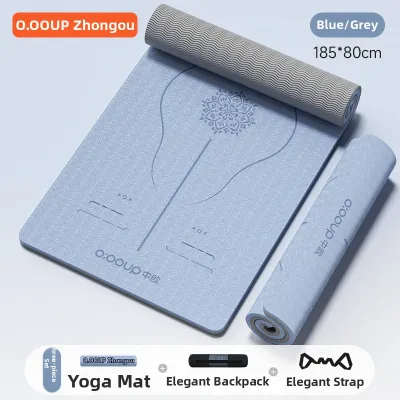
Prices are valid at publication and may change. Please refer to the product page for the latest price.
- Choose 8mm to 10mm if you practice gentle hatha or slow-flow yoga, require moderate cushioning for your knees, and want to maintain solid contact with the floor for basic standing postures.
- Choose 10mm to 12mm if you primarily practice Pilates, perform floor-based core conditioning, or have sensitive joints that require balanced protection during kneeling movements.
- Choose 15mm and above if you focus entirely on restorative yoga, prenatal exercises, or physical therapy rehabilitation where standing balance is not required.
- Verify first if your routine includes dynamic, fast-paced styles like Vinyasa, Ashtanga, or hot yoga. In these practices, the high compression of thick NBR foam can compromise wrist and ankle alignment, increasing the risk of joint strain.
| Thickness Range | Primary Use Cases | Stability Level | Ideal Body & User Type |
|---|---|---|---|
| 8mm to 10mm | Gentle yoga, basic floor stretches, light transitions | Moderate to High | Beginners, lightweight individuals, general fitness |
| 10mm to 12mm | Pilates, core conditioning, kneeling exercises | Moderate | Users with sensitive knees, hybrid home fitness |
| 15mm and above | Restorative yoga, prenatal, physical therapy | Low (Unstable for standing) | Rehabilitation patients, seniors, purely floor-based users |
Why NBR Yoga Mat Thickness Behaves Differently Across Brands
When shopping for an nbr yoga mat, relying solely on the thickness measurement listed in a product title can be highly misleading. This is because NBR is a foamed polymer, and its performance is dictated by its density rather than its height alone. During manufacturing, gas is injected into the liquid rubber to create a cellular structure. The ratio of gas to rubber determines the density of the final product.

A budget brand might produce a 15mm mat that contains a high volume of air bubbles and a low concentration of actual rubber. While this mat may feel incredibly soft and plush when you press it with your hand, it lacks structural integrity. Under the concentrated weight of a knee, elbow, or tailbone, the low-density foam collapses completely, leading to a painful bottoming-out effect against the hard floor. Conversely, a high-density 10mm mat from a reputable manufacturer can distribute body weight more evenly, offering superior joint support despite being thinner on paper.
Furthermore, measurement standards vary widely across the industry. Some brands measure the mat’s thickness at the outer ribbed edges, which naturally flare out during the cutting process, while the actual functional center of the mat is significantly thinner. E-commerce listings often use these nominal edge measurements as marketing hooks. To get an accurate picture of a mat’s quality before purchasing, look for the product’s net weight as a proxy for density. A heavier mat of the same thickness almost always indicates a denser, more supportive foam structure that will retain its shape over time.
Comparing Standard NBR Thickness Levels
Understanding the physical feedback and limitations of each thickness category will help you choose a mat that matches your physical capabilities and workout environment.
8mm to 10mm: Moderate Cushion for Gentle Yoga and Transitions
At this thickness, the mat serves as an entry-point option for those moving away from thin, standard PVC mats. The user experience is characterized by a firm yet slightly cushioned feel that provides adequate protection for basic kneeling poses like Cat-Cow or Tabletop. It allows the hands and feet to sink just enough to relieve pressure points without separating you from the solid floor beneath, preserving your sense of ground feedback.
However, this range has clear physical limitations. For heavier practitioners or those with acute joint issues, an 8mm to 10mm NBR mat may not offer enough shock absorption during deep transitions or prolonged kneeling sequences. If you sink completely through the foam during a low lunge, the lack of support can lead to immediate discomfort.
This thickness is ideal for beginners who are still developing their balance and require a stable foundation for standing poses like Warrior or Tree Pose. It strikes a practical middle ground, offering a touch of comfort while ensuring your ankles do not wobble excessively due to foam compression.
10mm to 12mm: Optimal Joint Support for Pilates and Sensitive Knees
The 10mm to 12mm range is widely considered the sweet spot for general floor fitness and Pilates. The user experience is distinctly plush, providing excellent shock absorption for exercises that involve rolling the spine or executing sit-ups on hard surfaces. It absorbs impact exceptionally well, making it a favorite for home workouts that combine bodyweight movements with light stretching.
The primary trade-off with this thickness is a noticeable reduction in lateral stability. When standing on one leg, the thicker foam compresses unevenly under the foot, forcing the small stabilizing muscles in the ankle and foot to work significantly harder to maintain balance. This can lead to premature fatigue or minor wobbling during static yoga poses.
This category is highly recommended for individuals with mild joint sensitivities, Pilates practitioners who spend a significant portion of their routine on their back or knees, and home fitness enthusiasts. It provides a comfortable barrier against cold, hard tiles or wooden floors without being completely unmanageable to roll up and store.
15mm and Above: Maximum Padding for Restorative Poses and Rehabilitation
Mats measuring 15mm and thicker offer the highest level of cushioning available in the synthetic rubber category. Standing or lying on these mats feels akin to a firm mattress, completely isolating the body from the hard floor beneath. The pressure on sensitive joints is virtually eliminated, making it an incredibly comfortable surface for long, passive holds.
Despite the comfort, the safety and performance boundaries of ultra-thick mats must be strictly managed. These mats are highly unsuitable for any standing balance postures, dynamic flows, or rapid transitions. The deep compression creates an uneven, unstable surface that can easily cause ankle rolls or wrist strain if you attempt to support your full body weight dynamically.
The ideal user for this category is someone practicing purely restorative or prenatal yoga, where poses are held close to the ground with extensive support. It is also highly beneficial for physical therapy and rehabilitation exercises where comfort is the primary goal and standing balance is not required.
How to Evaluate Brand Claims and Product Specifications
When browsing different brands on online marketplaces, navigating marketing jargon requires a systematic approach. Use these four evaluation metrics to filter out low-quality options:
- Weight-to-Thickness Ratio: Always cross-reference the listed thickness with the total weight of the mat. For example, a standard 183cm x 61cm NBR mat that is 10mm thick should ideally weigh between 800 grams and 1.1 kilograms. If you see a 15mm mat listed at under 700 grams, it is highly likely made of low-density, air-filled foam that will flatten instantly under pressure and degrade rapidly with use.
- Review Analysis: Analyze user feedback systematically rather than relying on star ratings. Search specifically for terms like "bottoming out," "flattened," "indents," or "tore." If multiple reviews mention that the mat retains deep indentations from knees or elbows hours after a workout, the foam lacks the resilience needed for proper joint support.
- Edge vs. Center Measurement: Be aware that some manufacturers measure the mat's thickness at the outer ribbed edges, which naturally flare out during production. The actual functional center where you place your weight may be up to 2mm thinner. Check customer-uploaded photos or the Q&A section to verify the true, uniform thickness of the mat.
- Material Blends: Verify the material composition carefully. Some low-cost products are marketed as NBR but are actually blended with cheaper materials like EVA (Ethylene-Vinyl Acetate) or low-grade PVC. Pure NBR is highly flexible, has a distinct rubbery feel, and does not crease easily when folded; blended mats are often stiffer, less durable, and may emit a strong chemical odor that persists for weeks.
Practical Considerations: Storage, Weight, and Climate in Singapore
Choosing an NBR mat is not just about the workout; it must also fit into your daily lifestyle and physical environment.
In Singapore, where compact HDB apartments and condominiums are the norm, storage space is a premium. A rolled-up 15mm NBR mat is incredibly bulky, often measuring over 20cm in diameter when rolled. It will not fit into standard yoga mat bags and can easily clutter small living spaces or closets if you do not have a dedicated storage area.
High-density NBR mats are also heavy. If your routine involves commuting to a local community center or a yoga studio via the MRT or bus, carrying a heavy, bulky 12mm or 15mm mat can become a physical chore. For those who travel frequently with their mats, a lighter 8mm option is far more practical.
Furthermore, Singapore’s tropical climate, characterized by high humidity and warm temperatures, presents unique maintenance challenges. NBR is a closed-cell foam, but the textured, ribbed surfaces common on these mats can trap sweat, skin oils, and moisture. In a humid environment, trapped moisture becomes a breeding ground for bacteria and mold, leading to persistent, unpleasant odors and material degradation.
To maintain your mat, never roll it up immediately after a sweaty session. Wipe it down with a damp cloth and a mild soap solution, then allow it to air dry completely in a shaded, well-ventilated indoor area. Avoid direct sunlight, as UV rays will degrade the NBR polymer, causing it to become brittle and crumble.
Frequently Asked Questions (FAQ)
Is a thicker NBR mat always better for beginners?
No, a thicker mat is not inherently better for someone starting their fitness journey. While extra cushioning protects sensitive joints, it also reduces your connection to the floor, making it difficult to sense your body’s alignment and balance. Beginners learning foundational poses may find a 15mm mat frustratingly unstable, potentially leading to incorrect form or ankle strain. For a balanced learning experience, an 8mm to 10mm mat is generally recommended.
Can I use a 15mm NBR mat for high-intensity interval training (HIIT)?
You should strongly avoid using a 15mm NBR mat for HIIT, plyometrics, or any routine involving rapid lateral movements and jumping. The thick, soft foam compresses deeply and unevenly, creating an unstable landing surface that significantly increases the risk of twisting an ankle or straining a knee. For high-impact workouts, opt for a thinner, high-density natural rubber mat or a specialized utility fitness mat designed to handle dynamic forces.
Community discussion
Share your experience or ask a question. Comments are reviewed before publication.