
Choosing the right neoprene socks for snorkeling comes down to balancing three key factors: thickness, fit, and sole construction. To find the perfect pair, you must match the water temperature of your destination with the correct thickness—typically 2mm to 3mm for warm tropical waters and 5mm for cooler environments—while ensuring a snug, wrinkle-free fit that prevents painful blisters without restricting blood circulation.
Why You Need Neoprene Socks for Snorkeling
Snorkeling is one of the most accessible ways to explore marine life, but spending hours in the water can take a toll on your feet. While many beginners assume that slipping on a pair of fins barefoot is sufficient, they quickly discover the discomfort of chafing, raw skin, and cold toes. Traditional cotton socks are entirely unsuitable; they absorb water, sag, trap sand, and offer virtually zero thermal or physical protection. This is where specialized neoprene socks become an essential addition to your snorkeling gear bag.
The primary benefit of neoprene socks is physical protection. When walking through shallow water or wading near shorelines, your feet are vulnerable to sharp coral fragments, jagged volcanic rocks, sea urchins, and scorching hot sand. A durable layer of neoprene acts as a reliable barrier against these hazards. Furthermore, when you are actively kicking, the constant motion of your snorkeling fins creates friction against your skin, particularly around the heel, ankle, and toes. Neoprene socks absorb this friction, preventing the painful blisters and raw spots that can cut a snorkeling trip short.
Products mentioned in this guide
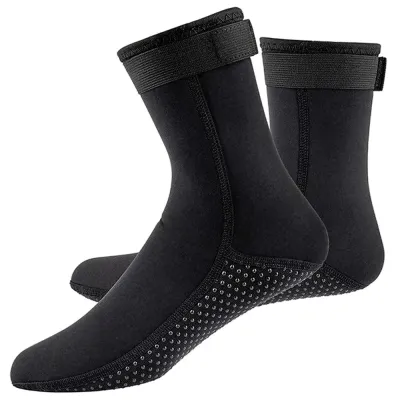
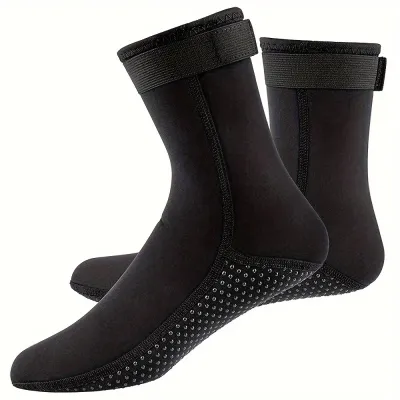
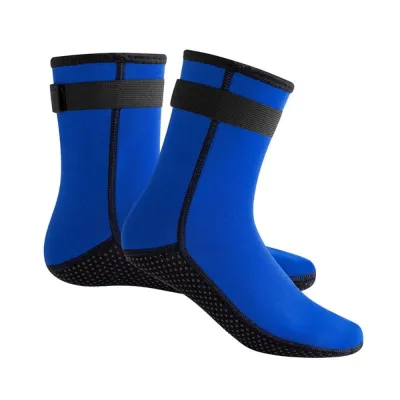
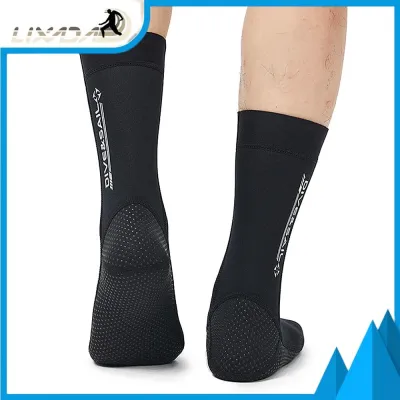
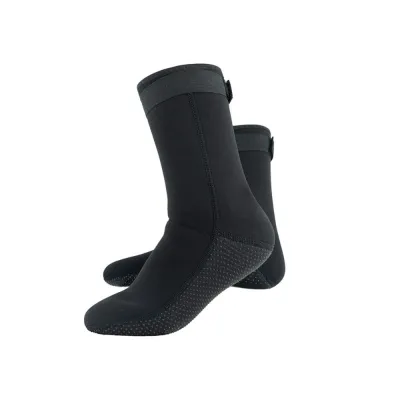
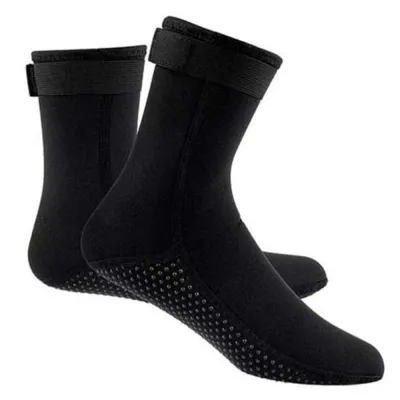
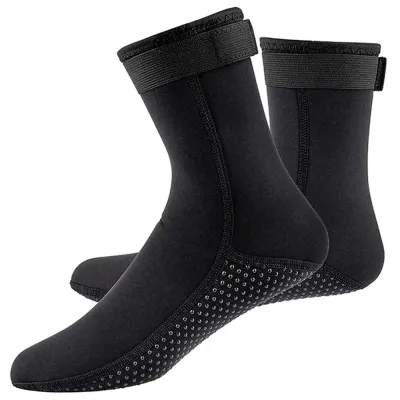
Prices are valid at publication and may change. Please refer to the product page for the latest price.
Beyond physical protection, these socks offer critical thermal insulation. Even in relatively warm tropical waters, such as those around Singapore’s Southern Islands or regional snorkeling hotspots in Southeast Asia, your body loses heat faster in water than in air. Over time, this temperature drop can lead to muscle fatigue and mild shivering. Neoprene socks trap a thin layer of water next to your skin, which your body naturally warms up, keeping your extremities comfortable so you can extend your time in the water.
Choosing the Right Thickness for Snorkeling
Neoprene gear is categorized by its thickness, measured in millimeters (mm). Selecting the correct thickness is a balancing act between thermal insulation and physical volume. As the millimeter count increases, the sock becomes warmer but also significantly bulkier. This added bulk directly impacts how your feet fit inside your snorkeling fins.

When selecting your socks, you must consider the design of your existing fins. Full-foot fins, which feature a closed, soft rubber heel pocket, have very little stretch. If you pair them with excessively thick socks, your feet will be squeezed too tightly, leading to restricted blood circulation, cramping, and cold toes. On the other hand, open-heel fins with adjustable straps are much more forgiving and can easily accommodate thicker socks or heavy-duty dive booties. For tropical snorkeling, choosing an overly thick sock is a common mistake that leads to discomfort rather than warmth.
2mm to 3mm Socks for Tropical Waters
For the vast majority of snorkelers, particularly those exploring warm tropical waters ranging from 25°C to 30°C, a thickness of 2mm to 3mm is the absolute sweet spot. In these warm environments, heavy thermal insulation is not the primary concern. Instead, the focus is on abrasion protection, preventing sand from rubbing against your skin, and stopping fin chafing.
Socks in the 2mm to 3mm range add minimal bulk to your feet. This thin profile means they can usually be worn with your standard full-foot snorkeling fins without requiring you to buy a larger fin size. They provide just enough cushion to eliminate raw spots while remaining highly flexible, lightweight, and easy to pack for travel.
5mm Socks for Cooler Conditions
If you plan to snorkel in cooler waters—typically below 20°C—or if you are highly sensitive to the cold, 5mm neoprene socks are a more appropriate choice. These thicker socks are designed to provide substantial thermal insulation, keeping your feet warm during long exposures in temperate climates or deep-water quarries.
However, the extra insulation comes with a trade-off in volume. A 5mm sock is noticeably thick and will almost certainly make your standard full-foot fins feel painfully tight. If you opt for 5mm socks, you will likely need to pair them with adjustable, open-heel fins, or size up your full-foot fins by one or two sizes to accommodate the extra material. Always check the fit before heading out to ensure your toes are not cramped.
Getting the Sizing and Fit Right
Finding the correct size for neoprene socks can be slightly tricky because they do not always align perfectly with standard shoe sizes. The overarching rule for water socks is that they must fit snugly, behaving like a second skin. Any loose material or sagging will compromise their performance.
A proper fit means the sock contouring closely to every curve of your foot. There should be no excess fabric bunching up around your arches, heels, or ankles. When neoprene wrinkles inside a fin, those folds create high-pressure friction points that rapidly turn into blisters. At the same time, the sock should not be so tight that it compresses your toes or cuts off blood flow at your ankles.
To verify the fit, pay close attention to the toe box. Your toes should lie completely flat and have a tiny bit of wiggle room at the tip. If your toes are forced to curl or feel tightly squeezed together, the sock is too small. Cramped toes restrict local blood circulation, which paradoxically makes your feet feel much colder, even in warm water.
Next, evaluate the heel fit. When you take a few steps on dry land, your heel should remain firmly in place inside the sock. If your heel slips up and down with every step, the sock is too large. This slippage will translate to constant rubbing inside your fin pocket, rendering the sock useless for blister prevention.
If you find yourself between standard sizes, the general recommendation is to size down rather than up. Neoprene is highly elastic and will stretch slightly to conform to your foot shape when wet. A slightly snugger sock will maintain a better seal around your ankle, preventing excess water and abrasive sand from flushing through the sock. However, if your snorkeling fins are already exceptionally tight on your bare feet, sizing down the sock may still result in too much pressure once inside the fin, in which case a thinner sock or a larger fin is necessary.
Evaluating Sole Types and Seam Construction
Not all neoprene socks are built the same way. The type of sole and how the seams are stitched will determine how durable the socks are, how well they protect you on land, and how much water they let in. Matching these features to your specific snorkeling environment will ensure your gear lasts for many seasons.
Soft Soles vs. Textured or Hard Soles
Soft-soled neoprene socks are made entirely of flexible, thin neoprene on the bottom, sometimes with a very light printed pattern for minimal slip resistance. These are ideal if you primarily enter the water from a boat, a sandy beach, or a swimming pool, where you can put your fins on immediately. They offer maximum flexibility, feel incredibly comfortable inside a fin pocket, and add virtually no weight to your gear bag.
In contrast, textured or hard-soled socks feature a reinforced bottom layer made of durable rubber, Kevlar, or tough textured fabric. If your snorkeling adventures involve walking over sharp volcanic rocks, navigating slippery boat decks, or trekking across gravel paths to reach the water, these are essential. The reinforced sole protects the delicate neoprene from tearing and shields your soles from sharp objects, though they add slightly more bulk inside your fins.
Flatlock vs. Blindstitched Seams
The way the panels of your socks are sewn together directly impacts their durability and water permeability. Flatlock stitching is the most common method used in entry-level, budget-friendly socks, which typically cost between S$15 and S$30. This method involves stitching through both overlapping layers of neoprene. While highly durable and comfortable against the skin, flatlock seams leave tiny needle holes that allow water to slowly seep in and out. This makes them highly breathable and perfect for warm-water snorkeling where water exchange is not a problem.
For maximum warmth, look for blindstitched (often called glued and blindstitched, or GBS) seams. In this construction, the panels are first glued together and then stitched using a curved needle that only penetrates halfway through the neoprene, leaving the inner layer completely intact. This creates a highly water-resistant, near-watertight seal that prevents cold water from flushing through the sock. While GBS socks are generally more expensive—often ranging from S$40 to S$70—they are superior for cooler waters or extended snorkeling sessions.
How to Test the Fit with Your Snorkeling Fins
Before using any new gear, always check the manufacturer instructions for both your neoprene socks and snorkeling fins to ensure compatibility and safe usage. Never wait until you are on a boat or standing on a beach to try on your new neoprene socks with your fins for the first time. A dry test at home is crucial to ensuring that your gear combination is compatible and comfortable.
Begin by putting on your neoprene socks, making sure the heels are aligned and there are no wrinkles. Next, slide your feet into your snorkeling fins. If you are using open-heel fins, adjust the straps to a secure but comfortable tension. Once your fins are on, stand up and walk around a carpeted room for a few minutes. Pay close attention to how your feet feel under pressure.
As you walk, check for any pinching across the bridge of your foot or excessive pressure on the tips of your toes. Your toes should not be forced against the front of the fin pocket. If you feel a throbbing sensation, or if your toes begin to go numb or feel tingly during this dry test, stop immediately. This is a clear warning sign that the combination of the sock thickness and the fin pocket is too tight. Restricted blood flow will cause severe foot cramping and make your feet feel cold very quickly once you enter the water. If this occurs, you will need to switch to a thinner sock, loosen your fin straps, or consider getting a larger pair of fins.
Cleaning and Storing Neoprene Socks
Neoprene is a synthetic rubber that requires proper care to maintain its elasticity, strength, and hygiene. Because water socks are exposed to salt, sand, chlorine, and sweat, neglecting them can lead to material degradation and unpleasant odors.
After every snorkeling session, rinse your socks thoroughly in clean, fresh water. Make sure to flush out both the inside and the outside to remove any trapped sand particles, salt crystals, or chlorine. Salt crystals can dry inside the neoprene fibers, acting like tiny abrasive blades that wear down the material over time.
When drying your socks, always turn them inside out first. This ensures that the interior fabric dries completely, preventing the growth of mold, mildew, and odor-causing bacteria. Hang them to air dry in a shaded, well-ventilated area. Never expose neoprene to direct sunlight, clothes dryers, or household radiators. High heat and ultraviolet (UV) radiation rapidly break down the chemical structure of neoprene, causing it to lose its stretch, become brittle, and crack.
For storage, lay your socks flat or roll them up loosely. Avoid folding them tightly or leaving them crushed under heavy gear at the bottom of a dive bag. Permanent creases can weaken the seams and compress the tiny air bubbles inside the neoprene, permanently reducing its insulating capabilities. Keep them in a cool, dry closet away from direct ozone sources like electric motors or heaters.
Frequently Asked Questions (FAQ)
Do neoprene socks keep your feet completely dry?
No, neoprene socks are not designed to keep your feet dry. Neoprene is a closed-cell foam that is waterproof, but water will still enter through the ankle cuff and the stitched seams. Instead of keeping water out, these socks work by trapping a thin layer of water between the fabric and your skin. Your body heat quickly warms this trapped water, creating a comfortable thermal barrier that insulates your feet against the colder surrounding water.
Should I size up if I plan to wear them with tight fins?
You should not buy oversized socks to solve the problem of tight fins. Purchasing socks that are too large will cause the excess fabric to bunch up and wrinkle inside your fins, creating severe friction points that lead to painful blisters. Instead, keep your sock size true to your actual foot measurements. If your current fins are too tight to accommodate the socks, you should adjust the fin straps, look into a larger fin size, or switch to open-heel fins designed to be worn with footwear.
Community discussion
Share your experience or ask a question. Comments are reviewed before publication.