
Selecting the ideal weight for your piloxing gloves is a critical decision that directly impacts both your workout performance and your joint safety. Piloxing is a high-energy fusion of boxing, Pilates, and dance, requiring rapid, repetitive arm movements that place unique demands on your upper body. Choosing the right glove weight depends on your current shoulder stability, cardiovascular endurance, and fitness goals. For most practitioners, this weight ranges from 250 grams (approximately 0.5 pounds) to 500 grams (approximately 1 pound) per glove. Selecting a weight within this range allows you to increase your heart rate and sculpt muscle without compromising your form or risking joint hyperextension.
Using gloves that are too heavy for your current fitness level can quickly lead to shoulder strain, elbow pain, or lower back compensation. Conversely, using gloves that are too light might leave you feeling under-challenged, missing out on the muscle-toning benefits of the workout. By conducting a systematic self-assessment and understanding the biomechanics of weighted movement, you can find the perfect balance that keeps your workouts safe, effective, and engaging.
Understanding the Role of Weighted Gloves in Piloxing
Piloxing is uniquely designed to blend the power and agility of boxing with the core control and flexibility of Pilates, all set to an upbeat dance rhythm. Because this workout transitions rapidly between explosive punches and controlled, graceful arm extensions, it requires specialized equipment. Standard bare-handed movements do not provide enough resistance to fully engage the upper body, while traditional combat gear is entirely unsuitable for this style of training. Specialized piloxing gloves fill this gap by adding a small, highly targeted amount of resistance directly to your hands.
Products mentioned in this guide
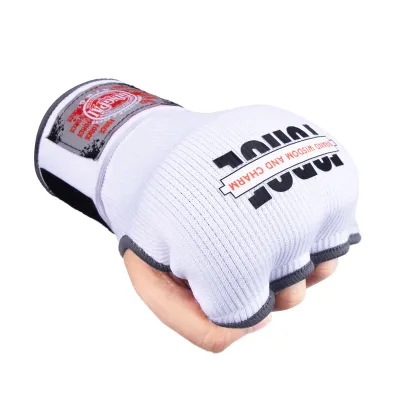
Prices are valid at publication and may change. Please refer to the product page for the latest price.
This light, distributed resistance is designed to amplify your cardiovascular output and build muscular endurance. During a high-repetition cardio session, even a small increase in weight forces your heart and lungs to work harder to pump oxygen to your working muscles. This increases your overall caloric burn and elevates your heart rate into the fat-burning zone. Because the weight is distributed evenly across the back of the hand, it challenges your shoulders, biceps, triceps, and upper back without requiring the heavy, bulky movements associated with traditional weightlifting.
It is important to distinguish fitness weighted gloves from standard boxing gloves used in combat sports. Traditional boxing gloves, which typically weigh between 10 and 16 ounces (approx. 280 to 450 grams), are heavily padded to absorb the impact of punching a heavy bag or an opponent. They are bulky, fully enclose the fingers, and restrict hand articulation. In contrast, piloxing gloves are sleek, open-fingered, and form-fitting. This design allows you to quickly open your palms for Pilates floor work, such as planks and push-ups, and transition back to a closed fist for boxing combinations.
Before purchasing any fitness gloves, always check the manufacturer’s product label and user instructions for exact weight specifications. Some brands list the weight “per pair” (for example, a 1 kg pair), while others list the weight “per glove” (such as 500 grams per glove). Misinterpreting these labels can lead to accidentally training with double your intended weight, which increases the risk of acute joint strain. In Singapore’s warm, tropical climate, look for gloves made from breathable, moisture-wicking neoprene that can be easily hand-washed to maintain hygiene after sweaty studio sessions.
Self-Assessment: Identifying Your Fitness Level and Workout Goals
Evaluating Your Cardio and Muscular Endurance Baseline
To determine the correct glove weight, you must first honestly assess your current physical conditioning. If you are new to high-intensity interval training (HIIT), or if you find your arms growing heavy and sagging during standard bodyweight exercises, you should classify yourself as a beginner. A simple baseline test is to stand and hold your arms straight out at shoulder height for three minutes. If your shoulders burn intensely or your arms drop before the time is up, your rotator cuffs and deltoids need to build baseline endurance before handling added resistance.

An intermediate practitioner is someone who can comfortably complete a 45-to-60-minute aerobic or cardio-kickboxing session without experiencing severe shoulder fatigue. At this level, you are already familiar with basic boxing punches, such as jabs, crosses, hooks, and uppercuts, and you can maintain a high, protective guard position throughout a workout. Your core is strong enough to stabilize your torso, preventing your lower back from arching when you throw punches.
Advanced users possess exceptional upper-body strength and muscular endurance, often gained through regular weight training, Pilates, or competitive sports. If you can perform multiple sets of push-ups with perfect form and regularly engage in weighted upper-body conditioning, your musculoskeletal system is prepared for higher resistance. Your joints are well-conditioned, and you have developed the muscle memory required to control rapid, weighted movements without hyperextending your elbows.
Defining Your Primary Goal
Your training objectives also play a major role in determining the right glove weight. If your primary goal is cardiovascular health, maximum calorie burn, and maintaining the fluid, rapid transitions of the dance segments, you should lean toward lighter resistance. Lighter gloves allow you to move quickly, keep up with high-tempo music, and focus on the artistic, flowing elements of the choreography without feeling weighed down.
If your focus is on upper-body toning, arm sculpting, and building muscular endurance, you will benefit from moving toward moderate or heavier fitness glove options. The added weight forces your muscles to contract harder against gravity during every punch and Pilates reach, accelerating muscle fatigue and toning. However, this strength-focused approach is only appropriate if your joint health is excellent and you can execute every movement with absolute control.
Matching Glove Weight to Your Fitness Profile
Beginners and Joint-Sensitive Users
For beginners, individuals recovering from minor shoulder or wrist injuries, and those with joint sensitivity, the safest starting point is to train bare-handed or with unweighted gloves. Once you feel comfortable with the choreography, you can progress to the lightest available weighted option, which is typically 250 grams (approx. 0.5 pounds) per glove. In Singapore, high-quality entry-level gloves generally cost between S$15 and S$30 at local sports retailers.
At this stage, your absolute priority is mastering proper punching mechanics, core engagement, and Pilates alignment. Throwing punches with added weight before your joints and stabilizing muscles are conditioned can easily lead to hyperextension injuries in the elbows or strain in the rotator cuffs. Focus on keeping your shoulders rolled back and down, away from your ears, and ensure your core remains braced to protect your spine during fast movements.
Intermediate Practitioners
Once you can complete a full 45-minute piloxing session with perfect form and zero joint discomfort, you are ready to transition to a moderate weight. For most intermediate users, this means selecting gloves that weigh between 250 and 350 grams per glove. This moderate resistance introduces a noticeable muscular burn in your shoulders and upper back by the middle of the workout, without forcing you to slow down.
At this level, you must focus on maintaining the balance between the fast-paced rhythm of the music and the resistance of the gloves. You should be able to throw crisp, controlled punches and snap your hands back to your face instantly. If you find your elbows dropping toward your ribs or your punches becoming sluggish and heavy, the weight is too heavy for your current endurance level.
Advanced Users
Advanced practitioners who want to maximize their muscular endurance and caloric expenditure can opt for heavier fitness gloves, typically weighing 500 grams (approx. 1 pound) per glove. This weight level provides substantial resistance, making every punch, block, and Pilates arm extension a rigorous strength-building exercise. High-performance advanced gloves with reinforced stitching and secure wrist closures typically range from S$30 to S$50 in the local market.
However, even advanced users must adhere to a strict safety boundary: speed, precision, and full range of motion are non-negotiable in piloxing. If the 500-gram weight prevents you from fully extending your arms, causes your wrists to bend, or makes your transitions into Pilates floor work clumsy, the gloves are too heavy. High-speed, high-repetition movements with excessive weight can cause micro-tears in the shoulder tendons and lead to chronic impingement issues over time.
Warning Signs: When to Adjust Your Glove Weight
Signs the Weight is Too Heavy
It is vital to monitor your body for physical and biomechanical warning signs that your current glove weight is exceeding your physical limits. The most critical physical signal is sharp, pinching, or lingering pain in your wrists, elbows, or rotator cuffs during or after a workout. Muscle soreness is normal, but joint pain is a clear indication that you must stop. Additionally, if you experience lower back stiffness or strain after a session, you are likely arching your spine to compensate for tired, sagging arms.
Form-based warning signs are equally important to watch for during your workout. If you cannot fully retract your punches back to your starting guard position, or if your hands constantly drop below chin level, your shoulders are fatigued. Sluggish transitions between the standing boxing combinations and the Pilates mat work, or a complete loss of dance fluidity, also indicate that the weight is compromising your performance. If you observe any of these signs, immediately remove the gloves and complete the workout bare-handed to prevent injury.
Signs the Weight is Too Light
Conversely, you should also be able to recognize when your gloves are no longer providing sufficient resistance. If you complete a full, high-intensity session and feel no muscular fatigue or warm burn in your upper body, your muscles have adapted to the current load. Another indicator is if your heart rate during the workout remains identical to your bare-handed baseline, showing that the gloves are no longer challenging your cardiovascular system.
When this occurs, it is time to progress to the next weight increment. Ensure that you transition gradually, such as moving from 250 grams to 350 grams, rather than jumping directly to the heaviest option. This step-by-step progression allows your tendons and ligaments, which adapt much slower than muscle tissue, to strengthen safely without being overloaded.
The Importance of Progressive Overload
Applying the principle of progressive overload is essential for safe, long-term fitness gains. In piloxing, this means gradually increasing the physical demands on your body over several weeks or months. Do not rush to buy the heaviest gloves available simply because you feel strong during your first few classes. Start bare-handed to master the technique, move to light gloves, and only upgrade when the current weight feels effortless across multiple consecutive sessions. This patient approach ensures your joints remain healthy and your workouts remain injury-free.
Frequently Asked Questions (FAQ)
Can I use standard boxing gloves instead of Piloxing weighted gloves?
No, standard boxing gloves are highly unsuitable and unsafe for piloxing workouts. Traditional boxing gloves are heavily padded to absorb high-impact forces from hitting heavy bags or sparring partners, making them bulky and rigid. They keep your hands locked in a closed fist, which prevents you from performing the open-palm Pilates movements, elegant dance extensions, and floor transitions (such as planks and push-ups) that define piloxing. Specialized fitness gloves are designed to be open-fingered and form-fitting, distributing weight across the back of the hand while leaving your fingers free for full hand articulation and mat work.
Should I wear wrist wraps under my Piloxing gloves?
Because piloxing is a non-contact fitness program, you do not strike any physical targets, which greatly reduces the risk of impact-related wrist injuries. However, the rapid, repetitive punching and snapping motions with added weight can still strain weak or unconditioned wrists. If you have pre-existing wrist instability or are transitioning to a heavier glove weight, you may consider wearing thin, low-profile, flexible wrist supports. Always ensure that any support you use fits comfortably underneath your fitness gloves without restricting circulation or limiting your hand’s range of motion. If you experience persistent joint pain, stop the workout and consult a medical professional or physical therapist.
Community discussion
Share your experience or ask a question. Comments are reviewed before publication.