
Selecting the right referee whistle is a critical decision that directly impacts match control and communication. The ideal choice depends on matching the whistle’s sound mechanism, pitch, and volume to your officiating level and match environment. Whether managing a quiet youth game on a community pitch or directing a high-stakes amateur league match with active spectators, your whistle must deliver an authoritative signal that commands immediate attention. By understanding how design, sound projection, and ergonomic features interact, you can select a tool that enhances your performance and keeps you comfortable throughout the match.
Assess Your Officiating Level and Match Environment
Your officiating level dictates the physical and environmental challenges your whistle must overcome. In grassroots or youth matches, playing fields are typically smaller, and crowd noise is minimal. In these settings, a standard whistle with moderate volume is usually sufficient to maintain control without overwhelming young players who are in close proximity.
As you transition to amateur adult leagues, the dynamics of the match change. Pitches are larger, play is more physical, and players are more spread out. To command authority and ensure your signals are heard instantly over shouting players and sideline spectators, you need a whistle with a clearer, more powerful sound projection.
Products mentioned in this guide
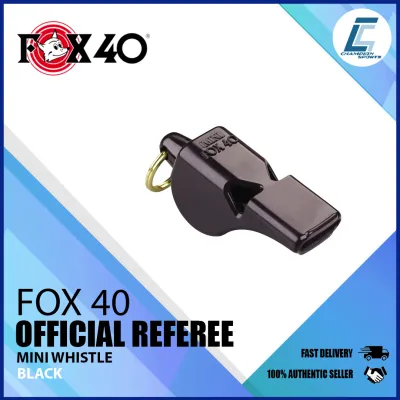
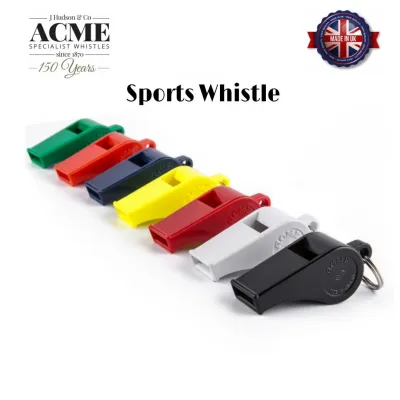
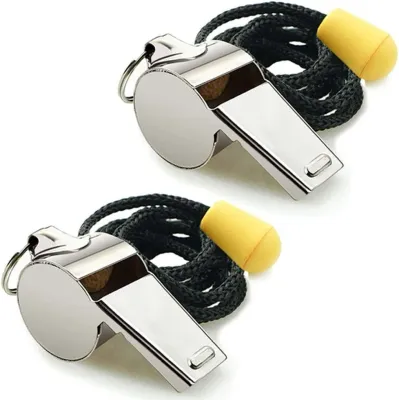
Prices are valid at publication and may change. Please refer to the product page for the latest price.
At competitive or semi-professional tiers, the demands on your equipment reach their peak. These matches often take place in larger sports complexes with multiple adjacent pitches, where the sound of other whistles can easily cause confusion. You must select a whistle with a distinct, high-decibel pitch that stands out from neighboring games and cuts through substantial crowd noise.
Environmental factors also play a major role. Outdoor pitches are subject to wind, heavy rain, and high humidity, all of which can dampen sound waves and affect how far your signal travels. In contrast, indoor sports halls or covered pitches present the opposite challenge, where hard walls and ceilings create intense echo. For indoor environments, a whistle with a slightly lower pitch or controlled volume helps prevent painful ear fatigue for everyone on the court.
Pea vs. Pealess Designs: Choosing the Right Mechanism
The fundamental choice when selecting a whistle is between a traditional pea design and a modern pealess design. Traditional pea whistles contain a small, spherical ball—often made of cork or synthetic material—inside the sound chamber. When you blow into the mouthpiece, the air forces the pea to rotate rapidly, constantly interrupting the airflow to create a classic, vibrating “trill” sound that is highly recognizable.

While pea whistles offer excellent tone modulation, they carry inherent risks in challenging weather conditions. In wet, rainy, or highly humid environments, moisture from the air or saliva can cause the internal pea to stick to the inner walls of the chamber. When this happens, the whistle may fail to produce its signature trill, resulting in a weak, airy hiss that fails to stop play.
Pealess whistles solve this reliability issue by eliminating all moving parts. Instead of a physical pea, these designs use precisely engineered air chambers to compress and accelerate the airflow, creating a sharp, consistent, and incredibly loud tone. Because there is nothing inside to get stuck, pealess whistles perform flawlessly in torrential rain, extreme humidity, and muddy conditions.
Hygiene is another area where pealess designs offer a clear advantage. Without an internal ball or complex moving parts, pealess whistles are incredibly easy to clean and sanitize. You can quickly rinse them under warm water to clear out saliva, dirt, or debris, and they dry almost instantly, reducing the risk of mold or bacterial buildup over long-term use.
Sound Projection and Pitch: Matching the Whistle to the Field
The pitch and frequency of a whistle determine how effectively its sound travels across a football pitch. High-pitched whistles produce high-frequency sound waves that are exceptionally good at cutting through ambient noise, such as wind, rain, and shouting spectators. This makes them the standard choice for large, open-air stadiums where sound naturally dissipates into the atmosphere.
For smaller venues or indoor facilities, a lower-pitched whistle is often a more practical choice. High-frequency sounds bouncing off hard indoor surfaces can cause uncomfortable reverberation, which can be distracting or even painful for players and officials alike. A lower pitch provides a deeper, more resonant tone that carries authority without causing excessive echo.
When evaluating whistles, you will often see manufacturers list decibel ratings to indicate volume potential. However, it is important to remember that these ratings represent maximum output under laboratory conditions. In a real match, the actual volume depends heavily on your blowing technique; a quick, sharp burst of air created by “tonguing” the mouthpiece will always produce a cleaner, louder signal than a slow, gradual blow.
Before committing to a specific model, it is highly beneficial to test how the whistle responds to different levels of breath pressure. A professional-grade whistle should offer a wide dynamic range, allowing you to blow softly for minor, close-up infractions or deliver an explosive blast to stop play for a serious foul on the far side of the pitch.
Comfort and Accessories: Selecting Mouthpieces and Lanyards
Comfort is a critical factor for referees who must carry and use their whistle continuously over a 90-minute match. Standard whistles made of hard plastic or metal can place significant strain on your teeth and jaw, especially when you are running at high speeds and need to keep the whistle clamped between your teeth.
To address this, many modern whistles feature a cushioned mouth grip, which is a soft silicone or thermoplastic cover over the mouthpiece. This cushioning protects your teeth from impact, reduces jaw fatigue, and provides a more secure, slip-resistant grip when your face is wet from sweat or rain.
The way you carry your whistle also affects your freedom of movement and reaction time. Traditional neck lanyards keep the whistle accessible, but they can swing around during sprints, which can be distracting or even dangerous. If you prefer a neck lanyard, ensure it features a breakaway safety clasp that releases automatically under tension to prevent neck injuries.
Many football referees prefer finger lanyards or finger grips, which attach directly to the whistle and slip over your fingers. This style keeps the whistle securely in your hand at all times, allowing you to run naturally, signal with your arms, and bring the whistle to your mouth instantly without any swinging or searching. Wrist straps offer a similar middle ground, keeping the whistle close to your hand while preventing it from falling to the ground if dropped.
Diagnostic Checklist: When to Upgrade or Replace Your Whistle
Regularly inspecting your officiating gear ensures you are always prepared for match day. You should inspect your whistle for physical signs of wear, such as deep bite marks, cracks in the plastic casing, or degradation of the cushioned mouth grip. Any structural crack can allow air to escape, which severely compromises the whistle’s volume, pitch, and overall reliability.
You should also pay attention to situational feedback during your matches. If you notice that players are consistently failing to react to your signals, or if assistant referees on the far touchline are struggling to hear your play-stoppage blasts, your whistle may no longer have the sound projection required for that level of play.
Physical discomfort is another clear indicator that it is time for a change. Experiencing persistent jaw fatigue, tooth soreness, or lip irritation after a match suggests that your current mouthpiece shape or material is not suited to your dental structure or officiating style.
Finally, your career progression itself is a natural trigger for an upgrade. When you transition from casual local matches to higher-tier competitive leagues, your equipment must step up to meet the increased intensity. Upgrading to a professional-grade, high-decibel pealess whistle ensures you have the acoustic power and authority needed to manage matches at a higher level.
Frequently Asked Questions (FAQ)
How should I clean and sanitize my referee whistle?
To clean your whistle, wash it thoroughly in warm water using a mild dish soap, which effectively removes saliva, dirt, and oils without damaging the materials. Avoid using harsh chemical disinfectants, bleach, or boiling water, as these can warp plastic chambers, degrade silicone mouth grips, or damage internal components. After washing, rinse the whistle completely with clean water and allow it to air dry in a well-ventilated area. For pea whistles, make sure the internal ball is completely dry and moves freely before placing the whistle back into your gear bag.
Can I use the same whistle for both football and other sports?
Yes, a high-quality pealess whistle is highly versatile and can be used effectively across multiple sports, including football, basketball, netball, and hockey. However, different sports and local leagues may have traditional preferences or specific regulations regarding whistle tones and volumes. For example, indoor sports often favor a slightly lower pitch to minimize echo, while outdoor sports require maximum decibel output. Always check with your local sports association or league coordinator to ensure your whistle meets any specific equipment guidelines mandated for your matches.
Community discussion
Share your experience or ask a question. Comments are reviewed before publication.