
When selecting a resistance band with handle attachments for recovery, mobility, or rehabilitation, the priority shifts entirely away from muscle fatigue and toward precise movement control. For most recovery scenarios, you should choose a light or medium resistance level. Heavy bands are counterproductive because they trigger compensatory movements and strain healing tissues.
Strength training relies on progressive overload to micro-tear muscle fibers, stimulating hypertrophy and maximum force output. Recovery and mobility work, conversely, aim to promote localized blood flow, restore joint range of motion, and re-establish neuromuscular activation. Instead of fatiguing the muscle to failure, recovery exercises use light tension to flush metabolic waste from tissues and gently remind the nervous system how to coordinate movement.
The addition of rigid or semi-rigid handles significantly alters the mechanics of the exercise compared to continuous loop bands. Handles create a fixed, comfortable grip point, which reduces direct hand fatigue but concentrates the rotational force on the wrists, elbows, and shoulders. Because you cannot easily choke up on a handled band without altering your grip angle, managing the baseline tension of the band becomes critical to protecting sensitive or recovering joints.
Products mentioned in this guide
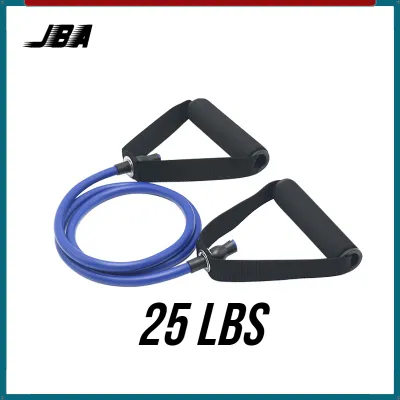
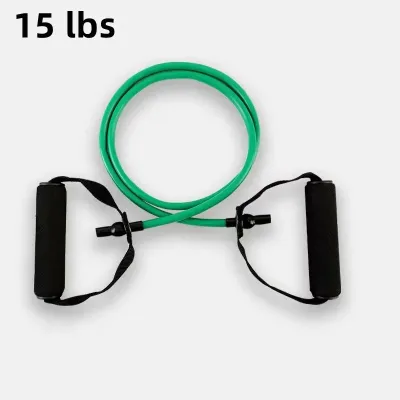
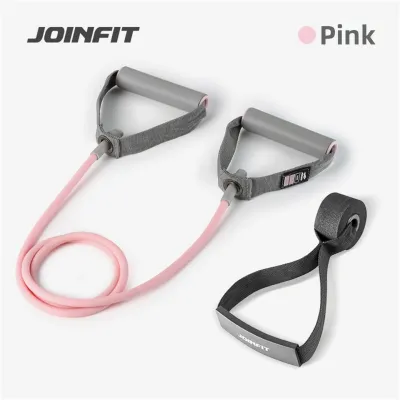
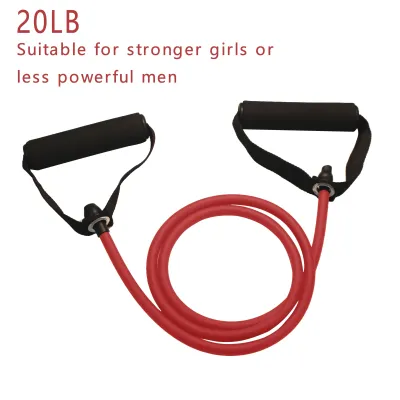
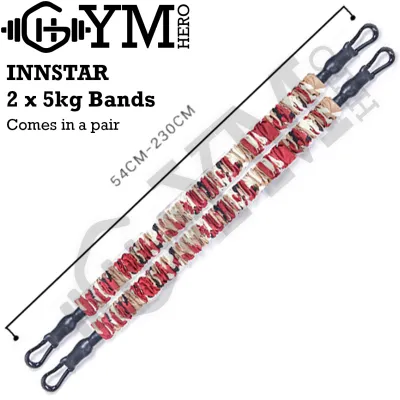
![[LOCAL SG SELLER 3 Days Delivery]11Pcs Resistance band come with handle / Yoga Fitness Home elestic band gym Kit pull Rope gym Equipment / Resistance loop band/ home gym/ Multifuction Pull Rope/ Resistance trainig band/ Pull Rope workout /Rubber band gym](https://img.lazcdn.com/g/p/e2a1e4613b71f7e53e57d610dc9e01cd.png_400x400q80.png_.webp)
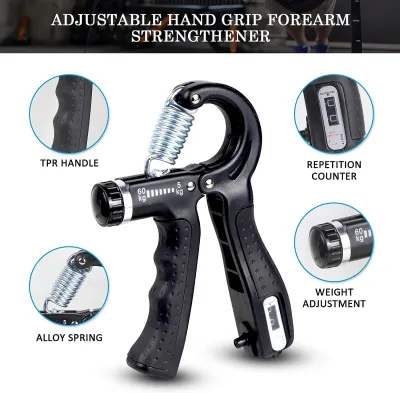
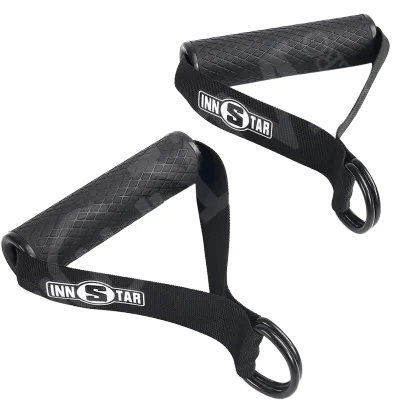
Prices are valid at publication and may change. Please refer to the product page for the latest price.
Your guiding principle when choosing a recovery band is to find a tension level that provides clear proprioceptive feedback—meaning you can feel the target muscle contracting—while allowing a complete, pain-free range of motion. If you must strain, twist your torso, or alter your posture to complete a repetition, the resistance is too high.
Why Recovery Demands a Different Resistance Strategy
To understand why recovery requires a distinct approach, you must look at how muscles and joints respond to different levels of tension. During heavy strength training, your body recruits high-threshold motor units, which are designed for short bursts of maximum power. This process creates high levels of mechanical tension and metabolic stress, which are essential for building muscle but highly damaging to tissues that are already inflamed, sore, or recovering from injury.
Recovery-focused exercises, on the other hand, are designed to stimulate the parasympathetic nervous system and facilitate tissue repair. By using low-intensity resistance, you encourage the expansion of local capillaries, delivering oxygen-rich blood and essential nutrients to damaged fibers. This gentle movement also helps realign collagen fibers in healing tendons and ligaments, ensuring they recover with optimal elasticity and strength rather than forming restrictive scar tissue.
The presence of handles on your band introduces specific leverage dynamics that you must manage carefully. Unlike flat loop bands that distribute tension across the entire surface of your hand or foot, a handle focuses the load onto a single grip point. This design can create a pivot point at your wrist, increasing the stabilization demands on your forearm and elbow. If the band’s resistance is too high, these smaller stabilizing muscles will fatigue rapidly, leading to poor form and potential strain.
Ultimately, the goal of mobility and recovery work is to restore your movement baseline. This means prioritizing the quality of each repetition over the quantity of resistance. A properly selected band will feel supportive rather than restrictive, allowing you to move through your natural anatomical pathways without pain or hesitation.
Signs You Should Start with Light Resistance
Starting with a light resistance band is the safest and most effective choice for several specific physical conditions. If you are in the early stages of recovering from an injury or surgery, dealing with acute delayed onset muscle soreness (DOMS) after an intense workout, or experiencing severe joint stiffness, light tension is mandatory. Always consult your physiotherapist and check the manufacturer’s care and safety instructions before starting any new rehabilitation program.

To determine if light resistance is appropriate, pay close attention to the physical feedback your body provides during the movement. The exercise should feel smooth, fluid, and completely controllable throughout both the pulling and releasing phases. If you notice your muscles shaking, or if you feel a sharp, pinching sensation in the joint, the resistance is too high. You should also be able to complete your full target range of motion without holding your breath or tensing unrelated muscle groups.
Light bands with handles are exceptionally well-suited for isolating small, delicate muscle groups that are easily overwhelmed by heavier loads. For example, the rotator cuff muscles in the shoulder or the pronator and supinator muscles in the forearm require very little external resistance to activate. Using a heavy band for these movements forces larger, dominant muscles like the deltoids or biceps to take over, which defeats the purpose of isolating and strengthening the stabilized joint capsule.
When shopping, keep in mind that color-coding systems are not standardized across manufacturers. While many brands use yellow, red, or light green to denote their lightest tension levels, you must verify the actual weight equivalent on the packaging. A light band typically provides between 2 to 5 kilograms of resistance at its standard stretch length, which is more than enough to stimulate blood flow without risking re-injury.
When to Progress to Medium Resistance for Mobility
Transitioning to a medium resistance band is appropriate once you have achieved several key physical milestones. If you can perform your recovery exercises through a full, pain-free range of motion and no longer feel sufficient sensory feedback from a light band, it is time to step up. Medium bands are also excellent for dynamic warm-ups before light cardio or mobility sessions, helping to wake up larger muscle groups.
Medium resistance bands are particularly effective for activating larger muscle groups, such as the glutes, hamstrings, and latissimus dorsi, without inducing deep muscular fatigue. Exercises like band-resisted glute bridges or standing lat pulldowns help correct posture and reinforce healthy movement patterns. The moderate tension provides enough resistance to challenge these larger muscle structures while still allowing you to focus on form rather than sheer effort.
To verify if a medium band is the right match for your current mobility baseline, you can use a simple self-check framework. Attempt to perform 12 to 15 slow, highly controlled repetitions of your target exercise. Throughout the entire set, you must maintain perfect posture, keep your shoulders relaxed, and follow a steady, rhythmic breathing pattern. If you can complete the set successfully without any loss of form or joint discomfort, the medium level is correct for your current physical state.
If you find yourself rushing through the repetitions or losing control during the return phase of the exercise, the medium band may still be too demanding. In this case, temporarily return to the light band or adjust your positioning to reduce the pre-stretch tension on the medium band. Remember that mobility work is about quality of movement, not the quantity of resistance.
Why Heavy Resistance Usually Hinders Recovery
Choosing a heavy or extra-heavy resistance band for recovery or mobility work is a common mistake that often leads to counterproductive results and increased injury risk. When the resistance is too high, the nervous system views the load as a threat and recruits neighboring muscle groups to assist. This compensation pattern bypasses the specific muscle you are trying to rehabilitate and places unnecessary stress on surrounding joints.
Excessive tension also places a dangerous amount of stress on healing connective tissues, such as tendons and ligaments, which recover much slower than muscle tissue due to limited blood supply. A heavy band can easily pull a joint out of its optimal alignment, artificially restricting your range of motion. Instead of restoring flexibility and joint health, you end up reinforcing tight, restricted movement patterns and potentially causing micro-tears in healing fibers.
There are several clear warning signs that indicate your handled band is too heavy for a recovery routine. If you experience joint clicking, popping, or a dull ache under load, the resistance is excessive. Another major indicator is the inability to control the eccentric, or return, phase of the movement; if the band snaps back rapidly despite your efforts to resist it, the tension is too high. Furthermore, if you must grip the handles so tightly that your forearms fatigue before the target muscle, or if you feel tension creeping into your neck and shoulders, you need to scale down immediately.
Heavy handled bands have their place in a fitness routine, but they should be strictly reserved for dedicated strength-building, hypertrophy, or power sessions. They are not designed for cool-downs, passive stretching, or active rehabilitation. Using the wrong tool for the job not only slows down your recovery process but can set your progress back by weeks or months.
How to Safely Test and Adjust Your Resistance Band with Handle Tension
Because handled resistance bands have fixed lengths, adjusting their tension requires a different approach than using continuous loop bands. One of the simplest ways to modify the resistance during an exercise is to adjust your physical distance from the anchor point. Stepping closer to the anchor decreases the pre-stretch tension, making the exercise easier, while stepping further away increases the load.
You can also alter the resistance by changing your grip width or how you hold the equipment. If your band features adjustable handles, you can shorten the tubing length to increase the baseline tension. Alternatively, for exercises that require less resistance, you can hold both handles in one hand or use two hands on a single handle to distribute the load more evenly across your upper body, reducing the localized stress on a single joint.
Before starting any routine, always consult the manufacturer’s tension chart or product label to understand the specific load range of your band. Do not rely on color conventions, as a “medium” band from one brand might feel as stiff as a “heavy” band from another. Knowing the exact weight equivalent at various stretch lengths allows you to make precise, safe progressions.
Maintaining your equipment is crucial for safety, especially in specific environments. The warm, highly humid tropical climate in Singapore can accelerate the degradation of natural latex and rubber components, leading to a phenomenon known as “latex rot,” where the material becomes sticky, brittle, or develops micro-cracks. Perform a mandatory pre-use safety checklist before every single session:
- Inspect the handles for any visible cracks, chips, or structural weakness in the plastic or foam grip.
- Check the metal carabiners, clips, or D-rings for rust, deformation, or loose gates that could fail under tension.
- Examine the rubber or fabric tubing near the attachment points for any tiny tears, fraying, or discoloration.
If the band shows any signs of wear, feels unusually stiff, or snaps back unevenly during a gentle test stretch, stop using it immediately. Replacing a worn band is a minor expense compared to the physical injury that can occur if a band snaps under high tension during an exercise.
Frequently Asked Questions (FAQ)
Can I use the same handled band for both strength training and recovery?
While the physical tool remains the same, the resistance level required for strength training is generally too high for safe recovery work. Attempting to use a heavy strength band for mobility exercises risks straining healing tissues and forcing compensatory movements. To transition safely between training phases, you should own at least two distinct resistance levels—such as a light band for recovery and a medium or heavy band for strength—or invest in an adjustable system where you can swap out the tubing while keeping the same handles.
Do I need to buy a full set of handled bands for rehabilitation?
Purchasing a complete multi-band set is rarely necessary when you are first starting a rehabilitation or mobility routine. Most early-stage recovery programs only require a single light or medium band, depending on your current physical condition and your physiotherapist’s specific guidance. It is more practical and cost-effective to buy one high-quality, durable band that matches your immediate needs, and only invest in heavier resistance levels once you have safely cleared your initial recovery milestones.
Community discussion
Share your experience or ask a question. Comments are reviewed before publication.