
Selecting the correct exercise band resistance level is key to unlocking an effective, injury-free workout at home or in the gym. The appropriate tension level depends on your current physical strength, the specific muscle groups you are targeting, and your training goals. A properly selected band should challenge your muscles within your target repetition range while allowing you to maintain strict, controlled form throughout the entire movement.
If a band is too light, your muscles will not receive enough stimulus to grow or strengthen. Conversely, a band that is too heavy will force you to compromise your posture, recruit unintended muscle groups, and increase your risk of joint strain. Finding the sweet spot ensures you get the maximum benefit from every repetition.
Understanding Exercise Band Resistance Levels
To choose the right band, you must first understand how manufacturers label and measure resistance. Most brands use a color-coded system to differentiate tension levels, typically ranging from extra-light to extra-heavy. However, there is no universal industry standard for these colors; a green band from one brand might offer the same tension as a red band from another. Always refer to the manufacturer’s specific weight equivalent chart rather than relying solely on color.
Products mentioned in this guide
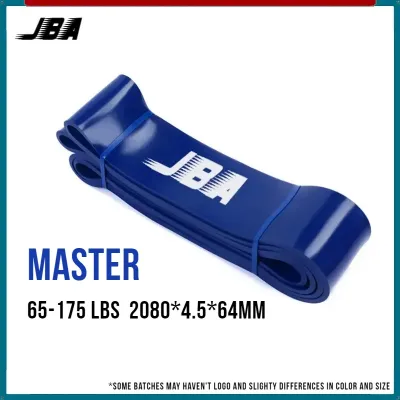
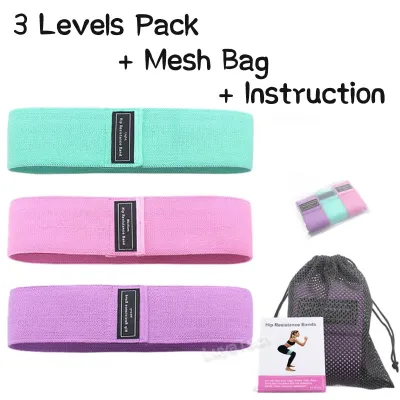

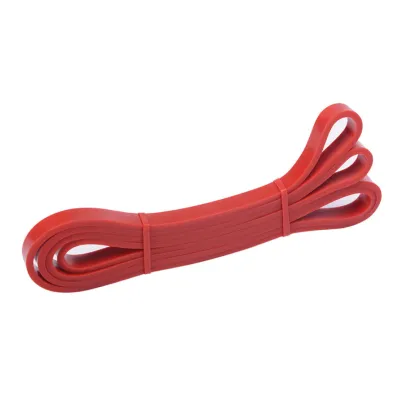

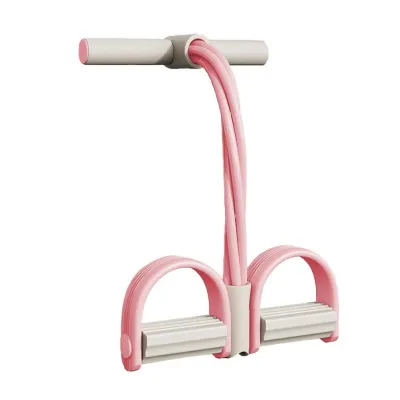
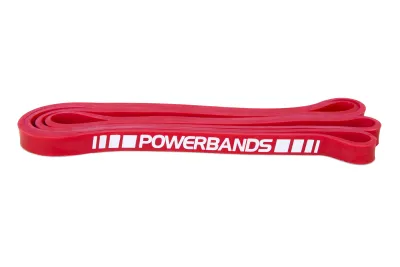
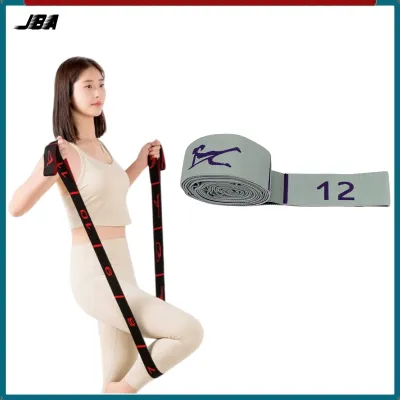
Prices are valid at publication and may change. Please refer to the product page for the latest price.
Tension ratings are usually expressed as a range of weight equivalents, such as 5 kg to 15 kg. This range exists because elastic resistance changes based on elongation percentage. Unlike a dumbbell, which maintains a constant weight, an exercise band provides progressive resistance. The further you stretch the band from its resting length, the heavier the pulling force becomes.
The physical structure of the band also dictates how resistance is applied. Flat loop bands are wide, continuous loops designed primarily for lower-body movements like lateral walks and glute bridges. Tube bands with handles feature hollow rubber tubes with clips, allowing you to attach different handles or anchors for traditional strength exercises. Therapy bands are thin, flat, non-loop sheets of latex or synthetic rubber, offering light, highly controllable tension for rehabilitation and mobility work.
Matching Resistance to Your Strength and Training Goals
Your choice of resistance should align directly with your fitness level and what you hope to achieve during your workout.

- Light Resistance: Typically rated between 2 kg and 8 kg of tension. This level is well-suited for joint rehabilitation, dynamic warm-ups, and targeting small stabilizer muscles like the rotator cuff. It is also suitable for high-repetition endurance training.
- Medium Resistance: Typically rated between 8 kg and 15 kg of tension. This is a highly versatile category, suitable for general strength conditioning, active recovery, and hypertrophy training for intermediate users.
- Heavy to Extra-Heavy Resistance: Typically rated from 15 kg up to 30 kg or more. These bands are designed for compound movements targeting large muscle groups, such as squats, deadlifts, and chest presses. They are also useful for providing assistance during bodyweight exercises like pull-ups.
To estimate your starting point, compare the band’s tension range to your current free-weight capacity. If you comfortably perform bicep curls with 5 kg dumbbells, a medium band with a starting tension of around 5 kg is a logical choice. If you are new to strength training, starting with a multi-band set—which typically costs between S$15 and S$40 on local online marketplaces—allows you to test different levels safely.
Remember that different muscle groups require vastly different resistance levels. Your glutes, hamstrings, and quadriceps are incredibly strong and will easily handle heavy or extra-heavy bands. In contrast, smaller upper-body muscles like your lateral deltoids and triceps require much lighter tension to prevent injury and maintain proper alignment.
How to Test and Adjust Your Band Tension
Once you have selected a band, you can easily verify if the resistance is correct by monitoring your muscle fatigue and form.
To test a band, perform a standard set of 10 to 15 repetitions of your target exercise. If you can complete all 15 repetitions easily without feeling any muscle burn or fatigue, the resistance is too light to stimulate muscle growth. If you struggle to complete 8 repetitions, or if you find yourself holding your breath and arching your back to finish a movement, the band is too heavy.
You do not always need to switch to a different band to modify the resistance. You can adjust the tension on the fly using simple mechanical changes:
- Shorten the grip: Choking up on a flat band or wrapping a tube band around your hands reduces the slack, increasing the starting tension.
- Widen your stance: When standing on a band for squats or bicep curls, spreading your feet wider stretches the elastic further, making the exercise harder.
- Fold the band: Doubling a flat loop band in half effectively doubles the resistance, allowing you to progress without buying extra equipment.
Pay close attention to physical warning signs during your workout. If you experience joint pain, notice your shoulders shrugging upward during arm exercises, or find yourself using momentum to swing the band, stop immediately. These are clear indicators that the resistance is too high and your body is compensating in ways that could lead to injury.
Common Mistakes When Selecting Band Resistance
Avoiding common pitfalls will keep your training safe, consistent, and highly effective over the long term.
The most frequent mistake is ego-lifting, or immediately reaching for the heaviest band available. Because elastic resistance peaks at the end of the movement when the band is fully stretched, an excessively heavy band can shock your joints at their most vulnerable angles. Always prioritize a full range of motion over a heavier band.
Another common error is attempting to use a single band for an entire full-body routine. Using the same band for both deadlifts and shoulder presses will either leave your lower body under-stimulated or cause acute strain to your shoulders. A balanced home gym setup requires at least three distinct resistance levels to accommodate different movements.
Finally, never skip a quick safety inspection before your workout. In Singapore’s warm and humid climate, latex and synthetic elastomer materials can degrade rapidly if stored in direct sunlight, balconies, or non-air-conditioned rooms. Inspect your bands for tiny cracks, discoloration, or sticky patches. A compromised band can snap violently under tension, potentially causing severe skin welts or eye injuries.
Frequently Asked Questions (FAQ)
Can I combine two lighter bands instead of using one heavy band?
Yes, stacking multiple bands is a highly effective way to progressively overload your muscles as you get stronger. Combining a light band and a medium band allows you to create an intermediate resistance level without purchasing a brand-new product.
When stacking bands, ensure they are anchored to the exact same point and aligned evenly. If you are using tube bands with handles, clip both carabiners to the same handle ring securely. This prevents one band from slipping or stretching unevenly, which can disrupt your balance or cause premature wear on the materials.
Do exercise bands lose their resistance over time?
Yes, all elastic exercise bands will gradually lose their original tension rating over time. This degradation is caused by repeated stretching, micro-tears in the material, and environmental exposure to heat, humidity, and UV light.
To determine if your band needs replacing, perform a visual and tactile check. If the band remains permanently stretched out when relaxed, feels brittle or sticky, or shows a powdery white residue, the material has degraded. Replace the band immediately to maintain accurate resistance levels and ensure your safety during high-tension exercises.
Community discussion
Share your experience or ask a question. Comments are reviewed before publication.