
To choose the right resistance tube for your fitness level, you must match the tube’s tension range to your current physical baseline, select a design that supports your specific exercise movements, and verify that the attachments align with your training environment. Selecting the wrong resistance can lead to poor exercise form or premature equipment wear. By evaluating your strength goals and understanding how different tube designs function, you can build a safe, effective, and highly portable home gym setup.
Assess Your Baseline Strength and Training Goals
Your fitness journey dictates the type of resistance you need. If your primary goal is joint rehabilitation or physical therapy, you require light, highly controllable tension to gently rebuild mobility without overloading recovering tissues. For those focusing on muscular endurance, moderate tension levels that allow you to complete high-repetition sets are ideal. If your goals center on muscle hypertrophy or athletic power, you will need heavier resistance tubes that challenge your muscles within lower, high-intensity repetition ranges.
Evaluating your starting strength does not require complex machinery. You can gauge your baseline using basic bodyweight movements. If you can easily perform more than 20 controlled bodyweight squats or 15 standard push-ups with perfect form, your muscles are already accustomed to moderate loads, meaning you will likely need a medium-to-heavy resistance tube to stimulate further adaptation. Conversely, if basic bodyweight exercises are highly challenging, starting with a light or extra-light tube ensures you can master the correct movement patterns without straining.
Products mentioned in this guide
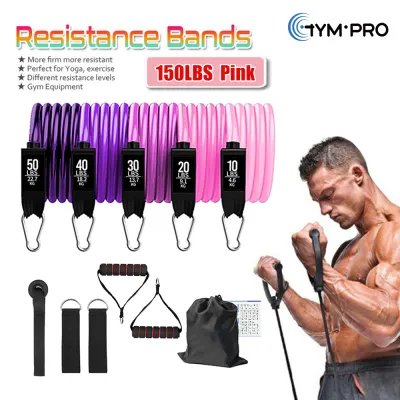
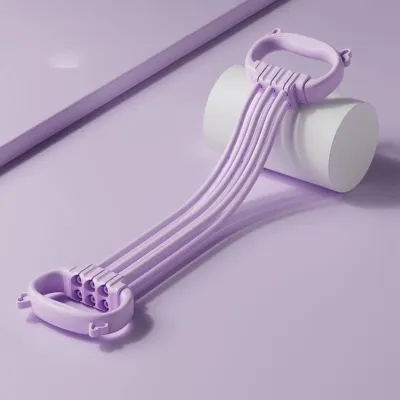
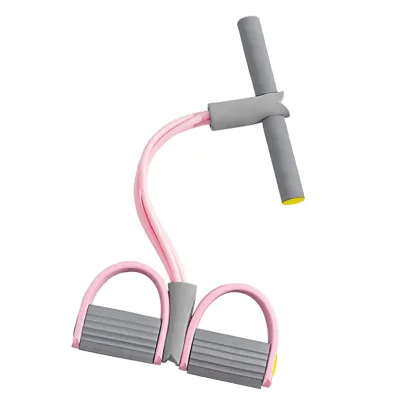
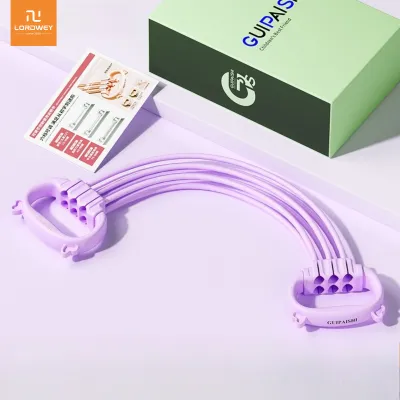
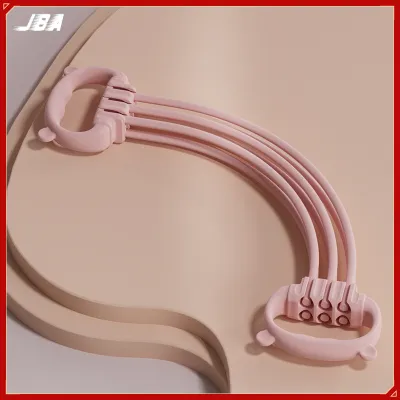
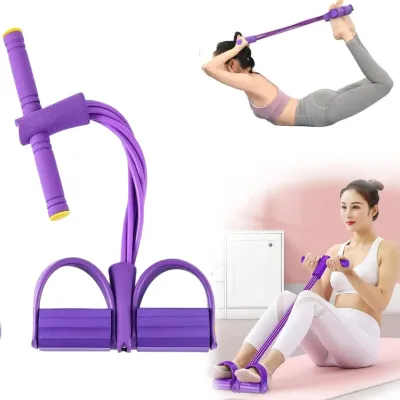
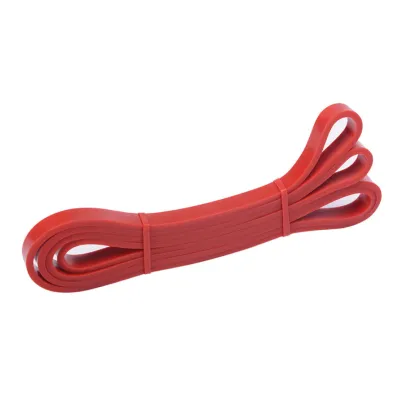
Prices are valid at publication and may change. Please refer to the product page for the latest price.
Your training environment also plays a critical role in your decision. In compact living spaces, such as typical apartments in Singapore, a compact tube system utilizing a secure door anchor allows you to perform a full range of pulling and pushing movements without taking up valuable floor space. Portability is another key factor if you plan to take your workouts outdoors to local parks or fitness corners. Lightweight, easily packable tubes allow you to maintain your routine anywhere without the burden of heavy iron weights.
Compare Tube Designs and Attachment Options
Resistance tubes come in several distinct designs, each suited to different exercise mechanics. Standard cylindrical tubes equipped with built-in ergonomic handles provide a familiar, secure grip similar to dumbbells, making them excellent for classic exercises like bicep curls, shoulder presses, and chest flies. In contrast, handle-less tubes or flat bands offer greater flexibility for wrapping around anchor points, poles, or your own limbs, though they require more grip strength to hold securely during high-tension movements.

The versatility of your workouts depends heavily on the included attachment options. Look for packages that feature dedicated ankle straps, door anchors, and heavy-duty metal carabiners. Ankle straps allow you to target the lower body effectively with exercises like cable-style kickbacks and hip abductions. A robust door anchor is essential for creating high and low pulling angles, transforming a simple tube into a versatile cable machine alternative.
When evaluating durability, look closely at the manufacturer’s material specifications rather than relying on generic marketing claims. High-quality tubes often feature braided anti-snap sleeves, which are protective fabric covers that encase the latex core. These sleeves not only protect the tube from friction damage against rough surfaces but also prevent the latex from snapping back toward you if the inner tube fails. Additionally, look for multi-layered latex construction, which offers greater resistance to micro-tears compared to single-extrusion plastic alternatives.
Match Tension Levels to Your Fitness Stage
Understanding how manufacturers label resistance is key to making an informed purchase. Most brands use a color-coding system to differentiate tension levels, typically ranging from extra-light (often yellow) to extra-heavy (often black or blue). However, because these color schemes are not standardized across the fitness industry, you should always check the printed tension ranges on the packaging or the tube itself. These ranges are usually expressed in equivalent weight values, such as 5 kg to 25 kg, giving you a clearer idea of the load.
To verify if a specific tension level is right for you, apply the “reps in reserve” (RIR) method during a trial workout. Perform a set of your chosen exercise aiming for a target repetition range, such as 12 to 15 reps. If you reach the end of the set and feel you could easily complete another 10 repetitions, the tension is too light to stimulate muscle growth or strength gains. Ideally, the resistance should challenge you to the point where you have only 2 to 3 clean, controlled repetitions left in reserve at the end of your set.
For long-term progress, investing in a complete set of stackable or interchangeable tubes is highly beneficial. These systems feature separate tubes with metal carabiners on each end, allowing you to clip multiple tubes onto a single pair of handles. This design enables progressive overload, as you can incrementally combine different tubes to increase the total resistance as your strength improves. A versatile stackable set, often available for under S$50, provides a cost-effective way to scale your workouts over several months without needing to purchase entirely new individual bands.
Perform Pre-Workout Safety Checks and Maintenance
Because resistance tubes operate under high tension, establishing a strict pre-workout inspection routine is vital to prevent sudden equipment failure. Before every training session, perform a thorough visual and tactile check by running your hands along the entire length of the tube. Look closely for micro-tears, small nicks, or localized thinning of the material. Pay special attention to any “whitening” of the latex, which is a clear sign of material stress and impending failure, and check for fraying on any protective braided sleeves.
Next, verify the structural integrity of all connection points, handles, and metal carabiners. Ensure that the stitching on the handle straps is intact and that the metal clips close completely without slipping. When using a door anchor, always place it on the hinge side of a door that closes away from you, and ensure the door is fully latched and locked to prevent it from swinging open mid-exercise.
Proper storage is essential to preserve the elasticity and lifespan of your equipment. Store your resistance tubes in a cool, dry indoor area away from direct sunlight, extreme heat, and sharp objects. The high humidity and warm climate in Singapore can accelerate the degradation of natural latex, making it brittle over time. Keeping your bands stored safely in a dedicated drawer or breathable bag will prevent premature aging and ensure safe performance.
Frequently Asked Questions (FAQ)
Is it safe to combine multiple resistance tubes for heavier tension?
Combining multiple tubes is safe only if you are using a stackable tube system specifically designed for this purpose. These systems utilize heavy-duty metal carabiners and reinforced D-rings on the handles to distribute the load evenly. Never attempt to manually tie, knot, or loop separate individual tubes together to increase resistance. Doing so creates intense friction points that rapidly degrade the material, significantly increasing the risk of a sudden snap-back. Additionally, always ensure that your door anchor and the door itself are rated to withstand the cumulative tension of all combined tubes.
What are the clear signs that a resistance tube needs replacing?
You must replace your resistance tube immediately if you observe any visible cracks, deep nicks, permanent deformation, or a noticeable loss of elasticity where the tube remains stretched out after use. Other critical warning signs include peeling or separation near the handle connection points and frayed stitching on the ankle straps or door anchors. Continuing to use a compromised tube, even if the tear seems minor, poses a severe safety risk, as the tube can snap under load and cause painful impact injuries to your face or body.
Community discussion
Share your experience or ask a question. Comments are reviewed before publication.