
Choosing the right Rockbros front bag depends on matching your specific cycling habits with the bag’s structural design, capacity, and mounting system. Whether you are navigating Singapore’s Park Connector Network (PCN) on a weekend, commuting to work through sudden tropical downpours, or embarking on a multi-day touring adventure, your front bag must balance storage capacity with stable handling. By evaluating your gear requirements, checking physical compatibility with your bicycle’s cockpit, and understanding how to read product specifications, you can select a model that enhances your ride without compromising safety or steering control.
Identify Your Riding Needs and Front Bag Categories
Choosing the right front bag begins with understanding how different designs serve different riding styles. Front bags generally fall into three main categories: stem bags, handlebar rolls, and structured front frame bags. Each category offers distinct advantages in terms of accessibility, capacity, and how they affect your bicycle’s handling.
Stem bags, often referred to as feedbags, mount directly behind your handlebars, nesting in the angle between your stem and your handlebar. These bags are typically cylindrical and feature a simple draw-string or one-handed open-and-close mechanism. They are designed for quick access while riding, making them the perfect spot for water bottles, energy bars, a smartphone, or a compact camera. Because they sit close to the steering axis, they have a minimal impact on your bike’s handling, even when fully loaded.
Products mentioned in this guide
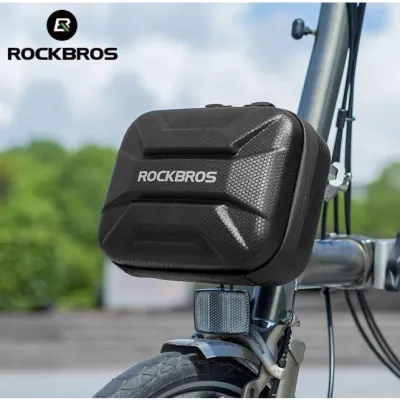
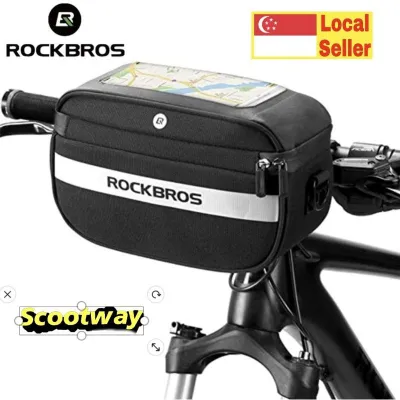
![[Stock Ready] Rockbros Bicycle Front Block Bag](https://img.lazcdn.com/g/p/abe1b28fee3b5f8bf8968dce4ffc3c5d.png_400x400q80.png_.webp)
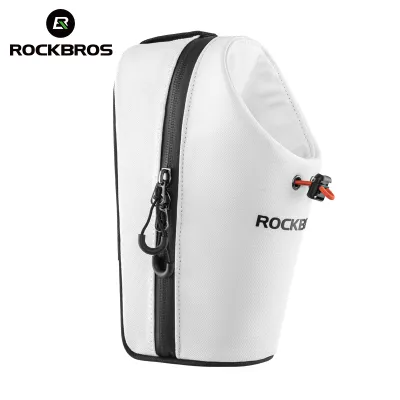
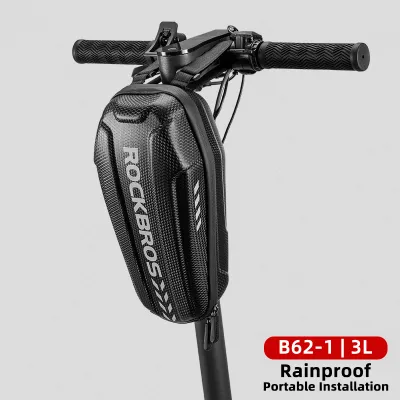
Prices are valid at publication and may change. Please refer to the product page for the latest price.
Handlebar rolls are cylindrical, horizontal bags that strap directly to the front of your handlebars. They are highly favored by bikepackers and long-distance touring cyclists because they are designed to carry bulky, compressible gear. Items like lightweight sleeping bags, spare clothing, or compact shelter components fit perfectly inside a handlebar roll. Because these bags distribute weight centrally across the front wheel, they help maintain a balanced center of gravity, though they can make steering feel slightly slower and more deliberate.
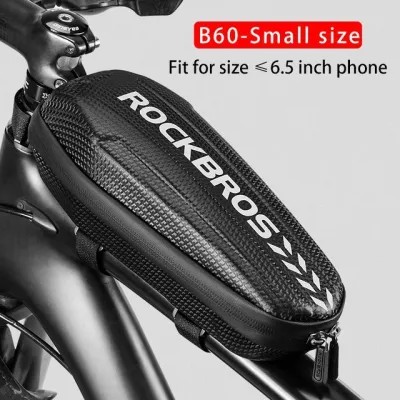
Structured front frame bags, or rigid handlebar bags, are boxy containers that maintain their shape regardless of whether they are empty or full. These bags often feature internal dividers, zippered pockets, and structured walls to protect delicate items. They are highly practical for daily commuters who need to organize distinct items like keys, wallets, tools, and electronic devices. Because they project forward from the handlebars, they require secure mounting systems to prevent bouncing on uneven roads.
To establish your baseline capacity requirement, lay out all the items you plan to carry on a typical ride. Measuring the physical volume of these items helps prevent purchasing a bag that is either too small, forcing you to leave essentials behind, or too large, which can lead to sagging and unstable handling.
Weight distribution is a critical safety factor to consider when choosing a front bag. Heavy items placed high up on your handlebars can slow down your steering response and make the front end feel floppy. Keep heavier items centered and as close to the stem as possible to maintain predictable handling and clear forward visibility.
Key Specifications to Verify on Product Labels
When browsing Rockbros models on an online marketplace or official store, look past the marketing photos and carefully analyze the technical specifications. The product label and specification sheet contain the most reliable information regarding size, capacity, and weather resistance.

Start by checking the stated volume, which is usually measured in liters, alongside the physical dimensions of length, width, and height. Compare these dimensions to your handlebar setup to ensure the bag will not block your hands, brake levers, or gear shifters. A bag that is too wide can interfere with your grip, especially on drop-bar road bikes where hand clearance is limited.
Water resistance is another critical specification that requires careful verification. Do not assume a bag is fully waterproof just because it is labeled “water-resistant” or “weatherproof.” Look for specific material descriptions such as TPU (Thermoplastic Polyurethane) coated nylon or 840D nylon with welded seams. If a product has an official IP (Ingress Protection) rating, verify what that rating means for dust and water exposure. Many water-resistant bags can handle light drizzle but require an external rain cover or internal dry bags to protect sensitive electronics during heavy downpours.
Examine the mounting system details. Rockbros bags typically use Velcro straps, nylon webbing with ladder lock buckles, or proprietary quick-release brackets. Check the width and placement of these straps. Wider straps distribute weight more evenly and reduce sway, while quick-release brackets allow you to easily detach the bag when parking your bike in public spaces.
Matching Bag Styles to Common Cycling Scenarios
To make an informed decision, it helps to align specific bag styles with typical riding environments and routes in Singapore. Your choice should reflect the duration of your rides, the weather conditions you expect to encounter, and the type of bicycle you ride.
For casual weekend rides along Singapore’s scenic Park Connector Network (PCN), your gear requirements are usually minimal. A compact stem bag or a small, lightweight handlebar pouch is often the best choice. These styles provide easy, on-the-go access to your phone, keys, a small wallet, and perhaps a light snack. Because you are not carrying heavy loads, these bags have negligible impact on steering, allowing you to enjoy a relaxed, unencumbered ride.
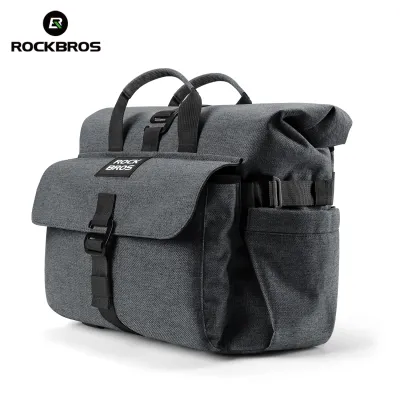
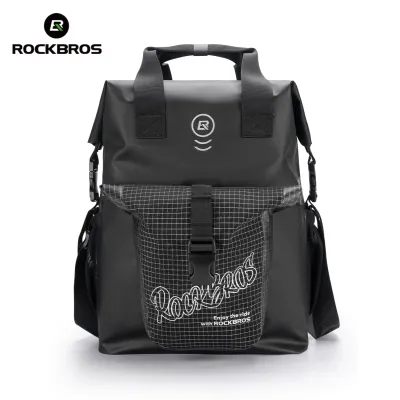
Commuting in an urban environment requires a more structured approach. You need a front bag that can protect your work essentials, such as a tablet, notebook, lunchbox, or a change of clothes, from unpredictable weather. Look for structured front bags made from heavy-duty, water-resistant materials. Reflective elements on the front and sides of the bag are essential for visibility during early morning or late evening commutes. Secure zippered closures or roll-top designs prevent your belongings from bouncing out on uneven roads or drainage grates.
If you are planning long-distance rides or multi-day touring, storage capacity and durability become your top priorities. Large handlebar rolls or high-capacity front bags are designed for this purpose. These bags allow you to pack bulky gear while keeping the weight centered over the front wheel. When choosing a large touring bag, ensure it does not interfere with your steering range or block your front light mount. Many touring cyclists use accessory bars or light mount extensions to keep their headlights visible over a fully loaded handlebar roll.
Pre-Purchase Compatibility and Installation Checks
Before finalizing your purchase, you must perform several physical checks on your bicycle to ensure a secure fit. Proper installation is crucial for both the longevity of the bag and your safety on the road.
First, measure the available horizontal space on your handlebars. Take into account the space occupied by your brake levers, gear shifters, bell, GPS mount, and front light. Ensure the bag’s mounting straps can wrap securely around the handlebar without pinching or crimping your brake and derailleur cables. Compressed cables can lead to poor shifting performance or unresponsive braking.
Second, verify the vertical clearance between the bottom of the bag and the top of your front tire. This is particularly important for riders with smaller bike frames, suspension forks, or front fenders. When a suspension fork compresses over a bump, the distance between the handlebar and the tire decreases. If the bag sags or sits too low, it can rub against the tire, causing sudden braking or damage to the bag.
Finally, confirm that the strap lengths and mounting hardware are compatible with your specific handlebar diameter and stem angle. Standard handlebars typically have a center diameter of 31.8mm, but older or specialized bars may vary. If the bag uses rigid mounting brackets, check if the package includes rubber spacers to accommodate different handlebar thicknesses.
Frequently Asked Questions (FAQ)
Are Rockbros front bags fully waterproof?
Not all Rockbros front bags are fully waterproof; many are designed to be water-resistant. To determine the level of protection, check the product specifications for materials like TPU-coated fabrics and welded seams, which offer excellent resistance to water penetration. If a bag features stitched seams and standard zippers, it is likely water-resistant and will protect your gear in light rain but may leak during prolonged, heavy tropical downpours. For absolute protection of sensitive electronics, cameras, or paper documents, always place them inside a sealed dry bag or plastic zip pouch before packing them into your front bag.
How should I clean and maintain the bag after riding in the rain?
Proper maintenance after a wet ride is essential to prevent mold, mildew, and unpleasant odors. Start by completely emptying the bag of all contents. Wipe down both the interior and exterior with a damp, soft cloth to remove road grime, mud, and salt residue. Allow the bag to air dry completely in a well-ventilated, shaded indoor area; avoid direct sunlight or high-heat sources like hair dryers, which can damage waterproof coatings and warp synthetic materials. Never use harsh chemical detergents, bleach, or abrasive brushes, and do not machine wash or tumble dry the bag unless the manufacturer’s care label explicitly states it is safe to do so.
Community discussion
Share your experience or ask a question. Comments are reviewed before publication.