
Fitting a running treadmill into a Housing & Development Board (HDB) flat requires balancing your fitness goals with the physical realities of compact apartment living. Unlike commercial gym setups, a home workout space must share room with daily foot traffic, furniture, and household members. Choosing the right machine involves more than just picking a model with high speed limits; you must carefully evaluate how its physical dimensions, folding mechanisms, and operational requirements align with your specific layout.
By focusing on precise measurements, structural safety, and noise mitigation, you can establish a highly functional home cardio setup. A well-planned installation ensures your workouts remain convenient and safe without turning your living room or bedroom into an impassable obstacle course.
Measure Your Space and Safety Clearances First
Before browsing online marketplaces or visiting fitness showrooms, you must establish the exact physical boundaries of your intended workout area. Start by measuring the length and width of the floor space where the treadmill will sit, making sure to measure from the skirting boards rather than the walls. Do not forget to measure the ceiling height, especially if you plan to use the treadmill’s incline feature, as your head will rise significantly closer to ceiling fans or light fixtures during a run.
Products mentioned in this guide
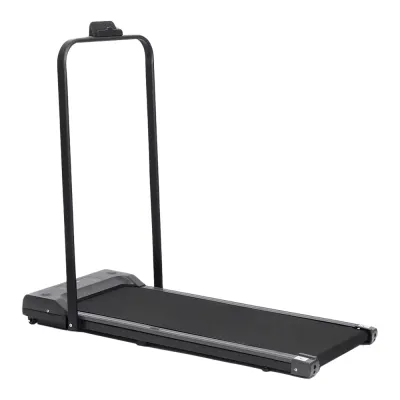
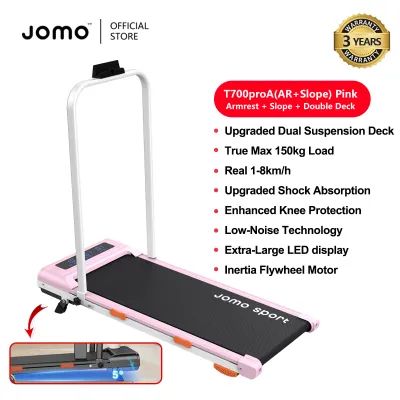
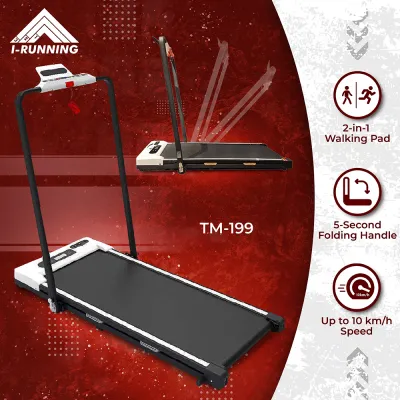
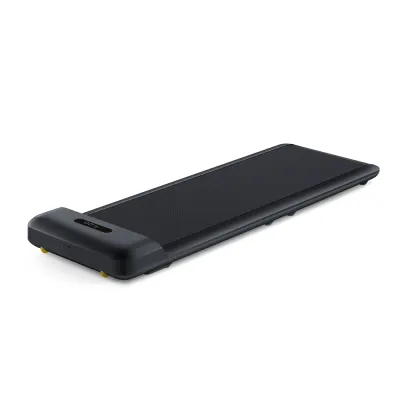
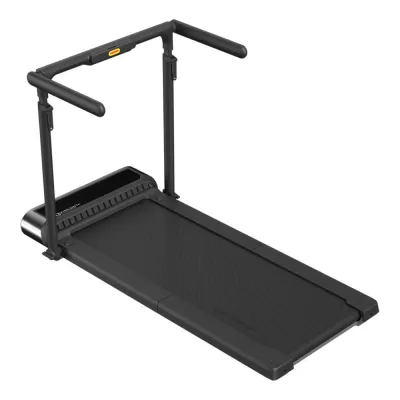
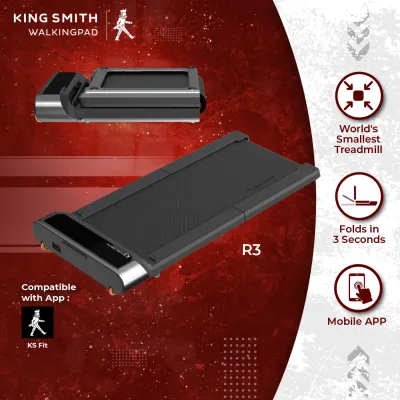
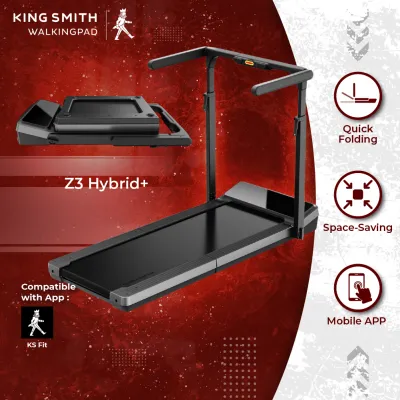
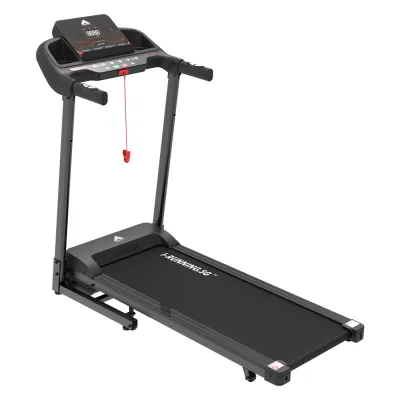
Prices are valid at publication and may change. Please refer to the product page for the latest price.
Getting the treadmill into your flat is the next critical hurdle. Measure the width of your main entrance, hallway turns, and bedroom doors to ensure the delivery team can safely maneuver the boxed or pre-assembled machine inside. Many heavy-duty running treadmills arrive in large, rigid boxes that cannot bend around tight HDB corridor corners or narrow entryways, making pre-delivery pathway checks essential.
Safety clearances are non-negotiable when installing motorized exercise equipment in a home environment. You must maintain a clear, unobstructed safety zone of at least 1.5 to 2 meters behind the treadmill belt to prevent severe friction burns or entrapment injuries if you slip or fall backward. Additionally, keep a clearance of at least 0.5 meters on both sides of the machine so you can easily mount and dismount without bumping into walls, wardrobes, or other furniture.
Compare Treadmill Footprints and Belt Sizes
When evaluating treadmill specifications, it is vital to distinguish between the machine’s overall footprint and its actual running belt dimensions. The overall footprint represents the total floor space the entire unit occupies when fully assembled, including the motor hood, side rails, and console uprights. The running belt, or deck size, is the actual moving surface available for your feet, which is always smaller than the total footprint.

The ideal belt size depends heavily on your height, stride length, and intended workout intensity. For walking or light jogging, a belt length of 120 centimeters and a width of 40 centimeters is generally sufficient for most users. However, if you plan to use a running treadmill for faster paces or interval training, your stride naturally lengthens, requiring a belt that is at least 130 to 140 centimeters long and 45 to 50 centimeters wide to prevent you from stepping off the edges.
Pay close attention to how the motor housing and console design impact the machine’s total length. Some compact running treadmills feature streamlined motor hoods that sit low and flat, allowing you to utilize the entire length of the deck safely. Consoles that protrude significantly forward can make the machine feel bulkier and take up valuable visual and physical space in a small room, even if the actual running deck is relatively short.
Evaluate Foldable and Space-Saving Features
For most HDB residents, a folding treadmill is the only practical way to maintain a multi-functional living space. Folding mechanisms generally fall into two categories: flat-folding designs and upright-folding models. Flat-folding models allow the console and handlebars to fold down parallel to the running deck, enabling you to slide the unit under a bed or stand it vertically against a wall. Upright-folding models, which are more common for high-performance running treadmills, fold the deck upward toward the console, keeping the overall length minimal while increasing the height.
Before choosing a folding model, verify the folded dimensions and the total weight of the machine to ensure you can manage it daily. Running treadmills require robust frames and heavy motors to remain stable at high speeds, often resulting in total weights exceeding 60 to 80 kilograms. Look for models equipped with hydraulic assist mechanisms, often called soft-drop systems, which support the weight of the deck when folding or unfolding to prevent sudden drops and back strain.
While ultra-compact, lightweight folding treadmills are highly appealing for small spaces, they often trade off structural stability and user weight capacity. A frame that is too light will shake, slide, or flex when you run at high speeds, which degrades the workout experience and accelerates wear on the internal components. Always check the manufacturer’s specified maximum user weight limit and prioritize a sturdy, well-braced frame over extreme lightness if you plan to run regularly.
Plan the Setup for HDB Flooring and Power
Operating a running treadmill in an HDB flat requires careful consideration of structural loads, noise transmission, and electrical safety. While HDB floors are engineered to support standard household loads, the repetitive, high-impact force of running can send loud vibrations through the concrete slab to the flat downstairs. To maintain good neighborly relations, place a high-density rubber anti-vibration mat beneath the treadmill to absorb impact noise and protect your vinyl, laminate, or tiled flooring from scratches and pressure marks.
Electrical requirements are another critical safety factor for home cardio equipment. Running treadmills draw a substantial amount of electrical current, particularly when the motor is working hard to maintain high speeds or handle a heavy user. Always plug your treadmill directly into a dedicated wall outlet rather than using extension cords or multi-way adapters, which can overheat, trigger circuit breakers, or cause voltage drops that damage the treadmill’s control board.
Finally, ensure your workout area has adequate ventilation to keep both you and the machine cool. Treadmill motors generate significant heat during operation, which needs to dissipate to prevent the internal electronics from overheating. Position the machine in a spot with good natural airflow or near a standing fan, but avoid placing it directly under an air-conditioning unit where condensation could drip onto the sensitive electronic console or motor housing.
Frequently Asked Questions (FAQ)
Can I place a treadmill on a balcony or near an open window?
Placing a running treadmill on an open balcony or directly next to an open window exposes the sensitive electronic components, motor, and running belt to outdoor elements. Singapore’s high humidity, ambient salt air, and sudden rain showers can quickly lead to electrical short circuits, rusted metal frames, and premature degradation of the belt lubrication. Additionally, direct sunlight can overheat the console screen and warp plastic parts, while uneven balcony flooring can compromise the machine’s stability and safety during use.
Do under-desk treadmills work for actual running?
Under-desk treadmills and walking pads are specifically engineered for low-speed walking and light jogging, typically topping out at speeds of 6 to 8 kilometers per hour. They feature smaller, less powerful motors that cannot sustain the high-torque demands of running, and their running decks are usually too short and narrow to accommodate a running stride safely. Attempting to run on an under-desk model can quickly burn out the motor, void the warranty, and increase the risk of falling due to the lack of supportive handrails and safety stop clips.
Community discussion
Share your experience or ask a question. Comments are reviewed before publication.