
Choosing the right sandbag weight requires shifting your mindset away from traditional barbell or dumbbell numbers. Because sand moves constantly inside the bag, the shifting center of mass makes the load feel significantly heavier than a static iron weight. To find your ideal starting point, a reliable rule of thumb is to select a sandbag weight that is approximately 30% to 40% lighter than what you would normally lift for a comparable barbell or dumbbell exercise. This conservative entry point ensures you can manage the awkward shape and unpredictable movement of the bag without compromising your lifting mechanics.
Your choice ultimately depends on your current fitness level, your specific training objectives, and the types of movements you plan to perform. A weight that works effectively for lower-body bear-hug squats will quickly become unmanageable during overhead presses or rotational tosses. By systematically evaluating your baseline strength, matching the load to your athletic goals, and understanding how different movement patterns affect your leverage, you can select a sandbag that challenges your muscles without risking injury.
Assess Your Current Strength and Training Experience
Evaluating your baseline experience with traditional free weights is the first step in establishing a safe starting reference point. If you are accustomed to lifting barbells, dumbbells, or kettlebells, you already have a foundation of muscular coordination and joint stability. However, this experience does not translate directly to sandbag training. Traditional weights are designed with balanced handles and fixed centers of gravity, allowing you to optimize your leverage. A sandbag lacks this structural predictability, forcing your stabilizing muscles to work continuously to keep the bag in position.
Products mentioned in this guide
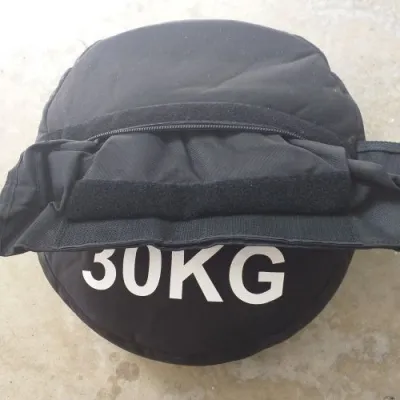
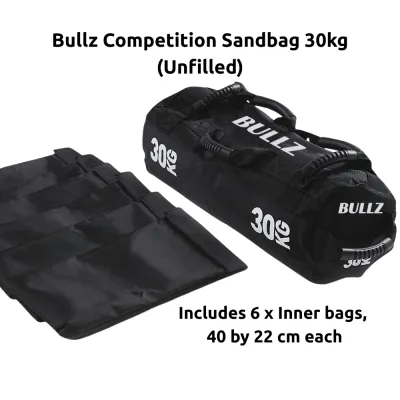

![[SG Stock]Leg weight sandbag wrist weight sandbag strength training sandbag dance training sandbag sports sandbag](https://img.lazcdn.com/g/p/2f5d03c05c91a6321d4467990af47778.jpg_webp_400x400q80.jpg_.webp)
![[OKLIFE. SG]Leg Strap Sandbag Weighted Running Sandbag Special Sandbag for Dance Strength Training Wrist Exercise Sandbag](https://img.lazcdn.com/g/p/2f5d03c05c91a6321d4467990af47778.jpg_400x400q80.jpg_.webp)
Prices are valid at publication and may change. Please refer to the product page for the latest price.
The shifting load and grip demands of sandbags typically require starting lighter than barbells or dumbbells. When you lift a sandbag, the sand flows away from your point of contact, constantly altering the shape of the implement. This fluid movement places immense stress on your grip, forearms, and core. Even if your primary muscle groups can handle a specific weight, your grip or upper back might fail first. Starting lighter allows these supporting muscle groups to adapt to the unique demands of an unstable load.
To frame your initial load selection, identify your current training tier based on your experience:
- Beginners: If you are new to strength training or have less than six months of consistent experience with free weights, prioritize movement quality over load. A light sandbag allows you to learn fundamental movement patterns, such as the hinge, squat, and press, while adapting to the awkwardness of the bag.
- Intermediates: If you have one to two years of consistent strength training experience and can perform basic compound lifts with proper form, opt for a moderate sandbag weight. This level allows you to challenge your conditioning and core stability while maintaining control during multi-joint movements.
- Advanced: Experienced lifters with several years of structured strength training can handle heavier sandbags. However, even advanced athletes should approach heavy sandbags with caution, as the lack of a rigid structure increases the demand on the spine and stabilizing joints during complex lifts.
Match the Weight to Your Specific Training Goals
Your training objectives dictate how heavy your sandbag should be. If your primary goal is to build raw strength and muscle mass, you will need a heavier sandbag that challenges your major muscle groups within lower repetition ranges. For these goals, focus on movements where you can maintain strict control, such as bear-hug squats, clean-to-shoulders, and floor presses. The weight should be heavy enough to induce muscular fatigue while allowing you to complete your target repetitions with a neutral spine and stable joints.

Training for explosive power and athletic performance requires a different approach. Instead of lifting the heaviest possible load, you need a moderate weight that you can move with high velocity. Exercises like sandbag cleans, snatches, and over-the-shoulder throws rely on rapid hip extension and force transfer. If the bag is too heavy, your movement speed will drop, defeating the purpose of power development and increasing the risk of straining your lower back.
For core stability, metabolic conditioning, or high-intensity interval training, lighter to moderate sandbags are highly effective. These routines often involve high-repetition complexes, rotational movements, or carrying tasks over extended distances. A lighter bag ensures that you can sustain proper posture and control during anti-rotation exercises, preventing your form from breaking down as cardiovascular fatigue sets in.
Factor in the Exercise Type and Movement Pattern
Different movement patterns dictate the maximum safe and effective load you can lift. Lower-body dominant movements, such as squats, deadlifts, and lunges, can generally accommodate heavier loads. Because your hips, glutes, and hamstrings are the strongest muscle groups in your body, and because you can hold the bag close to your center of mass, your leverage is maximized. This allows you to lift a substantial amount of weight safely compared to upper-body exercises.
Upper-body and pressing movements require significantly lighter loads due to shoulder and arm limitations. Overhead pressing is particularly challenging because you must stabilize an unstable object directly above your head and shoulders. A load that feels comfortable for a squat can easily overwhelm your shoulder stabilizers during a press, leading to compensatory arching of the lower back. Reducing the weight ensures you can press safely without compromising your spinal alignment.
Dynamic and rotational movements, such as rotational lunges, side throws, or woodchops, demand highly conservative weight selection. These movements subject your spine and joints to multi-directional forces. To protect your lower back and shoulders, use a lighter sandbag that allows you to control the trajectory of the bag throughout the entire range of motion without relying on momentum to compensate for a lack of strength.
How to Test and Progress Your Sandbag Load Safely
When you first train with a sandbag, start with a highly conservative load. If you have an adjustable bag, fill it to its lowest recommended weight capacity. Perform a few basic movements, such as a deadlift, a clean to the chest, and a front squat. Pay close attention to how your body responds. If you notice your knees caving in, your lower back rounding, or your grip slipping within the first few repetitions, the load is too heavy. Your goal during testing is to achieve smooth, controlled movements where the shifting sand does not pull you out of alignment.
As your body adapts to the unstable load, you will notice that movements feel more stable and your grip strength improves. A clear signal that you are ready to progress is the ability to complete all planned sets and repetitions with proper form and minimal rest, while feeling that you have several repetitions left in reserve. At this point, you can gradually add filler sand in small increments, such as one to two kilograms at a time, to slowly increase the resistance. If your bag is at maximum capacity, it may be time to upgrade to a larger outer shell.
Safety must always come first during sandbag training. You must immediately halt a set and adjust the load if you experience joint pain, sharp discomfort, or severe form degradation. Premature grip failure is another critical stopping condition; if you can no longer hold the bag securely, continuing the exercise increases the risk of dropping the weight on your feet or straining your back as you try to compensate. Never sacrifice your posture or joint alignment to complete a repetition.
Frequently Asked Questions (FAQ)
Should I buy an adjustable sandbag or a fixed-weight option?
Adjustable sandbags feature an outer shell that houses multiple smaller filler bags. This design offers exceptional flexibility and cost-effectiveness, as it allows you to adjust the total weight of the bag by adding or removing filler bags. This is highly beneficial for progressive overload and for performing a wide variety of exercises that require different weights. On the other hand, fixed-weight sandbags are filled directly to a specific weight and sealed. While they lack versatility, fixed-weight bags are often highly durable and convenient for dedicated routines where you do not want to spend time opening the outer shell to adjust the load.
How does sandbag weight compare to kettlebells or dumbbells?
A sandbag feels significantly heavier and more physically demanding than a kettlebell or dumbbell of the exact same weight. Traditional free weights have a fixed, predictable center of mass and ergonomic handles that allow for efficient force transfer. A sandbag has an unstable center of mass that shifts constantly, forcing your deep stabilizing muscles, core, and grip to work much harder. Because of this added stabilizing challenge, a direct one-to-one weight translation is not recommended. If you can comfortably perform a dumbbell press with a certain weight, you should expect to use a substantially lighter sandbag to achieve the same level of control and safety.
Community discussion
Share your experience or ask a question. Comments are reviewed before publication.