
Selecting your first pair of scuba diving fins is a critical step in your journey as a diver. Unlike swimming or snorkeling on the surface, scuba diving requires you to propel yourself, a heavy cylinder, and weighted gear through three-dimensional space, often against shifting ocean currents. The right pair of fins acts as an extension of your body, translating your leg movements into efficient thrust while minimizing muscle fatigue and air consumption. To find the perfect match, you must evaluate where you plan to dive, your physical strength, and the specific mechanics of how a fin fits your foot.
Assess Your Diving Environment and Travel Needs
Your primary diving location dictates almost every gear decision you make. If you live in or travel frequently around Singapore, your diving will likely center on the warm, tropical waters of Southeast Asia, such as Malaysia, Indonesia, or Thailand. In these environments, water temperatures typically hover between 27°C and 30°C, meaning heavy thermal protection is rarely a priority. However, if you plan to dive in cooler temperate zones—such as the southern coast of Australia or temperate lakes—you will need thick neoprene boots, which immediately changes the type of fin you require.
Travel logistics are another major consideration for modern divers. If you plan to fly to regional dive destinations, heavy, rigid fins can easily consume a significant portion of your airline baggage allowance. Lightweight, compact travel fins are designed to fit into carry-on luggage or standard travel bags without pushing you over weight limits. However, there is a trade-off: ultra-lightweight fins often feature shorter or more flexible blades, which may not provide the same level of power when navigating strong currents or carrying heavy equipment.
Products mentioned in this guide
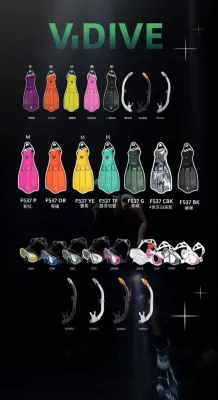
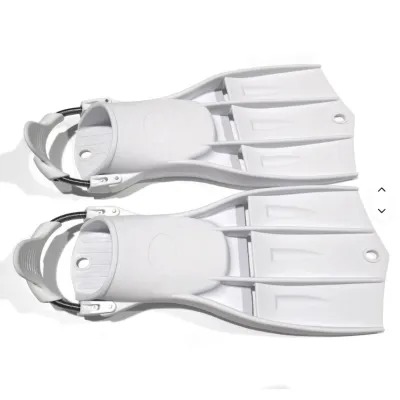
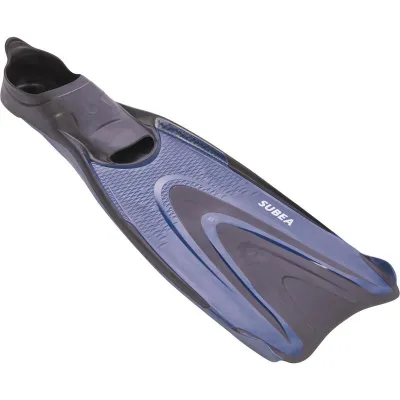
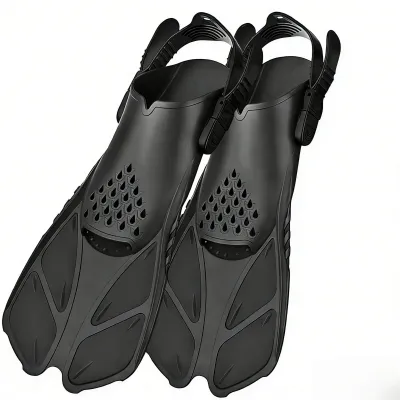
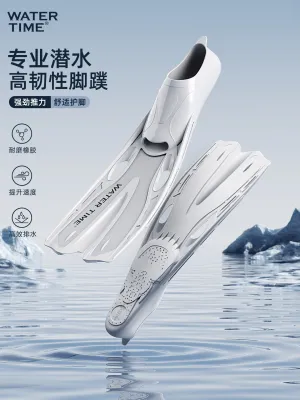


Prices are valid at publication and may change. Please refer to the product page for the latest price.
Finally, consider how you will enter the water. Boat diving is the norm in many tropical resorts, allowing you to walk gear-free to the dive platform and slip your fins on just before giant-striding into the water. In contrast, shore diving often requires walking across rocky paths, sharp coral rubble, or hot sand while carrying your full kit. This distinction is crucial, as shore entries mandate sturdy, thick-soled dive boots, which are incompatible with certain fin styles.
Open Heel vs. Full Foot: Which Fin Type Suits You?
The first major decision you must make is choosing between full foot and open heel fins. This choice is fundamentally linked to the water temperature, entry conditions, and level of foot protection you need.

Full Foot Fins
Full foot fins feature a soft, flexible rubber pocket that completely encloses your heel and foot. They are designed to be worn barefoot or with thin, soft neoprene socks. This design is highly popular among warm-water divers because it is lightweight, streamlined, and incredibly easy to pack.
Because they lack heavy straps or buckles, they offer a very natural feel in the water, allowing for clean, efficient kicks. However, full foot fins offer no protection for your feet outside the water. Walking across a hot boat deck, a rocky pier, or a gravel beach in barefoot fins is uncomfortable and can lead to painful cuts or slips. They are also unsuitable for colder waters, as they provide minimal thermal insulation.
Open Heel Fins
Open heel fins feature a rigid foot pocket with an open back, secured by an adjustable strap that wraps around the heel. These fins are designed to be worn with structured, hard-soled dive boots. This combination offers the ultimate in versatility and protection.
The boots shield your feet from the elements during rocky shore entries and keep your feet warm in cooler waters. The adjustable strap system—which can utilize standard rubber straps, spring straps, or highly durable bungee straps—allows you to easily adjust the tension to accommodate different boot thicknesses. While open heel setups are heavier and bulkier to pack, they are the preferred choice for divers who want a single, adaptable gear setup that can handle everything from local shore dives to international liveaboards.
Matching Blade Design and Stiffness to Your Kick and Strength
The physical design and flexibility of the fin blade determine how water flows around it, directly impacting your speed, maneuverability, and the physical effort required to move.
Paddle vs. Split Blades
Traditional paddle fins feature a solid, continuous blade that acts as a single paddle. When you kick, the blade pushes against a large volume of water, providing powerful, immediate thrust. This design is highly favored for its precise maneuverability. It allows you to execute advanced kicking techniques, such as the frog kick, which pushes water directly behind you rather than downward, preventing you from disturbing delicate marine life or kicking up silt on the ocean floor. Paddle fins are also highly effective when you need to swim against strong currents or make sudden, rapid maneuvers.
On the other hand, split fins are divided down the center, mimicking the aerodynamic properties of a fish’s tail fin. As you kick, the two halves of the blade flex to create a funneling effect, generating lift that propels you forward with very little resistance. Split fins are exceptionally easy on the leg muscles and joints, making them an excellent choice for divers prone to leg cramps or those who prefer a relaxed, steady flutter kick. However, they lack the precise control needed for technical maneuvers and can lose their efficiency when you are fighting heavy currents or carrying high-drag gear.
Choosing the Right Stiffness
Blade stiffness is a critical factor that must match your physical conditioning and diving experience. Fin blades generally range from soft and highly flexible to stiff and rigid. As a beginner, you should generally stick to soft or medium stiffness. Soft blades require less leg strength to flex, which helps prevent painful calf cramps, reduces muscle fatigue, and keeps your heart rate stable. This, in turn, helps you maintain a calm breathing pattern and lowers your air consumption rate, extending your time underwater.
Stiff blades, often made of advanced composites or heavy rubber, are designed for experienced divers with highly conditioned leg muscles and refined kicking techniques. If a beginner attempts to use ultra-stiff fins, the sudden resistance can quickly lead to severe cramping, exhaustion, and rapid air depletion. To test the stiffness of a fin in a retail store, place the tip of the blade on the floor and push down on the foot pocket. The blade should bend smoothly and spring back into shape without requiring excessive force.
How to Get the Perfect Fit and Size
An improperly fitted fin can ruin a dive, causing painful blisters, restricting blood circulation, or even slipping off your foot in deep water. Ensuring a correct fit requires a systematic approach based on the type of fin you choose.
When sizing full foot fins, you must try them on barefoot or with the exact thin neoprene socks you plan to use. The foot pocket should feel snug and secure, much like a comfortable pair of athletic shoes. Pay close attention to your toes; they should lie flat without being curled or pinched at the front of the pocket. To check the fit, sit down and lift your foot. Have a friend gently pull on the heel of the fin, or try to shake your foot. If the heel pocket slips off easily or if there is a noticeable gap, the fin is too large. A loose fin will rub against your skin, leading to painful blisters, and could easily slip off during a vigorous kick.
For open heel fins, the golden rule is to purchase and fit your dive boots first. Because boot sole thicknesses, toe shapes, and heel heights vary significantly between brands, you cannot accurately size an open heel fin without your actual boots. Slide your booted foot into the fin pocket. The boot should seat deeply into the pocket without forcing you to squeeze it in. The heel strap should rest securely across the hard, reinforced counter of your boot’s heel. If the strap sits too high, it can rub against your Achilles tendon; if it sits too low, it can slide off during a dive. There should be a small amount of space on either side of the boot within the pocket, but not so much that your foot rolls or slides side-to-side.
Once you have the fins on, perform a quick diagnostic test. Stand up, lift one foot, and simulate a slow, deliberate kicking motion. Pay attention to the top of your foot (the instep) and the back of your heel. If you feel any immediate pinching, hard pressure, or rubbing, these sensations will be magnified tenfold under the pressure and repetitive motion of a standard dive. If you are between sizes, it is generally safer to size up slightly in open heel fins and adjust the straps, whereas full foot fins must fit perfectly to remain secure.
Final Pre-Purchase Diagnostic Checklist
Before making your final purchase, run through this quick diagnostic checklist to ensure your chosen fins match your physical needs and diving plans:
- Water Temperature & Footwear: Confirm if you will be diving primarily in warm water (favoring full foot fins or thin socks) or if you require dive boots for shore entries and cooler conditions (mandating open heel fins).
- Blade Style Alignment: Ensure your blade choice matches your preferred kick. Select paddle fins if you want precise maneuverability and frog-kicking capability, or split fins if you want to minimize joint strain during standard flutter kicks.
- Stiffness and Conditioning: Verify that the blade flex matches your current leg strength. Opt for soft to medium stiffness to prevent cramping and keep your air consumption low.
- Fit and Security: Double-check that there are no pressure points on your instep or toes, and that open-heel straps sit securely on the hard counter of your dive boots.
- Travel and Logistics: If you plan to travel frequently, check the weight and overall length of the fins against standard airline baggage limits to avoid unexpected oversize or overweight fees.
Frequently Asked Questions (FAQ)
Can I use snorkeling fins for scuba diving?
No, you should not use standard snorkeling fins for scuba diving. Snorkeling fins are typically shorter, thinner, and much more flexible because they are designed only to propel a swimmer on the surface without heavy gear. Scuba diving requires you to move against resistance while carrying a heavy tank, buoyancy compensator, and thick exposure suit. Snorkeling fins lack the surface area and structural rigidity needed to provide adequate thrust under these conditions. Attempting to use them underwater can lead to extreme physical exertion, leg cramps, and an inability to swim against currents, presenting a serious safety hazard.
Should I buy fins before or after my dive boots?
You should always buy your dive boots before purchasing open heel fins. Because dive boots vary widely in sole thickness, toe box width, and heel height, a fin pocket that fits one boot perfectly might be far too tight or loose for another. Trying on open heel fins without your actual boots makes it nearly impossible to get an accurate fit. By securing your boots first, you can bring them to the dive shop and ensure the fin’s foot pocket and strap system accommodate them perfectly, preventing discomfort and gear slippage underwater.

Community discussion
Share your experience or ask a question. Comments are reviewed before publication.