
Choosing the right badminton shuttercock is a decision that directly impacts your control, pacing, and overall enjoyment on the court. The ideal choice requires balancing material construction, speed ratings, and environmental conditions with your current technical abilities and playing style. In Singapore, where high humidity and air-conditioned sports halls present contrasting playing conditions, selecting the correct shuttercock is essential for maintaining a consistent game. By understanding how different designs behave in the air, you can make an informed decision that supports your skill development and budget.
While many players focus heavily on selecting the perfect racket, the shuttercock is the component that actually dictates the flight path, speed, and feel of every shot. A mismatched shuttercock can lead to frustration, such as clean clears flying out of bounds or smashes feeling sluggish and heavy. By aligning your equipment with your playing environment and experience level, you can ensure a predictable flight trajectory and focus entirely on refining your technique.
Understand the Core Differences: Feather vs. Nylon Shuttlecocks
The foundational decision when choosing a shuttercock is selecting between natural feather and synthetic nylon materials. These two categories offer vastly different flight characteristics, durability profiles, and cost considerations. Understanding these physical differences is the first step in determining which option suits your regular playing sessions.
Products mentioned in this guide
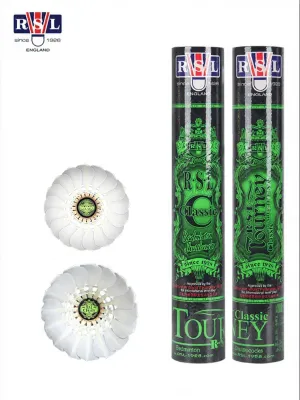
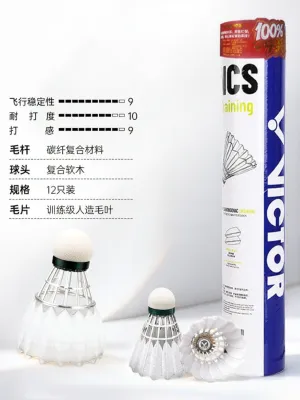
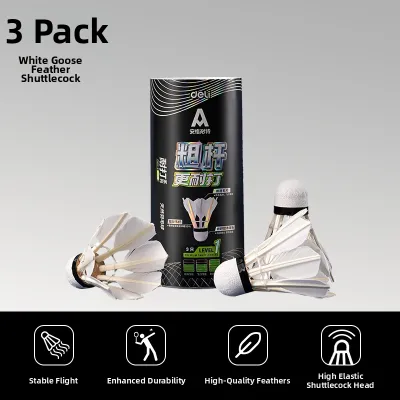
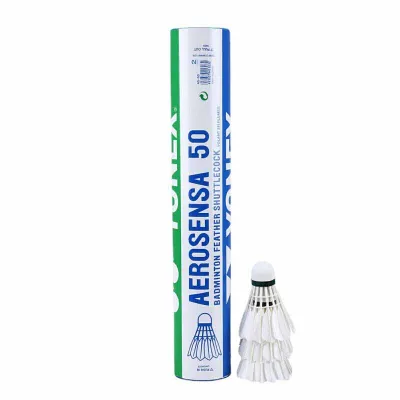
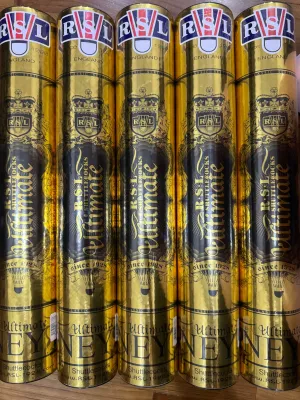
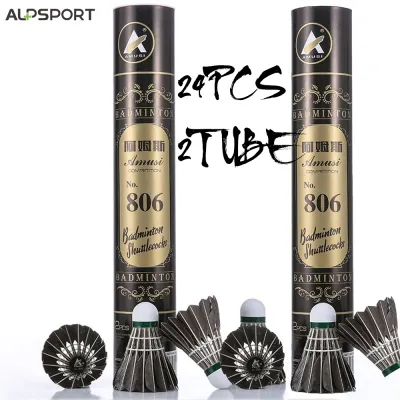

Prices are valid at publication and may change. Please refer to the product page for the latest price.
Natural feather shuttercocks, typically constructed from goose or duck feathers anchored in a cork base, are the standard for competitive and high-level play. The unique structure of natural feathers creates a distinct parabolic flight trajectory. When struck, a feather shuttercock accelerates rapidly and then decelerates quickly due to the aerodynamic drag of the flared feathers. This sharp deceleration allows for precise drop shots, tight net play, and steep smash angles. However, natural feathers are fragile; a single off-center hit can bend or snap a feather, permanently altering the flight path and requiring immediate replacement.
Synthetic nylon shuttercocks feature a plastic skirt designed to mimic the shape of natural feathers. Because nylon is highly flexible and resilient, these shuttercocks can withstand repeated high-velocity impacts and off-center hits without losing their shape. The flight trajectory of a nylon shuttercock is more of a simple, continuous arc rather than a sharp deceleration curve. It tends to fly faster through the air and travel further on deep clears, which can make precise net control more challenging. Despite this trade-off in control, the exceptional durability of nylon makes it highly cost-effective, saving you significant money on replacements over time.
Ultimately, the choice between feather and nylon comes down to a trade-off between authentic flight performance and long-term durability. Players who prioritize tactical precision, spin, and tournament-realistic practice will naturally gravitate toward feathers. Conversely, those who prioritize continuous play, high-frequency practice, and budget-friendly setups will find nylon options to be highly practical and reliable.
Match the Shuttlecock to Your Skill Level
Your current technical proficiency should heavily influence the type of shuttercock you bring to the court. Using a shuttercock that matches your skill level ensures that you receive the right feedback from your racket while avoiding unnecessary equipment costs.

For beginners, the primary goals are developing consistent hand-eye coordination, mastering basic stroke mechanics, and enjoying long rallies. At this stage, off-center hits—where the racket frame or strings strike the skirt rather than the cork base—are very common. If beginners use natural feather shuttercocks, they will likely ruin multiple birds per game, leading to high costs and interrupted play. Nylon shuttercocks are highly recommended for beginners because they easily survive these mishits, allowing players to focus on their swing mechanics without worrying about damaging the equipment.
Intermediate players who are starting to develop their touch, slice, and net play should consider transitioning to higher-grade nylon options or entry-level duck feather shuttercocks. At this stage, you are learning how to control the pace of the game and execute more complex shots. High-grade nylon shuttercocks are designed with advanced skirt patterns that offer a flight path closer to that of natural feathers. Alternatively, entry-level duck feather options provide the authentic feel and deceleration of feathers at a more accessible price point, helping you adapt to the tactile feedback required for advanced play.
Advanced and competitive players require tournament-grade goose feather shuttercocks. At a high level of play, matches are decided by microscopic margins, such as the exact spin of a net tumble or the steepness of a smash. Goose feathers offer superior structural strength and consistency compared to duck feathers, ensuring that the shuttercock behaves predictably under extreme forces. These players possess the clean striking technique necessary to prolong the life of a feather shuttercock, making the investment in premium materials essential for their competitive performance.
Decode Shuttlecock Speed Ratings and Environmental Factors
Shuttercocks are calibrated to fly at specific speeds under different environmental conditions. This calibration is represented by a speed rating system, usually indicated by numbers on the tube packaging. Understanding how to read these ratings and how local weather affects flight is crucial for selecting the right tube.
Standard speed ratings typically range from 75 to 79 (or sometimes 1 to 5, where 1 is the slowest and 5 is the fastest). A lower number indicates a slower shuttercock that travels a shorter distance, while a higher number indicates a faster shuttercock that travels further. The rating system is designed to compensate for air density, which is directly influenced by temperature, humidity, and altitude.
Air density acts as resistance against the shuttercock during flight. In warm, humid climates, the air is less dense, meaning there is less resistance to slow the shuttercock down. Consequently, a shuttercock will fly faster and further in hot, humid conditions. To compensate for this, players in tropical environments like Singapore typically use slower speed ratings, such as speed 76. The natural resistance of the warm air helps slow the shuttercock down, keeping your deep clears within the court boundaries.
Conversely, cold air is denser and creates more resistance, which slows the shuttercock down. If you play in a heavily air-conditioned indoor sports hall, the cool air will make a standard speed 76 shuttercock feel sluggish and heavy, requiring excessive physical effort to clear from baseline to baseline. In these air-conditioned environments, switching to a faster speed rating, such as speed 77 or 78, is necessary to maintain a natural flight distance and protect your shoulder from strain.
Evaluate Playing Style and Court Conditions
Your tactical approach to the game and the physical characteristics of your playing venue should also guide your shuttercock selection. Different styles of play place unique physical demands on the shuttercock, while outdoor environments introduce external variables that require specialized gear.
Aggressive, attack-oriented players who rely heavily on powerful smashes and quick offensive drives put immense stress on the shuttercock. High-velocity impacts cause the skirt of a nylon shuttercock to compress temporarily, which can lead to erratic flight paths immediately after a hard hit. For these players, high-quality feather shuttercocks are preferred because the natural shafts recover their shape almost instantly, ensuring a steep, stable smash trajectory and predictable deceleration for the defender.
Defensive and control-oriented players focus on precise placement, deceptive drop shots, and consistent net play. These players rely on the shuttercock’s ability to spin and tumble predictably when sliced. Natural feather shuttercocks excel in this area, offering a crisp feel off the racket face that allows players to gauge the exact amount of force needed for delicate net lifts. If using nylon, control players should look for models with textured skirts designed specifically to enhance aerodynamic drag and spin.
Outdoor play introduces wind, which can easily blow a standard indoor shuttercock off course. If you are playing in a park or an open-air court, standard feather and nylon shuttercocks are highly impractical. For these environments, you should look for specialized outdoor shuttercocks. These are designed with heavier cork bases and unique aerodynamic skirts that resist wind interference, allowing you to enjoy a stable game outdoors without the frustration of a drifting bird.
Inspect and Test Before Committing to a Bulk Purchase
Before purchasing shuttercocks in large quantities, it is wise to perform a few simple quality checks and on-court tests. This ensures that the batch you buy meets your expectations for flight consistency and durability.
When inspecting a new tube of feather shuttercocks, look closely at the construction of the individual birds. The feathers should be perfectly symmetrical and evenly spaced around the cork base. Check the glue lines around the threads; the adhesive should be applied uniformly without thick clumps or dry patches, as poor gluing leads to rapid structural failure. The cork base should feel firm and solid; natural cork offers the best rebound and feel, while composite or synthetic cork bases are common in budget-friendly options and may feel slightly stiffer.
Once on the court, perform a standard clear test to verify the speed and flight path. Stand on the back boundary line of the court and strike the shuttercock with a full underhand stroke parallel to the sideline. A shuttercock of the correct speed should land within the designated test marks on the opposite side of the court (typically between 530mm and 990mm short of the opposite back boundary line). Observe the flight path: the shuttercock should fly straight without wobbling or spinning erratically.
Proper storage is also essential for maintaining the quality of your shuttercocks, especially natural feathers. Feathers contain natural moisture that keeps them flexible; if they dry out, they become brittle and snap easily. Store your shuttercock tubes vertically in a cool, shaded place away from direct sunlight. To extend their lifespan, many players use specialized humidifying accessories or carefully apply steam to the open end of the tube a day before playing, which restores moisture to the feathers and significantly improves their durability on the court.
Frequently Asked Questions (FAQ)
How long does a feather shuttlecock typically last compared to a nylon one?
A single natural feather shuttercock typically lasts between one to three games under normal intermediate play, though powerful smashes or frequent off-center hits can destroy one in just a few rallies. In contrast, a single high-quality nylon shuttercock can easily last for several full sessions or weeks of casual play before the plastic skirt warps, tears, or loses its shape, making nylon significantly more durable.
Can I use the same speed rating year-round in an indoor court?
While outdoor temperatures in Singapore remain relatively constant, indoor court conditions can vary depending on ventilation. If you play in a non-air-conditioned community hall, a slower speed rating like 76 is generally suitable year-round. However, if you switch to a heavily air-conditioned sports hall, the cooler, denser air will slow the bird down, requiring you to switch to a faster speed rating like 77 or 78 to maintain a natural flight distance.
What is the best way to store feather shuttlecocks to extend their lifespan?
To prevent natural feathers from becoming dry and brittle, store the tubes vertically with both end caps securely closed in a cool, shaded area. Avoid leaving them in hot cars or dry, air-conditioned rooms. To actively extend their lifespan, you can use a specialized humidification infuser or carefully expose the open end of the tube to gentle steam for a few seconds a day before your session, which restores elasticity to the feathers.
Community discussion
Share your experience or ask a question. Comments are reviewed before publication.