
Selecting the correct adult exercise ball requires balancing physical dimensions, weight ratings, and your fitness goals. To find the right fit, you must match the ball’s diameter to your height to maintain proper joint alignment, while ensuring the weight capacity safely exceeds the dynamic forces of your workouts. A ball that is too small or under-inflated can strain your knees and lower back, while an overloaded ball risks sudden failure. By understanding how these specifications interact, you can select a durable tool that supports your fitness, recovery, or ergonomic goals safely.
How to Match Exercise Ball Size to Your Height
The primary factor in choosing an exercise ball is its diameter, which must correspond directly to your height. When you sit on a properly inflated exercise ball, your feet should rest flat on the floor with your weight distributed evenly. Your knees and hips should form a 90-degree angle, with your thighs positioned parallel to the ground. This alignment ensures that your spine remains in a neutral position, reducing pressure on your lumbar region and promoting active engagement of your core muscles. If your knees are bent at an acute angle, the ball is too small; if your feet cannot comfortably reach the floor, the ball is too large.
While general guidelines associate specific heights with standard ball diameters—such as 55 centimeters for individuals under 170 centimeters, 65 centimeters for those between 170 and 185 centimeters, and 75 centimeters for taller users—you should always consult the specific manufacturer’s sizing chart. Different brands utilize distinct PVC blends and manufacturing processes, which can cause variations in material elasticity and actual inflated dimensions. Relying solely on generic charts can lead to purchasing a ball that does not perform as expected under your body weight.
Products mentioned in this guide
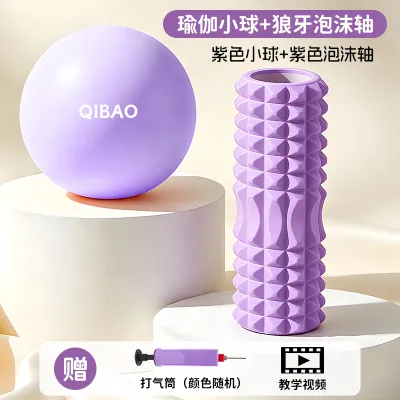
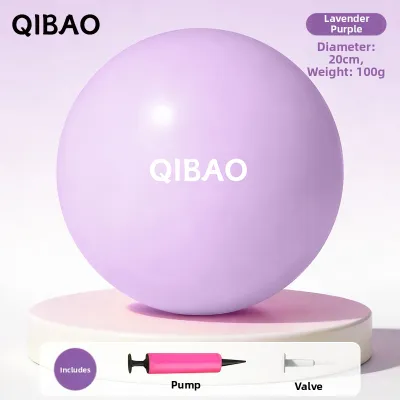
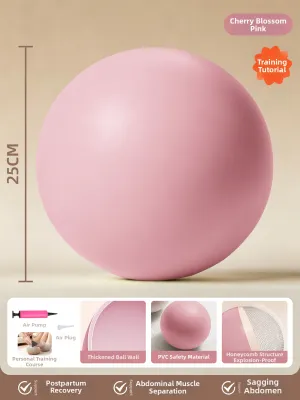
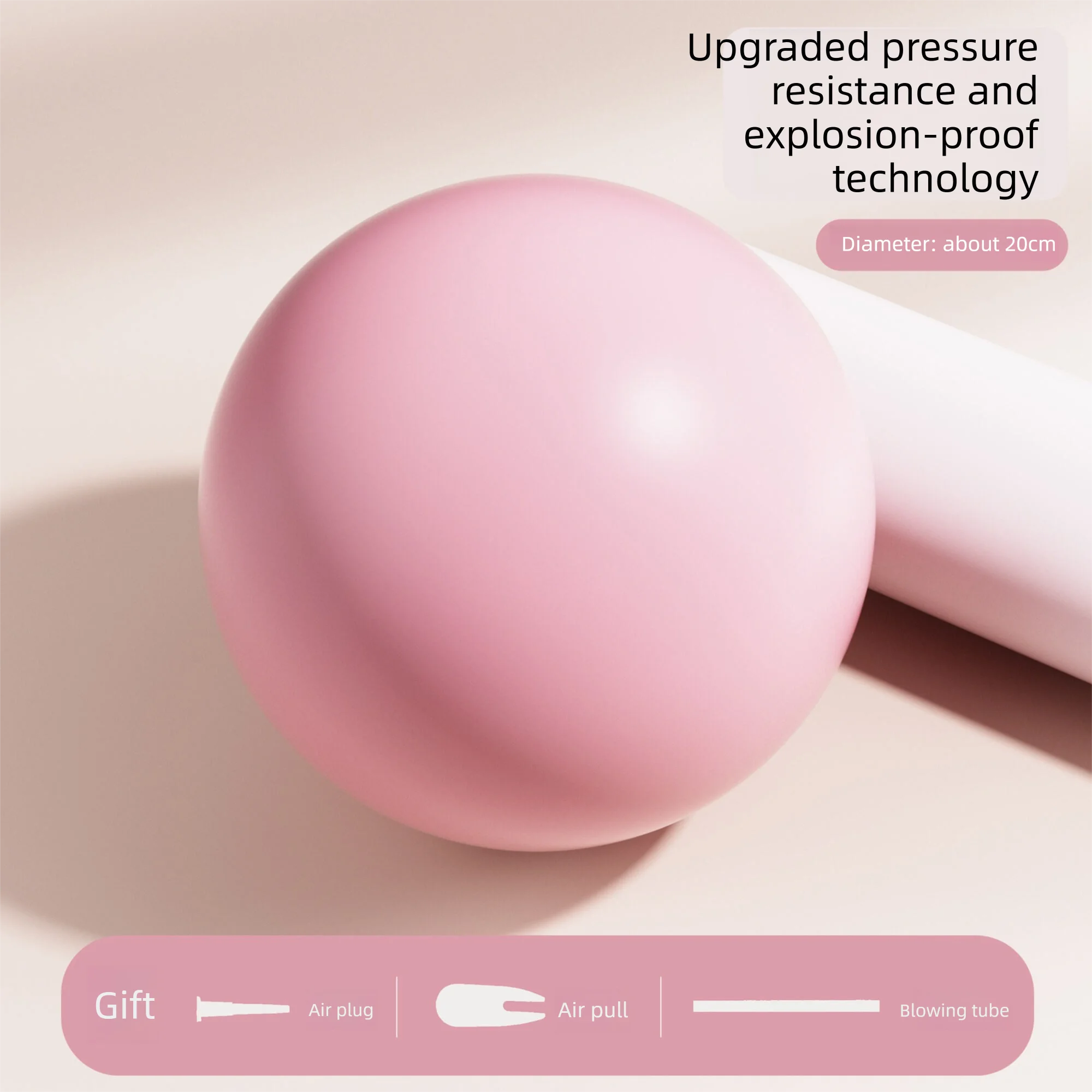
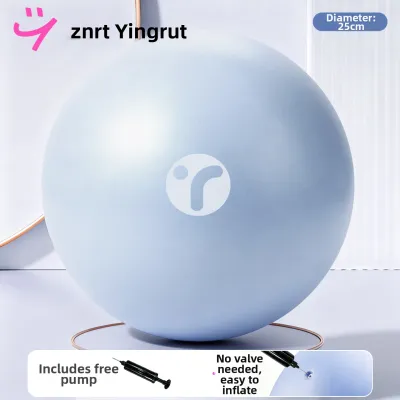
Prices are valid at publication and may change. Please refer to the product page for the latest price.
If your height falls directly on the boundary between two standard sizes, you can adjust the inflation level slightly to achieve the correct seating height. Choosing the larger ball and inflating it slightly below its maximum diameter can provide a wider, more stable base while maintaining the correct 90-degree knee angle. Conversely, avoid purchasing the smaller ball and over-inflating it to reach your desired height, as stretching the material beyond its engineered limits compromises its structural integrity and safety ratings.
Understanding Weight Capacity and Safety Limits
When evaluating an exercise ball, it is critical to distinguish between static weight capacity and dynamic or working weight capacity. The static weight limit refers to the maximum load the ball can support when a body is completely at rest on its surface. In contrast, the dynamic weight limit accounts for the additional forces generated during active movement, such as bouncing, rolling, or lifting weights while balanced on the ball. A user weighing 80 kilograms can easily exert a dynamic force exceeding 150 kilograms during high-intensity training, making the dynamic rating the more critical specification for active exercise.

To ensure your safety during workouts, check the product label or user manual for the certified burst-resistant rating. This rating indicates the maximum weight the ball can support while maintaining its “slow-deflate” capability. If a burst-resistant ball is punctured by a sharp object under load, it will release air gradually rather than popping like a balloon, allowing you to transition safely to the floor without sustaining a sudden fall. High-quality adult exercise balls typically feature burst-resistant ratings ranging from 200 kilograms to over 500 kilograms, depending on the thickness of the material.
For optimal safety, select an exercise ball with a weight capacity that offers a substantial safety margin above your actual body weight plus any external loads. If you plan to perform dumbbell presses or core exercises while holding free weights, add the weight of the equipment to your body weight when calculating your requirements. Choosing a ball with a dynamic capacity that is at least double your total working weight ensures that the material can withstand sudden impacts and repetitive stress over years of regular use.
Adapting Your Choice to Your Intended Use
Your primary activity determines the ideal firmness, size, and material thickness of your exercise ball. If you intend to use the ball as an ergonomic desk chair replacement, you may need to select a slightly larger size than you would for standard workouts. Standard office desks require a higher seating position to prevent wrist strain while typing, meaning a 65-centimeter or 75-centimeter ball is often necessary to align your forearms parallel to the desk surface. When used as a chair, the ball should be inflated firmly enough to prevent you from sinking too deeply, which can restrict blood flow and cause poor posture.
For active core training, physical therapy, or weightlifting, a firmer ball with a higher burst-resistant rating is essential. Dynamic exercises require rapid stabilization, and a firm surface provides the necessary feedback to your muscles to maintain balance. If the ball is too soft, it absorbs your movements, reducing the effectiveness of core-strengthening exercises and making it difficult to maintain control when performing complex movements. Furthermore, weightlifting demands maximum stability to prevent sudden shifts in balance that could lead to joint strain or dropped weights.
Conversely, a slightly larger or softer ball is often preferred for gentle stretching, prenatal exercises, or recovery routines. A lower inflation pressure increases the ball’s contact area with the floor, making it more stable and less prone to rolling away during slow, controlled movements. This softer support is gentler on sensitive joints and allows for a deeper, more relaxing stretch along the spine and hips. When adjusting the firmness for recovery, ensure the ball still prevents your hips from sinking below your knees, as deep sinking can place unnecessary stress on the lower back.
Verifying Material Specs and Setup Requirements
The safety of an exercise ball depends heavily on its material composition and how it is prepared for its first use. High-quality balls are manufactured from heavy-duty, non-toxic PVC that is explicitly labeled as “anti-burst” or “slow-deflate.” This specification means the material is engineered with a dense, cross-linked structure that resists tearing. While secondary features like color, matte finishes, or ribbed surface textures can improve your grip and prevent the ball from sliding on smooth floors, they do not replace the fundamental safety provided by a high-quality, thick-walled PVC construction.
Properly preparing the ball during its initial inflation is vital to preserving its material strength and ensuring it reaches its correct size. When you first unbox the ball, allow the material to acclimate to room temperature for several hours before inflating it. Cold PVC is stiff and brittle, and inflating it immediately can cause micro-tears along the seams. Use a multi-stage inflation process: pump the ball to approximately 80 percent of its target diameter, insert the plug, and let it rest undisturbed for 24 hours. This waiting period allows the polymer chains in the plastic to stretch and relax safely.
After the 24-hour acclimation period, complete the inflation until the ball reaches its specified diameter. Use a tape measure to verify the size rather than relying on visual estimation, as an under-inflated ball will feel too soft, while an over-inflated ball will stretch the seams and increase the risk of a sudden burst. Once fully inflated, insert the valve plug securely and check for any immediate air leaks around the seal. Following this structured setup process ensures the material retains its full elasticity and load-bearing capacity for long-term use.
Frequently Asked Questions (FAQ)
Can I use an exercise ball if I am between standard size ranges?
Yes, if your height falls between two standard sizes, it is generally safer to choose the larger size and inflate it slightly below its maximum capacity. This approach allows you to achieve the correct 90-degree knee and hip alignment without over-stretching the material. You must never purchase the smaller ball and over-inflate it to gain extra height, as exceeding the manufacturer’s specified diameter thins the PVC walls, compromises the burst-resistant rating, and significantly increases the risk of sudden deflation during a workout.
How often should I check the inflation and condition of my ball?
You should perform a quick visual inspection and pressure check before every workout session, especially if the ball has been stored in an environment with fluctuating temperatures. Changes in room temperature can cause the air inside the ball to expand or contract, altering its firmness and stability. Inspect the surface regularly for signs of wear, such as deep scratches, scuffs, discoloration, or small cracks. If you notice any structural imperfections, slow air leaks around the valve, or if the ball has been exposed to sharp objects, replace it immediately to prevent sudden failure during use.
Community discussion
Share your experience or ask a question. Comments are reviewed before publication.