
To fit a sit-up bench in a typical HDB bedroom without blocking walkways, you generally need a bench with an operational footprint of no more than 120 cm to 140 cm in length and 35 cm to 45 cm in width, combined with a folding or vertical storage design. Because local bedrooms typically range from 9 to 12 square meters, a fixed, full-sized commercial bench will likely obstruct the critical clearance needed for daily movement. Choosing a compact, foldable model allows you to perform core workouts safely and then reclaim your floor space immediately afterward.
Measure Your Bedroom and Walkway Clearances
Before purchasing any fitness equipment, you must map out the physical boundaries of your bedroom. A standard HDB common bedroom or master bedroom has limited open floor space once a queen-sized or single bed, wardrobe, and study desk are factored in. To find your workout zone, clear a temporary space and measure the length and width of the floor using a standard measuring tape.
Your workout zone must accommodate more than just the physical dimensions of the bench. You must account for your full body length, especially when performing sit-ups, leg raises, or extensions where your head or feet extend past the padded board. Add at least 30 cm of clearance at both ends of the bench to prevent your head or feet from striking walls, bed frames, or wardrobes during dynamic movements.
Products mentioned in this guide
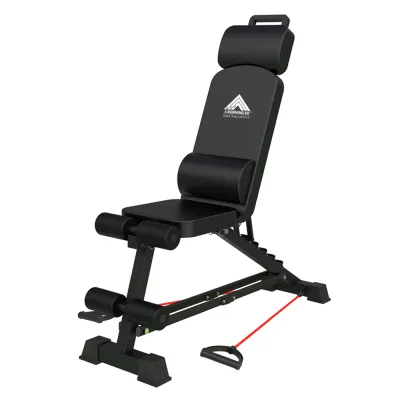
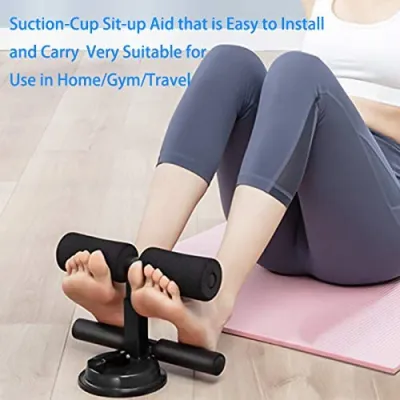
Prices are valid at publication and may change. Please refer to the product page for the latest price.
Walkway clearances are critical for maintaining a safe and functional living space. A primary walkway, such as the path from your bed to the bedroom door or wardrobe, requires a minimum clearance of 60 cm to allow unhindered movement. Marking this path with masking tape during your planning phase helps visualize whether an unfolded bench will block daily foot traffic.
Finally, consider the mounting and dismounting zones. You need at least 45 cm of open space on at least one side of the bench to safely sit down, swing your legs into the foot rollers, and stand up after a strenuous set. Neglecting this side clearance can force you into awkward, cramped movements that increase the risk of tripping or straining your back before your workout even begins.
Sit-Up Bench Dimensions and Form Factors to Consider
Understanding the physical dimensions of different sit-up bench designs is essential for making an informed choice. Standard flat utility benches are relatively compact, often measuring around 110 cm to 120 cm in length. However, dedicated sit-up benches, which feature decline angles and integrated leg-lock rollers, typically require more operational length, often extending from 130 cm to over 150 cm.

The base frame design directly influences both the stability of the bench and the amount of floor space it occupies. Benches with an H-frame base feature wide horizontal stabilizer bars at both ends, which offer excellent lateral stability but require a wider, flatter floor area. T-frame configurations use a single central spine with smaller crossbars, which can save minor amounts of floor space but may feel less stable during high-intensity core exercises if the steel tubing is thin.
Always verify the manufacturer’s specified maximum footprint, which represents the absolute outer limits of the equipment when fully assembled. For decline sit-up benches, this footprint must include the protruding leg-lock rollers and adjustment knobs, which often extend several centimeters beyond the main padded board. Failing to account for these protruding parts can result in a bench that blocks a closet door or juts into a walkway.
Height is another structural profile dimension to evaluate, especially if you plan to position the bench near low-hanging fixtures or open shelves. A typical sit-up bench stands between 45 cm and 60 cm high at its peak. Ensuring that this height does not interfere with desk drawers, low windows, or electrical outlets will keep your workout area safe and organized.
Storage and Space-Saving Configurations
For most HDB bedrooms, a foldable sit-up bench is the most practical choice because it allows you to reclaim your living space immediately after training. Foldable models feature hinge joints and pull-pin mechanisms that allow the frame to collapse flat. Before buying, compare the manufacturer’s folded dimensions against your intended storage spot, whether that is a narrow gap beside your wardrobe or a dedicated corner of your home.
Vertical storage is an excellent way to minimize the footprint of a folded bench, but it requires careful safety checks. Some space-saving benches are designed to stand upright on their end, utilizing specialized stabilizer caps to remain balanced. If you choose this method, ensure the bench is placed on a flat, level surface away from high-traffic areas where children, pets, or passing shoulders could accidentally knock it over.
Wall-mounted hooks offer another vertical storage alternative, but you must verify that both the wall structure and the hook hardware can support the weight of the bench. In local apartments, concrete or solid brick walls are suitable for heavy-duty anchors, whereas lightweight partition walls may fail under the concentrated load. Always consult the manufacturer’s guidelines to confirm if the bench frame is structurally rated for hanging.
Under-bed storage is highly effective but depends entirely on the clearance height of your bed frame. Measure the vertical distance from your bedroom floor to the lowest point of the bed frame, accounting for any central support legs or decorative trim. Many flat-folding benches collapse to a height of 15 cm to 20 cm, which easily slides under standard raised bed frames but may not fit under low-profile platform beds.
Safety and Stability Checks for Compact Benches
While prioritizing a compact footprint is necessary for small bedrooms, you must never compromise on structural safety. Compact and lightweight benches often use thinner steel tubing and narrower stabilizer bars to reduce weight and size. You must verify that the bench’s maximum weight capacity—which includes both your body weight and any dumbbells or medicine balls you plan to use—comfortably exceeds your actual training load.
The locking pins, hinges, and adjustment joints on foldable benches are critical points of potential failure. Before every workout session, perform a manual inspection to ensure that all spring-loaded pull pins, detent pins, or threaded knobs are fully engaged and locked into their respective adjustment holes. Any lateral wobble or play in the hinges during a test sit-up indicates that the joint is not secure or that the frame has experienced wear.
Maintaining a firm grip on your bedroom floor is vital to prevent the bench from sliding or tipping during dynamic core exercises. Most HDB bedrooms feature smooth flooring materials such as ceramic tiles, vinyl planks, or laminate, which offer very little natural traction. Check that the bench is equipped with thick, non-slip rubber end caps that cover the metal feet completely.
To further enhance stability and protect your home’s flooring, place a high-density PVC or rubber equipment mat beneath the bench. A dedicated fitness mat not only prevents the metal frame from scratching your tiles or denting your vinyl floor but also dampens noise and vibration. This simple addition ensures a quieter workout environment, which is especially important if you train early in the morning or late at night in a shared household.
Frequently Asked Questions (FAQ)
Can I use a sit-up bench on a carpeted or smooth bedroom floor?
Yes, you can use a sit-up bench on both carpeted and smooth bedroom floors, but each surface requires specific precautions. On smooth surfaces like ceramic tiles or vinyl, ensure the bench has intact rubber feet to prevent dangerous sliding during your workout. If you are placing the bench on a thick carpet, check for any wobbling or sinking; using a firm, flat equipment mat over the carpet will help distribute the weight evenly and provide a stable base.
Are foldable sit-up benches stable enough for weighted exercises?
Foldable sit-up benches can be stable enough for weighted exercises, provided you strictly adhere to the manufacturer’s maximum weight capacity. This limit must account for your body weight plus the weight of any dumbbells or plates you hold. Always inspect the locking pins and hinges before lifting, and avoid rapid, jerking movements that can introduce lateral forces, as foldable frames generally have more joint play than fully welded, non-folding commercial benches.
Community discussion
Share your experience or ask a question. Comments are reviewed before publication.