
Finding the right small football goal for a Singapore home requires balancing the passion for the beautiful game with the physical realities of local residential layouts. Whether you reside in a cozy high-rise apartment or a multi-story landed estate, selecting a goal that fits your available space ensures a fun, active environment without risking structural damage or household injuries. The ideal size is not merely a matter of what can physically squeeze into a room; it is determined by calculating active play zones, safety clearances, and storage convenience. By understanding how to measure your space and match it to specific goal dimensions, you can establish a safe, functional mini-pitch right inside your home.
Calculate the Maximum Allowable Goal Footprint
Before purchasing any equipment, you must establish the maximum physical boundary your home can accommodate. Start by using a standard measuring tape to record the total length, width, and ceiling height of your intended play area. However, the physical dimensions of the room do not equal the safe size of your goal. You must deduct mandatory safety buffers from these raw measurements to prevent accidents. A good rule of thumb is to maintain a clearance of at least one meter on either side of the goal and at least 1.5 meters behind the player’s shooting position. This buffer protects fragile furniture, glass windows, and active walkways from stray shots.
Additionally, you must account for the ball’s trajectory and the goalkeeper’s movement zone. A high-lofted shot can easily strike ceiling fans or recessed lighting fixtures, meaning low-ceilinged rooms require shorter goals to encourage low, ground-level passing. The depth of the goal is equally critical; a goal that is too deep will restrict the goalkeeper’s lateral movement or force them to play too close to walls, increasing the risk of collision. Ensure there is enough floor depth for the goal frame to sit securely while leaving ample space for a player to react and move safely.
Products mentioned in this guide
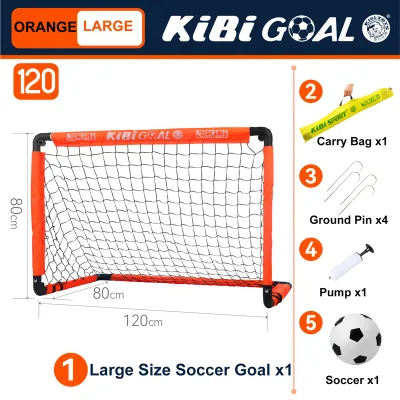
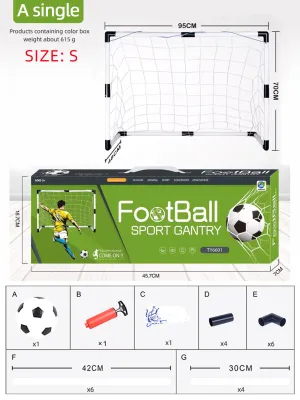
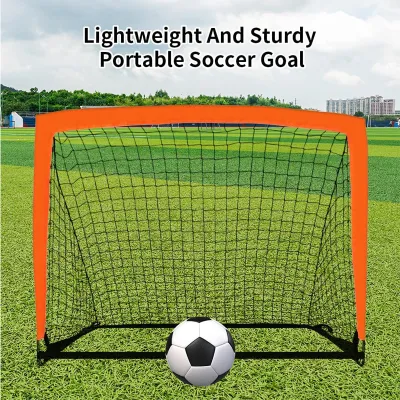
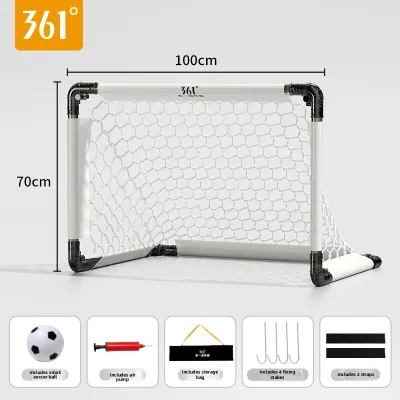
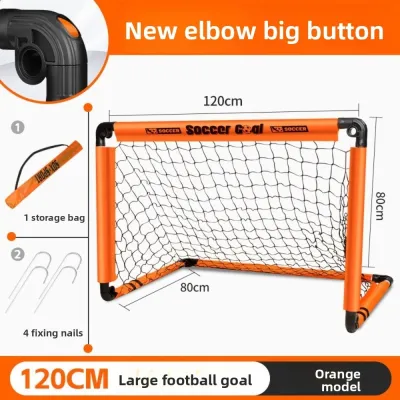
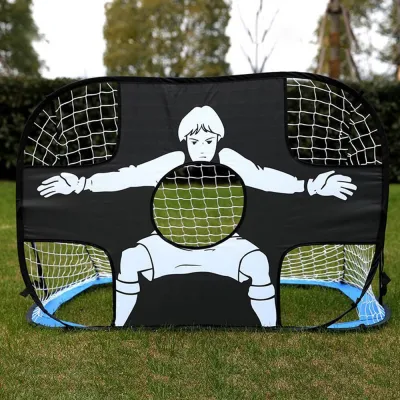
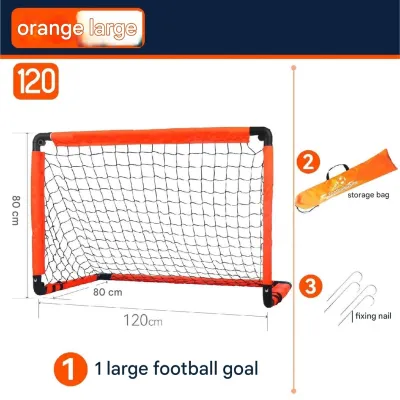
Prices are valid at publication and may change. Please refer to the product page for the latest price.
Identify Viable Play Zones in Your Home Type
Singapore’s diverse housing landscape means that play zones vary significantly from one property type to another. In Housing & Development Board (HDB) flats, space is highly optimized. The living room is often the primary option, requiring careful assessment of furniture layouts and clearance around television consoles. While common corridors might seem tempting for a quick kickabout, residents must strictly adhere to town council estate rules regarding common property. These regulations generally prohibit blocking fire escape routes or causing public nuisances, meaning corridors are rarely suitable for permanent or semi-permanent setups. Void decks are public communal spaces, and while they offer open concrete areas, playing there is subject to town council guidelines and must not disrupt other residents.

Condominiums offer alternative semi-outdoor options. Private balconies and ground-floor patios can serve as excellent mini-pitches, provided they are secured with high safety netting to prevent balls from falling over the edge. If you plan to use designated condominium facility areas, such as multi-purpose courts or lawns, check the management corporation strata title (MCST) rules first. Some developments require booking these spaces or restrict the use of personal sporting equipment to prevent damage to common landscaping.
Landed properties provide the greatest flexibility but still require careful planning. Car porches are highly popular for quick sessions, but you must measure the clearance around parked vehicles, support pillars, and main gates to avoid costly paint scratches. Backyards and front garden setbacks offer excellent outdoor turf or tiled surfaces, though you must still measure the distance to boundary walls to ensure balls do not fly into neighboring properties.
Match Goal Proportions to Your Room Shape
Once you have mapped out your play zone, you must match the goal’s proportions to the specific shape of the room. For narrow spaces, such as long hallways or rectangular living areas, wide and low-profile goals are highly recommended. These proportions encourage low, precise ground shots, which significantly reduces the risk of high rebounds striking the ceiling or upper walls. A goal with a height of under 60 centimeters and a width of around 90 to 120 centimeters works exceptionally well in these restricted corridors.
In contrast, if you have a more open, square living area or an outdoor yard where height is not restricted by low ceilings or delicate light fixtures, you can opt for standard proportional mini-goals. These goals typically feature a more traditional 3:2 width-to-height ratio, such as 120 centimeters wide by 80 centimeters high. This shape provides a more realistic target for practicing shooting accuracy and allows for dynamic goalkeeper play.
Do not overlook the depth of the goal frame. The depth—the distance from the front crossbar to the back of the net—determines how far the goal will protrude into your living space. In tight rooms, a deep goal can block essential pathways, prevent doors from opening fully, or obstruct ventilation from floor fans and air conditioning units. Look for ultra-shallow designs or flat-back frames that sit flush against a wall or barrier to maximize the remaining floor space for active play.
Evaluate Space-Saving and Storage Designs
Because a home must serve multiple purposes, a football goal should not permanently dominate your living space. Pop-up and foldable frames are the most practical solutions for high-density urban living. Pop-up goals, often made of flexible fiberglass rods, can be twisted and collapsed into a flat, circular carrying bag within seconds. Foldable steel or plastic frames utilize hinge mechanisms that allow the side posts to fold flat against the crossbar. Both designs allow you to slide the collapsed goal under a bed, behind a sofa, or inside a utility closet when playtime is over.
When floor space is exceptionally limited, alternative designs like wall-mounted or over-door target nets can be highly effective. These systems eliminate the need for a protruding ground frame entirely, instead hanging flat against a bedroom door or a sturdy wall. However, before installing these options, you must verify structural weight limits and wall material compatibility. Drywall or partition walls common in newer apartments may not withstand the repeated impact of a ball or the tension of mounting brackets. Ensure you follow the manufacturer’s installation instructions and mount these systems only to solid concrete walls or heavy-duty wooden doors.
Implement Safety and Damage Prevention Checks
Playing football indoors requires proactive measures to protect your home’s interior, flooring, and occupants. The most critical safety decision is selecting the right ball. Standard leather or synthetic match balls are far too heavy and hard for indoor use, posing a severe risk to windows, electronics, and plaster walls. Instead, opt for soft, lightweight balls made of high-density foam or sponge. These balls absorb impact, reduce noise, and match the lighter structural limits of small indoor goals, preventing the frame from collapsing or shifting violently upon impact.
Securing the goal base is another essential step, especially on smooth surfaces like ceramic tiles, vinyl, or polished wood floors. A lightweight goal will easily slide or tip over when struck by a ball, which can scratch your flooring or cause tripping hazards. To stabilize the frame, apply non-slip rubber pads or silicone grip sheets to the underside of the base. For slightly heavier play, placing small, fabric-wrapped sandbags or specialized water-weight bags over the rear ground bar provides excellent stability without scratching delicate floor finishes.
Finally, consider protecting vulnerable areas with secondary barriers. If your play zone sits near glass sliding doors, television screens, or delicate light fixtures, setting up a lightweight, freestanding mesh barrier or hanging a temporary net can catch stray shots before they cause damage. Taking these precautions ensures that your indoor football sessions remain safe, enjoyable, and entirely stress-free.
Frequently Asked Questions (FAQ)
Can I use a small football goal in an HDB corridor?
Using a small football goal in an HDB common corridor is generally not permitted due to strict safety and accessibility regulations. Under town council by-laws and Singapore Civil Defence Force (SCDF) fire safety guidelines, common corridors must be kept completely clear of obstructions to ensure safe evacuation routes during emergencies. Even a temporary goal setup can impede the movement of neighbors, emergency personnel, or wheelchairs. Additionally, the noise generated by kicking a ball in a confined concrete corridor can easily disturb nearby residents. It is always best to utilize designated play areas, such as neighborhood parks or multi-purpose courts, for active sports.
How do I stop the goal from sliding on tiled floors?
To prevent a small football goal from sliding on smooth tiled floors, you should use non-destructive stabilization methods. Applying self-adhesive rubber or silicone furniture pads to the bottom of the goal frame is a highly effective and inexpensive solution that increases friction. Alternatively, you can drape small, weighted sandbags or soft wrist weights over the back bar of the frame to hold it in place. Avoid using heavy-duty duct tape, double-sided mounting tape, or strong adhesives directly on your tiles, as these can leave sticky residues that attract dirt or even strip the protective sealant and finish off your flooring.
Community discussion
Share your experience or ask a question. Comments are reviewed before publication.