
Selecting the right snorkeling fin size requires a systematic approach: accurate foot measurements, careful translation of those measurements using brand-specific sizing charts, and a rigorous dry-land fit test. A proper fit ensures the foot pocket holds your foot securely like a snug glove, preventing painful friction while maximizing your kicking power in the water.
For those exploring the marine life at Sisters’ Islands Marine Park or the reefs around Pulau Hantu, having reliable gear is a safety priority. The warm tropical waters of Singapore are highly inviting, but sudden tidal currents require steady, efficient propulsion that only a perfectly fitted fin can provide. Understanding how to size your gear correctly is the first step toward a safe and enjoyable underwater adventure.
Why Proper Fin Fit Matters for Safety and Comfort
An ill-fitting fin is more than just a minor inconvenience; it is a direct hazard to your safety and physical well-being. When a fin pocket is too loose, your foot constantly slides around inside. This repetitive movement under water pressure creates intense friction against your skin, rapidly leading to painful blisters. In tropical seawater, open blisters are highly susceptible to irritation and bacterial infections, which can cut your snorkeling trip short.
Products mentioned in this guide
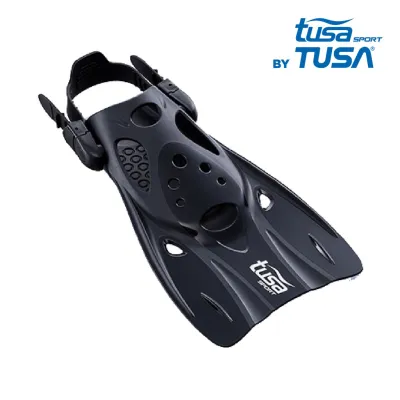
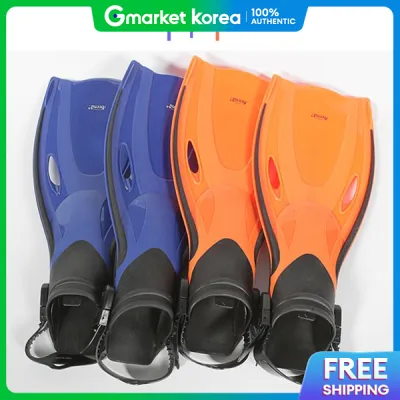
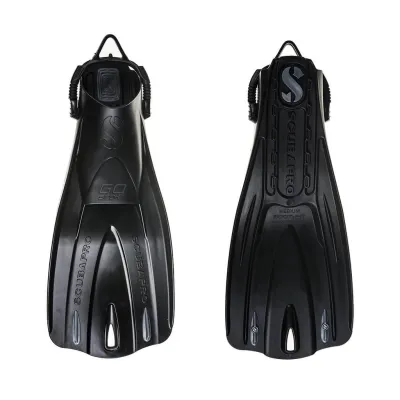
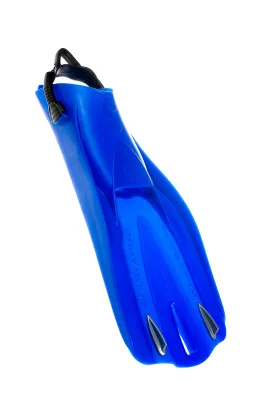
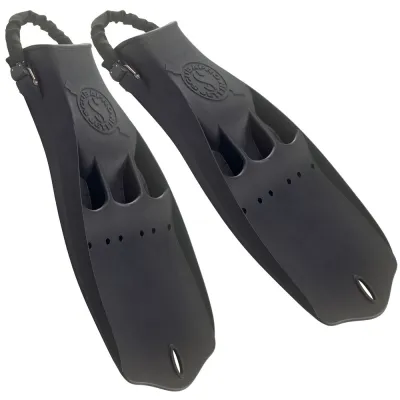
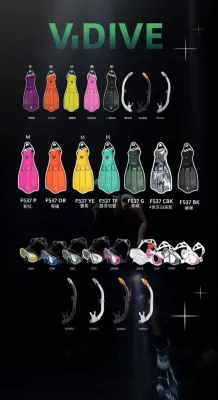
Prices are valid at publication and may change. Please refer to the product page for the latest price.
Foot cramps are another frequent consequence of poorly sized fins. If the foot pocket is too large, your toes will instinctively curl and claw downward to grip the sole of the pocket during the upward phase of your kick. This continuous, involuntary contraction of the plantar fascia and calf muscles leads to acute, debilitating cramps. Conversely, a foot pocket that is too tight compresses the metatarsal bones and restricts blood circulation, resulting in rapid muscle fatigue, cold toes, and localized numbness.
Propulsion efficiency relies entirely on a seamless transfer of energy from your legs to the fin blades. When your fins fit perfectly, every kick translates directly into forward movement, conserving your energy and reducing air consumption. A loose fin creates a lag or “dead space” in your kick cycle, forcing you to work twice as hard to cover the same distance. This inefficiency can quickly lead to exhaustion, especially when swimming against moderate currents.
Equipment can never replace proper swim training, physical fitness, and sound ocean judgment. Before heading into open water, always assess your swimming ability and check local sea conditions. If you experience severe cramping or lose a fin in deep water, stop swimming against the current, roll onto your back to float, and signal for assistance. Ensuring your fins are correctly sized before you enter the water is one of the most effective ways to prevent these emergencies.
Full-Foot vs. Open-Heel Fins: Which Sizing Logic Applies to You?
Before measuring your feet, you must determine which style of fin best suits your snorkeling environment, as full-foot and open-heel designs utilize entirely different sizing logics. Selecting the wrong style for your planned activity can lead to a highly uncomfortable fit, regardless of the size you choose.

Full-Foot Fins (Closed Heel)
Full-foot fins feature a soft, flexible elastomer foot pocket that completely encloses your heel. They are designed to be worn barefoot or with thin, flexible lycra or neoprene fin socks. Because there are no straps to adjust, the built-in pocket must fit your foot perfectly to remain secure.
These fins are highly suited for warm-water environments, boat-based snorkeling, and sandy beach entries where you do not need to walk over rough terrain. Because they lack heavy buckles and thick soles, they are lightweight and easy to pack for travel. However, because the material must stretch to accommodate your foot, achieving a snug, glove-like fit is absolutely critical to prevent painful heel slippage.
Open-Heel Fins (Adjustable Strap)
Open-Heel fins feature a rigid sole plate with a pocket that covers only the front half of your foot, secured by an adjustable rubber, silicone, or spring-loaded heel strap. These fins are designed to be worn with thick neoprene dive boots rather than bare feet.
This design is essential for shore entries over sharp coral rubble, rocky coastlines, or hot sand, where walking barefoot is impractical. The dive boot provides necessary grip and thermal protection, while the open-heel fin slides over the boot to provide propulsion. Because the boot adds significant bulk, open-heel fins are sized much larger than full-foot fins, and the adjustable strap allows you to fine-tune the tension across the back of your heel.
How to Accurately Measure Your Foot for Snorkeling Fins
To find a fin that fits perfectly, you must ignore your daily street shoe size and obtain precise physical measurements of your feet. Standard shoe sizes vary wildly between fashion brands and do not account for the unique width and volume requirements of water sports gear.
To get started, gather a rigid metal tape measure or a long ruler, a blank sheet of A4 paper larger than your foot, a pen or sharp pencil, and a flat wall. Avoid using soft tailor’s tape, as it can stretch or sag, leading to inaccurate readings.
Place the sheet of paper flat on a hard floor, ensuring one edge is pressed firmly against the wall. Stand barefoot on the paper with your heel resting lightly but completely against the wall. Keep your weight distributed evenly on both feet, as standing causes your foot to expand naturally in both length and width.
Have a partner trace the outline of your foot, holding the pen perfectly vertical. If you are measuring alone, carefully mark the furthest point of your longest toe and the widest points on either side of the ball of your foot. Use your ruler to measure the distance from the edge of the paper (your heel) to your toe mark in millimeters. This measurement is your precise foot length.
Next, measure the widest distance across the ball of your foot to determine your foot width. Repeat this entire process for both feet. It is common to have one foot that is slightly larger than the other; always use the measurements of your larger foot when selecting gear.
If you plan to wear open-heel fins, put on your neoprene dive boots and repeat the measurement process while wearing them. Measure the length from the heel of the boot to the toe, and the width at the widest part of the boot sole. These boot-inclusive dimensions are what you will use to reference open-heel sizing charts.
Always take your measurements in the late afternoon or evening. Your feet naturally swell slightly after a day of walking and standing, which closely mimics the natural swelling that occurs during physical exertion in warm tropical climates.
Translating Measurements to Manufacturer Sizing Charts
Once you have your precise millimeter measurements, you can begin cross-referencing them with manufacturer sizing charts. Every dive and snorkel brand uses its own proprietary molds, meaning a medium in one brand may fit like a large in another.
Do not assume that your everyday sneaker size translates directly to a fin size. Sneaker manufacturers design shoes with extra internal space to allow for toe movement and thick socks, whereas fin manufacturers design foot pockets to have minimal negative space. Relying solely on your shoe size often results in purchasing fins that are one or two sizes too large.
Locate the specific sizing chart for the brand and model of fin you are purchasing. Look for the column labeled in millimeters or centimeters (often referred to as Mondopoint sizing) and match your measured foot length to the corresponding range. Check the width specifications if the manufacturer provides them, as some European brands utilize narrower molds that may pinch wider feet.
If your measurements fall directly between two sizes, apply the following logic based on the fin type:
- For Full-Foot Fins: Choose the smaller of the two sizes if you plan to wear them barefoot. Water acts as a natural lubricant, and a slightly snugger pocket will prevent the fin from sliding off or rubbing your heel raw. If the pocket is slightly too tight, a thin pair of lycra socks can help slide your foot in comfortably.
- For Open-Heel Fins: Choose the larger of the two sizes. This ensures your neoprene boot has enough room to slide fully into the pocket without compressing your toes, which can cause painful cramping and restrict blood flow.
When purchasing fins online from specialized local dive retailers or online marketplaces, always review their return and exchange policies. Because foot shape is three-dimensional, a fin may match your length measurement but still feel uncomfortable due to a high instep or a wide heel. Ensure you can exchange the fins for a different size or model if the physical fit is not ideal.
The Dry-Land Fit Test: What to Check Before Entering the Water
Before you pack your gear for a trip or head out to the water, you must conduct a thorough dry-land fit test. Testing your fins at home allows you to identify pressure points and sizing issues while the gear is still clean and eligible for exchange.
Fit Checklist for Full-Foot Fins
To test a full-foot fin, sit down and slide your bare foot (or your foot wearing thin fin socks) into the pocket. Stand up to let your weight settle into the fin, and verify the following physical checkpoints:
- Heel Security: Try to slide your index finger into the pocket behind your heel. If you can easily insert your finger and wiggle it around, the heel pocket is too loose, and the fin will likely slip off while kicking.
- Toe Alignment: Your toes should lie completely flat inside the toe box. If your toes are forced to curl, or if they press painfully against the front opening of the pocket, the fin is too short.
- Instep Pressure: Pay close attention to the top of your foot. The rubber should hold your instep firmly but should not pinch or dig into your skin. If you feel a throbbing sensation or your toes begin to feel numb after two minutes of standing, the instep is too low.
- The Shake Test: Lift your leg off the ground and gently shake your foot in the air. The fin should feel like a secure extension of your leg, with no independent movement or shifting at the heel.
Fit Checklist for Open-Heel Fins
To test an open-heel fin, put on your neoprene dive boots, zip them up completely, and slide your foot into the fin pocket. Stand up and check these essential areas:
- Boot Integration: Your boot should slide smoothly into the pocket until it stops naturally. The heel of your boot should not overhang the back edge of the fin sole by more than two to three centimeters. If the boot cannot slide deep into the pocket, the pocket is too narrow.
- Strap Placement: Pull the adjustable strap over your heel. The strap should rest securely on the thickest part of your heel, just above the heel bulb. It should not sit too high near the Achilles tendon or slide down under the heel.
- Tension Balance: Adjust the strap tension so it is snug but comfortable. The strap should hold your boot firmly against the front of the pocket without forcing your toes to cramp up. If you must pull the strap to its absolute limit to keep the fin secure, the fin size is too large.
- Buckle Function: Ensure the quick-release buckles lock into place with a clear click. Practice releasing the buckles with one hand to ensure you can easily remove the fins in an emergency or when exiting the water onto a boat.
Common Sizing Mistakes to Avoid When Buying Fins Online
Buying snorkeling fins online is highly convenient, but it also increases the risk of sizing errors if you do not know what pitfalls to watch out for. Avoiding these common mistakes will save you the hassle of returns and ensure your gear is ready for your next dive.
- Assuming All Brands Use the Same Sizing: A common error is assuming that a size medium in one brand will fit exactly like a size medium in another. Different manufacturers use unique foot molds, resulting in variations in width, instep height, and overall volume.
- Ignoring Foot Width: Many beginners focus solely on the length of their feet. If you have wide feet and buy a narrow fin based on length alone, you will experience painful pressure points on the sides of your feet, which can cause severe cramping within minutes of swimming.
- Forgetting Boot Thickness: When purchasing open-heel fins, you must account for the thickness of your dive boots. A 5mm thick boot requires a significantly larger fin pocket than a 1.5mm tropical boot. Always measure your feet while wearing the exact boots you intend to use.
- Buying Fins Too Large to Accommodate Swelling: While feet do swell slightly in warm water, buying a fin that is a full size too large "just in case" is a major mistake. The excess space allows water to circulate rapidly inside the pocket, causing severe friction blisters and forcing you to claw your toes to keep the fin on.
Frequently Asked Questions (FAQ)
Should I size up or down if my measurements fall between sizes?
For full-foot fins, it is generally safer to size down slightly to ensure a snug, secure fit that prevents friction blisters, provided your toes can still lie flat. For open-heel fins, you should size up to comfortably accommodate the bulk of your neoprene dive boots and allow for proper strap adjustment without pinching.
Can I wear regular cotton socks with full-foot fins to prevent blisters?
No, you should never wear cotton socks with snorkeling fins. Cotton fibers absorb water, lose their shape, sag, and bunch up inside the foot pocket, which actually increases friction and accelerates blister formation. Instead, use properly fitted neoprene or lycra fin socks designed specifically for water sports.
How tight should snorkeling fins feel when tested on dry land?
Fins should feel snug, supportive, and secure on land, but never painfully tight. Keep in mind that rubber and silicone materials can stiffen slightly in cooler water, and feet swell during physical activity. If a fin feels painfully tight or cuts off your circulation on dry land, it will become unbearable once you start kicking in the water.

Community discussion
Share your experience or ask a question. Comments are reviewed before publication.