
Finding the right soccer mat size for a Singapore HDB flat or condominium requires balancing your training goals with the realities of compact apartment living. For most homes, a medium-sized mat measuring approximately 100 cm to 120 cm in length and 60 cm to 80 cm in width offers the ideal sweet spot, providing enough surface area for essential footwork drills without overtaking your living room. Smaller mats around 90 cm by 60 cm work exceptionally well in narrow hallways or tight bedroom corners, while larger mats exceeding 150 cm in length are best reserved for spacious, open-concept living areas where furniture can be easily moved. By matching the mat’s physical footprint to your available floor space and specific training drills, you can maintain an effective home practice routine without cluttering your shared living environment.
Assessing Your Available Training Space
Before purchasing a soccer mat, you must accurately measure the actual usable floor area in your apartment rather than relying on the general dimensions of the room. Living rooms and bedrooms in HDB flats and condos are often filled with permanent fixtures, such as sofa sets, TV consoles, dining tables, and wardrobes, which significantly reduce the open floor space. Use a physical measuring tape to map out the exact length and width of the clear zone where you plan to train, ensuring you do not rely on visual estimates that can lead to buying an oversized mat.
It is equally important to account for dynamic spatial factors, such as door swings, wardrobe doors, and the daily traffic paths of other household members. A mat that fits perfectly when all doors are closed might block a bedroom entrance or prevent a cabinet from opening, causing constant disruption during your practice sessions. If you share your home with family or flatmates, identify a multi-purpose zone—such as the space between the sofa and the television—where the mat can be temporarily rolled out and quickly packed away after use. This temporary deployment strategy allows you to utilize larger areas of the home during off-peak hours without permanently sacrificing your living space.
Products mentioned in this guide
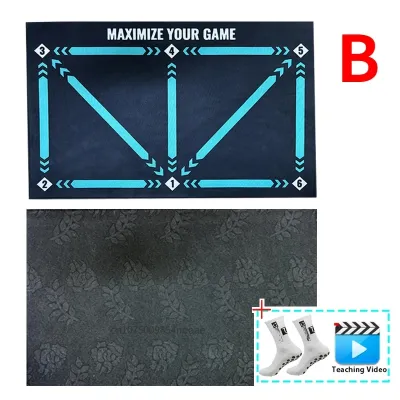
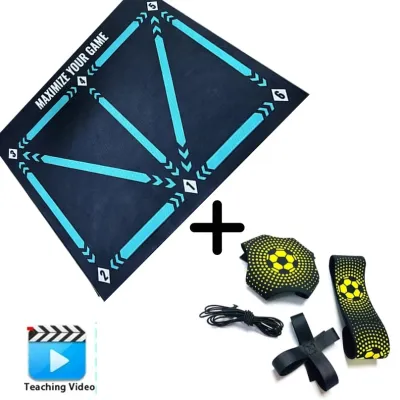
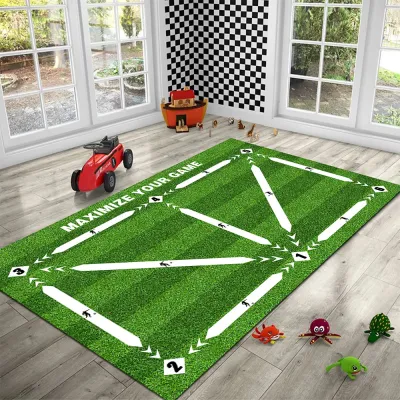
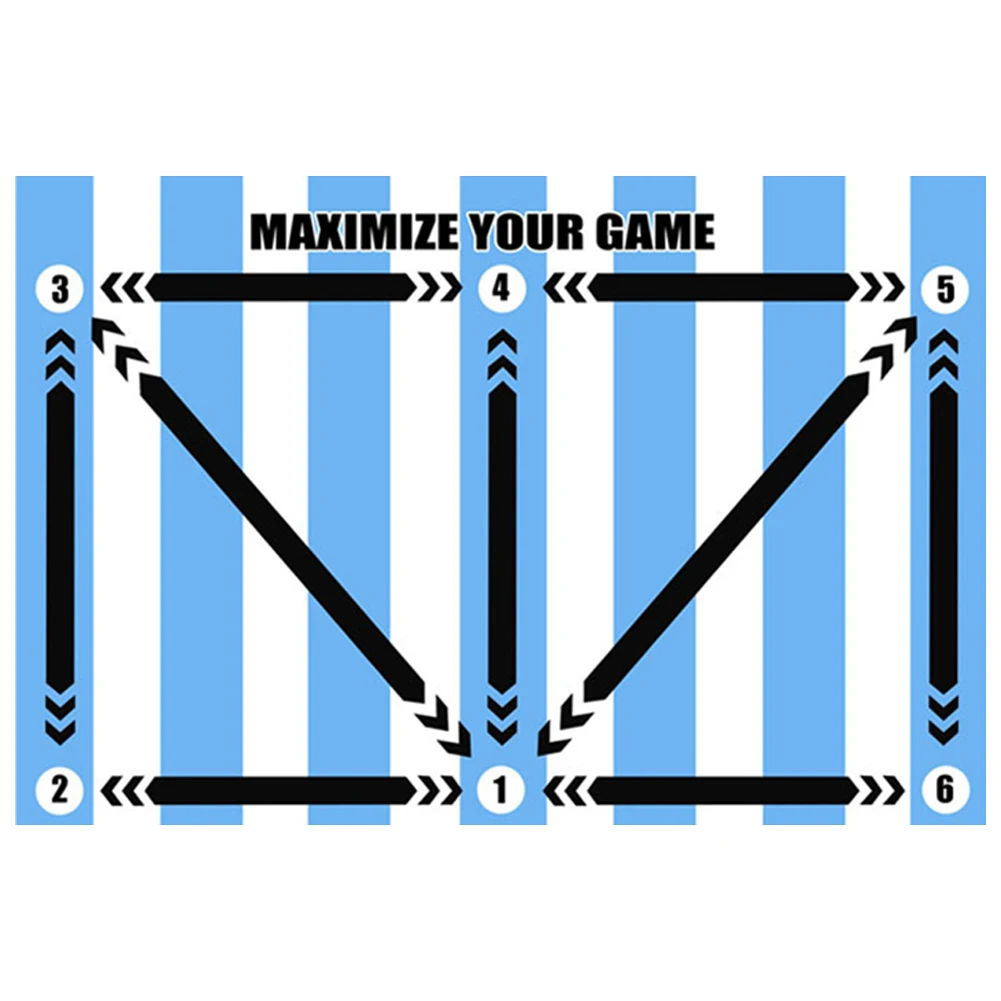
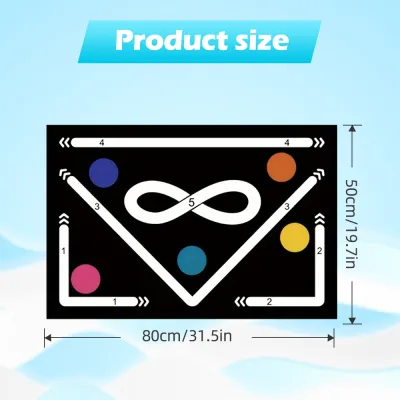
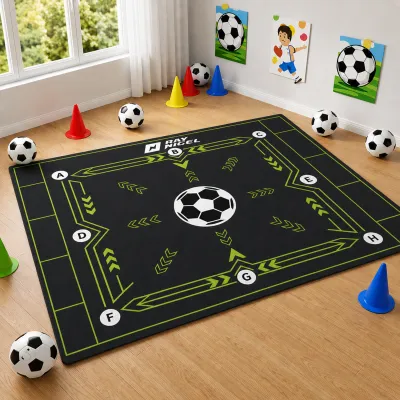
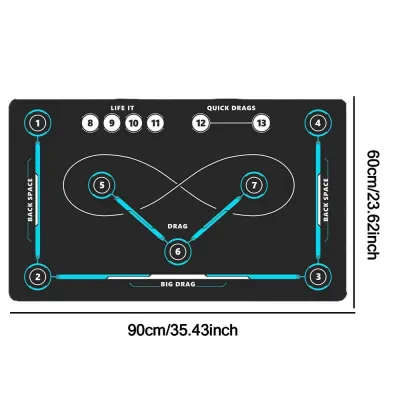
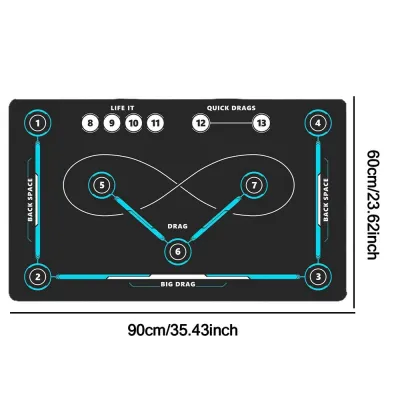
Prices are valid at publication and may change. Please refer to the product page for the latest price.
Matching Mat Dimensions to Football Drills
The specific football drills you intend to practice will dictate the minimum dimensions of the soccer mat you need. For close-control dribbling, sole rolls, toe taps, and inside-outside touches, a compact mat is highly effective because these exercises focus on rapid, localized footwork where the ball rarely leaves a small radius. If your training routine consists primarily of these stationary ball-handling skills, a smaller mat will easily suffice and fit comfortably into almost any apartment layout.

Conversely, if you plan to practice passing drills against a rebounder wall, lateral shuffling, or short-distance receiving, you will require a longer and wider mat to accommodate the natural travel of the ball and your body’s movement. In a compact apartment, you must adjust your training expectations and modify your drills to suit the physical limits of your space. For example, instead of full-stride dribbling, focus on high-repetition micro-touches and stationary agility patterns that do not require extensive lateral or forward travel.
Before making a final decision, carefully review the manufacturer’s product specifications and any provided drill guides to verify the recommended space requirements. Many brands design their mats with specific printed markings that correspond to structured training programs; check if these markings require you to stand off the mat or if all movements are self-contained within the mat’s boundaries. Choosing a mat that matches your physical height and stride length is also crucial, as taller players naturally require a slightly larger surface area to perform basic footwork comfortably without stepping off the edges.
Navigating Layout and Safety Clearances
Safety must be your top priority when setting up an indoor training space, as football drills involve rapid movements that can easily lead to slips or collisions. Always maintain a safe buffer zone of at least 50 cm to 1 meter between the edges of your soccer mat and any nearby walls, glass doors, sharp furniture corners, or fragile household items. This clearance area acts as a crucial safety margin, ensuring that if you lose your balance or miscontrol the ball, you will not collide with hard surfaces or knock over expensive electronics.
Do not forget to look upward when evaluating your training environment, especially if you plan to practice low-level juggling, chest traps, or high-bounce coordination drills. Check the ceiling height and the position of overhead fixtures, such as ceiling fans, pendant lights, or air conditioning units, to prevent accidental contact with the ball or your training gear. If your room has a low ceiling or a low-hanging fan, restrict your training strictly to ground-based footwork and low-impact ball control.
Additionally, verify the compatibility of the mat’s backing material with your apartment’s flooring to prevent dangerous slipping during high-intensity movements. A mat that slides across parquet, polished marble, or smooth vinyl tiles poses a severe injury risk and can damage the floor surface. Look for mats with dedicated non-slip rubber or textured foam backings, and test the grip of the mat with light footwork before committing to full-speed training drills.
Storage and Multi-Use Considerations
Because most Singapore apartments do not have dedicated home gyms, your soccer mat must be easy to store when not in use. Evaluate whether a roll-up design or a foldable panel design best suits your available storage spaces, such as closets, utility rooms, or the gap beneath your bed or sofa. Roll-up mats are generally easier to deploy quickly but can retain a curved edge if stored tightly for long periods, whereas foldable mats lay flat instantly but may have seams that affect ball roll.
Measure your intended storage compartments before buying to ensure the packed or rolled dimensions of the mat will fit properly. A mat that is too long to fit into your wardrobe or too thick to slide under your bed will end up cluttering your living space, defeating the purpose of a compact home setup.
Consider the weight and thickness of the mat as well, especially if you plan to set up and tear down your training area daily. A heavy, dense mat provides excellent stability but can become a chore to carry and roll up every day, which might discourage you from practicing regularly. Opt for a lightweight yet durable material that balances structural integrity with ease of handling, allowing you to transition from a living room to a training zone in under a minute.
Evaluating Mat Features for Indoor Use
The material and surface texture of your soccer mat must be compatible with your indoor training footwear or barefoot practice. If you prefer training in indoor football shoes or flat-soled futsal shoes, ensure the mat’s surface is durable enough to withstand the friction and pivot movements without tearing or wearing down prematurely. For those who train barefoot or in socks, look for a softer, non-abrasive texture that provides sufficient grip without causing blisters or discomfort during repetitive footwork.
Noise mitigation is another critical factor when training in high-density housing like HDB flats and condominiums, where impact sounds can easily travel through concrete floors to downstairs neighbors. Select a mat with high-density foam or rubber construction that offers excellent shock absorption and noise-dampening properties to muffle the sound of foot taps and ball impacts. This consideration allows you to maintain a consistent training schedule early in the morning or late at night without causing noise disturbances.
Finally, always review the manufacturer’s care and maintenance instructions to protect both the mat and your home’s flooring. Some rubber backings can leave dark marks or chemical residues on light-colored vinyl or laminate floors over time, especially in Singapore’s warm and humid climate. Regularly clean the underside of the mat and the floor beneath it to prevent the buildup of moisture, dust, and sweat, ensuring a clean and safe training environment.
Frequently Asked Questions (FAQ)
Can I use an agility ladder instead of a full soccer mat for apartment training?
While an agility ladder is excellent for foot speed and coordination, it serves a different purpose than a soccer mat and offers less versatility for indoor ball work. Agility ladders are designed primarily for bodyweight footwork and do not provide floor protection or noise dampening when a football is introduced. A soccer mat provides a dedicated, cushioned surface that protects your floors from ball impact and dampens sound, making it far more suitable for close-control ball drills in an apartment. Additionally, soccer mats often feature printed visual guides specifically designed for ball-tracking and directional footwork, which a standard ladder lacks.
How do I protect my laminate or vinyl flooring from soccer mat damage?
To protect your laminate or vinyl flooring from scratches, discoloration, or moisture damage, always check the mat’s backing material before use. Avoid mats with cheap, low-grade plastic backings that can degrade or stick to your floor in humid conditions, and opt for high-quality, non-reactive rubber or foam instead. You can also place a thin, breathable non-slip rug pad or protective underlay beneath the mat if recommended by your flooring manufacturer. Regularly lift the mat after training to inspect for trapped dust, grit, or sweat, as grinding debris between the mat and the floor during high-intensity drills is a primary cause of surface scratches.
Community discussion
Share your experience or ask a question. Comments are reviewed before publication.