
Selecting the perfect stretch band resistance level is the defining factor between a highly productive workout and an exercise in frustration. To make the right choice, you must evaluate your current physical baseline, align the band’s tension range with your specific training objectives, and learn how to read the physical feedback your body and the equipment provide during use.
Unlike traditional free weights that offer a constant gravitational load, a stretch band provides progressive elastic resistance. This means the tension increases dynamically as the band is stretched, peaking at the end of the movement. Choosing the correct level ensures you can complete your exercises through a full range of motion with proper form, maximizing muscle activation while protecting your joints from unexpected spikes in tension.
Assess Your Stretch Band Strength Baseline Before Buying
Before purchasing a stretch band, you must establish an honest assessment of your current physical strength. Because elastic bands do not rely on gravity, your baseline is best measured through fundamental bodyweight movements that test your functional capacity, joint stability, and core control. Performing a few simple movement tests at home will help you categorize your strength level and narrow down your initial resistance requirements.
Products mentioned in this guide
![🇸🇬 [READY STOCK] Elastic Yoga Pilates Rubber Stretch Resistance Exercise Fitness Band Belt](https://img.lazcdn.com/g/p/20dbe94b58bb8a94f4538aee88b0b8a2.jpg_400x400q80.jpg_.webp)
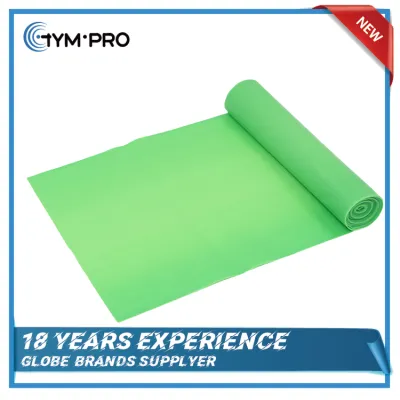
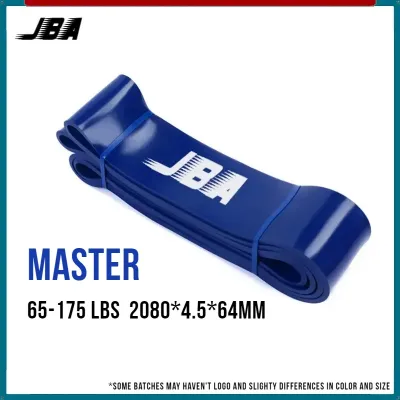
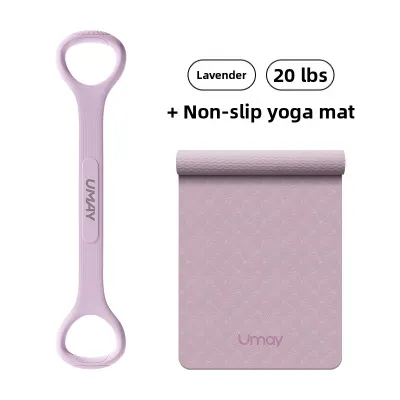
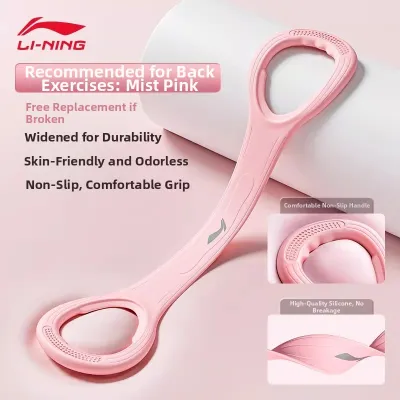
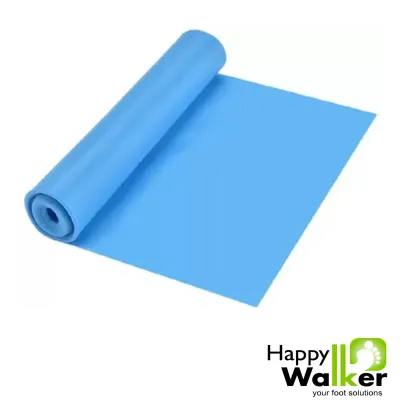
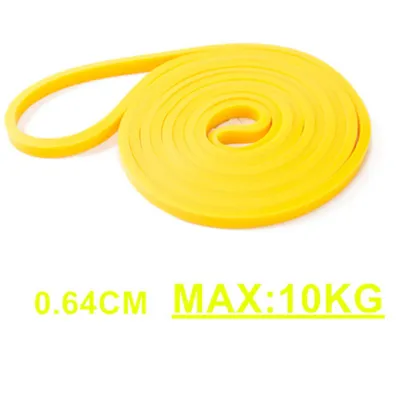
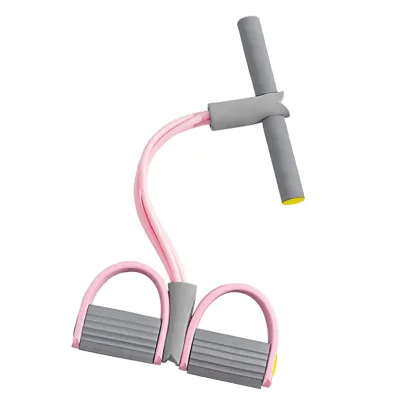
Prices are valid at publication and may change. Please refer to the product page for the latest price.
To evaluate your baseline, perform standard bodyweight tests. For upper-body strength, execute a push-up test; completing more than 15 strict push-ups with your chest lowering to the floor indicates a solid foundation, while fewer than 5 suggests an introductory baseline. For lower-body strength, perform consecutive deep squats; completing 20 reps with your thighs parallel to the ground and heels flat shows stability, whereas struggling before 10 reps indicates a need for gentler resistance. Core stability can be assessed via a forearm plank; maintaining a straight line for over 60 seconds reflects a developed core, while failing to reach 30 seconds highlights a need for lighter, highly controllable tension.
- Beginner Baseline: Individuals who struggle to complete 5 standard push-ups, 10 deep squats, or a 30-second plank. This profile requires light, highly forgiving bands to build basic motor patterns.
- Intermediate Baseline: Individuals who can execute 10 to 20 push-ups, 15 to 25 squats, and hold a plank for 60 seconds. This profile is best suited for medium-resistance bands.
- Advanced Baseline: Individuals capable of performing over 25 strict push-ups, 30 deep squats, and holding a plank for more than 90 seconds. This profile requires heavy to extra-heavy bands to adequately challenge their muscles.
Starting with a manageable, lighter resistance is critical for long-term joint health and movement mastery. When you introduce elastic tension, your stabilizing muscles—such as the rotator cuff or gluteus medius—must work overtime to control the band’s natural tendency to snap back. Beginning with a band that is too heavy forces larger muscle groups to compensate, leading to poor posture, joint shear, and a higher risk of acute strain. Mastering the movement pattern under light, controlled tension builds the necessary neural pathways and connective tissue strength before you subject your body to heavy elastic loads.
Match Resistance Intensity to Your Training Goals
Once you have identified your strength baseline, you must align your purchase with your specific fitness objectives. It is vital to understand that stretch band resistance ratings are not standardized across the fitness industry. You must always check the manufacturer’s product specifications or packaging for the exact weight equivalent—typically printed in kilograms (kg) or pounds (lbs)—rather than relying solely on the band’s color. A red band from one brand might represent a light 5 kg tension, while a red band from another manufacturer could represent a heavy 15 kg load.

Rehabilitation, Mobility, and Warm-ups
For rehabilitation, mobility work, and pre-workout warm-ups, low-resistance bands offering approximately 2 to 7 kg (5 to 15 lbs) of tension are the ideal choice. These highly flexible bands provide gentle, progressive loading that stimulates blood flow and activates dormant muscle groups without causing joint stress. When recovering from an injury or performing physical therapy exercises, such as external shoulder rotations, the primary focus is on restoring joint function. Light bands allow you to move through your joint’s full anatomical range of motion without triggering protective muscle guarding. During a pre-workout warm-up, they are exceptionally effective for waking up key stabilizers before transitioning to heavier compound lifts. The key is maintaining absolute control over both the stretching and contracting phases of the band, ensuring smooth and deliberate movement throughout the entire set.
Muscle Endurance and Toning
If your primary fitness goal is to build muscular endurance, improve cardiovascular conditioning, or tone specific muscle groups, opt for medium-resistance bands. These bands typically provide a tension range of 7 to 15 kg (15 to 35 lbs), offering enough resistance to challenge muscles over extended periods without causing rapid failure. Training for muscular endurance involves higher repetition ranges, generally between 15 and 25 repetitions per set. Medium bands provide a sustained level of metabolic stress that forces slow-twitch muscle fibers to adapt and become more efficient. This level of tension is highly effective for dynamic, full-body movements such as resisted thrusters, high-repetition standing rows, and band-resisted lunges. Because the resistance is moderate, you can maintain a faster, more fluid tempo, making medium bands an excellent tool for high-intensity interval training (HIIT) and metabolic circuit workouts.
Hypertrophy and Strength Building
To stimulate muscle hypertrophy and build absolute strength, select heavy to extra-heavy resistance bands. These robust bands generally deliver tension levels ranging from 15 to 45 kg (35 to 100+ lbs) or more, simulating the heavy external loads traditionally provided by iron barbells and dumbbells. To trigger muscle growth, subject your muscle fibers to high levels of mechanical tension within a moderate repetition range, typically 8 to 12 repetitions per set. Heavy bands achieve this by offering substantial resistance that makes the final few repetitions of a set highly challenging. They are particularly useful for heavy compound exercises, such as band-assisted pull-ups, heavy deadlifts, and resisted push-ups. When training with heavy elastic tension, maintaining strict form is paramount. Because the resistance peaks at the end of the movement (the concentric peak), the band will attempt to pull you back rapidly during the eccentric phase. You must actively resist this pull, lowering the weight slowly and under complete control to avoid joint strain.
Test Your Band: Signs It Is Too Easy or Too Hard
Once you have selected a band, perform a practical repetition test to confirm that the resistance level matches your capabilities. Select an exercise that aligns with your training goal and attempt a full set with strict form. If your goal is muscle endurance and you can easily complete 25 or more repetitions without experiencing a deep muscular burn or a drop in movement speed, the band is too light. Conversely, if your goal is hypertrophy and you cannot complete 8 repetitions with proper form, or if your movement becomes choppy and incomplete, the band is too heavy.
Recognize the physical warning signs that a stretch band exceeds your safe training capacity. If you experience compromised posture (such as arching your lower back or swinging your torso), joint strain or pinching sensations, an inability to complete the full range of motion, or uncontrollable shaking in your limbs, immediately drop down to a lighter resistance level.
Safety must always remain your top priority. If you feel any sudden, sharp pain during an exercise, stop immediately and consult a medical professional. Furthermore, never stretch a band beyond its manufacturer-specified maximum elongation limit—typically two to three times its resting length—to prevent sudden structural failure and snapback injuries.
In tropical environments with high humidity and heat, such as Singapore, sweat and ambient moisture accelerate the degradation of natural latex or thermoplastic elastomer (TPE) bands. Before every workout, perform a thorough visual inspection by stretching the band gently under a bright light. Check for micro-tears, thinning sections, fraying edges, or small white stress marks. If you notice any of these signs of structural compromise, or if the band feels sticky or brittle to the touch, discard it immediately and replace it to prevent a dangerous snap during use.
When to Upgrade, Combine, or Switch Equipment
As your body adapts to your training routine, you must apply the principle of progressive overload to ensure continuous physical progress. In elastic training, this means systematically increasing the tension your muscles must overcome. You will know it is time to upgrade to a heavier band when you can comfortably exceed your target repetition range by 3 to 5 reps for three consecutive workouts while maintaining flawless form.
If you are not ready to purchase a new, heavier band, you can safely create intermediate resistance levels by combining or ‘stacking’ multiple lighter bands together. For instance, looping a light band and a medium band onto the same anchor point combines their tension profiles. When stacking bands, always perform a series of safety checks: verify that the anchor point is completely structural and immobile (such as a heavy piece of gym equipment or a closed door with a dedicated door anchor), align the bands parallel to prevent friction and premature tearing, and ensure all attachment points are rated to handle the combined load.
While stretch bands are exceptionally versatile, portable, and space-saving, they do have inherent physical limitations. The primary limitation is their variable resistance curve; because the tension is lowest at the start of the movement, your muscles are not fully challenged through the entire range of motion. Additionally, tracking precise incremental progress is difficult compared to adding weights to a barbell. Consider transitioning to or supplementing your routine with traditional free weights or cable machines when you require constant tension throughout an entire movement path, or when the resistance needed to challenge large muscle groups becomes too awkward or unsafe to set up with elastic bands.
Frequently Asked Questions (FAQ)
Are stretch band color codes universal across all brands?
No, there is no industry-wide standard for stretch band color coding. A green band from one manufacturer might represent light resistance, while a green band from another brand could be rated as heavy. To ensure safety and training accuracy, you must always ignore the color and verify the exact resistance rating in kilograms (kg) or pounds (lbs) printed directly on the band or listed in the manufacturer’s product specifications before purchasing or using it.
Should I buy a single band or a full set?
For most users, purchasing a full set of stretch bands is the most cost-effective and practical choice. A set provides multiple resistance levels, allowing you to easily perform different exercises that require varying tension (such as lighter bands for shoulders and heavier bands for legs) while supporting your long-term progression as you get stronger. Conversely, buying a single band is highly suitable if you only need to perform a specific rehabilitation exercise, require a dedicated band for pull-up assistance, or need a single lightweight option for travel.
How do I know when it is time to replace my stretch band?
You must replace your stretch band immediately if you observe any visible signs of material degradation. These signs include fine cracks, micro-tears along the edges, thinning areas, or white stress marks when the band is slightly stretched. Additionally, if the band exhibits a sticky, gummy texture, or conversely, becomes stiff and brittle—common issues accelerated by warm, humid climates and exposure to sweat—the material’s structural integrity has failed. Using a degraded band presents a high risk of snapping during a workout, which can cause painful injuries.
Community discussion
Share your experience or ask a question. Comments are reviewed before publication.