
Finding the right table tennis racket is the single most critical step in transitioning from a casual recreational player to a confident competitor. In Singapore, where active players frequent community clubs and ActiveSG sports halls, choosing a racket that matches your unique playing style and current skill level can dramatically accelerate your development. The ideal racket is not simply the most expensive one on the shelf; rather, it is the one that provides the exact balance of speed, control, and spin that your hands can currently manage.
Diagnose Your Skill Level and Playing Style
Before browsing equipment, you must objectively evaluate your current playing ability. Table tennis proficiency is generally divided into three primary tiers:
- Beginner: Players focusing on basic stroke mechanics, consistent ball contact, and learning the fundamental rules of the game. Rallies are typically short, and the primary goal is keeping the ball on the table.
- Intermediate: Players who have mastered basic strokes and are actively developing spin generation, speed control, and tactical routines, such as transitioning from a backhand block to a forehand loop.
- Advanced: Players who execute high-speed attacks, heavy spin variations, and precise ball placement under intense competitive pressure. These players rely on highly developed muscle memory and rapid footwork.
Your playing style dictates the tactical approach you take during a match. A Defensive style involves chopping, blocking, and staying mid-to-far distance from the table to wear down opponents. An All-round style balances attack and defense, utilizing controlled loops and blocks close to mid-distance. An Offensive style relies on fast attacks, heavy topspin loops, and staying close to the table to dictate the tempo.
Products mentioned in this guide
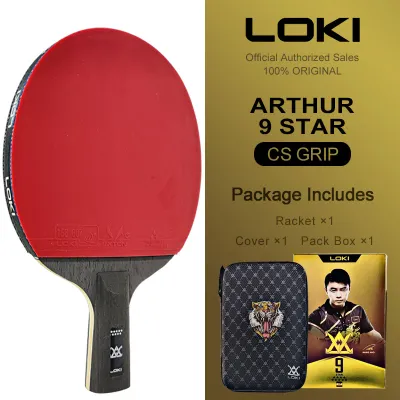
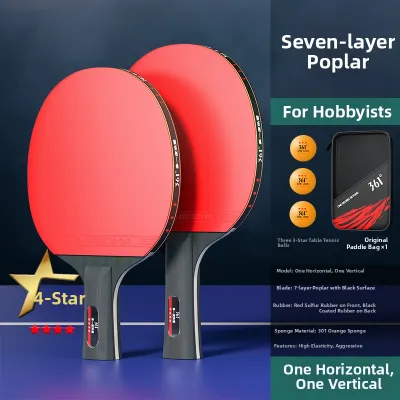
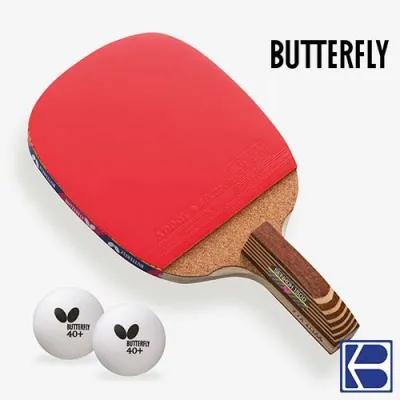

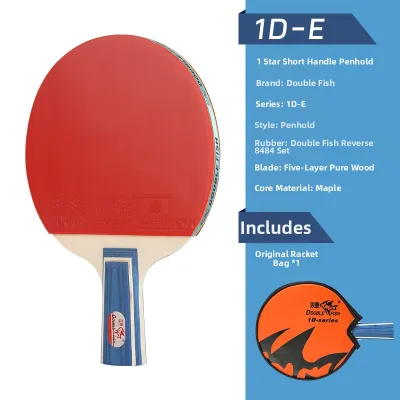
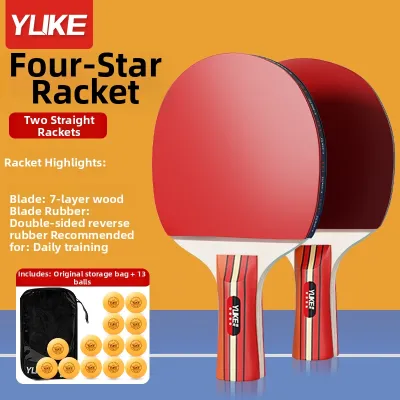
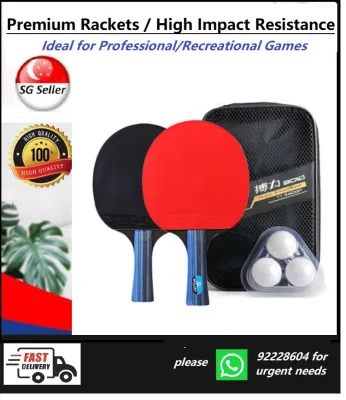

Prices are valid at publication and may change. Please refer to the product page for the latest price.
To categorize yourself accurately without overestimating your current abilities, ask yourself these diagnostic questions:
- How many consecutive topspin-to-topspin rallies can I comfortably sustain without making an unforced error? (Fewer than five suggests a beginner focus on consistency).
- Do I actively change the spin of the ball (topspin, backspin, sidespin) to win points, or am I mostly focused on returning the ball safely? (Active spin variation points to an intermediate level).
- When an opponent hits a fast, deep ball, is my instinctive reaction to retreat and chop, block steadily, or counter-loop with speed? (This reveals your natural defensive, all-round, or offensive tendency).
Match Blade and Rubber Specifications to Your Profile
Once you have diagnosed your skill level and playing style, you can translate that profile into specific equipment specifications. A table tennis racket consists of two primary components: the wooden blade and the rubber sheets applied to each side.

Choosing the Right Blade for Speed and Control
The blade is the wooden or composite core of your racket, and its composition determines the baseline feel and speed of your shots. All-wood blades, typically constructed from 5 plies of wood (such as Limba or Ayous), offer exceptional flexibility, high control, and clear sensory feedback on impact. This makes them highly recommended for beginners and defensive players who need to feel the ball to develop proper stroke mechanics.
In contrast, carbon or composite blades introduce layers of synthetic fibers (like carbon or arylate-carbon) between the wood plies. These materials stiffen the blade, resulting in higher speed, a larger sweet spot, and reduced vibration. While carbon blades are highly suited for advanced offensive players who need maximum power from mid-distance, they significantly reduce the ball’s dwell time on the racket, making control much more difficult for developing players.
When shopping, always check the manufacturer’s speed and control ratings on the blade packaging or specifications. Beginners should prioritize blades rated high in control (often labeled “ALL” or “ALL-“) rather than chasing maximum speed (“OFF” or “OFF+”). A 5-ply wood blade is the perfect starting point, whereas a stiff 7-ply wood or carbon blade should be reserved for those who have already established consistent stroke paths.
Selecting the Right Rubber and Sponge
The rubber sheet and its underlying sponge layer dictate how the racket interacts with the ball’s spin. The most common type is pips-in (inverted) rubber, where the smooth surface faces outward. Inverted rubbers generate high levels of spin and speed, making them the standard choice for the vast majority of all-round and offensive players. Conversely, pips-out rubbers (where the textured pimples face outward) can be short or long. Short pips excel at neutralizing incoming spin and delivering flat, fast blocks, while long pips bend upon impact to reverse the opponent’s spin, creating highly disruptive trajectories favored by specialized defensive players.
Beneath the rubber lies the sponge, which varies in thickness and hardness. Thicker sponges (2.0 mm to “Max” thickness) and harder sponge densities maximize speed and spin potential because they allow the ball to sink deep into the racket and rebound with immense energy. However, this setup requires high swing speeds and precise timing. Thinner sponges (1.5 mm to 1.8 mm) and softer sponge densities provide better dwell time, absorbing incoming energy to offer superior control and safety for beginners and defensive players.
Before purchasing any rubber, verify if it features the International Table Tennis Federation (ITTF) approval logo printed on the base of the sheet. This is a crucial check if you intend to play in sanctioned club leagues, community tournaments, or official ActiveSG competitions, as non-approved rubbers are illegal for competitive play.
Pre-Assembled vs. Custom Rackets: Choosing the Right Buying Path
When looking for a new table tennis racket, you will face a choice between buying a pre-assembled (ready-made) racket or building a custom setup from separate parts. Pre-assembled rackets come with the rubbers pre-glued to the blade by the manufacturer. They are highly convenient, cost-effective, and widely available in local sports shops across Singapore. For beginners or casual recreational players, a quality pre-assembled racket provides a balanced, low-maintenance introduction to the sport without a significant financial commitment, typically costing between S$20 and S$80.
Custom rackets require you to select the blade and two individual rubber sheets separately, which are then assembled using specialized water-based table tennis glue. This path offers unparalleled benefits, allowing intermediate and advanced players to tailor the racket’s weight, balance, and specific performance characteristics to their exact hand size and playing style. For example, you can pair a control-oriented wood blade with a highly spinny rubber on your forehand and a softer, high-control rubber on your backhand. Custom setups generally range from S$150 to over S$400.
To decide which path is right for you, consider this decision matrix based on your current development:
- Choose Pre-Assembled if: You are a beginner still developing basic consistency, play less than twice a week, or have a budget under S$80.
- Choose Custom if: You have a fixed playing style (e.g., dedicated loop attacker), play regularly in clubs, understand your exact specification needs, and are willing to invest S$150 to S$300+ for a personalized setup.
If you are caught in transition, some brands offer “custom-like” pre-assembled rackets. These are factory-assembled but use professional-grade blades and ITTF-approved rubbers, providing a high-quality, cost-effective middle ground before you make the leap to a fully customized build.
Signs You Need to Upgrade or Replace Your Current Racket
Even the highest-quality table tennis racket will eventually degrade, directly impacting your performance. The most common physical wear indicator is the loss of tackiness or grip on the rubber surface. If you run your thumb across the rubber and it feels slick or smooth, or if you see a distinct, faded circular patch in the center where the ball frequently impacts, the rubber has lost its spin-generating capabilities. Additionally, look for visible tearing or crumbling around the edges of the rubber, or structural damage and cracks in the wooden blade caused by accidental table impacts during close-to-the-table play.
Performance limitations also signal that your equipment is holding you back. If you find yourself struggling to generate sufficient spin or speed despite executing correct physical technique, or if your loops consistently hit the net or fly long because the rubber can no longer grip the ball, it is time for a change. A warped blade or one with degraded internal plies may also cause excessive, hollow vibrations on impact, stripping away your control and feel.
The transition from a beginner to an intermediate skill level is the most common trigger for an upgrade. A basic pre-assembled racket is designed to slow the ball down to help you learn; once you begin executing faster swings and seeking spin variations, that same racket will feel sluggish and unresponsive. Upgrading to a more responsive custom setup at this stage will immediately reward your proper mechanics.
To maximize the lifespan of your equipment and delay replacement costs, practice basic rubber maintenance. After every session, clean the rubber surface using a specialized table tennis foam cleaner or a damp, lint-free sponge with distilled water to remove sweat, dust, and oils. Once dry, immediately apply non-adhesive protective sheets over the rubbers and store the racket inside a padded, zippered racket case. This is especially vital in Singapore’s humid tropical climate, as high humidity and airborne dust rapidly oxidize rubber, turning a high-performance surface slick in a matter of months.
Frequently Asked Questions (FAQ)
How often should I replace my table tennis rubber?
The lifespan of a table tennis rubber depends heavily on your play frequency, intensity, and maintenance habits. As a general rule, a regular player practicing two to three times a week should replace their rubbers every six to twelve months. Look for observable signs of wear, such as a smooth, glossy patch in the center of the rubber where the grip has worn away, or a noticeable drop in the ball’s trajectory during topspin rallies.
Does a more expensive table tennis racket guarantee better performance?
No, a higher price tag does not guarantee better performance for every player. High-end, expensive rackets are engineered specifically for advanced players, featuring stiff carbon blades and highly reactive rubbers that prioritize extreme speed and spin over safety. For beginners and early intermediate players, using such a fast racket can severely hinder skill development, as the reduced dwell time offers an incredibly small margin for error, making it highly difficult to learn proper stroke mechanics.
Can I use the same racket for both indoor and outdoor table tennis?
It is highly recommended to keep your indoor and outdoor rackets separate. Standard indoor table tennis blades and rubbers are highly sensitive to moisture, dust, wind, and temperature fluctuations. Playing outdoors with a premium indoor racket will expose the wood to warping humidity and cause the rubber to oxidize and lose its grip almost immediately. For outdoor concrete or plastic tables, use a dedicated, weather-resistant outdoor racket made of synthetic materials designed to withstand the elements.
Community discussion
Share your experience or ask a question. Comments are reviewed before publication.