
Selecting the right table tennis racket is a pivotal decision that directly influences your control, stroke development, and overall enjoyment of the game. Using a racket that does not match your current physical coordination and technical consistency can hinder your progress. Beginners who play with overly fast, professional-grade equipment often struggle to keep the ball on the table, while advancing players using basic recreational paddles may find their spin and power severely limited. Finding the right balance requires evaluating your current playing frequency, understanding how racket materials behave, and matching these factors to your developmental goals.
By analyzing your technical proficiency and learning how different blades, rubbers, and sponges interact, you can select a setup that complements your style. Whether you play casual matches in community centers or train for local tournaments, the right equipment acts as an extension of your hand, providing the precise feedback needed to refine your strokes.
Identify Your Skill Level and Playing Style
Before browsing equipment, you must objectively evaluate your current playing ability and how often you play. Recreational players typically view table tennis as a social activity, playing occasionally in community clubs, schools, or residential common areas. At this stage, the primary goal is keeping the ball in play. Players in this category benefit most from equipment that prioritizes control and forgiveness over raw speed, allowing them to develop basic hand-eye coordination and consistent contact.
Products mentioned in this guide
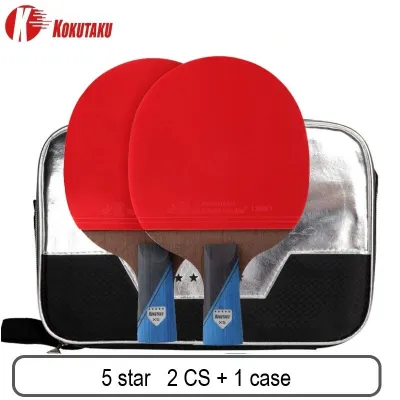
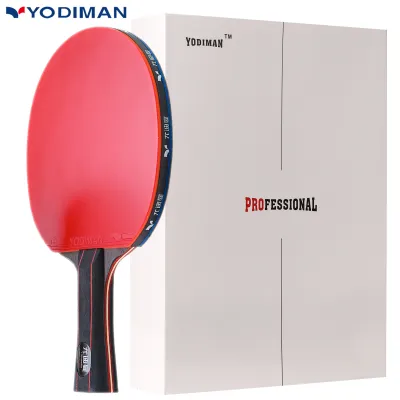
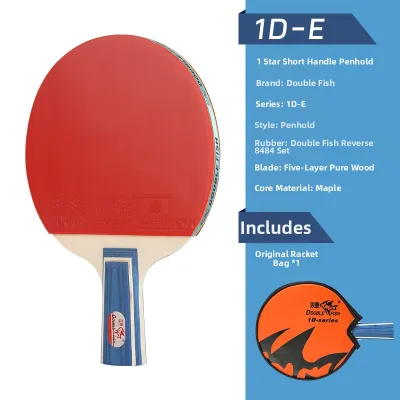
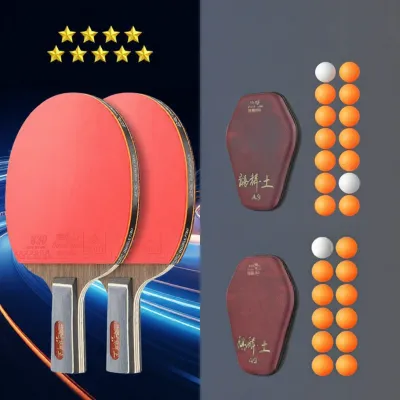
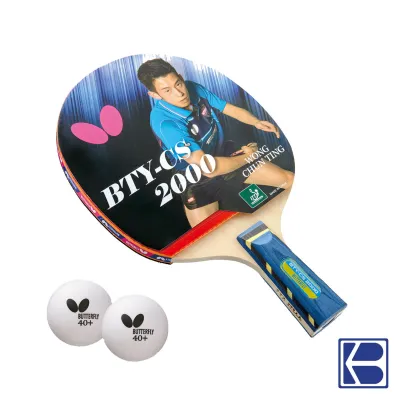

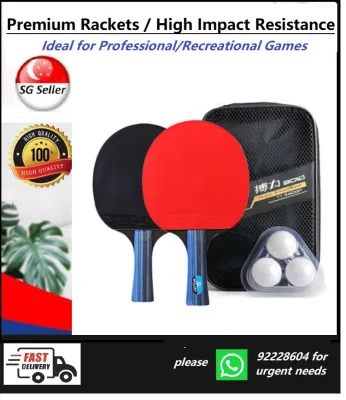
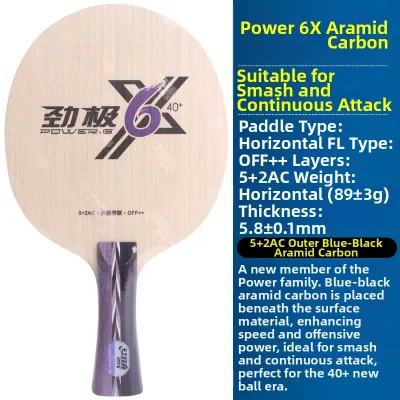
Prices are valid at publication and may change. Please refer to the product page for the latest price.
Intermediate players have moved beyond basic rallies and are actively developing structured strokes, such as forehand and backhand drives. If you play weekly and are beginning to intentionally apply topspin or backspin, you fall into this category. At this level, your equipment needs to offer a balanced mix of speed and control, giving you enough feedback to feel the ball on the racket while providing sufficient energy transfer to generate moderate pace.
Advanced and competitive players train multiple times a week and have established a distinct playing style, such as aggressive close-to-the-table attacking, mid-distance looping, or defensive chopping. If you are competing in local leagues or structured tournaments, your equipment must be highly specialized. Advanced players require custom setups tailored to their specific stroke mechanics, where even minor variations in blade stiffness or rubber hardness can alter the trajectory of the ball.
Recognizing when your current racket is limiting your progress is key to timing your upgrade. If you find that your strokes are technically correct and executed with sufficient force, yet the ball consistently lands short or lacks spin, your equipment may be worn out or too basic. Physical signs, such as a slippery rubber surface that no longer grips the ball or a blade that vibrates excessively upon impact, are clear indicators that it is time to transition to a higher-performing model.
Match Racket Components to Your Playing Style
Every table tennis racket consists of two primary components: the blade and the rubbers. The blade, which is the wooden or composite core of the racket, determines the fundamental speed and feel of your shots. Traditional blades are made entirely of wood plies, typically ranging from five to seven layers. All-wood blades offer excellent vibration feedback and a longer dwell time—the brief moment the ball remains in contact with the racket—making them highly suitable for developing players who need to feel the ball to build muscle memory.

Carbon composite blades introduce thin layers of carbon fiber between the wood plies. This construction stiffens the blade, reduces vibrations, and significantly enlarges the sweet spot, which is the area of the paddle face that yields a consistent bounce. While carbon blades offer exceptional speed and power for offensive players, they reduce dwell time and control. If you have not yet mastered your stroke mechanics, the rapid rebound of a carbon blade can make it difficult to control your shots.
Attached to the blade are the rubbers, which dictate how much spin and speed you can generate. Inverted rubbers, which feature a smooth outer surface and pimples facing inward toward the sponge, are the most common and versatile option. They provide maximum surface contact, making them ideal for generating heavy topspin and backspin. Alternatively, short-pimpled rubbers face outward, reducing the racket’s sensitivity to incoming spin and allowing for flat, fast hitting. Long-pimpled rubbers are highly specialized defensive tools that reverse the opponent’s spin, though they require advanced technique to control.
Between the top sheet of rubber and the wooden blade lies the sponge, which acts as the engine of the racket. Sponge thickness generally ranges from 1.5 millimeters to over 2.2 millimeters. Thinner sponges provide a firmer, more controlled feel because the ball makes closer contact with the wood, making them excellent for beginners. Thicker sponges absorb the ball deeper and eject it with greater speed and spin, which is preferred by offensive players who have the physical swing speed to compress the sponge effectively.
Sponge hardness also plays a critical role in performance. Softer sponges offer more forgiveness, a higher launch angle, and better control at lower swing speeds, making them highly suitable for intermediate players. Harder sponges require precise, high-speed strokes to activate their potential, but they offer unmatched power and direct trajectory for advanced players. In warm, humid climates, rubbers can lose some of their natural grip due to moisture in the air, making a slightly softer, high-friction rubber a practical choice for maintaining control.
Decide Between Pre-Built and Custom Rackets
When purchasing a new racket, you must decide between a factory-assembled pre-built model and a custom-assembled setup. Pre-built rackets are sold as a single unit, with the rubbers permanently glued to the blade by the manufacturer. These models are highly convenient, widely available, and cost-effective, often ranging from S$30 to S$80. They are designed to be user-friendly out of the box, making them the logical choice for recreational players and early intermediates who are still discovering their preferred style of play.
However, pre-built rackets have inherent limitations. The adhesive used during factory assembly is typically permanent, meaning you cannot replace the rubbers once they wear out or lose their grip. Additionally, the wood quality in mass-produced blades is generally lower, offering less consistency and feedback. As your technique improves, you may find that a pre-built racket cannot deliver the spin or speed required to execute advanced shots.
Custom rackets require you to select the blade and two individual sheets of rubber separately, which are then assembled using specialized water-based table tennis glue. This approach offers unparalleled flexibility, allowing you to choose different rubbers for your forehand and backhand to match your specific strengths. For example, you can pair a highly spin-oriented rubber on your forehand with a control-focused rubber on your backhand. While custom setups require a higher initial investment—often starting around S$150—the blade can last for several years, and you can easily peel off and replace the rubbers as they wear down.
For players transitioning from intermediate to advanced play, entry-level custom builds offer an excellent middle ground. Instead of buying high-end professional gear, you can pair a budget-friendly, all-wood control blade with entry-level, spin-elastic rubbers. This setup provides the high-quality feel and renewability of a custom racket without the overwhelming speed and high cost of professional-grade carbon equipment.
Verify Fit and Specifications Before Purchase
Before finalizing your purchase, it is essential to verify the physical fit of the racket handle. The shakehand grip is the most common style globally, and blades designed for this grip typically come in two main handle shapes: flared and straight. Flared handles are wider at the base, preventing the racket from slipping out of your hand during powerful swings, which makes them highly popular among offensive players. Straight handles maintain a uniform width, allowing you to easily adjust your grip pressure or slightly rotate the paddle face between forehand and backhand strokes.
If you prefer the penhold grip, which is held similarly to a writing instrument, you must select a blade specifically designated as penhold. These blades feature a shorter, thicker handle designed to sit comfortably in the crook of the hand. Testing different handle shapes in person at a specialty sports retailer is the most reliable way to ensure ergonomic comfort and prevent wrist strain during long playing sessions.
When researching rackets online, you will frequently encounter manufacturer ratings for speed, control, and spin, usually presented on a scale of 1 to 10 or 1 to 100. It is important to interpret these ratings as relative indicators within a single brand’s product line rather than absolute physical measurements. A speed rating of 90 from one manufacturer may feel completely different from a 90 rated by another. Instead of relying solely on these numbers, focus on the physical specifications, such as the wood type, ply count, sponge thickness, and sponge hardness.
Finally, consider your budget and the availability of local support. If you are purchasing a custom setup for the first time, check if the retailer offers professional assembly services, as gluing and cutting rubbers requires precision to avoid damaging the edges. Investing in a simple protective case and a specialized rubber cleaning spray will also help preserve the tackiness of your rubbers, protecting your investment from dust and humidity.
Frequently Asked Questions (FAQ)
How often should I upgrade my table tennis racket?
You should consider upgrading or replacing your racket components when you observe physical degradation or when your equipment no longer supports your technical growth. For regular players practicing two to three times a week, rubbers typically lose their optimal grip and elasticity within six to twelve months. You can test this by running a table tennis ball across the surface of the rubber; if it slides smoothly without resistance, the rubber has lost its friction and needs replacement. Additionally, if you find yourself consistently swinging harder to achieve the same depth and spin that used to come naturally, your equipment is likely holding you back.
Does a more expensive racket automatically improve my game?
No, a more expensive racket will not automatically improve your performance and can actually hinder your development if it does not match your skill level. High-priced rackets often feature stiff carbon layers and hard, high-speed sponges designed for professional players who possess exceptional footwork and precise stroke mechanics. If a beginner or intermediate player uses this type of equipment, the ball will rebound off the paddle too quickly, making it incredibly difficult to learn the correct stroke path and ball control. True improvement comes from consistent training, physical conditioning, and using equipment that matches your current technical ability.
Community discussion
Share your experience or ask a question. Comments are reviewed before publication.