
Selecting the right tennis ball machine requires balancing your current playing ability with your long-term athletic development. A well-chosen machine acts as a tireless hitting partner, allowing you to groove your strokes through high-repetition practice. However, buying a machine with advanced features you do not need can lead to unnecessary expense, while under-buying might leave you with a unit that you quickly outgrow.
To make an informed decision, you must evaluate how specific mechanical features align with your training objectives, transport logistics, and local court environments. This guide provides a structured framework to help you assess your needs, compare technical specifications, and select a machine that maximizes your court time and investment.
Identify Your Skill Level and Training Objectives
Your current playing standard dictates the level of complexity you require from a tennis ball machine. Beginners, intermediates, and advanced players have vastly different training priorities, and matching your machine to these stages ensures productive practice sessions.
Products mentioned in this guide
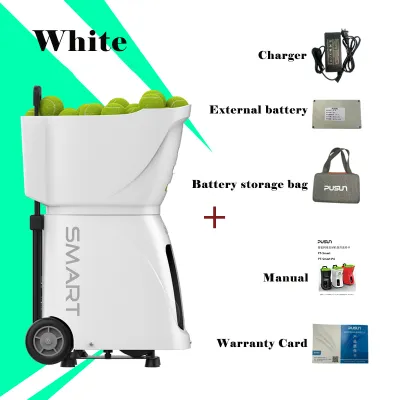
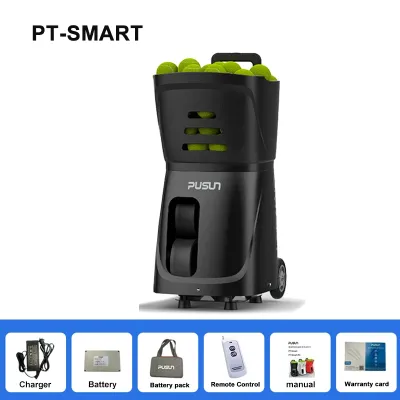
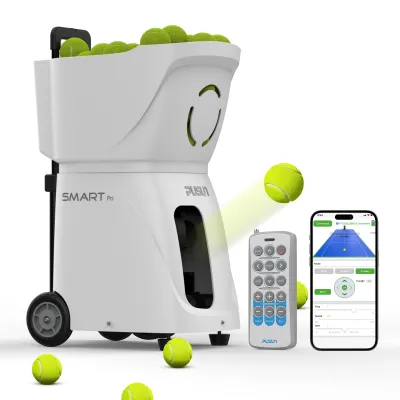
![SG [In Stock]PUSUN PT-Smart Tennis Ball Machine - 100% Genuine Automatic Launcher with 3-Year Warranty & Lifelong Maintenance Portable for Tennis Training & Games](https://img.lazcdn.com/g/p/53512a246b1ad4b3ef279cf3164fe1d3.jpg_400x400q80.jpg_.webp)
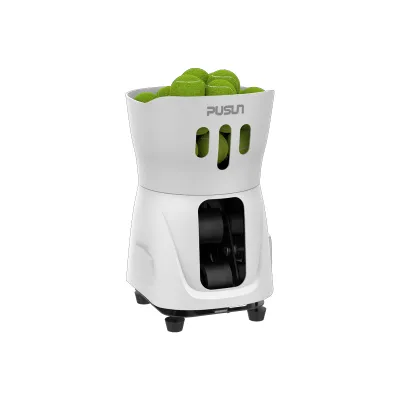
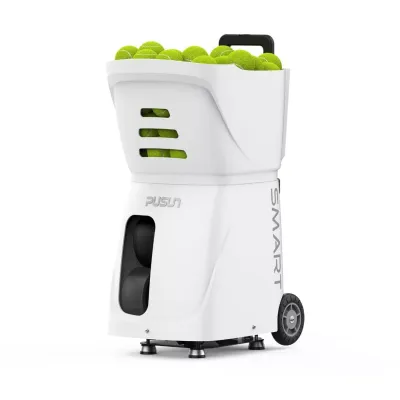
Prices are valid at publication and may change. Please refer to the product page for the latest price.
Beginner Level: Building Consistency and Mechanics
For those new to the sport, the primary goal is to develop clean stroke mechanics and consistent contact with the ball. At this stage, you do not need complex ball paths or extreme speeds. Instead, look for a machine that offers a reliable, consistent feed rate and basic horizontal oscillation. A steady feed allows you to focus entirely on your footwork, backswing, and follow-through without adjusting to unpredictable bounces.
Intermediate Level: Developing Footwork and Shot Variety
As you transition to an intermediate level, your training must incorporate movement and adaptability. You will need a machine that can introduce variety into your practice. Look for adjustable spin controls—both topspin and backspin—and variable speed settings. These features allow you to practice handling deep, heavy groundstrokes or low, skidding slices, simulating the diverse shots you encounter in recreational matches.
Advanced Level: Simulating Match Play and High Intensity
Advanced players require high-intensity workouts that replicate the unpredictability of competitive play. If you are training at this level, prioritize machines with high maximum ball speeds, heavy spin capabilities, and fully programmable drills. Features like random vertical and horizontal oscillation, custom drill sequences, and multi-function remote controls are essential for challenging your positioning, reaction times, and physical conditioning.
Match Machine Features to Your Practice Goals
Once you have defined your training objectives, you can translate them into specific technical specifications. Understanding how these features operate on the court will help you narrow down your options.

Ball Capacity and Feed Rate
The hopper capacity determines how many balls the machine can hold, which directly impacts the rhythm of your practice. A larger capacity, such as 120 to 150 balls, allows for longer, uninterrupted hitting sessions before you have to stop and collect them. The feed rate, or the interval between consecutive shots, typically ranges from 2 to 10 seconds. Beginners benefit from longer intervals to reset their stance, while advanced players often require rapid feeds to practice quick-fire volleys or intense footwork drills.
Spin and Speed Adjustments
The ability to manipulate ball speed and spin is crucial for realistic practice. Basic machines use single-wheel or dual-wheel throwing mechanisms to propel the ball. Dual-wheel systems generally offer superior control over spin, allowing you to adjust the relative speed of the top and bottom wheels to generate heavy topspin or backspin. Ensure the speed range matches your needs; a machine that tops out at lower speeds may suffice for soft lobs and short balls, but you will need higher velocity settings to practice returning powerful serves and deep drives.
Oscillation and Elevation
Oscillation refers to the machine’s ability to sweep side-to-side, distributing balls across the width of the court. Basic horizontal oscillation sweeps randomly from left to right, which is excellent for lateral footwork drills. Advanced machines offer vertical oscillation, which changes the depth of the ball, forcing you to move forward and backward. Combining horizontal and vertical oscillation creates a fully random, two-line or multi-point delivery that tests your court coverage and decision-making.
Evaluate Portability, Power, and Court Setup
A tennis ball machine is only useful if you can easily transport it to the court and power it throughout your session. Physical logistics are particularly important when playing on public courts or shared condominium facilities.
Weight and Transport
Consider how you will transport the machine from your home to the court. Heavy, bulky units can be difficult to lift into a car boot or maneuver down narrow pathways. Look for models featuring large, durable wheels and ergonomic, extendable towing handles. Compact designs with detachable hoppers are highly advantageous, as they reduce the overall dimensions, allowing the machine to fit comfortably in standard vehicle trunks or even on public transport during off-peak hours.
Battery Life and Power Options
Most portable machines run on rechargeable batteries, offering freedom from power outlets. When evaluating battery options, check the expected runtime per charge, which typically ranges from two to four hours of continuous play. Lithium-ion batteries are generally lighter and charge faster than traditional lead-acid batteries, though they may come at a higher price point. If you plan to practice at indoor facilities or private courts with accessible power outlets, consider a machine that supports an AC adapter for unlimited runtime.
Weather Resistance and Storage
In tropical environments like Singapore, high humidity and sudden weather changes are common. While most machines are designed for outdoor use, they are not waterproof. You must verify the manufacturer’s guidelines regarding moisture exposure. Always store your machine in a cool, dry indoor location to protect the electronic components and battery from humidity-induced degradation. Avoid leaving the machine in a hot car trunk for extended periods, as extreme heat can damage the battery cells.
Compare Brands and Models, Including Nisplay Tennis Machines
With numerous options available, establishing a clear comparison framework is essential for finding the best value within your budget.
Reading Manufacturer Spec Sheets
When comparing models, look closely at the technical specifications rather than marketing claims. Pay attention to the maximum ball speed, spin capabilities, battery chemistry, and overall weight. Additionally, review the warranty terms provided by the manufacturer. A longer warranty period often indicates greater confidence in the machine’s build quality and internal components.
Evaluating Support and Service
Because tennis ball machines contain moving parts and electronic circuits, access to customer support and spare parts is critical. Before purchasing, research whether the brand has local service centers or authorized distributors in your region. Having local access to replacement wheels, batteries, and belts can save you significant time and shipping costs if the machine requires maintenance or repairs.
Establishing a Baseline with Entry-to-Mid-Level Brands
Using a specialized entry-to-mid-level brand, such as a Nisplay tennis machine, provides an excellent baseline for your comparison. These machines often focus on high portability, user-friendly controls, and essential features like adjustable speed and spin, making them highly practical for recreational players. By comparing the features and pricing of these models against high-end, club-level machines, you can determine whether the premium features of more expensive units are truly necessary for your personal training goals. For instance, if your budget is around S$1,500 to S$2,500, comparing portable models within this range helps you identify which features offer the most practical value for your daily routines.
Setup, Safety, and Basic Maintenance
Proper setup, safe operation, and regular maintenance are vital to protect your investment and ensure a safe training environment.
Pre-Use Checks
Before turning on the machine, place it securely on the baseline or the designated feeding position. Ensure the court surface is clear of stray balls, leaves, or debris that could be swept into the machine’s hopper. Inspect the throwing wheels visually to confirm they are free of obstructions. If you are using a battery-powered unit, verify that the battery is fully charged to prevent mid-session power drops.
Safe Operation
Always stand clear of the firing zone when the machine is powered on. Most modern machines feature a built-in start delay, giving you ample time to walk to the opposite side of the court before the first ball is launched. If your machine includes a remote control or a smartphone app, use it to pause the feed whenever you need to adjust your position, collect balls, or take a break. Never attempt to clear a jammed ball while the machine is running; always turn off the power switch first.
Routine Care and Storage
Over time, tennis balls shed felt and yellow dust, which accumulates on the internal throwing wheels and electronic sensors. After every few sessions, wipe down the exterior and use a dry cloth or soft brush to clear dust from the feeding mechanism. For long-term battery health, follow the manufacturer’s instructions regarding charging cycles. Avoid letting the battery drain completely to zero, and charge it fully before storing the machine for an extended period.
Frequently Asked Questions (FAQ)
Can I use regular tennis balls, or do I need pressureless balls?
While you can use standard pressurized tennis balls, pressureless balls are highly recommended for machine practice. Pressurized balls lose their bounce quickly when subjected to the high-pressure squeezing action of the machine’s throwing wheels, leading to inconsistent feeds. Pressureless balls maintain their bounce indefinitely because they rely on a solid rubber core rather than internal air pressure. Whichever type you choose, avoid mixing different ball models or wear levels in the hopper, as this will cause variations in ball speed and depth. Always check your user manual for specific ball compatibility guidelines.
How often should I clean the throwing wheels?
You should inspect the throwing wheels after every five to ten hours of use. If you notice a buildup of yellow felt dust or a slick residue on the rubber surface of the wheels, it is time to clean them. Accumulated dust can cause the wheels to lose their grip, resulting in erratic ball speeds and inconsistent spins. To clean the wheels, ensure the machine is completely powered off and disconnected from any power source. Use a medium-grit sandpaper or a stiff brush to gently scuff the wheel surface, restoring its texture. Always consult your user manual for approved cleaning methods and tools to avoid damaging the rubber.
Community discussion
Share your experience or ask a question. Comments are reviewed before publication.