
Selecting your first can of tennis balls in Singapore can feel surprisingly complex. With various options lining the shelves of local sports shops, making the wrong choice can lead to balls that lose their bounce after a single session or wear down rapidly on abrasive surfaces. For absolute beginners, the most practical approach is to start with pressureless tennis balls for durable, repetitive practice, or low-compression green-dot transition balls to build rally consistency. If you are stepping straight into recreational match play, extra-duty pressurized tennis balls are highly recommended to withstand the abrasive outdoor hard courts commonly found across the island.
By understanding how different ball constructions interact with your skill level and the local playing environment, you can save money and accelerate your learning curve. This guide breaks down the essential factors to help you make an informed decision.
Pressurized vs. Pressureless: Which is Better for Beginners?
To make the right purchase, you must first understand the core structural difference between the two primary types of tennis balls available on the market: pressurized and pressureless.
Products mentioned in this guide
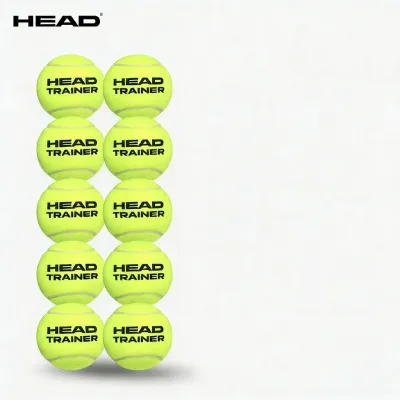
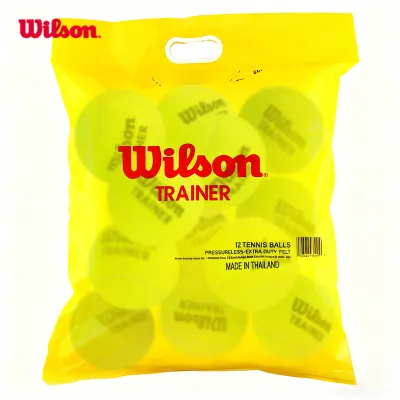
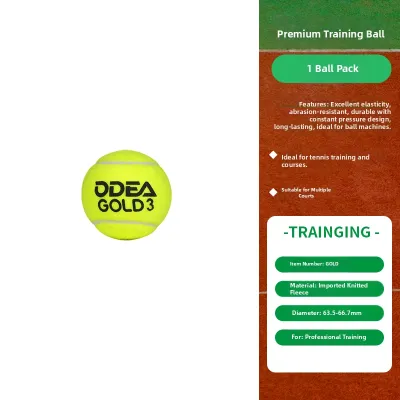
![[BUY 4 CANS AT PRICE OF 3] Wilson Championship Extra Duty Tennis Balls (4 Pack) 12 Tennis Balls - WRT100101](https://img.lazcdn.com/g/p/e4c5d48ca16e86c119d985bee3f966ee.jpg_400x400q80.jpg_.webp)
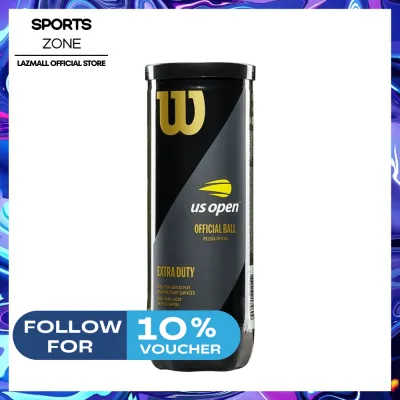
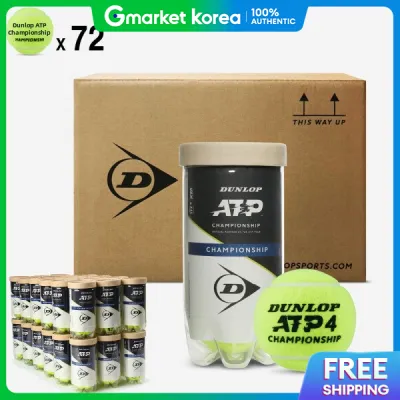
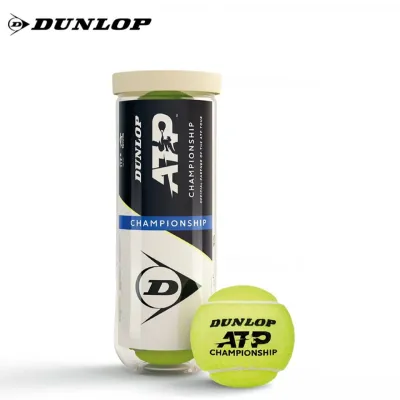
Prices are valid at publication and may change. Please refer to the product page for the latest price.
Pressurized tennis balls are the industry standard for competitive play. These balls are filled with compressed air or nitrogen, which exerts outward pressure against the inner rubber core. This internal gas gives the ball a lively, crisp bounce and a lightweight feel when it impacts your racket strings. However, the moment you crack open a pressurized can, the gas begins to slowly seep through the porous rubber shell. Even if left unused in your bag, pressurized balls will naturally lose their bounce over a few weeks. During active play, this loss of pressure accelerates, often rendering the balls flat or “dead” after a few hours of hitting.
Pressureless tennis balls, on the other hand, do not rely on internal gas pressure for their bounce. Instead, they feature a much thicker, high-density rubber core that provides inherent elasticity. Because there is no gas to escape, pressureless balls never lose their bounce over time. In fact, as the outer felt wears down and the ball becomes lighter, they can actually feel slightly bouncier and harder. The primary trade-off is their physical weight and feel; they feel noticeably heavier and stiffer upon impact, which can be tiring for a beginner’s wrist and elbow during long sessions.
For beginners, the choice comes down to your training format. If you are practicing solo against a concrete wall, using a ball machine, or engaging in repetitive drilling sessions where you hit hundreds of balls, pressureless balls offer outstanding long-term value. They can live in your sports bag for months without losing their performance characteristics. However, if you are playing friendly matches or practicing serves and rallies with a partner, pressurized balls are highly preferred because they are gentler on your joints and provide the standard bounce height expected in a real game.
Decoding Ball Stages: Do You Need Transition Balls?
Many adult beginners assume they must immediately start playing with the standard yellow tennis balls used by professionals. However, the International Tennis Federation (ITF) utilizes a color-coded transition system designed to help players develop proper technique before moving to high-velocity equipment.

This progression system consists of three distinct stages, each featuring lower compression levels and slower speeds than standard yellow balls:
- Red Balls (Stage 3): These are the largest and lightest balls, designed to bounce 75% slower than standard balls. They are primarily used by very young children on miniature courts.
- Orange Balls (Stage 2): These are standard-sized but highly compressed, bouncing 50% slower than standard balls. They are designed for mid-sized courts.
- Green Dot Balls (Stage 1): These are standard-sized balls that feature a green dot on the felt. They are pressurized to bounce 25% lower and travel slower through the air than standard yellow balls.
For adult beginners, green-dot transition balls are an incredibly effective training tool. Standard yellow balls bounce high and fast, often forcing new players to strike the ball above their comfortable hitting zone, which lies between the hip and chest. This leads to rushed swings, poor footwork, and frequent errors. A green-dot ball stays within this comfortable hitting zone longer, giving you the crucial split-second extra time needed to prepare your body, execute a clean swing path, and maintain longer, more satisfying rallies.
You should consider graduating to standard yellow balls once you can consistently sustain a 10-to-15 shot rally with a partner using green-dot balls, and when your footwork allows you to cover the court comfortably without feeling rushed by the ball’s speed.
Key Features to Check Before You Buy
Before purchasing any tennis balls, keep this checklist of physical and performance attributes in mind to ensure they are suitable for your specific playing conditions.
Felt Type
Tennis ball felt is generally categorized into regular-duty and extra-duty varieties. Regular-duty felt is designed for soft clay courts or indoor carpet courts; it features a higher wool content to prevent the ball from absorbing clay particles. Extra-duty felt is woven with a higher percentage of synthetic nylon fibers, creating a thicker, more durable cover designed to resist the grinding action of abrasive acrylic hard courts. Because almost all public and private tennis courts in Singapore are outdoor hard courts, you should always check the packaging and select extra-duty balls. Using regular-duty balls on these surfaces will cause the felt to fluff up excessively and wear down to the rubber core within a single session.
Climate Considerations
While altitude is not a factor at sea level, Singapore’s tropical climate presents high humidity and frequent rainfall. High humidity directly impacts tennis ball performance. The thick felt cover of a tennis ball acts like a sponge, absorbing moisture from the humid air or a damp court surface. This moisture makes the ball significantly heavier and slower, which increases the physical strain on your elbow and shoulder during hits. To mitigate this, always store your balls in a cool, dry place, and avoid using pressurized balls that have been left in a hot car trunk, as heat can accelerate pressure loss.
Visibility
Standard optic yellow is the global benchmark for tennis ball visibility because it offers the highest contrast against dark green, blue, or red court surfaces. This is particularly important in Singapore, where many recreational players book court times during the cooler evening hours under artificial floodlights. Ensure the balls you buy feature a bright, clean optic yellow felt to help you track the ball’s trajectory and spin accurately under night lighting.
Packaging
Pressurized tennis balls are sold in vacuum-sealed plastic or metal cans, usually containing three or four balls. When buying pressurized balls, always perform a quick physical check: press the plastic lid and ensure the metal pull-tab underneath is completely taut and sealed. If the can feels soft or squishy, air has leaked out, and the balls inside may already be flat. Pressureless balls do not require pressurized packaging and are typically sold loose in mesh bags or cardboard boxes, making them easier to store long-term.
Recommended Tennis Ball Categories for Beginners
To help you narrow down your options, here is a breakdown of the three main categories of tennis balls suitable for beginners, along with their ideal use cases and limitations.
Category 1: Pressureless Practice Balls
These balls are highly recommended for solo practice, wall hitting, and ball machines. Because they rely on a solid rubber core, they offer exceptional durability and will maintain their bounce for months. The main limitation is their stiff feel, which can feel harsh on the arm if you use a lightweight or stiff racket.
Category 2: Extra-Duty Pressurized Balls
These are the standard choice for recreational matches and social play on local hard courts. They provide a comfortable, arm-friendly feel and a true, predictable bounce. The primary limitation is their short lifespan; once the can is opened, they should ideally be used within a few sessions before they lose their optimal bounce.
Category 3: Low-Compression (Green Dot) Balls
These are excellent for technical training and adult beginners focusing on stroke mechanics. They slow down the pace of the game, allowing you to practice full, confident swings without fear of the ball constantly flying out of bounds. The limitation is that they are not suitable for standard match play, as more experienced players will find the bounce too low and slow.
| Ball Category | Primary Use Case | Expected Lifespan | Ideal Court Surface |
|---|---|---|---|
| Pressureless Practice Balls | Solo drills, ball machines, wall practice | Several months (until felt wears off) | Hard courts, concrete walls |
| Extra-Duty Pressurized Balls | Recreational matches, social play | 2 to 4 playing sessions | Outdoor hard courts |
| Low-Compression (Green Dot) | Technical training, beginner rallies | 3 to 6 sessions (pressurized versions) | Hard courts, indoor courts |
Buying Tips for Players in Singapore
When you are ready to purchase, keeping a few local buying strategies in mind can help you get the best value for your money.
First, consider visiting local sports retailers and specialized racket shops. Physical stores allow you to inspect the cans directly to ensure the vacuum seal is intact and the felt quality is consistent. Specialized tennis shops often have knowledgeable staff who can recommend specific ball models based on the court surfaces in your immediate neighborhood.
For those looking to buy in larger quantities, online marketplaces and e-commerce platforms offer excellent convenience and bulk discounts. When purchasing online, always verify the seller’s ratings and read recent customer reviews. Be cautious of deals that seem unusually cheap, as some sellers may be clearing out old, expired pressurized stock that has lost its bounce while sitting in warm warehouses.
In terms of budget, single cans of pressurized tennis balls typically range from S$5 to S$10, depending on the brand and quality level. If you plan to play regularly, buying a bulk case of 24 cans can lower the cost per can significantly, bringing it down to around S$4 to S$6 per can. Pressureless balls are often sold in bags of 12 to 72, costing roughly S$2 to S$4 per ball, representing the most cost-effective option for solo practice over time.
Frequently Asked Questions (FAQ)
How long do pressurized tennis balls last once opened?
Once you break the vacuum seal of a pressurized can, the internal gas begins to escape immediately. Even if you do not play with them, the balls will lose a noticeable amount of bounce within one to two weeks. For active play on hard courts, pressurized balls generally provide optimal performance for about two to four hours of continuous hitting before they begin to feel flat and heavy.
Can adult beginners use kids' tennis balls?
While red and orange transition balls are generally too light and slow for adult rackets, green-dot transition balls (often labeled as Stage 1 junior balls) are highly beneficial for adult beginners. They feature the same physical size as standard yellow balls but have 25% lower compression, which helps slow down the game and allows you to focus on proper swing mechanics. However, you should avoid using foam balls outdoors, as they are easily swept away by the wind and do not bounce consistently on hard courts.
Is it worth buying tennis balls in bulk?
Buying in bulk is highly recommended if you play multiple times a week or if you are purchasing pressureless balls for solo practice and ball machines. However, if you only play occasionally, avoid buying large quantities of pressurized cans. Even unopened pressurized cans can slowly lose their internal pressure over a year or two, especially when stored in Singapore’s warm, humid climate.
Community discussion
Share your experience or ask a question. Comments are reviewed before publication.