
Fitting a treadmill into a Singapore HDB flat requires a careful balance between your fitness aspirations and the physical realities of compact urban living. To find a machine that works without making your home feel cramped, you must prioritize a compact footprint, efficient folding mechanisms, and noise-reduction features. By matching the equipment’s dimensions to your specific stride and your flat’s layout, you can maintain an active lifestyle without sacrificing valuable living space or disrupting your household flow.
While the convenience of home workouts is undeniable, a poorly planned purchase can quickly turn a valuable fitness tool into an obstructive piece of furniture. Success lies in understanding that a treadmill’s suitability is not determined solely by its features, but by how harmoniously it integrates into your daily domestic environment.
Measuring Your Available Space and Safety Clearances
Before browsing online marketplaces or visiting a showroom, you must accurately map out the physical space where the treadmill will sit. Start by measuring the exact floor area of your designated workout spot, keeping in mind that a treadmill requires more than just its physical footprint. Safety guidelines dictate leaving a clear, unobstructed zone of at least 1.5 to 2 meters behind the rear of the running belt. This safety margin is critical; if you slip or lose your footing while running, a clear space ensures you are safely ejected from the moving belt rather than pinned against a wall or furniture.
Products mentioned in this guide
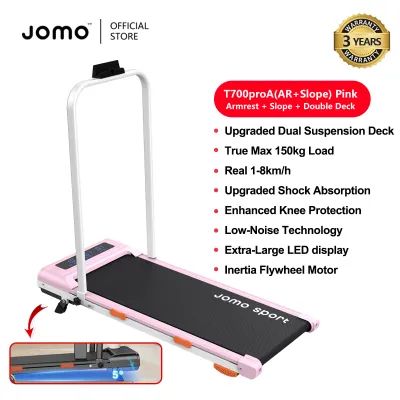
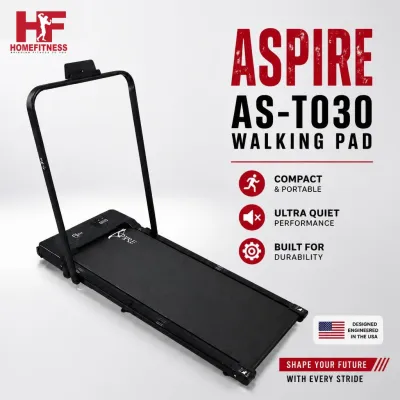
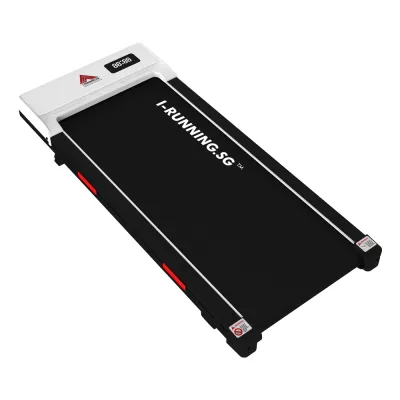
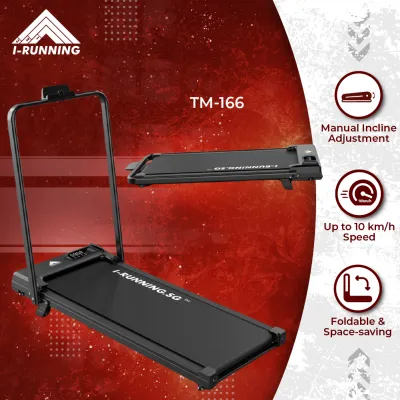
![[INSTOCK] Home Manual Treadmill / Belt Treadmill / Walking Pad](https://img.lazcdn.com/g/p/252e9cdd1aff5e5f5ac7bf3fc98134c9.png_400x400q80.png_.webp)
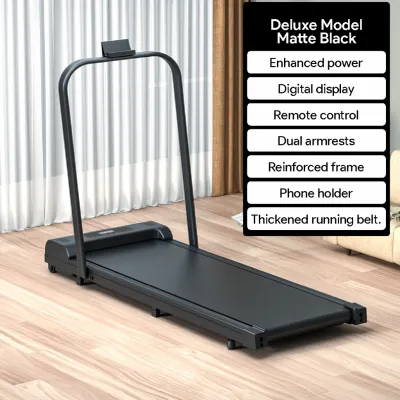
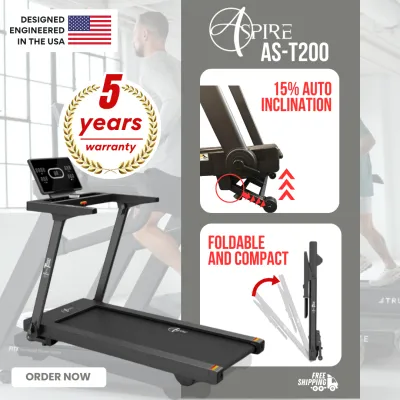
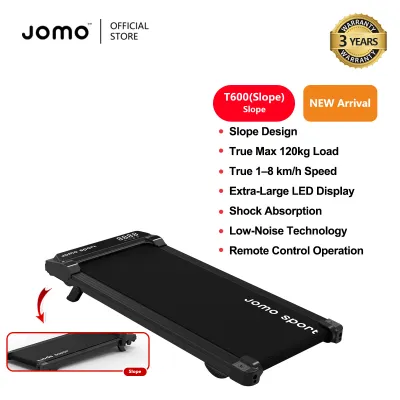
Prices are valid at publication and may change. Please refer to the product page for the latest price.
Ceiling height is another crucial factor that is easily overlooked in HDB flats, where standard ceilings typically measure around 2.6 meters. When you run, your body rises with each stride, and if your treadmill features an incline function, the deck will elevate you even closer to the ceiling. To calculate your required clearance, add the height of the treadmill’s deck at its maximum incline to your own height, and ensure there is still a comfortable buffer of at least 15 to 20 centimeters above your head.
Finally, plan the delivery route from the estate’s loading bay to your room. Measure the width of your flat’s main entrance, internal doorways, and any tight corridor turns. If you live on a higher floor, verify the internal dimensions and weight capacity of the passenger lift. Many heavy-duty or semi-commercial treadmills arrive in large, heavy boxes that may not navigate narrow HDB corridors or older lift doors easily, making professional assembly services or compact, modular designs a practical necessity.
Evaluating Treadmill Dimensions and Footprints
When comparing models, you must distinguish between the overall machine footprint and the actual usable running surface. The overall dimensions dictate how much floor space the machine occupies when fully assembled, while the running belt dimensions determine the quality of your workout. A machine that is too small may save space but could severely restrict your movement, making your workouts feel cramped and unsafe.

The running belt’s length and width should directly align with your height, stride length, and workout intensity. For walking or light jogging, a belt width of 40 to 45 centimeters and a length of 120 centimeters are generally sufficient for average-height users. However, if you plan to run at higher speeds, your stride naturally lengthens and sways; in this case, look for a belt that is at least 48 to 50 centimeters wide and 130 to 140 centimeters long to prevent your feet from accidentally stepping onto the stationary side rails.
For homes where the treadmill cannot remain permanently deployed, pay close attention to the folded dimensions. Some models fold vertically, reducing their floor footprint significantly but requiring a stable wall to lean against or a dedicated corner. Other models fold completely flat, allowing them to be stored horizontally. Measure the height of the gap under your sofa or bed frame to ensure a flat-folding model can actually slide underneath without scraping the underside of your furniture.
Space-Saving Features and Storage Mechanisms
Modern fitness equipment offers various space-saving designs tailored for compact apartments. Folding mechanisms generally fall into three categories: hydraulic soft-drop systems, flat-folding frames, and vertical wall-leaning units. Hydraulic systems are highly recommended for safety and convenience; they assist in lifting the heavy deck and ensure it lowers slowly and hands-free when unfolded, protecting your flooring from sudden impacts.
Mobility is another essential feature if you plan to store the treadmill after every session. Look for units equipped with multi-directional transport wheels. Standard wheels only allow you to roll the machine forward and backward, which can make maneuvering around tight HDB bedroom corners incredibly frustrating. Four-wheel transport systems or lightweight frames weighing under 40 kilograms make it much easier for a single person to guide the machine into a closet or behind a partition.
Safety must remain a priority when storing folded equipment, especially in households with young children or pets. Always verify the presence of robust locking pins, safety latches, or physical clips that secure the deck in its folded position. A folded treadmill holds a significant amount of potential energy, and a failing latch could cause the heavy deck to fall unexpectedly, posing a severe injury hazard.
Balancing Performance Specs with Physical Limits
Choosing a treadmill for a small flat often involves navigating trade-offs between motor power, structural stability, and physical size. Compact, space-saving treadmills typically feature smaller motors, often ranging from 1.5 to 2.0 Continuous Horsepower (CHP). While these motors are highly energy-efficient and perfectly adequate for walking or casual jogging, they may struggle, overheat, or wear out prematurely if subjected to daily high-speed running by multiple household members.
If your fitness routine demands intense running, you will need to look for a motor with at least 2.5 to 3.0 CHP. However, more powerful motors require larger housings, which increases the overall footprint and weight of the machine. You must decide whether to prioritize an ultra-compact design that is easy to hide away, or a sturdier, heavier machine that offers the performance and durability required for serious training.
Noise and vibration are also critical considerations in high-density HDB living. Lighter, compact treadmills often lack the heavy-duty shock absorption systems found in larger models, meaning the impact of your feet striking the deck can transmit directly through the concrete floor slabs to the flat below. To maintain good relations with your neighbors, look for models with built-in elastomer cushioning and consider adjusting your workout times to avoid early mornings or late nights.
Common Space-Matching Mistakes to Avoid
One of the most common mistakes is failing to account for the console height and the swing radius of the handlebars. Even if a treadmill’s floor footprint fits perfectly into a corner, the wide handlebars or a protruding console screen might block a nearby wardrobe door, prevent a window from opening, or obstruct a main walkway. Always measure the widest points of the machine, not just the base frame.
Another frequent error is assuming that any “foldable” treadmill can easily slide under a standard bed. Many bed frames in Singapore sit low to the ground, offering less than 15 centimeters of clearance. Even the slimmest flat-folding treadmills often require 18 to 22 centimeters of vertical clearance once you account for the folded console, motor cover, and transport wheels. Always measure your furniture clearance before purchasing a model intended for under-bed storage.
Lastly, do not overlook electrical requirements and cable management. Treadmills draw a significant amount of power and should ideally be plugged directly into a dedicated wall outlet rather than a multi-way extension cord, which can overheat or trip your home’s circuit breaker. Ensure your chosen workout spot is close enough to a power outlet so that the power cable does not stretch across high-traffic walkways, creating a dangerous tripping hazard for your family.
Frequently Asked Questions (FAQ)
Do I need a special mat for a treadmill in an HDB flat?
Yes, using a high-density rubber or PVC equipment mat is highly recommended. A mat serves multiple purposes: it protects your vinyl, parquet, or tiled flooring from scratches, indentations, and sweat damage. Additionally, it helps dampen the high-frequency motor hum and minor vibrations. However, keep in mind that while a mat reduces surface noise, it cannot completely eliminate the low-frequency impact sound of your feet striking the deck, which travels structurally through the concrete floor.
Can I place a treadmill directly against a wall?
No, you should never place the rear of a treadmill directly against a wall or solid furniture. Safety standards recommend maintaining a clear space of at least 1.5 to 2 meters behind the running belt. If you lose your balance or fall while the belt is moving, a wall directly behind you can trap your body against the spinning track, leading to severe friction burns, entrapment, or impact injuries. Always ensure there is a clear escape path behind the machine.
Community discussion
Share your experience or ask a question. Comments are reviewed before publication.