
Finding the right fitness equipment for a compact Singapore home requires balancing workout utility with floor space. The best treadmill for a small Housing & Development Board (HDB) flat is one that features a folding frame, a space-saving footprint of less than 150 centimeters in length when unfolded, and a quiet motor with robust vibration dampening. Because HDB bedrooms and living rooms serve multiple purposes, prioritizing easy storage, low-profile decks, and adequate safety clearances ensures your home workouts do not compromise your daily living space.
Measure Your Space and Safety Clearances First
Before browsing online marketplaces or visiting local showrooms, you must establish the physical limits of your flat. Start by measuring the exact floor area where you plan to place the machine. Use a metal measuring tape to map out the length and width of the designated spot, whether it is a corner of the living room, a study, or a spare bedroom. Mark these dimensions on the floor using masking tape to visualize how much physical space the machine will occupy during a workout.
Safety clearances are non-negotiable when installing cardio equipment at home. Manufacturers typically recommend leaving a clear, unobstructed zone of at least 2 meters behind the treadmill and approximately 0.5 to 1 meter on both sides. This safety buffer is critical; if you lose your footing or slip while running, you need an open area behind the belt to fall safely without colliding with walls, glass doors, or sharp furniture edges. In a tight HDB layout, failing to account for this clearance can turn a minor slip into a severe injury.
Products mentioned in this guide
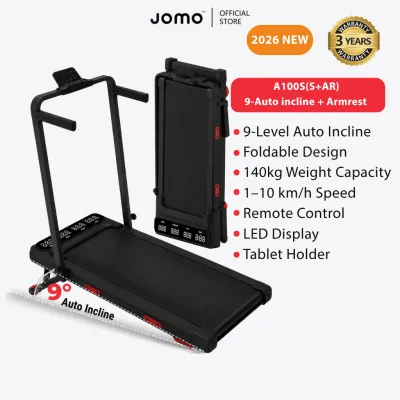
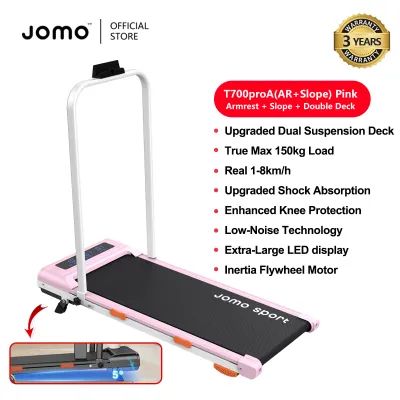
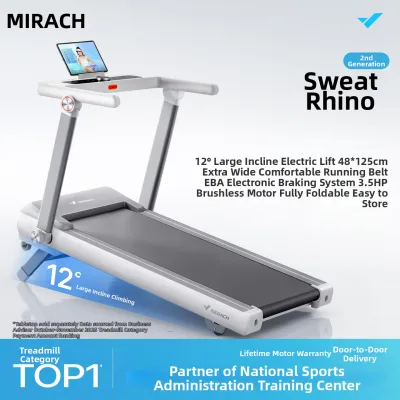
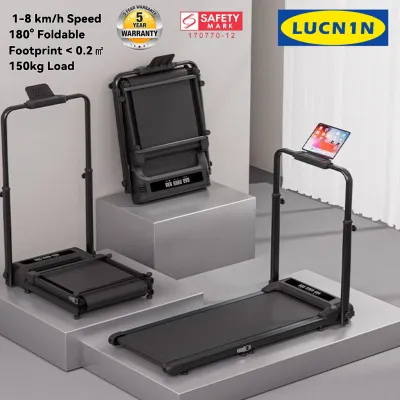
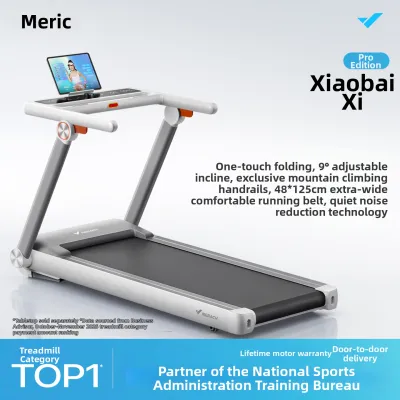
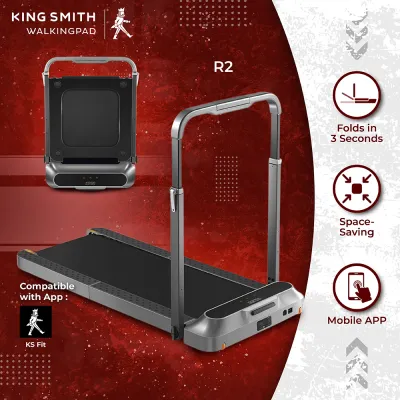
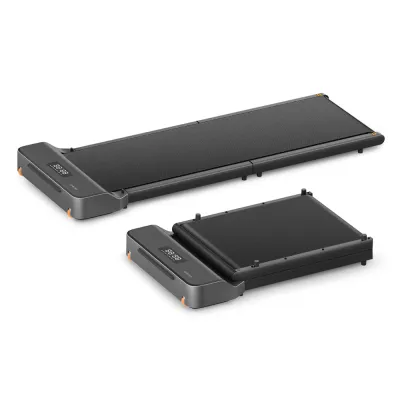
![[INSTOCK] Home Manual Treadmill / Belt Treadmill / Walking Pad](https://img.lazcdn.com/g/p/252e9cdd1aff5e5f5ac7bf3fc98134c9.png_400x400q80.png_.webp)
Prices are valid at publication and may change. Please refer to the product page for the latest price.
Ceiling height is another crucial factor that is often overlooked. Standard HDB ceilings generally measure around 2.6 meters, though some newer flats or top-floor units may vary slightly. When you run, your body rises with each stride, and if your treadmill has an incline feature, the deck height increases significantly at its maximum setting. You must verify the deck’s step-up height—the distance from the floor to the top of the running belt—and add it to your height, plus an extra 15 to 20 centimeters of clearance for head movement, to ensure you will not hit the ceiling or low-hanging light fixtures.
Finally, map out the delivery path from the estate’s lift lobby to your flat’s front door. Measure the width and height of your main gate, front door, hallway corridors, and bedroom doors. Many heavy-duty treadmills are delivered in large, heavy boxes that cannot navigate tight, right-angle turns in narrow HDB corridors. Ensuring the packaged unit can physically pass through your doorways saves you from costly return fees or delivery complications on arrival day.
Compare Overall Footprint Against Running Surface Size
When evaluating a thread mill home purchase, you must distinguish between the machine’s overall footprint and its actual running surface. The overall footprint includes the motor cover, side rails, console uprights, and folding joints, which can add 20 to 30 centimeters to the length and width of the machine. The running surface, or belt size, is the actual area available for your feet. Balancing these two dimensions is the key to finding a machine that fits your home without restricting your stride.

To assess the daily space impact, always check both the unfolded and folded dimensions provided by the manufacturer. A treadmill might seem compact when folded upright, but once lowered for a workout, it can easily dominate a standard 10-square-meter HDB bedroom. If you plan to fold the machine after every session, ensure the folded footprint leaves enough room for walkways and other furniture. If you intend to leave it unfolded, the machine must not block access to wardrobes, power outlets, or air conditioning units.
The ideal belt size depends heavily on your height, stride length, and intended workout intensity. For walking or light jogging, a belt width of 40 to 45 centimeters and a length of 120 centimeters is generally sufficient for most users. However, if you are taller or plan to run at faster paces, you will need a wider belt of at least 50 centimeters and a length of 140 centimeters to prevent your feet from accidentally stepping onto the side rails or slipping off the back of the belt.
While prioritizing a compact size, do not overlook structural stability and weight capacity. Lightweight, ultra-compact treadmills often have lower maximum weight limits and thinner frames, which can feel unstable or wobble when you run at high speeds. Check the manufacturer’s specifications to ensure the machine’s maximum user weight capacity exceeds your body weight by at least 15 to 20 kilograms. A sturdier frame provides a safer, more comfortable run and extends the lifespan of the machine’s internal components.
Identify Space-Saving and Storage Features
Modern home treadmills offer various space-saving designs tailored for urban apartments. The most common design is the traditional folding treadmill, where the deck folds upward toward the console and locks into place. Another popular option for HDB flats is the flat-folding or “under-bed” treadmill, where the console uprights fold down flat against the deck, allowing the entire unit to be rolled under a bed or sofa, or stored vertically against a wall.
When comparing folding mechanisms, look for systems equipped with hydraulic assist or soft-drop technology. These systems use gas shocks to help lift the heavy deck with minimal physical effort and ensure that when you lower the deck, it descends slowly and safely to the floor on its own. This feature is particularly important if a single person will be moving and setting up the machine daily, as it prevents sudden drops that could damage your flooring or cause personal injury.
Mobility is another critical factor for easy storage. Ensure the treadmill is equipped with high-quality transport wheels. Some models only have wheels that roll forward and backward, while others feature multi-directional wheels that allow you to maneuver the machine sideways into tight corners or closets. Before purchasing, verify the total weight of the machine; even with wheels, a treadmill weighing over 80 kilograms can be exceptionally difficult to steer across carpeted areas or over door thresholds.
If you plan to store your treadmill vertically against a wall or inside a wardrobe, safety must be your top priority. Ensure the machine has a reliable, mechanical locking pin that prevents the deck from accidentally falling forward. This is especially critical in households with young children or pets who might pull on the machine. Always store the folded treadmill on a flat, level surface, and avoid placing it in high-traffic pathways where it could easily be knocked over.
Match Motor and Performance Specs to Your Routine
Selecting the right motor ensures your treadmill performs reliably without consuming excessive power or creating unnecessary bulk. Treadmill motors are rated by Continuous Horsepower (CHP), which measures the motor’s ability to maintain a constant speed under load over a long period. For walking, a motor with 1.5 to 2.0 CHP is adequate. For jogging, aim for 2.0 to 2.5 CHP, while serious running requires a motor with 2.5 to 3.0 CHP or higher to prevent overheating and premature wear.
Speed and incline ranges should align directly with your fitness goals. Most compact treadmills offer top speeds of 12 to 16 kilometers per hour, which is more than enough for light running and interval training. If you enjoy hill workouts, look for a model with motorized incline adjustments rather than manual ones, which require you to stop your workout and manually adjust pins on the rear feet. However, keep in mind that motorized incline mechanisms add weight and height to the deck, which may affect your ceiling clearance.
Console design plays a significant role in the overall depth and bulk of the machine. Large, high-definition touchscreen consoles look impressive but often add substantial depth to the upright frame, making the machine harder to fold flat. If space is your primary constraint, consider a minimalist console with a simple LED display that tracks basic metrics like speed, distance, time, and heart rate. You can use a tablet holder to mount your own device for entertainment or interactive training apps, saving both space and cost.
In a high-density HDB block, noise and vibration can easily travel through concrete floors and disturb your neighbors downstairs. Look for treadmills equipped with advanced deck cushioning systems, such as elastomeric shock absorbers, which absorb the impact of your footstrikes and reduce both joint stress and structural noise. Additionally, choosing a high-quality brushless DC motor can significantly lower operational noise compared to older brushed motor designs, allowing you to exercise early in the morning or late at night without causing friction with your neighbors.
Frequently Asked Questions (FAQ)
Can I place a treadmill directly on typical HDB flooring?
Placing a heavy, vibrating treadmill directly on standard HDB flooring like vinyl, ceramic tiles, or laminate can cause scratches, dents, or discoloration over time. The concentrated weight of the machine, combined with the impact of your running stride, can also crack tile grout or warp laminate planks. To protect your floors, always place a high-density rubber equipment mat underneath the treadmill. This mat helps distribute the machine’s weight evenly, absorbs vibrations, reduces noise transmission to the flat below, and prevents the treadmill from sliding during intense workouts. Additionally, ensure your floor is perfectly level before setup, as an uneven surface can cause the treadmill frame to twist, leading to belt misalignment and uneven wear on the motor.
Do folding treadmills need to be reassembled after storage?
No, standard folding treadmills do not require tools or reassembly after being folded for storage. They are specifically engineered for quick, daily deployment. When you fold the deck upward or fold the console flat, the internal wiring and structural joints remain fully connected. To use the machine again, you simply release the safety lock or hydraulic lever, let the deck lower to the floor, and plug the power cord into the wall outlet. However, you must always double-check that all locking pins, safety keys, and frame latches are fully engaged and secure before stepping onto the running belt to prevent the frame from shifting during use.
How do I calculate the required ceiling height for incline use?
To calculate the minimum ceiling height required for safe incline workouts, start by measuring the step-up height of the treadmill deck when it is completely flat. Next, add the maximum height elevation the deck reaches at its highest incline setting—this specification is usually listed in the user manual or can be verified with the manufacturer. Add your own height to this combined deck height. Finally, add a safety buffer of at least 15 to 20 centimeters to account for your natural vertical bounce and arm movement while running. Ensure the total sum is less than the height of your ceiling, measuring specifically to the lowest point of any overhead obstacles like ceiling fans, light fixtures, or structural beams.
Community discussion
Share your experience or ask a question. Comments are reviewed before publication.