
Selecting the right tennis bag is not just about showing brand loyalty; it is a practical decision that directly impacts your comfort, gear organization, and racket longevity. The ideal Wilson tennis bag size depends on your weekly playing frequency, the number of rackets you carry, and your secondary gear requirements. Casual players who hit the court once a week or less typically find a compact tennis backpack or a 3-racket bag sufficient. Regular club players who play two to three times a week benefit most from a versatile 6-racket bag. Competitive tournament players require a 9-racket bag or larger to accommodate multiple backup frames, changes of apparel, and specialized court accessories.
Quick Match: Wilson Tennis Bag Sizes by Playing Frequency
To help you quickly identify the right capacity, use the decision matrix below to match your playing habits and typical gear load to the appropriate bag style:
| Playing Frequency | Typical Racket Count | Recommended Bag Type | Key Gear Accommodated |
|---|---|---|---|
| Casual (1x/week or less) | 1–2 rackets | Tennis Backpack or 3-Racket Bag | Rackets, keys, phone, small water bottle |
| Regular (2–3x/week) | 2–4 rackets | 6-Racket Bag | Rackets, change of clothes, court shoes, towel |
| Competitive (4x+/week or Tournaments) | 4–6 rackets | 9-Racket Bag (or larger) | Multiple rackets, shoes, warm-ups, hydration, medical kit |
These recommendations assume a baseline of standard tennis gear. However, your daily routine can shift your requirements. For example, if you commute directly from an office to the court, you will need to carry both your work attire and your tennis gear simultaneously. In such cases, sizing up from a backpack to a 6-racket bag is highly recommended to avoid crushing your clothes or forcing dirty court shoes into the same compartment as your laptop.
Products mentioned in this guide
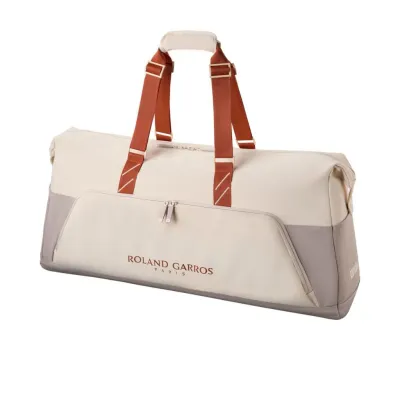
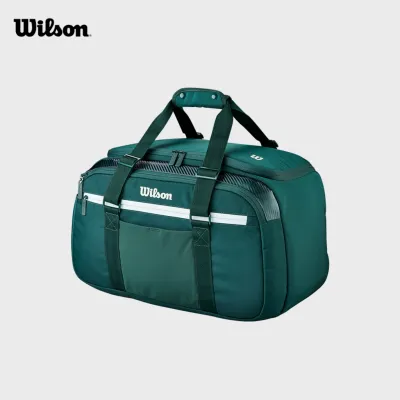
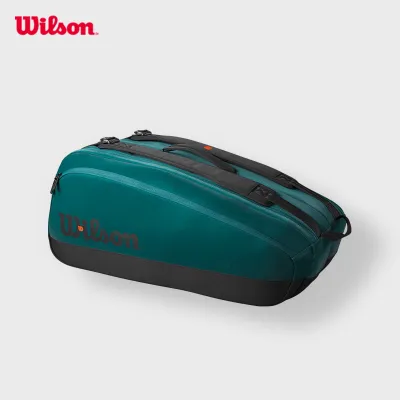
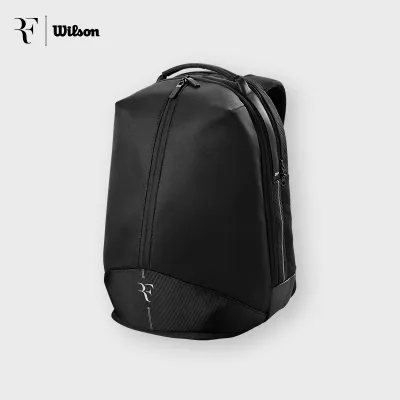
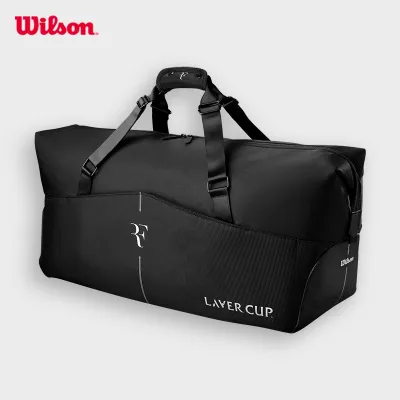
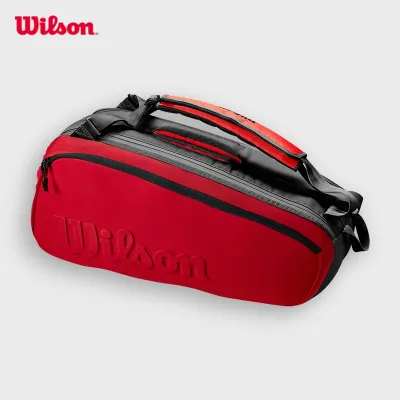
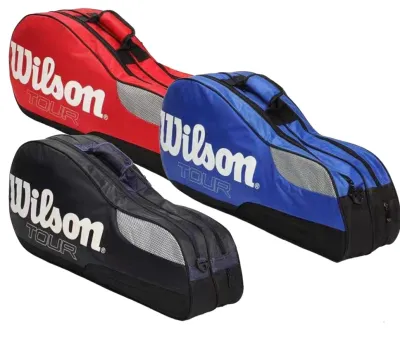
Prices are valid at publication and may change. Please refer to the product page for the latest price.
Similarly, if you play long sessions in high-humidity environments, you will likely carry extra shirts, towels, and larger hydration flasks. This additional volume can quickly overwhelm a standard 3-racket bag, making a larger capacity a more practical choice even if you only own two rackets.
How to Calculate Your True Gear Volume
One of the most common errors when choosing a tennis bag is focusing solely on racket capacity. A bag designated as a “6-racket bag” does not mean you must carry six rackets; rather, it represents the total volume of the bag measured in racket units. To find your true gear volume, you must account for all the non-racket items you bring to the court.

Bulky items are the primary space consumers. A pair of tennis shoes (especially in larger sizes) can easily occupy the equivalent space of two to three rackets. Damp clothes and towels used during play also expand in volume and require physical isolation to prevent moisture and odors from transferring to your clean equipment. Dedicated, ventilated shoe or wet/dry compartments are essential features to look for if you plan to carry these items regularly.
Accessories also require dedicated space. A typical player’s inventory often includes:
- Multiple cans of tennis balls
- Spare overgrips and vibration dampeners
- Athletic tape, bandages, and blister prevention kits
- Sunscreen and insect repellent
- A 1-liter or 1.5-liter water bottle
Finally, environmental factors play a significant role in your gear decisions. High ambient temperatures can cause synthetic tennis strings to lose tension rapidly and can degrade the structural materials of your rackets. If you frequently play on outdoor courts during peak daylight hours, verifying whether a bag features a thermal protective lining is a critical step to safeguard your equipment from heat damage.
Wilson Tennis Bag Capacity Profiles
Wilson categorizes its tennis bags by racket capacity to help players select a model that aligns with their level of commitment and daily transport needs. Each size category offers distinct advantages and trade-offs in terms of storage, portability, and organization.
Backpacks and 3-Racket Bags for Casual Play
Tennis backpacks and 3-racket bags are designed for maximum mobility and are ideal for players who travel light. A tennis backpack typically features a dedicated rear compartment that holds one to two rackets with the handles extending upward. The main compartment remains free for a light change of clothes, a water bottle, and personal items like keys and a phone.
Traditional 3-racket bags offer a classic teardrop shape but maintain a very slim profile. The primary trade-off with these smaller options is the lack of specialized compartmentalization. You will not find dedicated shoe pockets or thermal linings in most entry-level models. However, these bags are exceptionally well-suited for players who cycle, ride a scooter, or walk to local neighborhood courts, as they distribute weight evenly and do not protrude awkwardly during transit.
6-Racket Bags for Regular and Club Players
For the dedicated club player, the 6-racket bag represents the ultimate middle ground. These bags typically feature two main compartments, allowing you to dedicate one side entirely to your rackets (usually holding two to three comfortably) and the other side to your court shoes, towel, and a fresh change of clothes.
This layout ensures that dirty soles and damp apparel never come into direct contact with your rackets or clean gear. Most 6-racket bags also include medium-sized exterior accessory pockets for organized storage of smaller items. While highly versatile for weekly league play, a 6-racket bag can start to feel cramped if you need to pack for multi-day tournaments where extra apparel, warm-up gear, and extensive medical supplies are required.
9-Racket Bags for Competitive and Tournament Play
Competitive players and tournament travelers require the expansive volume of a 9-racket bag. Featuring three main compartments, these bags allow for precise organization. You can isolate your primary and backup rackets in one compartment, store clean apparel and nutrition in the second, and place dirty gear and shoes in the third.
Because these bags can become heavy when fully loaded, they are equipped with padded, adjustable dual shoulder straps, allowing you to carry them comfortably as a backpack. The main trade-off is the physical footprint. A 9-racket bag is bulky and can be difficult to manage on crowded public transit or fit into standard-sized club lockers. Before choosing this size, ensure you have adequate storage space at home and a convenient way to transport it to the courts.
Common Sizing Mistakes and Fit Checks
To avoid buyer’s remorse, steer clear of common sizing pitfalls. A frequent mistake is overestimating future racket purchases and buying a massive bag that remains mostly empty. Carrying an underfilled bag causes your gear to shift constantly during transit, which can lead to unnecessary wear on your rackets and accessories.
Before finalizing your choice, perform these practical checks:
- Transit Compatibility: Verify the physical dimensions of the bag against your primary mode of transport. If you travel by train or bus, a highly protruding backpack or an oversized tournament bag can cause inconvenience to fellow commuters.
- Locker Fit: If you plan to store your bag in a gym or club locker, check the locker's dimensions against the bag's specifications.
- Ergonomic Comfort: Once you receive the bag, load it with your typical gear—including filled water bottles and shoes—and test the fit. Ensure the shoulder straps do not pinch your neck and that the grab handles are positioned for easy lifting.
- Base Durability: Inspect the bottom of the bag. Because tennis bags are frequently placed on rough, abrasive hardcourt surfaces, the base should feature durable, water-resistant materials or protective feet to prevent premature wear.
Frequently Asked Questions (FAQ)
Can I use a standard daily backpack instead of a dedicated tennis backpack?
While a standard daily backpack can physically hold a tennis racket, it lacks the specialized design elements required for safe transport. Standard backpacks do not have angled, locking zippers designed to keep racket handles upright and secure, which can cause the racket to slip or swing while you walk or cycle. Additionally, dedicated tennis backpacks feature reinforced bases to handle the weight of sports gear and specialized compartments to isolate dirty court shoes and damp clothes from your clean items and electronics.
Is a thermal compartment necessary for playing in Singapore's climate?
In Singapore’s consistently hot and humid climate, a thermal compartment is highly beneficial. High temperatures can cause synthetic tennis strings, particularly polyester and nylon, to lose tension rapidly, which directly affects your control and feel on the court. Extreme heat can also weaken the structural materials of your racket frame over time. When selecting a Wilson bag, check the product specifications to verify if the model includes a proprietary thermal lining to protect your equipment from ambient heat during outdoor sessions.
Community discussion
Share your experience or ask a question. Comments are reviewed before publication.