
Selecting the right yoga massage ball in Singapore requires balancing material durability, density, and climate resilience. While many brands compete for your attention, the most effective choice depends on your specific recovery goals—whether you need gentle myofascial release after a vinyasa flow or deep, targeted trigger point therapy for tight muscles. By understanding how different materials and designs interact with your body, you can make an informed decision that supports your long-term physical well-being.
In Singapore’s warm and humid environment, material choice becomes even more critical. Low-quality plastics and cheap rubbers can quickly degrade, becoming sticky or emitting unpleasant chemical odors. Investing in a high-quality recovery tool ensures that your equipment remains hygienic, durable, and effective through countless recovery sessions.
Core Features to Look for in a Quality Yoga Massage Ball
The material composition of a massage ball directly dictates its firmness, grip, and longevity. Solid silicone is widely considered the gold standard for yoga recovery tools due to its optimal balance of density and yield. It provides a firm pressure that mimics the deep touch of a massage therapist’s thumb while retaining a slight surface give that prevents bruising. Natural rubber is another excellent option, offering a high-traction surface that grips both skin and yoga mats effectively, though it requires more careful maintenance. Thermoplastic elastomers (TPE) provide a lightweight and highly firm alternative, though they can sometimes feel too rigid for sensitive areas.
Products mentioned in this guide
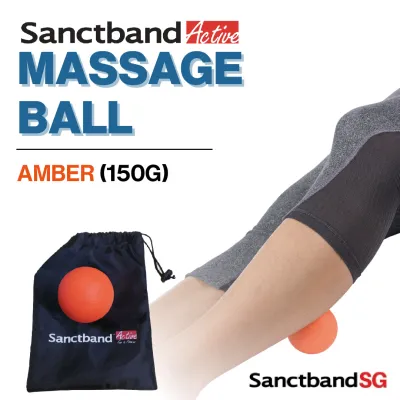
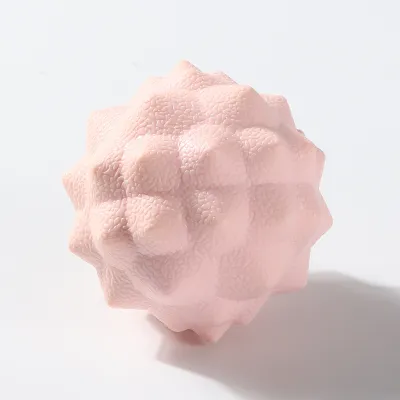
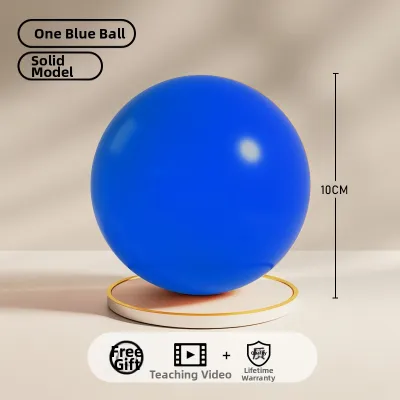
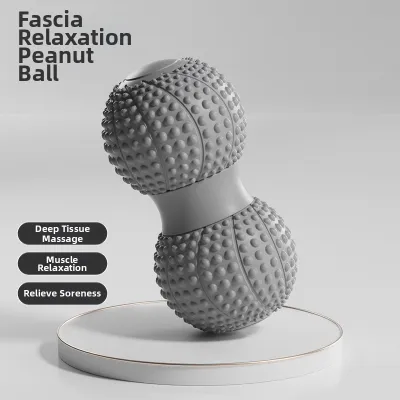
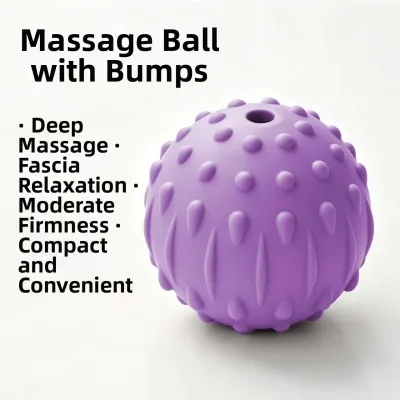
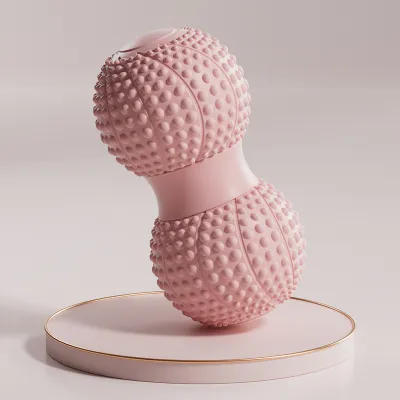
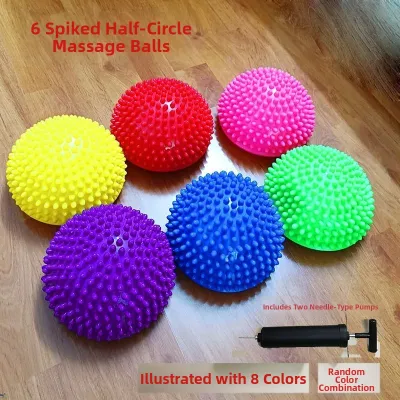
Prices are valid at publication and may change. Please refer to the product page for the latest price.
Surface texture plays a vital role in how the tool engages with your fascia and skin. Smooth massage balls are highly versatile, mimicking the broad pressure of a palm or forearm, making them ideal for general myofascial release and sweeping strokes across large muscle groups. Textured or ridged variations are designed to grab the skin and superficial fascia, creating a shearing force that helps break up stubborn adhesions. Spiked or multi-point balls provide intense sensory stimulation, which can help increase local blood circulation and desensitize highly tender areas, though they may be too intense for beginners.
Size and diameter determine which muscle groups you can target effectively. A small ball, typically around 6 to 6.5 centimeters in diameter (similar to a lacrosse ball), is ideal for targeting localized areas such as the arches of the feet, the forearms, the calves, and the deep rotators of the glutes. Medium-sized balls, ranging from 8 to 10 centimeters, are better suited for larger muscle groups like the hamstrings, quadriceps, and lower back, as they distribute pressure over a wider surface area. Double massage balls, often referred to as peanut balls, feature a central groove designed to cradle the spine, allowing you to roll the thoracic back safely without placing direct pressure on the vertebrae.
Matching Texture and Density to Your Recovery Goals
For post-yoga stretching and gentle cool-down routines, your primary goal is to calm the nervous system and encourage fascial hydration. This requires a tool with moderate density and a smooth surface. Applying excessive pressure immediately after an active yoga session can cause muscles to contract defensively, defeating the purpose of recovery. A medium-density silicone ball allows you to sink slowly into the tissue, promoting deep relaxation and helping to restore optimal slide and glide between fascial layers.

When dealing with chronic muscle knots and high-tension areas, targeted trigger point therapy is necessary. This technique requires a high-density, firm tool that can penetrate deep muscle layers without compressing or losing its shape under your body weight. Solid silicone or firm natural rubber balls are excellent for this purpose. By placing the ball directly under a tension point—such as the piriformis or the upper trapezius—and holding static pressure, you can encourage the muscle fibers to release and lengthen over time.
Active, movement-based recovery sessions require a high level of grip and slip resistance. If a massage ball slips out from under you while you are rolling against a wall or on a slick yoga mat, it can cause sudden joint strain or interrupt your recovery flow. Matte-finished silicone and natural rubber offer superior traction, ensuring the ball stays firmly anchored against your body and the floor. This grip allows you to perform cross-fiber friction rubbing, where you move the muscle side-to-side over the ball to break up localized tissue restrictions.
Evaluating Brand Reliability and Local Availability
When evaluating different brands, it is essential to look closely at manufacturer specifications rather than relying on marketing buzzwords. Reliable brands will clearly state the exact materials used in their products, such as “100% medical-grade silicone” or “non-toxic, latex-free natural rubber.” Be cautious of products that use vague terms like “high-quality polymer” or “synthetic blend,” as these often contain cheap fillers that compromise the tool’s structural integrity. Checking for a manufacturer warranty against splitting or flattening is a good indicator of a brand’s confidence in its product durability.
Singapore’s tropical climate presents unique challenges for sports equipment storage. High relative humidity can cause low-grade rubber and cheap plasticizers to undergo polymer degradation, a process that leaves the surface of the ball feeling sticky, tacky, and prone to collecting dust and hair. High-grade silicone and premium TPE are chemically inert and highly resistant to moisture, making them far more suitable for local conditions. Choosing these climate-resilient materials ensures your recovery tools remain clean and usable for years.
Navigating where to purchase your recovery tools can impact your overall satisfaction and after-sales support. While online marketplaces offer a wide variety of options, buying from authorized local sports retailers allows you to physically test the density and texture of the balls before making a purchase. Furthermore, local retailers provide straightforward return policies and immediate customer service if you encounter any manufacturing defects. If you choose to buy from cross-border e-commerce platforms, prioritize official brand storefronts and read verified customer reviews to avoid counterfeit products.
A Condition-Based Framework to Build Your Shortlist
To help you select the ideal yoga massage ball, consider how your specific activity level and recovery needs align with different product specifications. The following matrix maps common user profiles to their recommended tool profiles:
- The Daily Yogi (Vinyasa & Yin): Focuses on fascial hydration and relaxation. Recommended specification: Medium-density solid silicone, smooth surface, 8 cm diameter.
- The Endurance Athlete (Running & Cycling): Focuses on deep tissue recovery and plantar fascia release. Recommended specification: High-density solid silicone or firm rubber, smooth or slightly textured surface, 6 cm diameter.
- The Office Worker (Desk Bound): Focuses on relieving neck, shoulder, and upper back tension. Recommended specification: Peanut-shaped double massage ball, medium-to-high density silicone.
Before finalizing your purchase, use this pre-purchase checklist to verify the quality of the product:
- Material Verification: Confirm the ball is made of 100% solid silicone, high-grade TPE, or natural rubber. Avoid hollow plastic or low-density foam.
- Odor and Safety: Ensure the product is certified as non-toxic, BPA-free, and latex-free if you have sensitivities.
- User Feedback: Look for reviews mentioning long-term durability, specifically checking if other users in humid climates experienced stickiness or splitting.
Once your massage ball arrives, it is important to test it safely to ensure it matches your personal comfort and pressure thresholds. Begin by testing the ball on a soft surface, such as a thick yoga mat, rather than directly on a hard tile or wooden floor. Gently lower your body weight onto the ball, starting with only 20% to 30% of your weight, and breathe deeply. Slowly increase the pressure as your muscles adapt, and stop immediately if you experience sharp, shooting pain, numbness, or tingling, as these are signs of nerve compression rather than muscle release.
Frequently Asked Questions (FAQ)
Is a standard tennis ball a good substitute for a dedicated massage ball?
A tennis ball can serve as a gentle, introductory tool for highly sensitive areas, but it falls short for deep tissue recovery. Because tennis balls have a hollow core, they compress significantly under full body weight, preventing them from reaching deeper muscle layers. Additionally, the felt cover of a tennis ball lacks the precise grip of silicone or rubber, causing it to slip easily on yoga mats and hard floors, which can disrupt your recovery exercises.
How should I clean and store my massage ball in a humid climate?
To maintain your massage ball in Singapore’s humid climate, wash it regularly with warm water and mild dish soap to remove sweat, skin oils, and dust. Avoid using alcohol-based wipes, bleach, or harsh chemical cleaners, as these can degrade natural rubber and certain TPE compounds over time. After washing, dry the ball thoroughly with a clean towel and store it in a cool, well-ventilated space away from direct sunlight. Avoid leaving your massage ball inside a damp gym bag or a hot car, as trapped moisture and heat encourage bacterial growth and accelerate material breakdown.
Community discussion
Share your experience or ask a question. Comments are reviewed before publication.