
Choosing the right yoga stick requires matching the tool’s specific design to your current mobility, strength, and training objectives. Because the term “yoga stick” can refer to structurally different wellness devices, your first step is to identify the exact equipment type you need, then evaluate its dimensions, materials, and safety limits to ensure it supports your fitness journey safely and effectively.
To find the ideal tool, you must first define whether your primary goal is passive stretching, active posture correction, or myofascial release. From there, evaluating physical specifications like length, weight, grip texture, and joint locking mechanisms will help you select a safe, durable device that fits your home workout space.
Identify Your Yoga Stick Type Before Comparing Features
Before looking at specific product listings, you must clarify which category of yoga stick aligns with your training. The term is frequently used as a catch-all, but mixing up these tools can compromise your safety and training efficiency.
Products mentioned in this guide
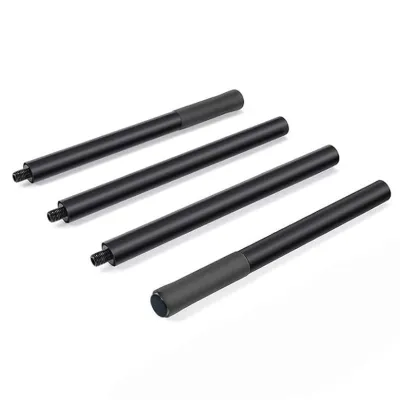
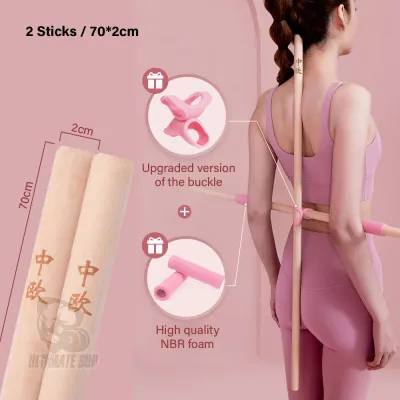
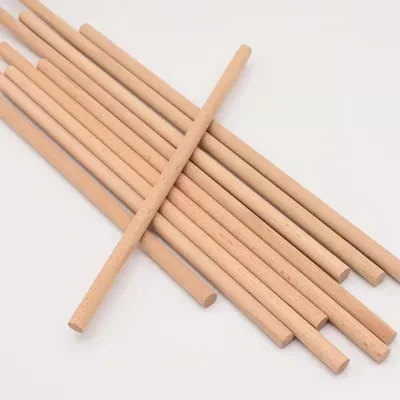
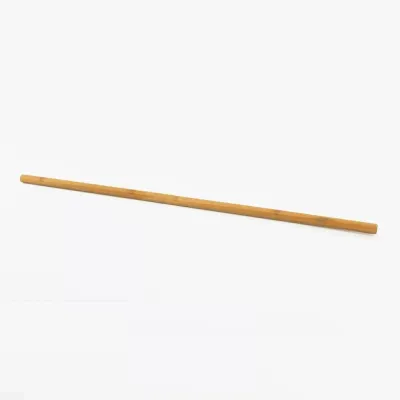
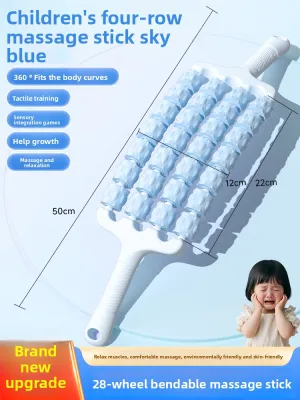
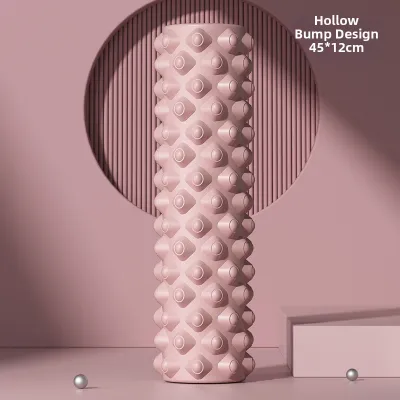

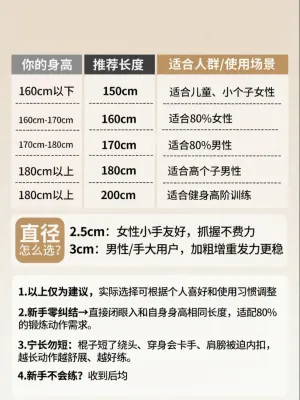
Prices are valid at publication and may change. Please refer to the product page for the latest price.
Stretching and flexibility sticks are typically long, rigid dowels designed to provide leverage. They often feature integrated straps, loops, or end-caps that allow you to anchor your hands or feet, helping you deepen stretches safely without overextending your joints.
Balance and posture sticks, sometimes called alignment bars, are designed to be held across the shoulders or behind the back. These tools help you monitor your body’s positioning during standing poses, lunges, or squats, providing immediate tactile feedback when your shoulders or hips tilt out of alignment.
Massage and fascia sticks, by contrast, are rolling devices equipped with independent, rotating segments along the shaft. These are built specifically for myofascial release, allowing you to roll out tight muscle groups like the calves, quadriceps, and hamstrings after a workout.
While some manufacturers market multi-functional hybrid tools that claim to perform all of these tasks, these designs often compromise on structural integrity. A stretching stick needs to be highly rigid to support leverage, whereas a massage stick requires rotating parts that can weaken a load-bearing shaft; choosing a dedicated device for your primary training objective is always the safer, more effective approach.
Match Dimensions and Grip to Your Fitness Level
Selecting the physical dimensions of your yoga stick requires a careful look at your current flexibility, height, and joint health. A stick that is too short or too heavy can force your body into awkward compensatory angles, increasing the risk of shoulder or wrist strain.

To determine the ideal length, use your arm span as a primary guide. For general stretching and posture work, the stick should ideally be at least as long as your wingspan, allowing you to hold it with a wide grip and pass it comfortably over your head without bending your elbows.
If you have limited shoulder mobility, a longer stick provides a wider, more forgiving grip angle that reduces stress on the rotator cuff. Conversely, shorter sticks are highly portable and work well for targeted core stability exercises, but they demand a higher baseline level of flexibility to use comfortably.
Weight and thickness are equally critical to match to your experience level. Beginners should generally opt for lighter, thinner shafts—typically between 20 to 25 millimeters in diameter—which are easier to hold securely and allow you to focus entirely on form and alignment.
Advanced practitioners who require greater leverage or want to add mild resistance to their movements may prefer thicker, heavier sticks. A thicker shaft (around 30 millimeters or more) reduces hand fatigue during long holding patterns, though it requires a stronger grip to manage safely.
Grip design also plays a major role in wrist comfort. Smooth cylindrical shafts allow your hands to slide fluidly during dynamic transitions, while ergonomic contoured handles or textured foam sleeves provide high traction, which is especially useful in humid climates like Singapore where sweaty hands can easily slip.
Evaluate Build Quality and Safety Limits Before Buying
Because a yoga stick is used to support your body weight or provide leverage during deep stretches, evaluating its build quality is a vital safety step. You should never rely solely on marketing descriptions; instead, look closely at the materials and structural connections.
Solid wood sticks, such as those made from beech or maple, offer excellent rigidity and a natural tactile feel, but they can be heavy and are susceptible to warping if stored in humid environments. Fiberglass and aluminum options provide a lightweight, highly durable alternative that resists moisture, making them excellent for humid climates, though they can feel cold to the touch.
High-density polymers and plastics are common in budget-friendly models, but they can flex excessively under load. If you plan to use the stick for leverage-heavy movements, ensure the material is rated as high-rigidity to prevent the bar from bowing or snapping unexpectedly.
Always check the manufacturer’s product manual or label for the maximum weight capacity and load limits. This is particularly important if you plan to rest your body weight against the stick or use it for balance support, as exceeding these limits can lead to sudden structural failure.
Inspect all connection points, especially on adjustable or telescopic models. Look for robust locking mechanisms, such as heavy-duty twist locks or spring-loaded pins, and avoid designs with loose plastic threads that can wear down quickly and slip during a stretch.
If your chosen model includes integrated straps or resistance bands, verify how they are anchored to the stick. Do not attempt to anchor these bands to external household fixtures or stand on the stick unless the manufacturer’s official documentation explicitly states it is safe to do so.
Build Your Shortlist: A Conditional Buying Framework
To help you navigate the options available on online marketplaces, you can use a conditional framework based on your current fitness profile rather than searching for a single universal winner.
For the beginner and rehabilitation profile, your priority should be safety, ease of use, and joint protection. Look for a lightweight, adjustable aluminum or fiberglass stick with soft foam grips and clear visual alignment markers to help you monitor your posture as you build basic mobility.
For the intermediate and active stretching profile, focus on consistency and durability. A mid-weight, fixed-length wooden or high-grade composite stick with a smooth surface will allow you to perform dynamic mobility routines and transition smoothly between different grip positions.
For the advanced and deep mobility profile, prioritize high rigidity and maximum leverage. A thick, solid wood or heavy-duty aluminum stick with specialized ergonomic grips will withstand the high torque required for advanced flexibility training without flexing or slipping.
Regardless of your profile, when purchasing wellness devices online, always verify the seller’s authenticity and check the return policies and warranty terms. Investing S$30 to S$60 in a high-quality, certified tool from a reputable sports retailer is far safer than opting for unbranded, ultra-cheap alternatives that lack clear safety specifications.
Frequently Asked Questions (FAQ)
Can I use a massage stick as a stretching stick?
It is highly recommended that you do not use a massage stick for stretching exercises that require leverage. Massage sticks are engineered with rotating rollers and a flexible inner core designed to contour to your muscles, meaning they lack the structural rigidity needed to support your body weight or resist lateral bending forces. Attempting to use a flexible massage roller for deep leverage stretches can cause the tool to bend excessively or snap, which could lead to sudden loss of balance or acute joint injury.
How do I clean and maintain my yoga stick?
Proper maintenance depends on the material of your yoga stick. For wooden sticks, wipe the surface down after each session with a slightly damp, soft microfiber cloth, and avoid harsh chemical cleaners that can strip the protective finish; store them in a dry, cool place away from direct sunlight to prevent warping. For synthetic polymers, fiberglass, or aluminum sticks, you can use a mild, non-abrasive soapy water solution to sanitize the surface, ensuring you dry the connection points thoroughly to prevent rust or mineral buildup.
What length should my yoga stick be if I am very tall or short?
As a general rule, your yoga stick should be proportional to your body size rather than a fixed standard length. If you are exceptionally tall, look for a stick that exceeds your total height by at least 10 to 15 centimeters, or choose an adjustable model that can expand to match your wide arm span. If you are shorter, a stick that aligns with your collarbone when standing upright will provide sufficient leverage without being too unwieldy to maneuver in compact indoor spaces.
Community discussion
Share your experience or ask a question. Comments are reviewed before publication.