
Choosing the right yoga strap is one of the simplest ways to make challenging poses accessible and safe, yet many practitioners overlook the importance of finding the correct dimensions. The ideal yoga strap length and width depend heavily on your physical height, your current flexibility level, and your specific practice goals. As a general rule, an 8-foot strap with a 1.5-inch width serves as the most versatile option for the majority of practitioners. However, if you are particularly tall or dealing with tight hamstrings and shoulders, opting for a longer strap is essential to maintain proper spinal alignment. By understanding how these dimensions interact with your body, you can select a tool that supports your alignment rather than hindering your progress.
Quick Sizing Rules: Matching Strap Dimensions to Your Body
When you are looking to purchase a yoga strap, a few quick rules of thumb can help narrow down your options immediately. Your height is the traditional starting point for determining length: individuals under 5 feet 4 inches (163 cm) often find a 6-foot strap sufficient, while those taller than 5 feet 10 inches (178 cm) almost always require a 10-foot strap. For anyone in between, or for those unsure of their needs, an 8-foot strap is the safest and most adaptable standard.
Width is primarily a matter of hand size, comfort, and portability. A standard 1.5-inch width fits comfortably in most hands, offering a secure grip without feeling overly bulky in a yoga bag. If you prioritize ultra-light travel, a narrower 1-inch strap might appeal to you, whereas those seeking maximum grip comfort and pressure distribution often prefer a wider 2-inch option.
Products mentioned in this guide
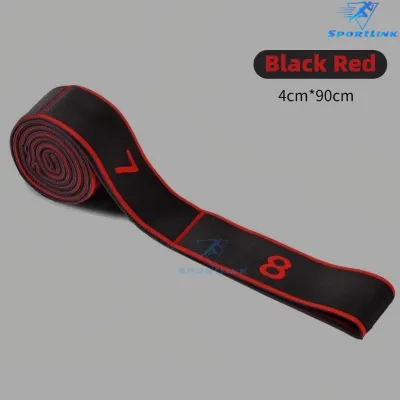
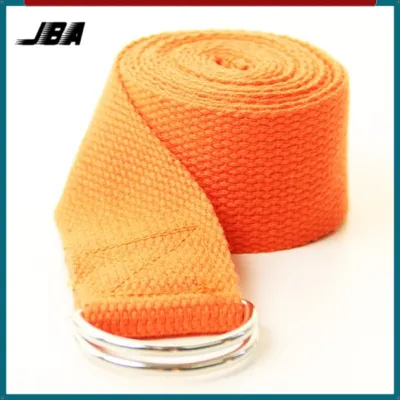
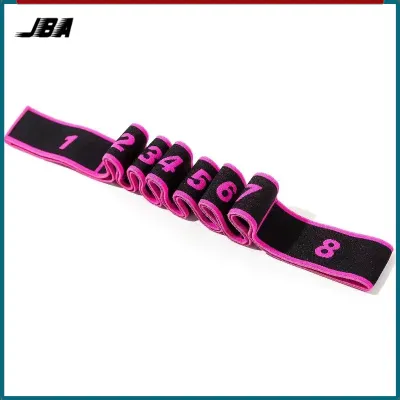
![[SG Seller]Multi-Loop Stretching Strap Fitness Resistance Band Pilates & Dance Strap Numbered Stretching Strap for Flexibility Training](https://img.lazcdn.com/g/p/376afe777203ba8901b1038cbc08138b.jpg_400x400q80.jpg_.webp)
Prices are valid at publication and may change. Please refer to the product page for the latest price.
However, the most critical factor to remember is that your current level of flexibility often matters far more than your physical height. A shorter practitioner with exceptionally tight hamstrings or limited shoulder mobility will struggle with a 6-foot strap because it does not provide enough slack to keep the body in proper alignment. Always prioritize your body’s range of motion over standard height charts when making your final decision.
Decoding Yoga Strap Lengths: What 6ft, 8ft, and 10ft Mean for Your Practice
Yoga straps are widely available in three standard lengths: 6 feet, 8 feet, and 10 feet. Understanding the practical applications of each length ensures you do not run out of slack mid-pose or find yourself tangled in excess material.

6-Foot Straps A 6-foot strap is the shortest standard option. It is highly suited for shorter individuals (under 5 feet 4 inches) or intermediate to advanced practitioners who already possess a high degree of flexibility. If you only need a small amount of assistance to complete a bind or to stabilize your alignment in poses like Natarajasana (Lord of the Dance Pose), a 6-foot strap is excellent. Its compact size makes it lightweight and easy to pack, making it a favorite for commuters. However, its shorter length limits its usefulness for restorative setups where you need to loop the strap around your entire torso and feet.
8-Foot Straps The 8-foot strap is the industry standard and the most versatile choice. It comfortably accommodates individuals between 5 feet 4 inches and 5 feet 10 inches. This length provides ample slack for standard poses like Supta Padangusthasana (Reclining Hand-to-Big-Toe Pose), allowing you to hold the strap with relaxed shoulders and a neutral spine. It offers the perfect middle ground: long enough to facilitate deep stretches for most body types, yet compact enough to roll up neatly without cluttering your yoga bag.
10-Foot Straps A 10-foot strap is essential for taller practitioners over 5 feet 10 inches, as well as anyone working with significant stiffness in the hips, hamstrings, or shoulders. If you struggle to keep your spine straight in seated poses, the extra length of a 10-foot strap ensures you can reach your feet without rounding your back. Additionally, this length is highly recommended for restorative and yin yoga, where straps are frequently looped around the body to support passive, long-held postures.
The Adjustability Rule When choosing between two lengths, always remember the adjustability rule: you can easily shorten a long strap, but you cannot safely lengthen a short one. If you buy a 10-foot strap, you can easily fold the excess fabric or slide the buckle to customize the length. If you buy a 6-foot strap that proves too short, you risk straining your muscles or compromising your posture to make up the distance. For beginners, err on the side of caution and choose a longer option.
Understanding Yoga Strap Widths: Grip Comfort vs. Portability
While length determines whether you can reach your limbs, the width of a yoga strap dictates how comfortable it feels in your hands during a pose. Choosing the wrong width can lead to hand fatigue or painful pinching.
1-Inch Width A 1-inch width is the narrowest option available. These straps are exceptionally lightweight and easy to roll up, making them highly portable. However, they come with a significant trade-off in comfort. When you pull tightly against a 1-inch strap, the narrow band concentrates the pressure onto a small surface area. This can cause the strap to dig into your skin, pinch your palms, or restrict circulation during intense or long-held stretches. They are best reserved for light stretching or travel.
1.5-Inch Width The 1.5-inch width is the standard size found in most yoga studios. This width offers the ideal balance of grip comfort, surface area, and portability. It is wide enough to distribute tension evenly across your palms and the soles of your feet, preventing the digging sensation common with narrower straps. At the same time, it is not so wide that it feels clumsy or difficult to grip for those with smaller hands. It rolls up easily and fits into standard yoga mat carrier straps.
2-Inch Width A 2-inch width provides the maximum amount of comfort and support. Because the strap is wider, it distributes pressure over a larger surface area, making it incredibly gentle on the hands and feet. This width is highly recommended for individuals with sensitive joints, arthritis, or limited grip strength, as it requires less effort to hold securely. It is also excellent for deep, passive restorative practices where you rely on the strap to support your body weight. The primary drawback is its bulk; a 2-inch strap is heavier and more cumbersome to pack.
Secondary Specs: Buckles and Materials That Actually Matter
Once you have determined the correct length and width for your body, a few secondary specifications will help you finalize your choice. Focusing on buckle design and material construction ensures your strap is durable, safe, and easy to use.
Buckle Types The buckle is the mechanism that secures your strap into a loop.
- D-Ring Buckles: Made of metal (like stainless steel), these are virtually indestructible, hold securely without slipping, and are easy to adjust. While they can clink when dropped, their reliability makes them the preferred choice.
- Plastic Cinch Buckles: Lightweight and silent, making them ideal for quiet restorative classes. However, they can warp or slip over time under heavy tension.
- Buckles to Avoid: Avoid quick-release plastic side-squeeze buckles. They do not allow for micro-adjustments and can snap open under tension, posing a safety risk during deep stretches.
Materials The material of the webbing affects both grip and maintenance.
- Cotton: Soft, comfortable against bare skin, and provides excellent natural grip even when your hands are sweaty. However, cotton absorbs sweat and requires regular washing.
- Nylon and Polyester: Highly durable and easy to wipe clean. However, synthetic webbing can feel slick when wet and can cause friction burns if the strap slips quickly through your grip.
What to Ignore When shopping, do not get distracted by non-functional features. Bright patterns, brand logos, and aesthetic prints do not affect the utility of the strap. Additionally, avoid straps with thick, built-in neoprene padding or bulky handles. While these features may seem comfortable, they make the strap too thick to thread smoothly through standard buckles, reducing its adjustability and making it difficult to roll up compactly.
Frequently Asked Questions (FAQ)
Can I use a longer yoga strap if I am short but have tight hamstrings?
Yes, you absolutely should. Your flexibility level is a much more important factor than your height when choosing a strap. If you have tight hamstrings, hips, or shoulders, an 8-foot or 10-foot strap provides the necessary slack to keep your spine straight and your shoulders relaxed on the mat. Using a strap that is too short forces you to round your back or strain your neck to reach, defeating the purpose of the prop.
How do I measure my needs to ensure the right length before buying?
To find your minimum required length, grab a non-stretchy household item like a bathrobe tie or a long piece of string. Sit on the floor with your legs extended straight in front of you. Loop the tie around the soles of your feet and hold the ends in your hands. Sit up tall with a straight spine, relaxed shoulders, and a comfortable, slight bend in your elbows. Measure the distance from one hand, around your feet, and back to your other hand to determine your ideal minimum strap length.
Community discussion
Share your experience or ask a question. Comments are reviewed before publication.