
Selecting your first yoga wheel requires matching the wheel’s physical dimensions to your height, verifying that the core material can support your weight, and choosing an outer padding that offers reliable grip in Singapore’s humid climate. For most adults, a standard 12-inch diameter wheel with a non-slip thermoplastic elastomer (TPE) or natural cork surface provides the ideal balance of support and comfort. However, individual factors such as spinal flexibility, torso length, and your specific wellness goals can shift this recommendation toward wider or more compact alternatives.
While online marketplaces offer a vast array of colorful options, purchasing a prop based solely on aesthetics can lead to discomfort or even physical strain. Investing a few minutes to understand how different specifications interact with your body type ensures you select a safe, durable tool. By focusing on structural integrity and proper sizing, you can confidently integrate this prop into your home practice to improve mobility, relieve upper body tension, and support your posture.
Why Body Type and Skill Level Matter for Your First Yoga Wheel
Your physical proportions and current flexibility levels are the most critical factors when selecting a yoga wheel. Because the wheel is rigid, it does not conform to your body; rather, your body must drape over its curved surface. For a beginner with limited spinal flexibility or tight shoulders, a wheel that is too large or too firm can force the joints into an unnatural, excessive arch. This can lead to muscle guarding or acute lower back discomfort instead of the intended therapeutic release.
Products mentioned in this guide
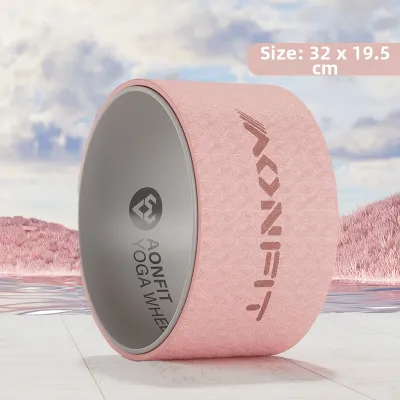
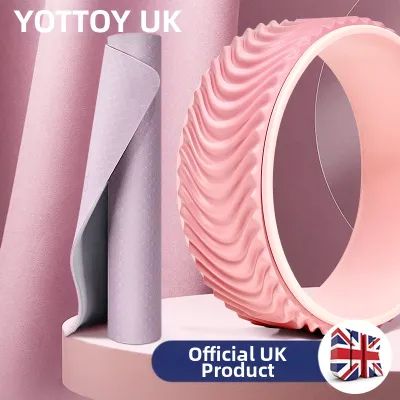
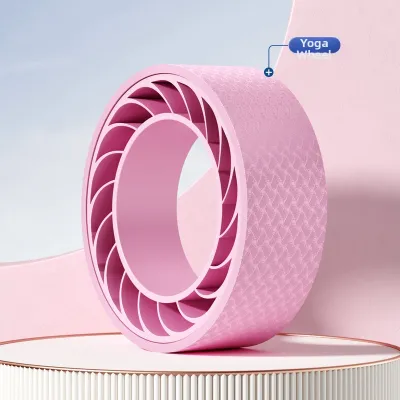
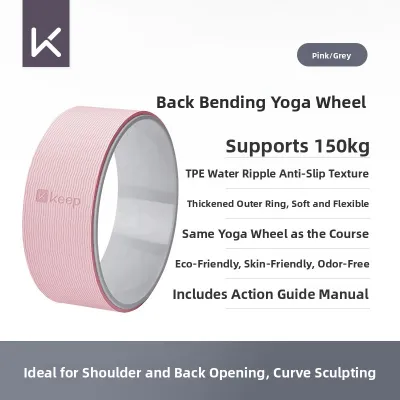
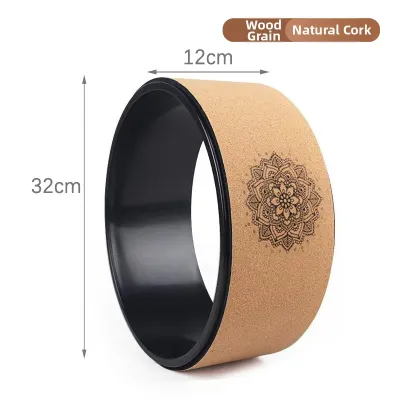
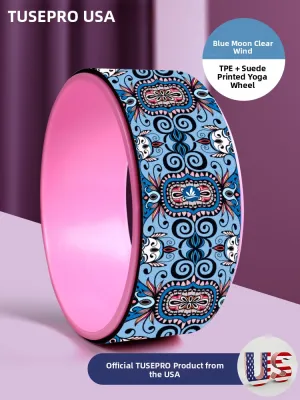
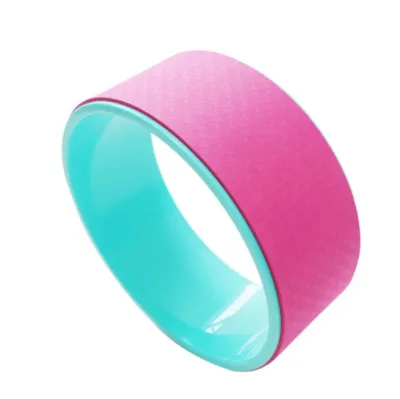
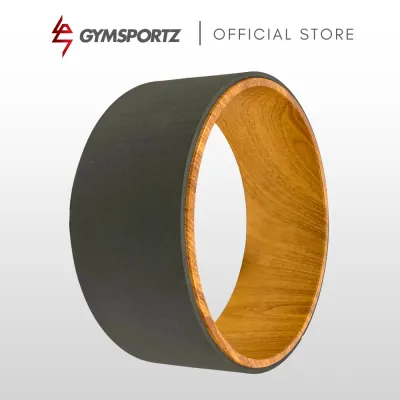
Prices are valid at publication and may change. Please refer to the product page for the latest price.
Height and torso length directly dictate the diameter of the wheel required to maintain safe spinal alignment during backbends. A taller individual with a longer torso requires a larger circumference to support the entire length of the spine, whereas a shorter practitioner will find a standard wheel forces their lower back into an uncomfortable, steep angle. Properly matching the wheel’s curve to your natural spinal length allows the pressure to distribute evenly across your vertebrae rather than concentrating in the lumbar region.
Body weight and core strength also influence how the wheel behaves under load. Beginners often rely heavily on the prop to support their full body weight during chest openers or balance poses, demanding high structural integrity from the wheel’s inner core. Selecting a wheel with an insufficient weight capacity can cause the frame to flex or warp, which compromises your balance and increases the risk of falls. A highly individualized choice ensures the prop remains a stable, reassuring foundation as you build the core strength and flexibility needed for advanced movements.
Key Specifications to Evaluate Before Buying
Before adding a yoga wheel to your shopping cart, it is essential to look past promotional graphics and analyze the technical specifications listed on the product packaging or online retail description. High-quality manufacturers provide detailed measurements of the wheel’s diameter, width, maximum load capacity, and specific material compositions. Verifying these details helps you avoid low-grade replicas that may crack under pressure or lose their grip after a few sweaty sessions.

Relying on marketing images can be misleading, as models of varying heights can make a wheel appear larger or smaller than it actually is. Checking the exact dimensions and materials allows you to assess how the wheel will perform on your home floor, whether you have smooth parquet, vinyl, or a dedicated rubber workout mat. Prioritizing verified structural limits and high-density padding ensures a safe, comfortable, and long-lasting addition to your fitness routine.
Diameter and Width: Matching Size to Your Body Type
The standard diameter for an adult yoga wheel is 12 inches (approximately 30 cm), which is designed to suit individuals between 150 cm and 185 cm in height. This size provides a moderate arch that effectively opens the chest and shoulders for the average adult without overextending the spine. If you fall within this height range, a 12-inch wheel serves as the most versatile entry point for general backbends and spinal traction.
Width is another crucial dimension, with most standard wheels measuring between 5 and 6 inches (12.7 cm to 15.2 cm) across. This width is narrow enough to fit comfortably between your shoulder blades, allowing your shoulders to drape naturally over the sides for a deep pectoral stretch. However, for users with broader shoulders or those who experience anxiety regarding lateral balance, wider options ranging from 10 to 13 inches offer a much broader base of support, preventing the wheel from tipping sideways during use.
Core Material and Padding: Balancing Support and Comfort
The inner ring, or core, of the wheel is responsible for its structural strength and is typically constructed from either Acrylonitrile Butadiene Styrene (ABS) plastic or Polyvinyl Chloride (PVC). ABS plastic is highly recommended for beginners due to its superior rigidity, impact resistance, and ability to retain its circular shape under heavy, repetitive loads. PVC cores are generally less expensive but are more prone to flexing, warping, or cracking over time, which can compromise safety during weight-bearing exercises.
Wrapping the rigid core is the outer padding, which directly affects your comfort and grip. Thermoplastic Elastomer (TPE) and Ethylene-Vinyl Acetate (EVA) foam are common synthetic options; TPE generally offers superior resilience and slip resistance, while EVA is softer but may compress permanently over time. Natural cork is an excellent premium alternative, offering exceptional grip that actually improves when exposed to moisture—a valuable feature in Singapore’s warm, humid environment. Beginners should look for a padding thickness of at least 4 mm to 6 mm to cushion the spinous processes of the vertebrae against the hard inner core.
Weight Capacity and Structural Integrity
Every reputable yoga wheel carries a maximum weight capacity rating, which typically ranges from 150 kg to over 350 kg (approximately S$330 to S$770 equivalent load limits). It is vital to select a wheel with a weight limit that far exceeds your static body weight. This safety margin is necessary because moving on the wheel generates dynamic load—additional force created by movement, transitions, or pressing your body weight downward during a stretch.
Using a wheel that does not clearly specify its maximum load capacity on the packaging or product page is a significant safety risk. Under-engineered wheels can fail suddenly under dynamic pressure, leading to abrupt collapses that can injure the neck, spine, or wrists. Always verify that the structural core is rated to support both your weight and the active forces of your practice before purchasing.
Recommended Yoga Wheel Profiles for Beginners
To simplify your search, beginner-friendly yoga wheels can be grouped into three primary physical profiles. Categorizing options by their dimensions and structural designs, rather than focusing on specific commercial brand names, allows you to filter retail listings effectively based on your physical needs and space limitations.
The Standard All-Rounder (12-inch Diameter, 5 to 6-inch Width)
The standard all-rounder is the default recommendation for most adult beginners. Measuring 12 inches in diameter and roughly 5 inches wide, this profile fits comfortably between the shoulder blades and offers a versatile curvature for standard backbends, hip flexor stretches, and balance poses. It is widely available across sports equipment stores in Singapore, typically ranging in price from S$25 to S$60 depending on the padding material.
This profile is highly portable and easy to store in compact apartments, fitting neatly on a shelf or inside a wardrobe. It provides a balanced level of instability that helps engage your deep core muscles without feeling overly precarious, making it the ideal starting point for general posture correction and spinal maintenance.
The Extra-Wide Stability Wheel (12-inch Diameter, 10 to 13-inch Width)
For beginners who feel hesitant about balancing on a narrow 5-inch strip, the extra-wide stability wheel offers a reassuringly wide surface. Retaining the standard 12-inch diameter, this profile expands the width significantly, providing a stable platform that resists tipping. It is particularly beneficial for individuals with broader shoulders or larger body frames who require more surface area to feel secure.
This wider profile is also highly functional if you plan to use the wheel as a supportive prop for advanced transitions, such as forearm stands or supported headstands. The primary trade-offs are its bulk and weight; these wheels take up more floor space in your living area and are less convenient to carry if you commute to local yoga studios via public transport.
The Compact or Travel-Friendly Option (6 to 10-inch Diameter)
Compact yoga wheels, featuring smaller diameters between 6 and 10 inches, are designed for highly specific applications. These smaller wheels are excellent for petite adults, children, or individuals with highly flexible spines who want to deepen specific backbends. They are also highly portable, fitting easily into a backpack for outdoor sessions at East Coast Park or during travel.
However, beginners should note that a smaller wheel is generally not suitable as a primary tool for full spinal extension. The tight curvature of a 6-inch or 8-inch wheel can cause acute compression in the lower back if you attempt to drape your entire torso over it. Instead, these compact models function best as secondary tools for targeted myofascial release, such as rolling out tight calves, IT bands, or the back of the neck.
Match Your Body Type: A Quick Comparison of Beginner Profiles
When shopping online or visiting a local sporting goods store, you can use the following comparison table to quickly cross-reference your physical profile with the most suitable wheel dimensions. This helps you narrow down your choices and avoid purchasing a prop that is incompatible with your body type.
| Wheel Profile | Ideal User / Body Type | Primary Use Case | Key Limitation |
|---|---|---|---|
| Standard All-Rounder (12" x 5-6") | Adults between 150 cm and 185 cm with average shoulder width. | General spinal extension, chest opening, and core strengthening. | Requires a basic level of lateral balance to prevent tipping. |
| Extra-Wide Stability (12" x 10-13") | Users seeking extra stability, broader frames, or broader shoulders. | Supported inversions, forearm balance, and high-stability backbends. | Bulky to store; heavier and less convenient to transport. |
| Compact / Travel (6-10" x 5") | Petite users, children, or those seeking targeted muscle massage. | Neck, calf, and hamstring rolling; targeted myofascial release. | Too small for safe, full spinal backbends for average-sized adults. |
While this table provides a practical starting point, personal comfort and physical limitations should always guide your final decision. If you have a particularly stiff upper back, starting with a wider, well-padded wheel can provide the extra stability needed to relax your muscles. Always verify the exact measurements in the product description before finalizing your purchase, as naming conventions like “mini” or “plus” can vary across different manufacturers.
Safety Checks and First-Time Use Guidelines
Before using your new yoga wheel for the first time, perform a thorough visual and physical inspection to ensure the equipment is safe to use. Check the inner ABS or PVC core for any hairline cracks, stress fractures, or signs of warping that may have occurred during shipping or manufacturing. Run your hand along the outer padding to confirm it is securely bonded to the core without any lifting, peeling, or air bubbles, as loose padding can cause your hands or feet to slip during a pose.
For a safe and successful first session, always place your wheel on a clean, non-slip yoga mat rather than directly on smooth residential flooring like polished wood, vinyl, or marble. The mat provides the necessary friction to keep the wheel from sliding out from under you as you roll. When starting out, begin with gentle chest openers: sit on the floor with your knees bent, place the wheel flat against your spine, and slowly lean back, allowing the wheel to support your shoulder blades while keeping your hips firmly on the ground.
It is important to remember that a yoga wheel is an assistive prop designed to support your body and gradually improve your natural range of motion, not a tool to force your joints beyond their current limits. Keep the wheel strictly aligned with your spine and avoid twisting your torso while draped over the curve. If you experience any sharp, pinching, or radiating pain—particularly in your lower back or neck—stop the exercise immediately and return to a seated position. Always check the manufacturer’s care and safety instructions included with your specific product before beginning your practice.
Frequently Asked Questions (FAQ)
Can I use a yoga wheel if I have a pre-existing back condition?
If you have a pre-existing spinal condition such as herniated discs, osteoporosis, spinal stenosis, scoliosis, or chronic, undiagnosed back pain, you must consult a physiotherapist or medical professional before using a yoga wheel. Because the wheel applies direct pressure to the spinous processes and forces the spine into deep extension, improper use can exacerbate underlying structural issues. A yoga wheel is a fitness and wellness prop; it is not a medical device and should never be used as a replacement for professional physical therapy or prescribed medical treatment.
How do I clean and maintain my yoga wheel?
To maintain the grip and hygiene of your yoga wheel, wipe down the outer TPE, EVA, or cork padding after every sweat-inducing session. Use a soft cloth dampened with warm water and a drop of mild, diluted dish soap or a specialized gentle yoga mat spray. Avoid using harsh chemical cleaners, bleach, alcohol-based sanitizers, or abrasive scrubbing brushes, as these can degrade the synthetic foam, dissolve the adhesive holding the padding to the core, or leave a slippery residue that compromises safety.
Store your yoga wheel indoors in a cool, dry place away from direct, prolonged sunlight. Singapore’s high humidity and intense UV exposure can accelerate the degradation of plastics and synthetic foams, causing them to warp, discolor, or become brittle over time. Keeping the wheel in a well-ventilated indoor space ensures the materials retain their structural integrity and non-slip properties for years to come.
Community discussion
Share your experience or ask a question. Comments are reviewed before publication.