
Selecting the right badminton shuttlecock is a critical decision that directly impacts the quality of your game, your skill development, and your overall playing budget. Yonex, as a leading brand in badminton equipment, offers a comprehensive range of shuttlecocks designed to cater to different environments, skill levels, and playing frequencies. Making the correct choice involves balancing the immediate tactile feedback of the shuttlecock against its long-term durability and cost. By understanding how construction materials, speed ratings, and product lines align with your personal playing profile, you can optimize your on-court experience and ensure every session is both productive and enjoyable.
To make an informed purchase, you must evaluate several technical dimensions. The choice between natural feathers and synthetic nylon affects everything from flight trajectory to how often you need to open a new tube. Additionally, local environmental factors like temperature and humidity play a massive role in how a shuttlecock behaves in the air. This guide breaks down these variables systematically, helping you select the ideal Yonex shuttlecock for your specific needs.
Understanding Yonex Shuttlecock Materials and Construction
Feather shuttlecocks are the traditional standard for badminton, prized for their distinct flight trajectory and crisp impact sound. Within the feather category, Yonex utilizes both goose and duck feathers, each offering distinct performance characteristics. Goose feathers are generally sourced from the wing feathers of geese, which possess thicker shafts and stronger vanes. This structural integrity translates to superior flight stability, a more consistent deceleration curve, and better resistance to feather breakage during high-impact smashes. Duck feathers, while still offering an authentic flight path, have slightly thinner shafts and less rigid vanes. This makes them more susceptible to wear and deformation, though they serve as a more cost-effective option for regular training and club play.
Products mentioned in this guide
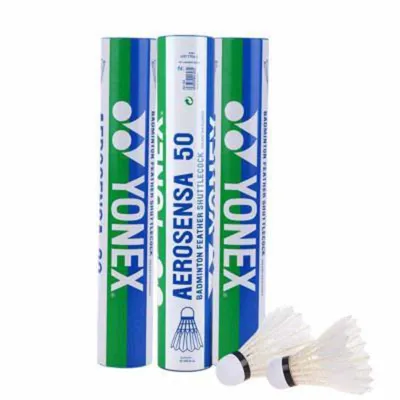
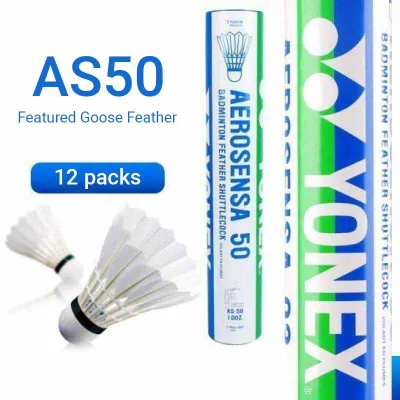
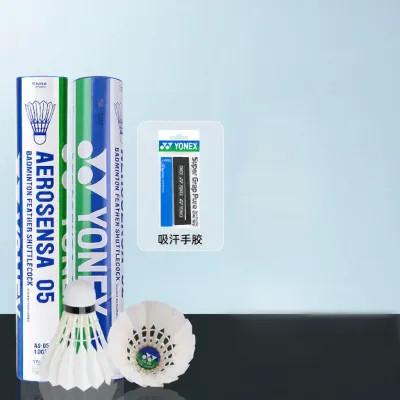
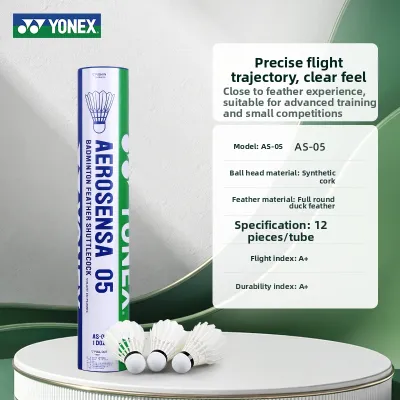
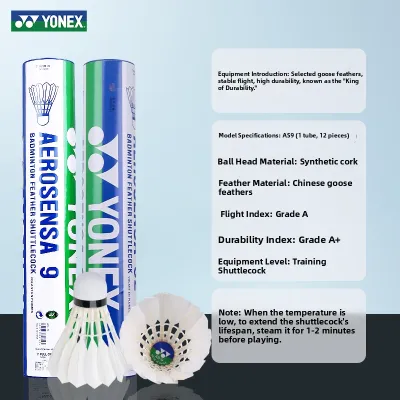
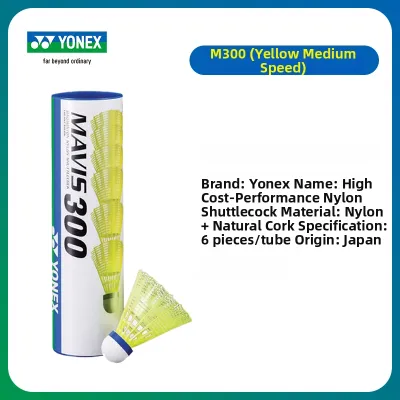
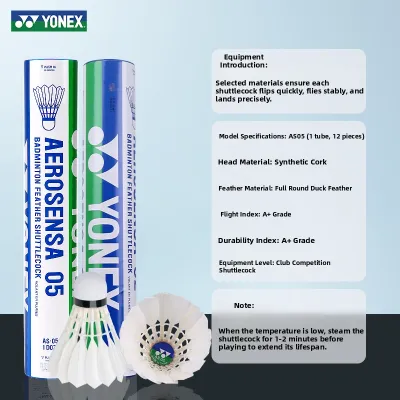
Prices are valid at publication and may change. Please refer to the product page for the latest price.
The base of the shuttlecock, or the cork, also varies by material. Premium feather shuttlecocks typically feature 100% natural cork, which provides the most consistent rebound and tactile feedback off the racket face. Mid-tier options may use composite cork, which blends natural cork with synthetic materials to balance cost and performance. The quality of the cork directly influences how the shuttlecock recovers its stable flight path immediately after a high-speed impact.
In contrast, nylon shuttlecocks, such as the Yonex Mavis series, utilize a synthetic skirt designed to mimic the aerodynamic properties of natural feathers. The primary advantage of nylon is its exceptional durability. While a single feather shuttlecock might only last one or two intense rallies before losing its flight characteristics, a high-quality nylon shuttlecock can often endure multiple games without significant degradation. The synthetic material resists tearing and bending, making it highly resilient against off-center hits from developing players. However, nylon shuttlecocks exhibit a different flight profile; they tend to fly faster initially and decelerate less sharply than feather shuttlecocks, which can affect the timing and precision of delicate net shots.
Choosing between these materials requires evaluating your play frequency and budget. For players who step onto the court multiple times a week for competitive matches, the authentic feel and predictable flight of feather shuttlecocks are often indispensable. For recreational players, beginners, or those focusing on high-repetition drills, the long-term cost efficiency of nylon shuttlecocks makes them the practical choice, allowing players to focus on stroke mechanics without the constant distraction of replacing damaged feathers.
Decoding Yonex Speed Ratings and Temperature Factors
Shuttlecock speed is not a measure of how hard you can hit it, but rather how the shuttlecock responds to the ambient temperature, humidity, and altitude of the playing venue. Yonex categorizes its shuttlecocks using a standardized speed rating system, typically ranging from 1 to 4 (or 75 to 79 in some regions). Lower numbers indicate slower shuttlecocks designed for warmer, low-altitude environments, while higher numbers represent faster shuttlecocks suited for colder or high-altitude conditions.

In a tropical climate like Singapore, where temperatures and humidity levels in sports halls are consistently high, the air density is lower. In these warm conditions, shuttlecocks naturally fly faster and travel further. Consequently, players in Singapore typically require slower speed ratings, such as speed 2 (or speed 76), to ensure the shuttlecock remains controllable and does not consistently fly out of bounds on standard clears. Using a speed rating that is too fast for the local climate can ruin the game’s dynamics, forcing players to hold back on their shots and preventing them from executing full-power strokes.
For nylon shuttlecocks, Yonex uses a color-coded cap system on the tube to indicate speed. Green caps represent slow speed (ideal for hot climates like Singapore), blue caps represent middle speed (for moderate temperatures), and red caps represent fast speed (for cold climates). Selecting the green or blue cap ensures that the synthetic skirt behaves predictably under local indoor conditions.
To verify if a shuttlecock’s speed is appropriate for your current hall conditions, you can perform a standard on-court speed test. Stand behind the back boundary line of the court and strike the shuttlecock with a full underhand stroke, aiming upward and parallel to the sidelines. A shuttlecock of the correct speed should land between the two back boundary lines on the opposite side of the court. If it lands short of the first line, the shuttlecock is too slow; if it flies past the outer boundary line, it is too fast. Performing this quick check before a session ensures that your games remain fair and aligned with standard playing conditions.
Matching Yonex Product Lines to Your Player Profile
To simplify the selection process, Yonex organizes its shuttlecocks into distinct product lines tailored to specific player profiles. Professional and advanced players who participate in tournaments or high-level club leagues should focus on the premium goose feather lines, primarily represented by the Aerosensa series. Models such as the Aerosensa 40 and Aerosensa 50 are crafted from top-grade goose feathers and natural cork, offering the precise flight trajectory, exceptional recovery speed, and satisfying tactile feedback required for advanced net play and powerful smashes. These premium models undergo rigorous quality control to ensure consistent weight and balance, allowing advanced players to execute delicate drop shots and tight net spins with absolute confidence.
Intermediate and club players, who play regularly but must balance performance with ongoing equipment costs, should evaluate mid-tier duck feather options or high-end nylon alternatives. The Aerosensa 10 or Aeroclub series utilizes quality duck feathers to provide an authentic flight experience at a more accessible price point. Alternatively, the Mavis 2000 nylon shuttlecock features a redesigned wing structure that closely mimics the spin and flight path of a feather shuttlecock, offering intermediate players a durable training option that does not completely sacrifice the feel of a traditional game.
Beginners and casual players should prioritize durable nylon lines, specifically the Mavis 350 series. This model is widely regarded as the benchmark for recreational play due to its predictable flight path and outstanding durability. Beginners often struggle with clean contact, frequently hitting the shuttlecock on the feathers or the skirt rather than the sweet spot of the racket. A feather shuttlecock would quickly disintegrate under these conditions, whereas a Mavis nylon shuttlecock can withstand repeated mishits, making it the ideal tool for developing basic stroke consistency, footwork, and hand-eye coordination.
Before purchasing, always verify the official product labels on the packaging. Look for the material grade (goose feather, duck feather, or nylon), the speed rating, and the intended use case indicated by the manufacturer. Ensuring these specifications match your playing environment and skill level will prevent premature wear and optimize your investment.
Purchasing Guidelines and Authenticity Checks
To ensure you are purchasing genuine Yonex shuttlecocks, always source your equipment from authorized sports retailers, official brand stores, or reputable online sports platforms. Counterfeit shuttlecocks are common on online marketplaces and often suffer from poor flight stability, brittle feathers, and weak glue joints that fail after a few hits. Genuine Yonex packaging features high-quality print, clear alignment of the brand logo, and a security hologram sticker on the tube cap. You can verify the authenticity of the hologram by tilting the packaging under direct light to check for the shifting color patterns characteristic of official Yonex merchandise.
Proper storage is equally vital to maintaining the performance and lifespan of your shuttlecocks. Feather shuttlecocks are highly sensitive to environmental conditions; exposure to direct sunlight, air conditioning drafts, or extreme dryness can dry out the natural oils in the feathers, making them brittle and prone to snapping. Always store the shuttlecock tubes vertically with the caps securely fastened to retain moisture. In Singapore’s humid climate, storing them in a cool, shaded area away from direct air conditioning vents is usually sufficient to keep the feathers pliable. For nylon shuttlecocks, avoid storing them under heavy equipment or in distorted positions, as the synthetic skirt can permanently deform, ruining its aerodynamic properties.
Frequently Asked Questions (FAQ)
How can I extend the lifespan of feather shuttlecocks?
Extending the lifespan of feather shuttlecocks requires careful environmental management. Store your shuttlecock tubes in a cool, humid environment away from direct sunlight and dry air conditioning. To restore moisture to dry feathers, you can utilize a light steaming technique. Gently expose the feather end of the shuttlecock to steam from a kettle or a dedicated humidifier for a few seconds before sealing them back in the tube. Ensure you do not over-steam or allow moisture to contact the cork base, as this can soften the glue and ruin the shuttlecock’s balance.
When should I switch from nylon to feather shuttlecocks?
You should consider switching from nylon to feather shuttlecocks when your stroke consistency improves to the point where you rarely mishit the shuttlecock. If you can consistently strike the sweet spot of your racket and find yourself executing advanced net play, delicate drop shots, or precise slices, the superior control and deceleration of feather shuttlecocks will significantly enhance your game. Additionally, evaluate your budget; transitioning to feathers means accepting higher ongoing costs, so ensure your playing frequency and competitive goals justify the investment.
Community discussion
Share your experience or ask a question. Comments are reviewed before publication.