
Selecting the ideal badminton shuttlecock directly impacts your game, skill development, and playing budget. While Yonex is globally recognized for producing reliable shuttlecocks, the variety of options can be overwhelming. To make the right choice, you must evaluate your playing environment, skill level, and playing frequency. Generally, beginners and recreational players benefit most from the durability of nylon shuttlecocks, while intermediate and advanced players require the precise flight of natural feather shuttlecocks to execute advanced techniques.
Playing conditions also play a massive role. Factors such as indoor air conditioning, outdoor wind, and local humidity dictate how a shuttlecock behaves. By matching these variables with the correct product line and speed rating, you can ensure a consistent playing experience. This guide will walk you through the key differences between materials, help you navigate the brand’s product families, explain how to select the correct speed rating for Singapore’s unique climate, and provide practical tips for maintaining your equipment.
Quick Decision: Choosing Between Feather and Nylon Shuttlecocks
When deciding on a shuttlecock, the first choice is between natural feather and synthetic nylon. This decision shapes the speed of the game, the feel of your shots, and the long-term cost.
Products mentioned in this guide
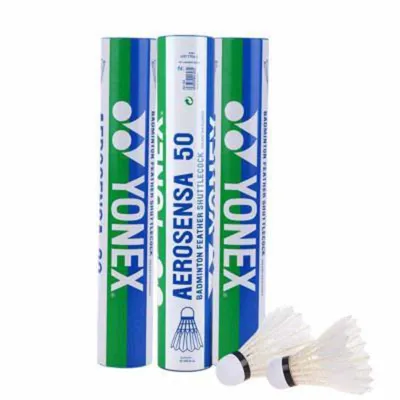
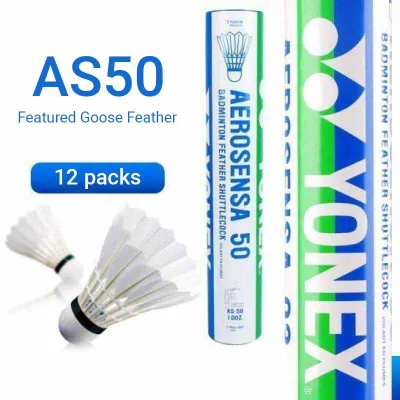
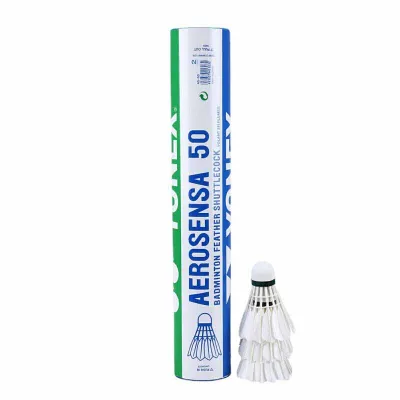
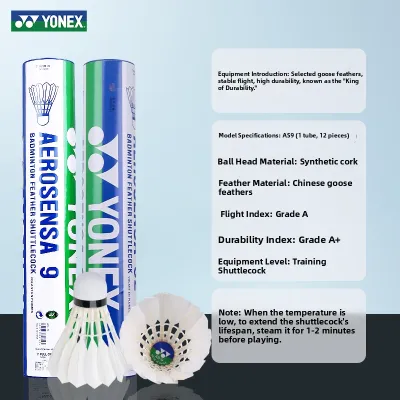
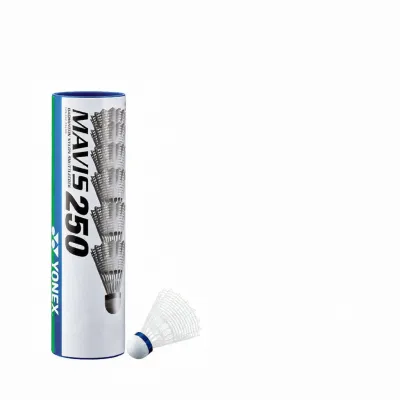
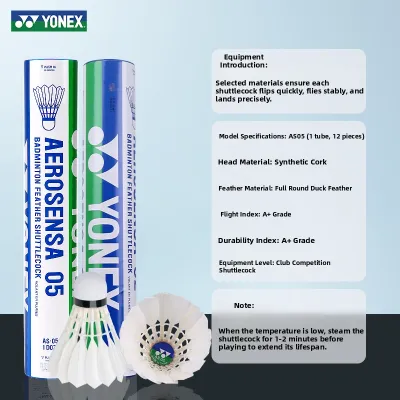
Prices are valid at publication and may change. Please refer to the product page for the latest price.
Feather shuttlecocks are the standard for competitive badminton. Constructed from natural feathers anchored into a solid cork base, they offer excellent flight stability, a satisfying sound upon impact, and precise spin control. The unique aerodynamic design of natural feathers allows the shuttlecock to decelerate rapidly at the end of its flight path, creating the classic drop-shot trajectory essential for tactical play. However, feathers are delicate and can easily bend, crack, or snap, especially when struck off-center by developing players.
Nylon shuttlecocks are engineered for high durability and cost-effectiveness. Featuring a synthetic plastic skirt attached to a cork or synthetic base, these shuttlecocks can withstand hundreds of hard impacts without losing structural integrity. While they do not decelerate as sharply as feather models and fly in a slightly faster, more linear path, they are incredibly resilient. This makes them a highly practical choice for players who want to focus on rallies and physical conditioning without constantly replacing damaged gear.
Your playing venue is another decisive factor. Indoor, climate-controlled courts are the natural home of feather shuttlecocks, where still air allows their precise aerodynamics to shine. In contrast, outdoor courts, community parks, and multi-purpose recreational halls with open windows or active ventilation are highly prone to drafts. In these environments, the delicate flight of a feather shuttlecock is easily disrupted, making the heavier and more stable flight of a nylon shuttlecock far more practical.
To streamline your decision, map your playing habits and commitment level to the most suitable material category:
- Casual and Recreational Play (1 to 2 hours per week): Nylon shuttlecocks are highly recommended. They offer excellent value, require zero maintenance, and allow you to enjoy long rallies without frequent interruptions.
- Regular Club and Intermediate Play (3 to 5 hours per week): A hybrid approach works best. Utilize high-quality nylon shuttlecocks for intense training drills, then switch to entry-level feather shuttlecocks for friendly matches to refine your touch.
- Competitive and Advanced Play (5 or more hours per week): Feather shuttlecocks are indispensable. To perform at your peak in tournaments, you must train with the same equipment used in official matches to build accurate muscle memory.
Navigating Yonex Product Lines for Your Skill Level
Once you have decided between feather and nylon, the next step is to navigate the specific product families. Yonex organizes its shuttlecocks into distinct series designed to cater to different skill levels, training requirements, and budgets.

The Aerosensa (AS) series is the flagship feather lineup, widely used in clubs and international tournaments. This series is structured numerically, with models ranging from entry-level training grades to premium tournament standards. Lower-numbered models in the Aerosensa family are designed primarily for club training and practice sessions. They offer a reliable flight path and decent durability at a more accessible price point, making them highly suitable for intermediate players transitioning from nylon to feather. As you move up the numerical scale, the quality of the feathers and cork base increases, culminating in high-numbered models certified for international competition. These premium models offer high flight consistency and exceptional durability under high-impact play, but they carry a premium price tag.
The Mavis (M) series represents the brand’s synthetic nylon lineup, designed to bridge the gap between recreational durability and realistic flight performance. The entry-level Mavis models are highly durable and suitable for school sports, backyard games, and absolute beginners learning basic mechanics. The more advanced models in the Mavis series feature a specialized wing-rib skirt design. This unique structural pattern is engineered to mimic the natural expansion and contraction of feathers during flight, providing a deceleration profile much closer to a traditional feather shuttlecock than standard nylon options.
When selecting a specific model, inspect the manufacturer’s packaging rather than relying solely on model numbers, which can vary by region. Look for clear labels indicating the intended use case, such as training, club, or tournament grades. Additionally, check the material specifications on the tube to confirm whether the shuttlecock uses natural cork, synthetic cork, or a composite base, as this directly affects the feel and rebound of your shots.
Decoding Speed Ratings for Singapore's Court Conditions
A common mistake among badminton players is ignoring the speed rating printed on the shuttlecock packaging. Shuttlecocks are highly sensitive to environmental factors like temperature, altitude, and humidity, which is why they are manufactured in different speed grades to ensure consistent performance worldwide.
The speed rating system typically uses numbers from 1 to 5 (or 75 to 79 in some regions) to indicate the flight distance and speed of the shuttlecock. A lower number represents a slower shuttlecock designed for warm, low-altitude, or highly humid environments. A higher number represents a faster shuttlecock designed for cold, high-altitude, or dry conditions. The science behind this is simple: warm air is less dense than cold air, meaning there is less aerodynamic drag on the shuttlecock. Consequently, a shuttlecock will fly faster and further in a hot hall than it will in a cold one.
In Singapore, the climate is characterized by consistently high temperatures and high humidity throughout the year. Whether you are playing in a non-air-conditioned school hall or a community center, the warm, humid air means that standard shuttlecocks will naturally fly faster and further. To compensate for these local conditions and prevent your shots from constantly sailing past the baseline, you should typically select a slower speed rating, such as speed 1 or 2 (or 75/76). Using a slower speed grade allows you to play with your natural power and technique without having to artificially hold back your swings.
To ensure you have selected the correct speed before committing to a full game, perform a standard on-court speed test. This quick check helps verify if the shuttlecock matches the specific conditions of the court on that day.
- Stand at the baseline: Position yourself at the back boundary line of the court.
- Execute a full underhand clear: Strike the shuttlecock with an upward, full-force stroke, aiming parallel to the sidelines.
- Observe the landing point: A shuttlecock of the correct speed should land between 530 mm and 990 mm short of the opposite back boundary line.
- Adjust if necessary: If the shuttlecock consistently lands beyond the outer boundary line, switch to a slower speed rating; if it falls significantly short, a faster rating may be required.
Extending Shuttlecock Lifespan: Storage and Care
Badminton shuttlecocks are consumable items, but with proper care and storage, you can significantly extend their lifespan, maintain their flight quality, and get the most value out of your purchase. This is especially true for feather shuttlecocks, which require active maintenance to prevent premature damage.
The primary enemy of natural feather shuttlecocks is dryness. When feathers lose their natural moisture, they become brittle, causing the delicate shafts to crack or snap easily upon impact. To combat this, players use safe humidification techniques before heading to the court. A highly effective method is to humidify the shuttlecocks inside their storage tube. You can do this by using a specialized shuttlecock humidifier or by carefully exposing the open ends of the tube to gentle steam from a hot kettle for a few seconds before quickly sealing the caps. This traps moisture inside the tube, allowing the feathers to absorb it and regain their natural elasticity. However, you must ensure that no direct water droplets contact the cork base, as excess moisture can soften the cork and ruin its rebound performance.
Proper storage conditions are equally important for preserving both feather and nylon shuttlecocks. Always store your shuttlecock tubes vertically with the caps securely closed to prevent the feathers or nylon skirts from getting crushed or losing their shape. Keep the tubes in a cool, dry place away from direct sunlight, extreme heat (such as inside a parked car), and damp environments. High temperatures can dry out the natural oils in feathers and degrade the adhesives used to bind them, while excessive dampness can cause mold or weaken the structural integrity of the cork base.
Knowing when to replace a worn shuttlecock is crucial for maintaining a fair and enjoyable game. Playing with a damaged shuttlecock disrupts your timing and ruins the quality of your rallies.
- Broken Feather Shafts: If a feather shaft is snapped or missing, the shuttlecock will wobble in the air, lose its speed consistency, and fail to spin correctly.
- Deformed Nylon Skirt: For synthetic models, look for tears, deep creases, or a stretched skirt. A deformed skirt causes the shuttlecock to fly erratically and lose its predictable deceleration.
- Softened Cork Base: Press the cork base gently with your thumb. If it feels spongy, soft, or has begun to separate from the feathers or skirt, the shuttlecock will no longer transfer energy efficiently and should be replaced.
Securing Authentic Yonex Shuttlecocks in Singapore
Because of the brand’s global reputation for quality, counterfeit Yonex shuttlecocks are highly prevalent in the market. Fake shuttlecocks are a poor investment; they suffer from terrible flight paths, break after only a few hits, and can even damage your racket strings due to uneven weight distribution. Securing authentic products requires careful selection of purchasing channels and physical inspection.
To guarantee authenticity, always purchase your shuttlecocks from authorized sports retailers, official brand stores, or reputable online marketplaces. Avoid buying from unauthorized third-party sellers on social media or unverified online listings, as these are the primary channels for counterfeit goods.
When you receive your shuttlecocks, perform a thorough physical inspection of the packaging and the product:
- Holographic Sticker: Genuine Yonex tubes feature a high-quality holographic security sticker. When you tilt the tube under light, the hologram should display a clear, sharp color shift and distinct brand patterns. Counterfeit stickers are often dull, blurry, or fail to change colors cleanly.
- Print Quality: Examine the text and logos on the tube. Genuine packaging features sharp, high-contrast printing with perfect alignment. Blurry text, faded colors, or spelling mistakes are immediate red flags.
- Adhesive and Construction: Inspect the shuttlecock itself. Genuine feather models show a clean, uniform application of glue around the thread and feathers. The feathers should be evenly spaced and aligned. Fake models often have messy, excessive glue lines and uneven feather placement.
- Cork Base Texture: The cork base of a genuine shuttlecock should feel firm, smooth, and have a consistent natural texture. Fake models often use low-grade synthetic foam or highly irregular cork that feels soft or crumbles easily.
Be highly skeptical of prices that are significantly lower than the standard retail rate. If a deal seems too good to be true, it is almost certainly a counterfeit product. Investing in genuine shuttlecocks ensures you get the durability, flight stability, and performance that you pay for.
Frequently Asked Questions (FAQ)
Can I use nylon shuttlecocks for official club tournaments?
Most official club tournaments and sanctioned competitive events require the use of natural feather shuttlecocks to ensure standard flight dynamics and professional playing conditions. Nylon shuttlecocks are generally reserved for recreational leagues, junior training, or casual club sessions where durability is prioritized over strict tournament standards. It is always best to check the specific tournament rules or consult with the local club organizers before purchasing your equipment.
How many shuttlecocks should I buy for a weekly casual game?
The number of shuttlecocks consumed during a session depends on the skill level of the players, the intensity of the matches, and the material used. For a casual two-hour session with four players using nylon shuttlecocks, one or two shuttlecocks are usually sufficient. If you are using feather shuttlecocks, consumption is higher; a typical casual group might go through three to six feather shuttlecocks per session, depending on how often off-center hits occur. Buying a full tube of twelve is generally more cost-effective than purchasing individual units and ensures you never run out mid-game.
What is the difference between goose and duck feather shuttlecocks?
Goose feathers are generally considered more durable and structurally robust than duck feathers due to their thicker shafts and stronger structure. This results in greater durability, better resistance to high-impact smashes, and a more consistent flight path over a longer period. Duck feather shuttlecocks are more economical and serve as excellent options for daily training and intermediate club play. However, for advanced players and high-stakes tournaments where absolute precision is required, the premium price of goose feather shuttlecocks is fully justified.
Community discussion
Share your experience or ask a question. Comments are reviewed before publication.