
Selecting the right Zamst knee brace requires matching the specific nature of your joint discomfort or injury to the structural support level of the brace, while balancing the physical demands of your chosen sport. Zamst offers a highly specialized range of knee supports designed for everything from mild patellar tracking issues to severe ligament instability. By identifying your exact pain triggers, understanding the mechanical features of different models, and ensuring a precise fit, you can protect your joint without unnecessarily restricting your athletic performance.
Assess Your Knee Condition and Pain Signals
Before looking at specific models, you must evaluate what your knee is experiencing. Pain signals are the body’s way of communicating structural or functional issues, and different symptoms require different levels of mechanical stabilization.
General muscle fatigue and mild aching after a long run or a workout session usually point to minor overuse or muscle tightness. This level of discomfort rarely involves structural instability and typically responds well to light compression that keeps the joint warm and promotes blood circulation.
Products mentioned in this guide
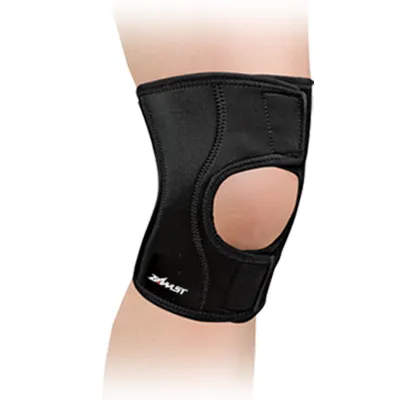
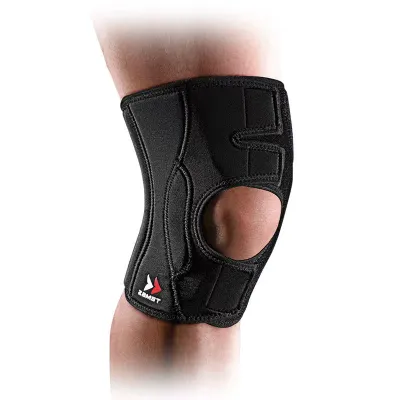
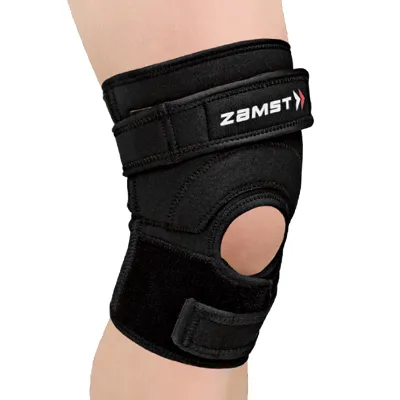
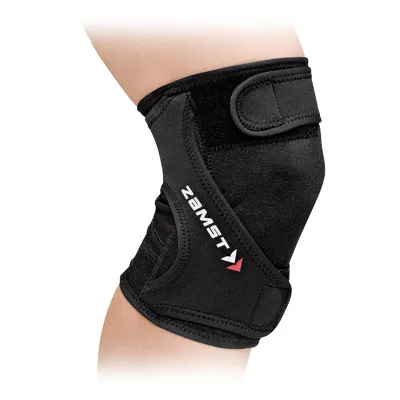
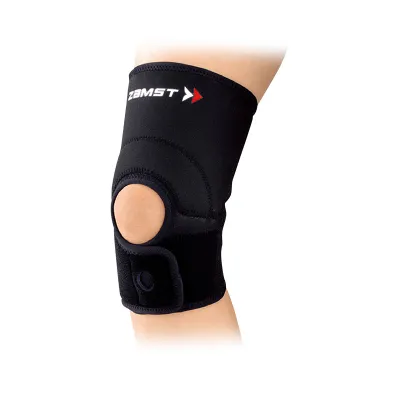
Prices are valid at publication and may change. Please refer to the product page for the latest price.
Mild to moderate localized pain, especially around the kneecap (patella) or along the sides of the joint, often indicates early-stage tendonitis, minor patellar tracking issues, or mild ligament strains. You might feel this discomfort when climbing stairs or during lateral movements on the court.
Joint instability, or the sensation of the knee “giving way,” is a more serious signal. This feeling of looseness or shifting typically indicates ligament laxity or a partial tear, such as in the anterior cruciate ligament (ACL) or medial collateral ligament (MCL). This requires structured support to prevent dangerous lateral or rotational shifting.
Acute pain, sudden swelling, and joint locking are critical red flags. If your knee swells immediately after an impact, locks in place, or produces a sharp, sudden pain that prevents you from bearing weight, these are signs of severe structural damage, such as a complete ligament tear or a meniscus tear.
It is vital to understand that a knee brace is a supportive management tool, not a medical cure. A brace cannot repair torn cartilage or ruptured ligaments. For any moderate-to-severe symptoms, or if you are recovering from joint surgery, you must consult an orthopedic specialist or sports physiotherapist before selecting a high-support brace.
Use this simple decision matrix to guide your next steps:
- Dull ache, no swelling, stable joint: Safe to self-select mild or preventive compression.
- Mild localized pain, slight swelling, joint feels stable: Suitable for moderate support braces; monitor closely.
- Giving way, moderate swelling, pain during lateral movement: Seek professional advice; look at moderate-to-maximum support options.
- Sharp pain, rapid swelling, joint locking, unable to bear weight: Stop immediately, do not self-select a brace, and seek an urgent medical evaluation.
Match Support Levels to Your Activity Intensity
Once you have assessed your joint’s condition, you can match your needs to Zamst’s structured support tiers. The brand categorizes its braces into clear levels of protection to suit different injury severities and athletic demands.

Mild / Preventive Support
This tier is engineered for athletes experiencing minor joint soreness or those looking to prevent injuries during low-impact activities. If your routine consists of light jogging, walking along nature trails, or basic gym workouts, a lightweight compression sleeve is ideal. These supports, such as the Zamst EK-1, focus on providing gentle compression to improve proprioception—your body’s awareness of joint position—and maintain therapeutic warmth. They are highly flexible, allowing a full, unrestricted range of motion.
Moderate Support
If you are dealing with mild ligament sprains, minor patellar tracking issues, or participate in moderate-impact sports like tennis, badminton, or cycling, you require a step up in structural guidance. Braces in this category, such as the Zamst EK-3 or EK-5, incorporate semi-flexible side stays and targeted padding around the kneecap. These features help guide the joint through its natural path of motion, preventing minor lateral deviations while still allowing you to bend and straighten your leg comfortably during active play.
Maximum Support
Reserved for post-injury rehabilitation, severe joint instability, or high-impact contact sports like basketball, rugby, and football. If your sport involves rapid changes of direction, jumping, or physical contact, your knee is subjected to extreme rotational and lateral forces. Maximum-support models, such as the Zamst ZK-7 or ZK-X, feature rigid resin hinges, heavy-duty material construction, and complex strap configurations designed to physically block abnormal joint movement. Because of the high level of restriction and the severity of the underlying conditions they treat, these braces must be selected and used under the guidance of a medical professional.
Always verify the manufacturer’s specific support level indicators on the product packaging or official brand guidelines. Zamst uses a clear numbering system to help you verify that the model you choose matches your intended use.
Key Zamst Knee Brace Features to Check
Understanding the specific design elements of Zamst braces allows you to select a model that addresses your precise anatomical needs.
Patella Stabilization
The design of the area surrounding the kneecap is critical for managing anterior knee pain. Open-patella designs feature a cutout, often lined with a circular gel pad or foam guide, that surrounds the kneecap. This design relieves direct pressure on the patella while keeping it properly aligned within its groove during movement. Closed-patella designs, on the other hand, cover the entire joint with a continuous layer of fabric, providing uniform compression, maximum heat retention, and general support for diffuse joint pain.
Lateral and Medial Stays
The sides of the brace determine how much lateral movement is restricted. Flexible side supports, often made of lightweight resin or coiled springs, bend easily with your knee. They do not physically lock the joint but provide constant sensory feedback, encouraging your muscles to stabilize the knee naturally. In contrast, rigid side bars or mechanical hinges physically limit lateral shifting and prevent hyperextension, making them essential for protecting compromised collateral ligaments.
Strap and Binding Systems
How a brace fastens to your leg dictates its stability and comfort. Advanced Zamst models utilize cross-straps or dual-strap systems that wrap above and below the knee joint. These straps allow you to customize the level of compression and tension on specific areas of the knee. For instance, an under-patella strap can apply targeted pressure to the patellar tendon to relieve jumper’s knee, while cross-straps can mimic the stabilizing function of the cruciate ligaments.
Material and Breathability
Singapore’s tropical climate, characterized by high temperatures and humidity, makes material choice a primary comfort factor. Standard neoprene braces can quickly trap sweat, leading to skin irritation, chafing, and slipping during intense workouts. Look for Zamst models that utilize breathable, moisture-wicking fabrics and ventilated mesh panels. Anti-slip inner linings or silicone grips are also crucial to keep the brace firmly in place when you sweat heavily during outdoor activities.
Fitting, Care, and Safety Boundaries
A knee brace can only protect your joint if it fits correctly and is maintained properly. An ill-fitting brace can worsen your condition or cause secondary issues.
To find your correct size, you must measure your leg precisely according to the official Zamst sizing chart. Typically, this involves using a flexible tape measure to find the circumference of your thigh at a specific distance (usually 10 cm or 16 cm, depending on the model) above the center of your kneecap, as well as your calf circumference below the joint. Do not guess your size based on your clothing size or previous braces from other brands. If your measurements fall between two sizes, it is generally recommended to opt for the larger size to avoid excessive constriction, unless a specialist advises otherwise.
You must monitor your leg for signs of an improper or dangerous fit. If you experience numbness, tingling, coldness in your foot, or visible skin discoloration, the brace is too tight and is restricting blood flow or compressing nerves. Conversely, if the brace constantly slips down your leg during movement or bunches up behind your knee, it is too loose and will not provide the necessary structural support.
Proper care preserves the elasticity and structural integrity of your brace. Always hand wash the brace in cold water using a mild detergent. Avoid bleach, fabric softeners, and harsh chemical cleaners, as these degrade the synthetic fibers and elastic components. Never put the brace in a washing machine or tumble dryer. Instead, gently squeeze out excess water—do not wring it tightly—and lay it flat to air dry in a well-ventilated indoor space away from direct sunlight and heat sources. If your brace has removable rigid stays or hinges, take them out before washing according to the manufacturer’s instructions.
When to Stop and Seek Professional Help
While a knee brace is an excellent tool for managing minor instability and supporting recovery, it has clear safety boundaries.
You must immediately stop using the brace and remove it if you experience sharp, sudden, or worsening pain, rapid joint swelling, skin rashes, or if your joint begins to lock or catch during movement. These symptoms indicate that the brace is either improperly fitted, unsuitable for your specific injury, or that the underlying structural damage has worsened.
Relying solely on a knee brace as a long-term solution without addressing muscle imbalances can be counterproductive. Over time, constant external support can cause your quadriceps, hamstrings, and calf muscles to weaken, leading to greater joint instability when the brace is removed. A brace should always be paired with targeted physical rehabilitation exercises designed to rebuild your body’s natural strength and stability.
If your knee symptoms do not improve after a few weeks of conservative management and brace wear, or if your mobility remains severely limited, a professional medical reassessment by a qualified physiotherapist or orthopedic doctor is mandatory.
Frequently Asked Questions (FAQ)
Can I wear a knee support sleeve all day for prevention?
Mild compression sleeves can generally be worn during your daily activities to provide warmth, improve circulation, and offer light joint awareness. However, you should always remove them before going to sleep to prevent localized circulation issues. Maximum-support or rigid-hinged braces should never be worn all day or during periods of rest unless specifically instructed by your medical specialist, as prolonged use can lead to muscle weakness and skin irritation.
How tight should a knee brace feel during exercise?
A properly fitted knee brace should feel snug, secure, and supportive, offering a reassuring sense of joint stability without causing discomfort. It should not pinch your skin or restrict your natural circulation. A reliable self-check is to try sliding two fingers under the top and bottom edges of the brace; if you cannot do so easily, or if you experience numbness, tingling, or coldness in your lower leg, the brace is too tight and must be adjusted or resized.
Community discussion
Share your experience or ask a question. Comments are reviewed before publication.