
Selecting your first diving buoy requires focusing on three core pillars: high visibility, an intuitive inflation mechanism, and a manageable tethering system that matches your specific water activity. In busy coastal waters, such as those around Singapore’s Southern Islands or popular regional reefs, a buoy is not just an accessory but a vital safety link to boat captains, surface support, and fellow divers. It establishes your presence from below and provides a physical reference point during ascents or while resting on the surface.
For beginners, the sheer variety of shapes, sizes, and inflation styles can be overwhelming. Making the wrong choice can lead to gear entanglement, difficulty deploying the buoy under pressure, or rapid wear and tear from sun and salt. By understanding how different buoys function in real-world conditions, you can select a reliable piece of safety equipment that fits your skill level and enhances your confidence in the water.
Identify the Right Buoy Type for Your Activity
Before looking at specific features, you must determine which type of surface marker aligns with your primary water sport. The three main categories are surface marker buoys (SMBs), traditional dive flags with floats, and dedicated snorkel buoys. Each serves a distinct purpose, and using the wrong type can compromise your safety or make your activity unnecessarily difficult.
Products mentioned in this guide
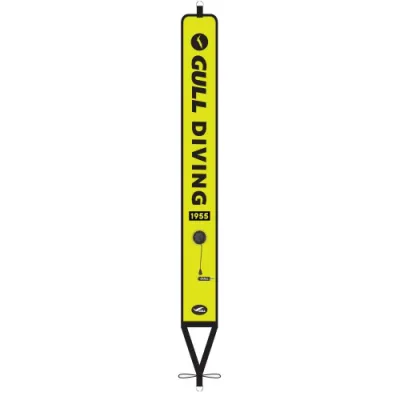
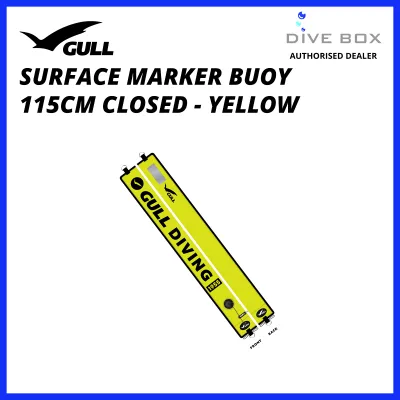
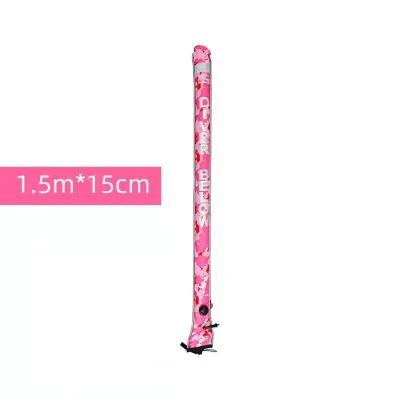
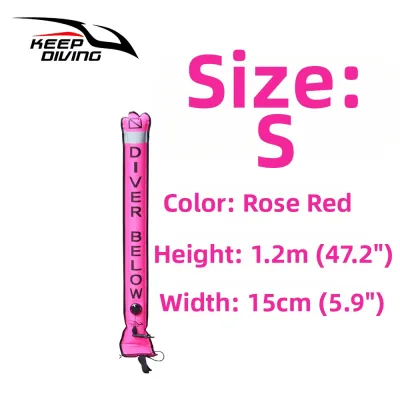
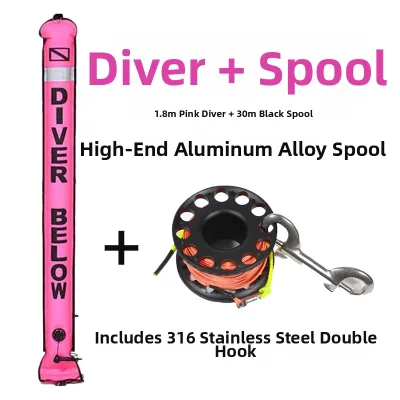
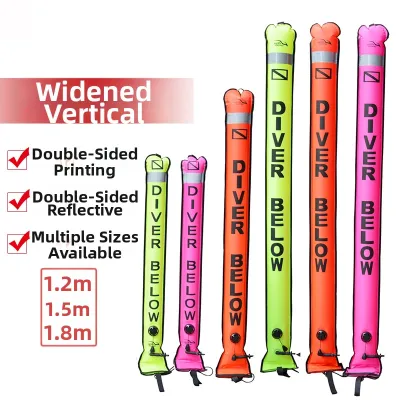
Prices are valid at publication and may change. Please refer to the product page for the latest price.
Surface marker buoys, often referred to as SMBs or delayed SMBs (DSMBs), are long, inflatable tubes designed to be deployed from depth or inflated at the surface. Scuba divers use them during safety stops or drift dives to signal their location to the dive boat before surfacing. Because they are streamlined and compact when deflated, they clip easily to a buoyancy control device (BCD) and do not create drag while you swim underwater.
In contrast, a traditional dive flag mounted on a float is designed to remain on the surface throughout your entire session. These floats are typically round or torpedo-shaped and feature a rigid mast displaying a highly visible warning flag. They are towed behind a diver or snorkeler using a floating line, providing a continuous warning to nearby boat traffic that people are in the water directly below.
Snorkel-specific buoys are designed with the surface swimmer in mind. These floats are often wider and offer high buoyancy, allowing a tired snorkeler to hold onto them and rest. Many models include integrated storage compartments, mesh pockets, or dry bags to secure small personal items like car keys, hydration, or sun protection. If your primary activity is surface snorkeling or shallow free diving, a stable snorkel float with a built-in flag is generally the most practical and comfortable option.
Evaluate Visibility and Inflation Mechanisms
Visibility is the primary function of any diving buoy, meaning color and reflective properties should be your first evaluation criteria. While red and orange are the most common colors for open ocean environments because they contrast sharply with blue water, neon yellow and bright green are highly effective in greener, coastal waters. For the best versatility, look for a buoy that combines a bright body color with reflective panels or SOLAS (Safety of Life at Sea) tape at the top, which reflects light efficiently during overcast days or low-light conditions.

How you inflate the buoy is equally critical, especially when managing your buoyancy or dealing with surface chop. Oral inflation valves are the simplest and most reliable option for beginners. They require you to depress a mouthpiece and blow air into the chamber, making them ideal for surface-level snorkeling buoys where you do not have to manage compressed gas.
For scuba diving, many modern SMBs feature a combination valve that supports both oral inflation and low-pressure inflator hose connection. This allows you to press your BCD inflator hose against the valve to fill the buoy quickly with air from your cylinder. While efficient, using a power inflator requires practice to ensure you do not get pulled upward by the expanding air as the buoy rises.
Another common design is the open-bottom or “duckbill” buoy, which features a wide opening at the base. Divers inflate these by purging their secondary regulator or catching exhaust bubbles inside the opening. If you choose an open-bottom design, ensure it features a self-sealing internal baffle. This mechanism prevents the trapped air from escaping if the buoy tips over on the surface, keeping the marker upright and visible even in rough waves.
Finally, high-quality closed-circuit buoys must include an over-pressure valve (OPV) or dump valve. As an inflated buoy rises from depth, the surrounding water pressure decreases, causing the air inside to expand. An OPV automatically releases excess pressure to prevent the seams of the buoy from rupturing during its ascent, while also allowing you to deflate the unit quickly for packing after your dive.
Select the Appropriate Line and Attachment Hardware
A diving buoy is only as useful as the line that connects it to you. The length of your tether should be determined by your planned depth and the local environment. For casual snorkeling along shallow reefs, a line of 10 to 15 meters is usually sufficient to allow freedom of movement without creating excessive slack. Scuba divers deploying an SMB from depth typically require a line of 30 meters or more to ensure they can launch the marker well before beginning their safety stop.
The material of the line plays a significant role in preventing tangles and protecting the marine environment. For surface towing, always choose a floating line, such as one made from braided polypropylene. Floating lines stay on the surface of the water rather than sinking, which greatly reduces the risk of the line wrapping around your legs, snagging on sharp coral, or getting caught in rocky crevices.
To manage the line, beginners should choose between a simple hand spool, a mechanical reel, or a basic storage wrap. Finger spools are highly recommended for new scuba divers because they are compact, lightweight, and have no moving parts that can jam or fail. Mechanical reels offer a handle and a winding lever, which can make retrieving line easier, but they require more maintenance and are prone to bird-nesting (tangling) if not operated with care.
When it comes to securing your line to your gear or the buoy, avoid cheap plastic clips that can degrade under UV exposure or snap under the tension of a strong current. Instead, look for marine-grade stainless steel or solid brass double-ended bolt snaps. These materials resist saltwater corrosion and provide a secure, reliable connection that can be operated easily even while wearing thick neoprene gloves.
Assess Material Durability and Storage Convenience
Tropical waters, intense sunlight, and abrasive salt can quickly degrade low-quality gear. When evaluating a diving buoy, look closely at the outer shell material. Cheap recreational floats are often made of thin, single-layer PVC, which is highly susceptible to punctures from sharp rocks, coral, or gear clips. For long-term durability, look for buoys constructed from heavy-duty nylon, such as 210-denier or 400-denier fabrics, featuring a thermoplastic polyurethane (TPU) inner coating.
The construction of the seams is another indicator of quality. High-frequency welded seams or double-stitched seams reinforced with binding tape are much less likely to split under pressure or when subjected to the pulling force of surface currents. Inspect the attachment points and D-rings as well; these should be made of marine-grade stainless steel and sewn into the buoy using heavy-duty, reinforced webbing.
Storage and portability are essential for ensuring you actually bring your safety gear on every trip. A beginner-friendly buoy should fold down into a compact package that does not clutter your gear bag. Many models feature integrated elastic loops or Velcro straps to keep the deflated buoy rolled up tightly. Some also come with a dedicated mesh storage pouch that allows water to drain freely, preventing mold and mildew growth during travel and storage.
Pre-Purchase Verification and Destination Compliance
Before finalizing your purchase, perform a physical inspection of the gear to ensure everything is in working order. If buying in person, inflate the buoy orally and let it sit for a few hours to verify that the valves and seams do not leak. Check that the line is free of knots, frays, or manufacturing defects, and test the spring tension on all metal bolt snaps to ensure they open and close smoothly.
It is also important to research the specific maritime regulations and dive operator requirements for your intended destinations. In Singapore, maritime authorities and local charter boats require divers and snorkelers to display a clear surface marker or dive flag when swimming in active waterways, such as around Pulau Hantu or the Sisters’ Islands Marine Park. Ensuring your buoy features a standard blue-and-white Alpha flag or a red-and-white “Diver Down” flag keeps you compliant with local safety protocols and visible to commercial vessel traffic.
While it can be tempting to opt for the cheapest available option, investing in a reliable, mid-range buoy setup typically costs between S$40 and S$120. This investment ensures you receive durable materials, reliable valves, and high-quality hardware that will perform consistently when you need them most. Balancing your budget with these essential safety features will provide peace of mind and keep you safe across many underwater adventures.
Frequently Asked Questions (FAQ)
Do I need a diving buoy for shallow snorkeling?
Yes, using a diving buoy is highly recommended even in shallow water, especially if you are snorkeling in areas with active boat traffic, kayaks, jet skis, or other swimmers. A bright surface float makes your position clear to vessel operators from a distance, reducing the risk of accidents. Additionally, a buoy provides a highly visible reference point for your buddies on shore or on a boat, and it serves as a convenient flotation aid if you need to rest, adjust your mask, or clear water from your snorkel.
How do I clean and store my diving buoy after a saltwater dive?
To maximize the lifespan of your buoy, rinse it thoroughly with clean, fresh water inside and out after every saltwater session. Salt crystals can accumulate inside the inflation valves and cause them to stick or leak over time. After rinsing, partially inflate the buoy and hang it to dry in a shaded, well-ventilated area away from direct sunlight, as UV rays can degrade the fabric and fade the high-visibility colors. Ensure the buoy and its line are completely dry before folding them tightly for long-term storage to prevent mold and mildew.
Can I use a regular pool float instead of a dedicated diving buoy?
No, recreational pool floats are not suitable substitutes for dedicated diving buoys. Pool floats are typically made of thin, unreinforced vinyl that punctures easily on coral, rocks, or gear clips. They lack the aerodynamic and hydrodynamic shapes needed to handle wind and currents, meaning they can easily blow away or drag you off course. Furthermore, pool floats do not feature the standardized high-visibility colors, reflective tape, or secure attachment points required to mount a proper dive flag and secure a towing line safely.
Community discussion
Share your experience or ask a question. Comments are reviewed before publication.