
Selecting your first pair of diving socks is a critical step toward ensuring comfort, warmth, and protection during your underwater adventures. These specialized accessories, typically crafted from stretchable neoprene, serve as a protective barrier between your skin and the elements. They help prevent painful blisters caused by fin friction, shield your feet from sharp coastal hazards, and provide essential thermal insulation in cooler currents. To find the right pair, you must balance thickness, sole design, material quality, and fit based on where and how you plan to dive or snorkel.
Making an informed choice prevents common discomforts like foot cramps, cold toes, or slipping on wet surfaces, allowing you to focus entirely on exploring the marine environment. By understanding your specific activity needs and matching them to the right product specifications, you can avoid common beginner purchasing mistakes and secure a pair that lasts for many seasons.
Assess Your Snorkeling Environment and Activity Needs
Before browsing online marketplaces or visiting a local dive shop, evaluate the specific environments where you will spend the most time. Water temperature is the primary driver for insulation needs. Tropical waters require minimal thickness to prevent overheating, while temperate or deeper waters demand heavier thermal protection to keep your extremities warm.
Products mentioned in this guide
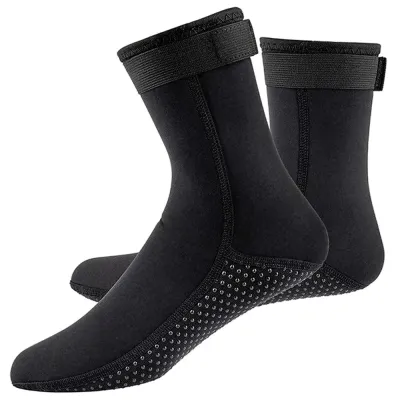
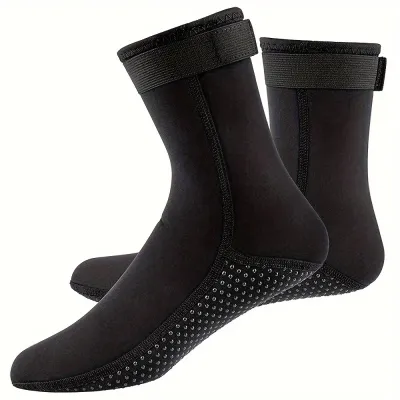
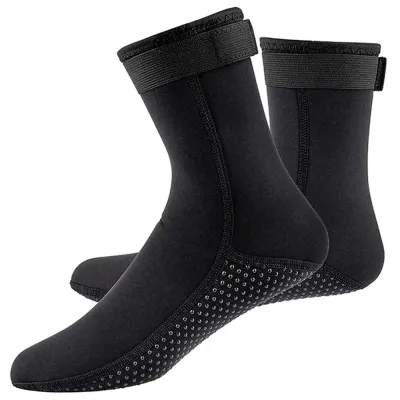
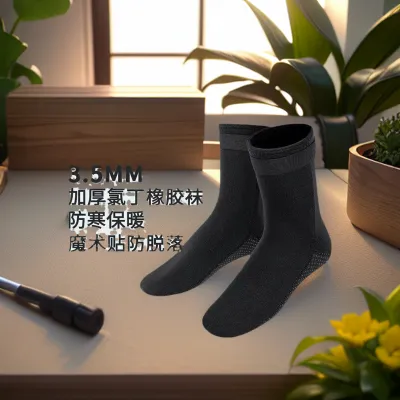
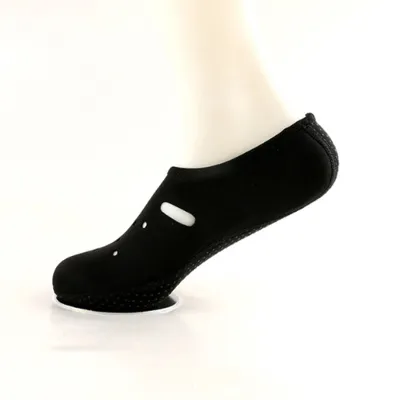
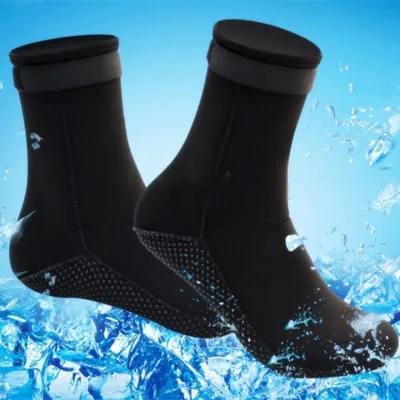
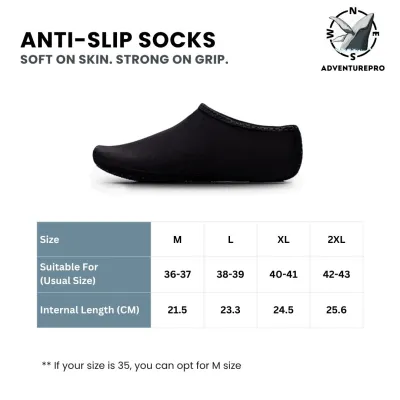
Prices are valid at publication and may change. Please refer to the product page for the latest price.
Terrain is another decisive factor in your selection process. If you plan to walk across rocky shores, coral rubble, or concrete boat ramps before entering the water, your socks will face significant abrasive wear and require robust underfoot protection. Conversely, if you are diving directly from a boat or walking only on soft sand, a lightweight, highly flexible sock is often more comfortable and easier to pack.
Your activity level also dictates the balance between flexibility and physical protection. Snorkelers who spend hours surface-swimming need maximum ankle flexibility to maintain an efficient kick cycle and prevent calf cramping. Shore divers carrying heavy gear, however, require robust underfoot support to handle the extra load on uneven, slippery ground.
Evaluate Material and Thickness for Warmth and Comfort
Neoprene is the standard material for diving socks due to its excellent insulating properties and elasticity. The thickness of this material, typically measured in millimeters, directly correlates with warmth but inversely affects flexibility.

For warm tropical waters, a thickness of 1.5mm to 2mm is generally sufficient to prevent minor scrapes and provide light insulation. If you venture into cooler subtropical waters, a 3mm sock offers a balanced middle ground, keeping your feet warm without making them feel overly bulky. For cold-water environments, manufacturers often recommend 5mm or thicker neoprene, though these require careful pairing with larger fin pockets.
The interior lining of the sock plays a major role in skin comfort and ease of donning. Smooth-skin neoprene seals exceptionally well against the skin to minimize water exchange, but it can be difficult to slide on without lubrication or water. Nylon-lined interiors are much easier to slip into and offer a softer feel, though they may hold slightly more water.
Seam construction is another critical detail to inspect. Flatlock stitching is common in thinner socks; it is highly durable and lies flat against the skin to prevent chafing, but it allows water to seep through the needle holes. For maximum warmth, look for glued and blind-stitched (GBS) seams, which are sealed with adhesive before being stitched halfway through the material, creating a watertight barrier that keeps cold water out.
Select the Right Sole Type for Traction and Protection
The sole of a diving sock determines where you can safely walk and how much grip you will have on wet surfaces. Beginners must choose between soft, fabric-textured soles and rigid, vulcanized rubber soles.
Soft-soled socks feature textured patterns printed directly onto the neoprene or reinforced with a thin layer of synthetic fabric. These are exceptionally lightweight and packable, making them ideal for boat dives or sandy beach entries where you put your fins on immediately. They allow your feet to flex naturally, ensuring an efficient kick cycle without added drag.
Hard-soled or semi-rigid socks feature a molded rubber outsole bonded to the bottom of the neoprene. These are essential for rocky shore entries, tide pooling, or navigating slippery boat docks. While they offer superior protection against sharp shells and stones, they add bulk and stiffness, which can alter your finning technique and require open-heel fins with adjustable straps.
When evaluating rubber soles, inspect the tread pattern for slip resistance. Deep, multi-directional grooves help channel water away to improve traction on wet boat decks, though you should always exercise caution on algae-covered rocks where no footwear can guarantee absolute grip. Ensure the rubber sole wraps slightly around the heel and toes to protect these high-wear areas from friction.
Ensure a Secure and Comfortable Fit
A proper fit is the single most important factor in preventing blisters and ensuring your diving socks perform as intended. Unlike casual footwear, diving socks must fit snugly without any loose pockets of material where water can pool and circulate.
To find your size, do not rely solely on your standard shoe size, as neoprene stretches and sizing standards vary significantly between brands. Instead, measure the actual length of your foot in centimeters and compare it directly to the manufacturer’s specific sizing chart. If you fall between sizes, it is generally advisable to size down for a snugger fit, provided it does not pinch your toes or restrict blood circulation.
When trying on the socks, pay close attention to the toe box and the heel. Your toes should reach the end of the sock without being curled or compressed, and the heel pocket should align perfectly with your actual heel. Walk around on a clean surface to check if the sock slides or bunches up, as any movement inside the sock will quickly lead to painful chafing once wet.
Additionally, you must account for how the socks interact with your snorkeling fins. If you use full-foot fins, a thick diving sock will increase your foot’s volume, potentially making your existing fins painfully tight. If you plan to wear socks thicker than 2mm, you may need to size up your fins or transition to open-heel fins with adjustable spring straps to accommodate the extra bulk.
Inspect Build Quality and Use a Try-On Checklist
Before finalizing your purchase, conduct a thorough physical inspection of the diving socks to ensure they will withstand the rigors of regular use. High-quality construction prevents premature tearing and ensures a reliable seal against water entry.
Begin by examining the ankle closure system. Many diving socks feature an elastic cuff, a Velcro strap, or a zipper to secure the opening. Test these closures repeatedly; Velcro should grip firmly without fraying the surrounding neoprene, and zippers should slide smoothly without catching on the inner baffle. A secure ankle seal is vital for preventing “flushing,” which occurs when cold water continuously enters and exits the sock, stripping away your body heat.
Next, perform a physical flex test. Put the socks on and perform a series of deep squats, toe raises, and ankle rotations. Pay close attention to the internal seams; if you feel any sharp edges, bulky knots, or irritating friction points, these will likely cause blisters during an extended swim.
Finally, verify the retailer’s return and exchange policies before purchasing. Because dry neoprene behaves differently than wet neoprene, you want the flexibility to exchange the socks if your initial home try-on reveals fit issues. Keep all tags attached and test the fit indoors on a clean carpeted surface to keep the items in pristine, returnable condition.
Frequently Asked Questions (FAQ)
Can I wear diving socks with my existing snorkeling fins?
Yes, you can wear diving socks with your existing fins, but compatibility depends heavily on the fin type and sock thickness. Thin socks of 1.5mm to 2mm can often fit inside standard full-foot fins, providing a comfortable barrier against friction. However, if your fins are already a tight fit, adding even a thin sock may compress your feet, leading to cramps or restricted circulation. For thicker socks or cold-water boots, you will likely need to switch to open-heel fins, which feature adjustable straps designed to accommodate varying footwear volumes.
How do I clean and dry diving socks after use?
Proper maintenance is essential to prevent odors and extend the lifespan of the neoprene material. After every use, thoroughly rinse your diving socks inside and out with clean, fresh water to remove salt, sand, chlorine, and organic debris. Gently squeeze out excess water without wringing or twisting the neoprene, which can damage the seams. Hang the socks to air dry in a well-ventilated area out of direct sunlight, as ultraviolet rays degrade neoprene, causing it to become brittle and crack over time. Ensure they are completely dry inside before storing them flat to prevent mold growth.

Community discussion
Share your experience or ask a question. Comments are reviewed before publication.