
Selecting your first jigging rod is the most critical decision you will make when transitioning to vertical saltwater fishing. To find the right rod, you must look for a specialized blank that matches your target species, the weight of your jigs, and your physical endurance. A proper setup balances flexibility to work the lure with the structural lifting power needed to stop powerful bottom-dwelling fish.
In Singapore’s offshore waters, from the Southern Islands to deeper regional currents, a mismatched rod will quickly lead to physical fatigue or, worse, a shattered blank. Understanding how to decode rod specifications—such as power, action, length, and weight ratings—ensures you purchase a tool that works with you rather than against you.
Understand Jigging Basics and Why You Need a Specialized Rod
Jigging is an active, highly physical fishing technique that relies on a vertical presentation. Unlike casting and retrieving lures horizontally, jigging involves dropping a heavy metal lure (a jig) directly beneath the boat and retrieving it using a rhythmic, vertical jerking motion. This repetitive action mimics injured baitfish fleeing upward through the water column, triggering aggressive strikes from predatory species.
Products mentioned in this guide
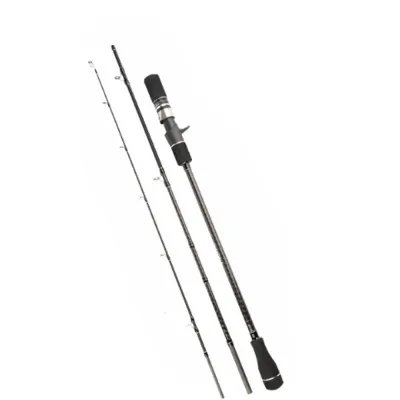
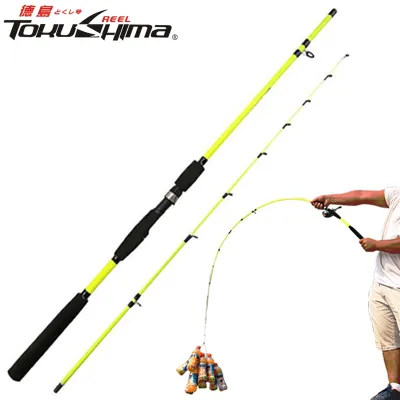
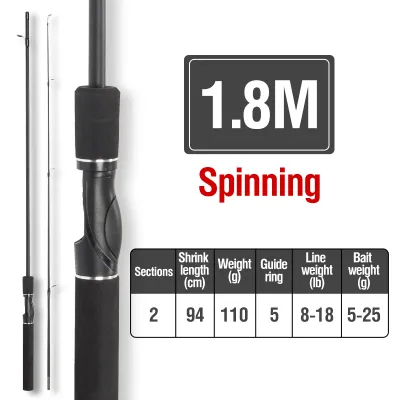
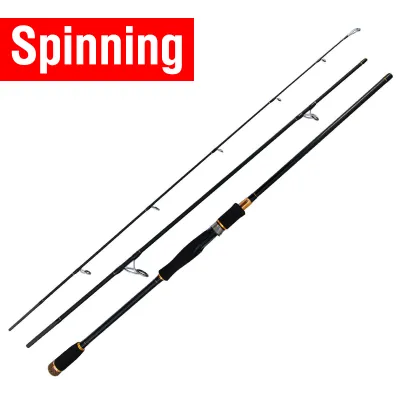
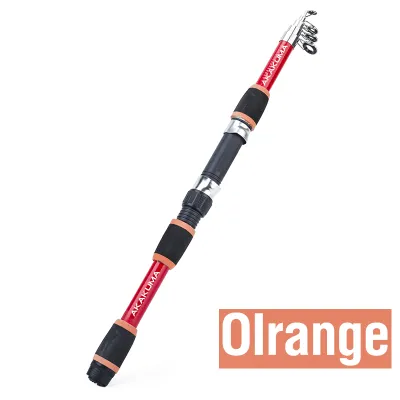
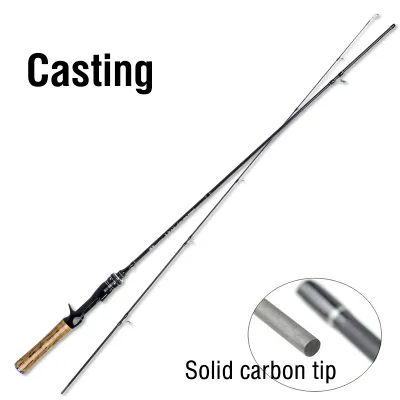
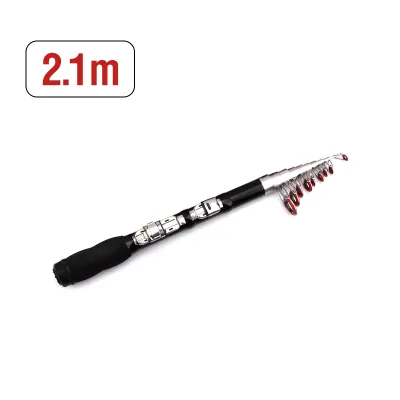
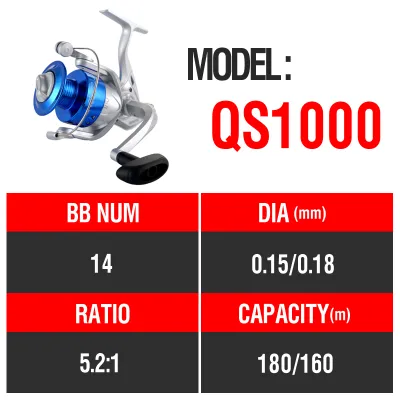
Prices are valid at publication and may change. Please refer to the product page for the latest price.
Because the jig is worked vertically, both the rod blank and the reel seat are subjected to continuous, intense stress. Every upward sweep of the rod bends the blank under the resistance of the water and the heavy weight of the metal lure. When a fish strikes, the sudden downward load places immense pressure on the reel seat and the lower section of the rod, requiring specialized reinforcement that standard casting or spinning rods simply do not possess.
Before selecting your gear, you must distinguish between the two primary jigging styles: high-speed (traditional) jigging and slow-pitch jigging. High-speed jigging uses fast, aggressive jerks and rapid reel turns to target fast-moving mid-water predators like amberjacks and trevallies. Slow-pitch jigging uses a slower, highly calculated rhythm where the rod’s recoil does the work, allowing the jig to flutter and fall slowly to entice sluggish bottom-dwellers like groupers and snappers.
Match Rod Power and Action to Your Target Species and Technique
Rod power describes the overall stiffness of the rod blank and its resistance to bending under a load. Manufacturers generally classify this rating along a spectrum from light to heavy, which directly correlates with the depth of the water you are fishing, the weight of the jigs required to reach the bottom, and the fighting strength of your target species.

For shallow-water applications or lighter currents, a light or medium-light jigging rod is ideal because it prevents angler fatigue and provides excellent sensitivity. However, if you are targeting deep-water structures or fighting powerful fish like adult groupers that immediately run for sharp reef cover, you will need a medium-heavy or heavy rod. The heavier power provides the crucial lifting leverage in the lower third of the blank (the butt section) to turn a fish’s head before it can cut your line on underwater obstructions.
Rod action, on the other hand, defines where along the blank the rod begins to bend when pressure is applied. Fast-action rods bend primarily in the top third of the tip, moderate-action rods bend in the top half, and slow-action (or parabolic) rods bend throughout the entire length of the blank down to the handle.
To choose the right configuration, use this decision framework to match rod action and power to your intended fishing technique:
- High-Speed Jigging: Select a medium to heavy power rod with a fast or moderate-fast action. The stiffer tip allows you to transfer your physical movements directly to the heavy jig, ensuring it darts erratically through the water, while providing a rapid hook-setting response when a fish strikes at high speed.
- Slow-Pitch Jigging: Choose a light to medium power rod with a slow, highly parabolic action. This design allows the rod to fully load under the weight of the jig and then slowly spring back, flicking the jig upward and letting it flutter down naturally without pulling it too violently through the water.
- Micro-Jigging: Opt for an ultra-light or light power rod with a moderate-fast action, designed specifically for working tiny jigs (typically under 40 grams) in shallow coastal waters for smaller reef species.
Select the Right Length and Read Weight Ratings Correctly
The physical length of a jigging rod directly determines your leverage over a fish and how easily you can maneuver your gear on a boat. Unlike casting rods that need extra length to achieve distance, specialized jigging rods are significantly shorter, typically ranging between 5 feet (1.5 meters) and 6 feet 6 inches (2.0 meters).
A shorter rod acts as a shorter lever, which works to your physical advantage. When fighting a heavy fish vertically beneath the boat, a short rod transfers the mechanical strain away from your back and arms and onto the rod blank itself. Shorter rods are also far easier to handle in the confined spaces of a charter boat or a small pleasure craft, reducing the risk of hitting the boat’s canopy or tangling with neighboring anglers during vertical drops. Longer rods, stretching up to 7 feet or more, are generally reserved for shore-based jigging or open-deck casting scenarios where casting distance is required to reach passing schools of fish.
Every dedicated jigging rod has critical specifications printed directly on the blank near the handle, showing the recommended jig weight and line weight limits. Jig weight is usually measured in grams (e.g., 60g–150g), while line weight is typically indicated by PE ratings (a Japanese system for measuring braided line diameter, such as PE 2 to PE 4) or pound-test ratings.
Understanding and respecting these printed limits is vital for both performance and gear safety:
- Jig Weight Limits: Staying within the manufacturer's recommended gram rating ensures the rod blank loads and recoils exactly as designed. Using a jig that is too light will not bend the rod enough to work the lure, while an excessively heavy jig will overload the tip, ruining the action and risking a sudden structural fracture when you jerk the rod.
- Line PE Ratings: The PE rating indicates the maximum line tension the rod is engineered to handle. Matching your braided line to the rod’s PE rating ensures that your line will break before the rod blank reaches its ultimate breaking point under extreme drag pressure.
Inspect Build Quality: Blanks, Guides, and Saltwater Durability
A jigging rod must withstand high-humidity, high-salinity marine environments and intense mechanical stress. When evaluating a rod’s build quality, look past flashy cosmetic designs and focus on the technical specifications of the core components.
The foundation of any high-quality jigging rod is its blank. Look for blanks constructed from high-modulus carbon fiber or graphite, which offer an optimal strength-to-weight ratio and high sensitivity. Many reputable manufacturers utilize multi-directional carbon wraps or specialized resin systems to reinforce the blank against twisting (torsional load) during heavy fights. Always verify these construction details on the manufacturer’s official specifications sheet rather than relying on vague retail marketing terms.
Because jigging relies exclusively on braided lines, which generate immense heat and friction under load, the rod guides must be exceptionally durable. Look for corrosion-resistant guide frames, such as those made from high-grade stainless steel or titanium, paired with hard ceramic inserts like silicon carbide (SiC) or aluminum oxide. These smooth inserts dissipate heat rapidly and prevent the abrasive braided line from grooving or cutting into the guide rings over time.
Finally, inspect the reel seat and the handle grips, as these are your direct contact points with the gear. A high-quality reel seat must feature a secure, heavy-duty locking mechanism—often with a double-locking nut—to prevent your reel from wobbling or slipping under heavy drag pressure. For the handle, high-density EVA foam grips are highly recommended for saltwater jigging; they offer superior slip resistance when wet, are easy to clean, and do not degrade under prolonged exposure to saltwater and fish slime.
Always check the applied product’s label and the treated item’s manufacturer instructions for proper care. After every saltwater outing, thoroughly rinse the rod, guides, and reel seat with fresh, running water to dissolve salt crystals before they can cause pitting corrosion.
Avoid Common Beginner Mistakes When Buying Jigging Gear
One of the most frequent mistakes beginners make is purchasing an overpowered, overly stiff rod because they assume they need maximum strength for saltwater fishing. An excessively stiff rod makes it nearly impossible to work lighter jigs naturally, as the rod tip fails to bend and load properly. This lack of flex also transfers all the physical shock of jigging directly to your wrists and shoulders, causing rapid physical exhaustion within an hour of hitting the water.
Another critical error is ignoring the physical balance between the rod and the jigging reel. A heavy overhead jigging reel paired with an ultra-light spinning rod, or vice versa, creates an awkward center of gravity that makes repetitive vertical jerking highly uncomfortable. Always ensure your rod type matches your reel type: spinning rods (with larger, downward-facing guides) must only be paired with spinning reels, while overhead/casting rods (with smaller, upward-facing guides or spiral-wrapped guides) are designed exclusively for overhead reels.
Additionally, watch out for rods with undersized guides or poorly constructed reel seats. Small, low-clearance guides can restrict the smooth flow of thick shock leaders and line-to-line knots (such as the FG knot), leading to sudden line snags during a drop. A weak, plastic-heavy reel seat that lacks metal reinforcement can flex or strip its threads under the immense drag pressure required to stop large saltwater fish, causing the reel to detach mid-fight.
How to Test and Verify Your Rod Before Hitting the Water
Before finalizing your purchase or heading out on a boat trip, you must physically inspect and verify the structural integrity of your new jigging rod. Doing so protects you from manufacturing defects and ensures your safety when handling heavy loads on the water.
To perform a safe, supported flex test, follow these precise steps:
- Mount your reel onto the reel seat and thread the line through all the guides.
- Have a partner hold the line a few meters away, or secure the line to a low, stable object near floor level.
- Slowly lift the rod to a 45-degree angle to apply a gentle, steady load to the blank.
- Observe the bend of the rod carefully: the curve should be smooth and continuous. Look for any flat spots (where the rod does not bend) or sharp hinges (where the bend is unnaturally concentrated), which indicate structural weaknesses. Never high-stick the rod by bending it past a 90-degree angle, as this will break even the strongest blanks.
Next, check the alignment of the guides. Hold the rod at eye level and look straight down the blank from the reel seat to the tip. All the guides must align perfectly in a straight line; any twisted or offset guides will cause uneven line distribution and friction during use. Note that some specialized overhead rods use a “spiral wrap” (or acid wrap) design where the guides naturally curve around the blank to the underside—this is intentional, but the transition must still be smooth and uniform.
Finally, test the hardware by firmly tightening the reel seat locking nut to ensure it grips your reel foot without slipping or stripping. Give the EVA or cork grips a firm twist to verify that the adhesive holding them to the blank is completely secure. If you discover any micro-cracks in the epoxy coatings, loose guide inserts, or structural wobbles, stop immediately and consult the retailer or manufacturer for a replacement before exposing the rod to actual fishing loads.
Frequently Asked Questions (FAQ)
Can I use a standard spinning or casting rod for jigging?
While you can use a standard rod for casual, very light jigging in shallow water, it is not recommended for dedicated vertical jigging. Standard rods lack the specialized parabolic bend required to absorb the continuous strain of heavy vertical lures, and their reel seats are rarely reinforced to withstand heavy vertical drag pressure. Using a non-specialized rod typically leads to severe hand and arm fatigue, poor lure action, and a high risk of rod breakage under heavy vertical loads.
What is the difference between slow-pitch and high-speed jigging rods?
The primary difference lies in their stiffness and bending profiles. Slow-pitch jigging rods are highly parabolic and have a slower, softer recoil, designed to let the rod blank do the work of lifting and fluttering the jig with minimal physical effort from the angler. High-speed jigging rods are stiffer, feature a faster action, and are built to handle rapid, aggressive upward jerks and quick hook sets when targeting fast-moving predators in deep water or strong currents.
Community discussion
Share your experience or ask a question. Comments are reviewed before publication.